
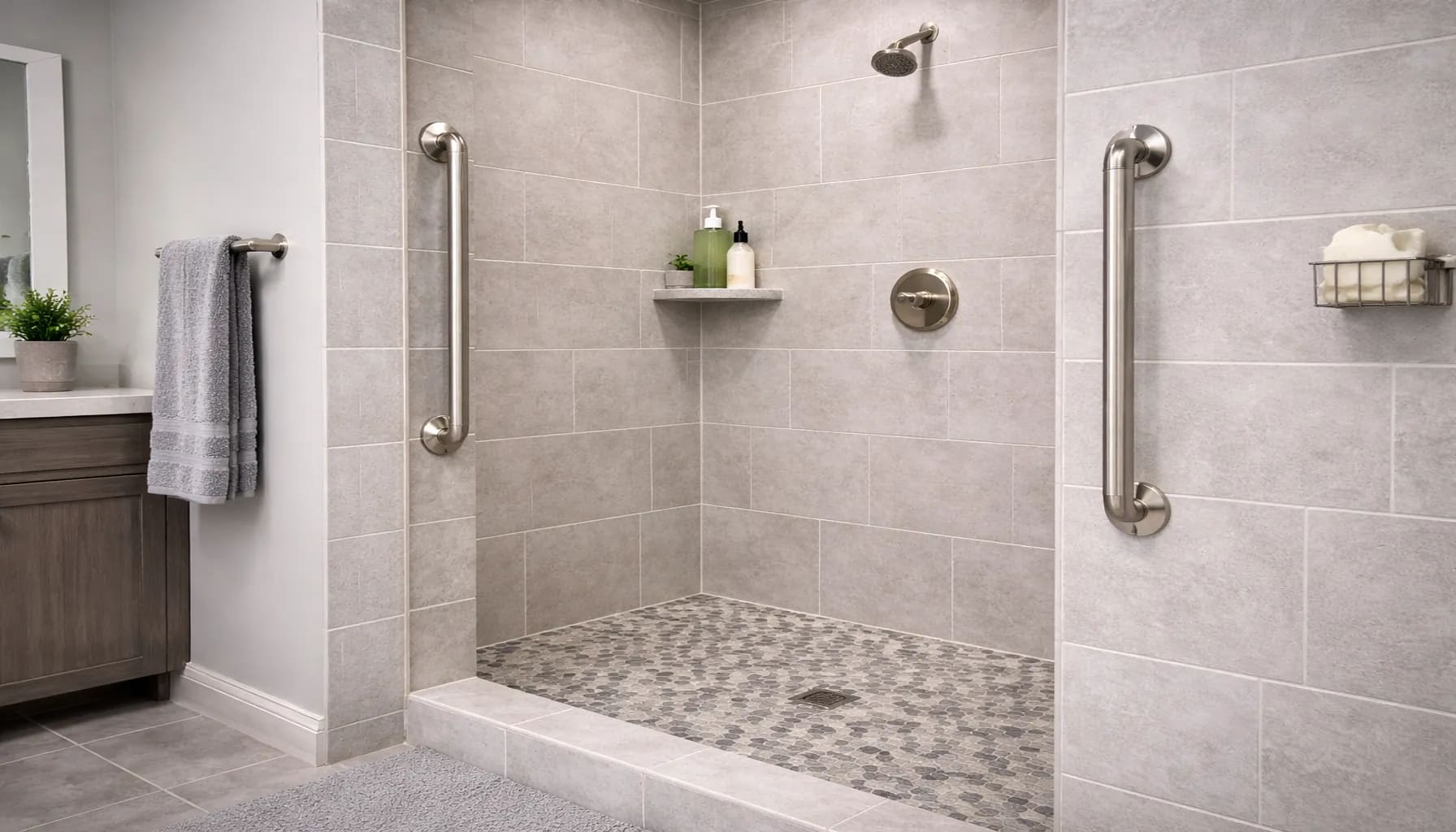
Showers are one of the most common places where slips and falls happen in the bathroom. Wet floors, soap residue, and smooth tile surfaces can make it difficult to maintain balance, especially for seniors or people with limited mobility.
Grab bars are designed to reduce that risk by providing a stable support point when entering the shower, adjusting position, or recovering balance on a slippery surface.
Most people are familiar with horizontal grab bars, but vertical grab bars can also play an important role in shower safety when placed in the right location.
Knowing where to place vertical grab bars in a shower helps ensure they are positioned where they can actually support movement. When placed correctly, vertical grab bars can make entering and exiting the shower much safer and more comfortable.
In real bathrooms, understanding where to place vertical grab bars in a shower can make the difference between a grab bar that simply looks helpful and one that actually improves everyday safety.
Disclosure: As an Amazon Associate, I earn from qualifying purchases. This post may contain affiliate links. If you purchase through these links, I may earn a small commission at no extra cost to you. I only recommend products I would feel comfortable using in my own home. Learn more.
On This Page
Quick Answer
Vertical grab bars in a shower are usually placed near the shower entrance or along the front edge of the shower wall where users need support while stepping in or out.
When deciding where to place vertical grab bars in a shower, the goal is to provide support during the moments when balance is most likely to be lost—especially when entering or exiting the shower.
Vertical grab bars are often installed:
- near the shower entrance or door opening
- along the front wall of the shower
- near a built-in shower seat
They are usually combined with horizontal grab bars that provide support while standing inside the shower.
Why Vertical Grab Bars Work Well in Showers
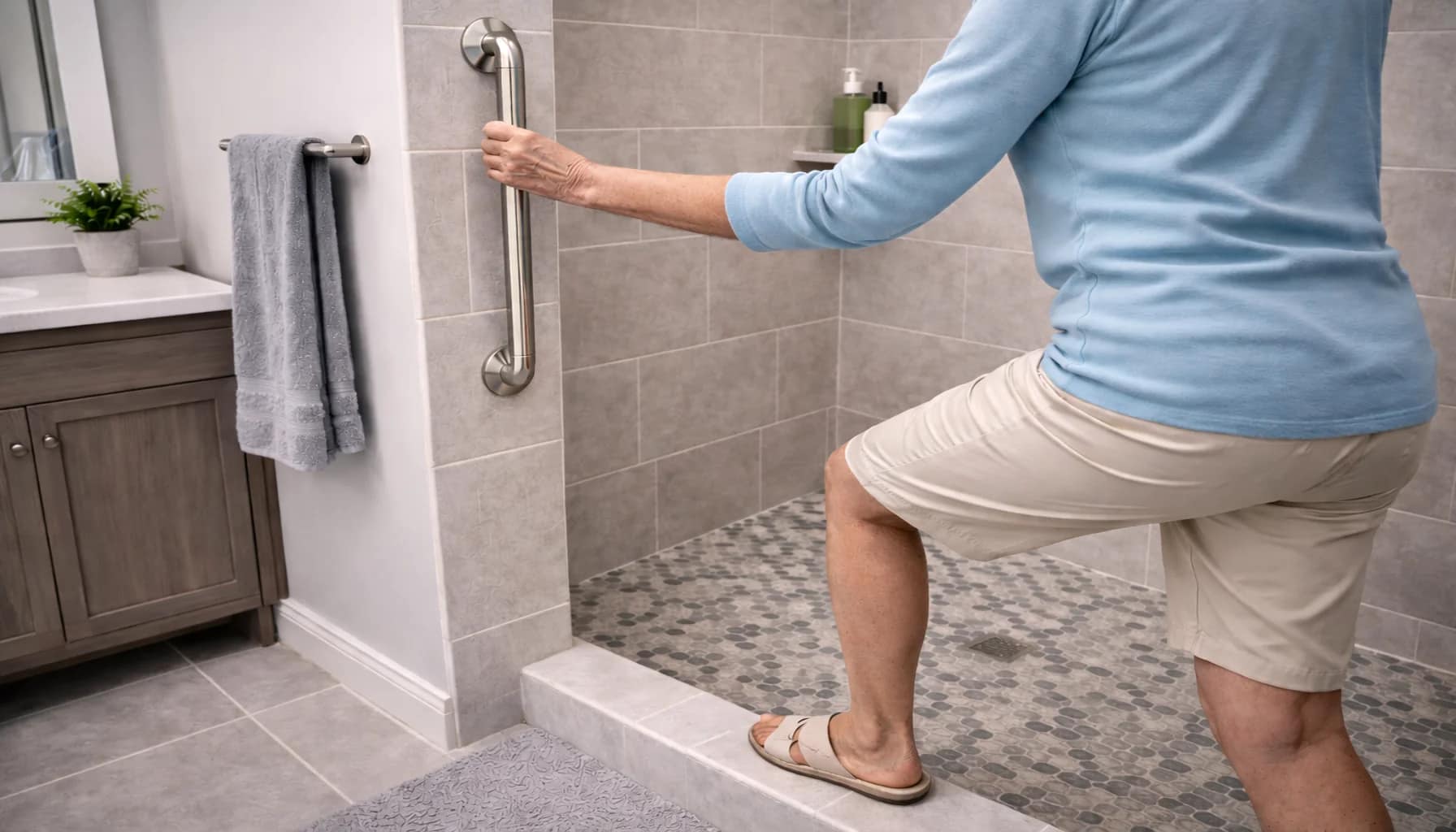
Vertical grab bars offer a different type of support compared to horizontal grab bars.
Instead of supporting pushing or leaning movements, vertical bars allow users to grip the bar at multiple heights as they move.
This can be helpful when:
- stepping over a bathtub edge
- lowering yourself onto a shower seat
- regaining balance when entering the shower
Because hand placement can change along the length of the bar, vertical grab bars allow users to adjust their grip naturally during movement.
This flexibility makes them particularly useful near shower entrances where body position changes quickly.
Where to Place Vertical Grab Bars in a Shower
The best answer to where to place vertical grab bars in a shower depends on how users enter the shower and where support is needed most during movement.
Near the Shower Entrance
One of the most common locations for vertical grab bars is near the shower entrance.
This placement helps provide support when stepping into or out of the shower.
Typical benefits include:
- helping stabilize balance while stepping over a tub wall
- allowing users to grip the bar at different heights
- providing support before fully entering the shower
For walk-in showers, placing a vertical grab bar near the entrance helps users maintain balance while transitioning from the bathroom floor into the shower area.
Along the Front Shower Wall
Another useful location for vertical grab bars is along the front wall of the shower, especially near the entrance.
This placement allows users to grab the bar while:
- turning to face the shower controls
- adjusting position while entering
- stabilizing themselves before moving deeper into the shower
Vertical grab bars in this position often work best when combined with a horizontal grab bar along the side wall.
If you’re planning overall placement carefully, reviewing where to install grab bars in a bathroom can help determine the safest locations throughout the entire bathroom.
Near a Shower Seat
In showers that include a built-in seat or folding seat, a vertical grab bar can provide additional support.
This allows users to:
- hold the bar while lowering themselves onto the seat
- maintain balance when standing up
- adjust grip height during movement
This setup is often used in bathrooms designed for aging in place or accessibility.
Recommended Height for Vertical Grab Bars
Vertical grab bars do not rely on a single fixed height the way horizontal grab bars do.
Instead, the bar should be installed so that users can comfortably grip the bar at multiple points along its length.
Many vertical grab bars are installed between 36 and 48 inches in length, allowing support at different heights.
However, the exact position still matters. The bar should be placed so the user’s hand naturally reaches it when stepping into the shower.
If you’re unsure about placement heights for grab bars in general, reviewing grab bar placement height guidelines can help ensure bars are positioned safely.
Vertical vs Horizontal Grab Bars in Showers
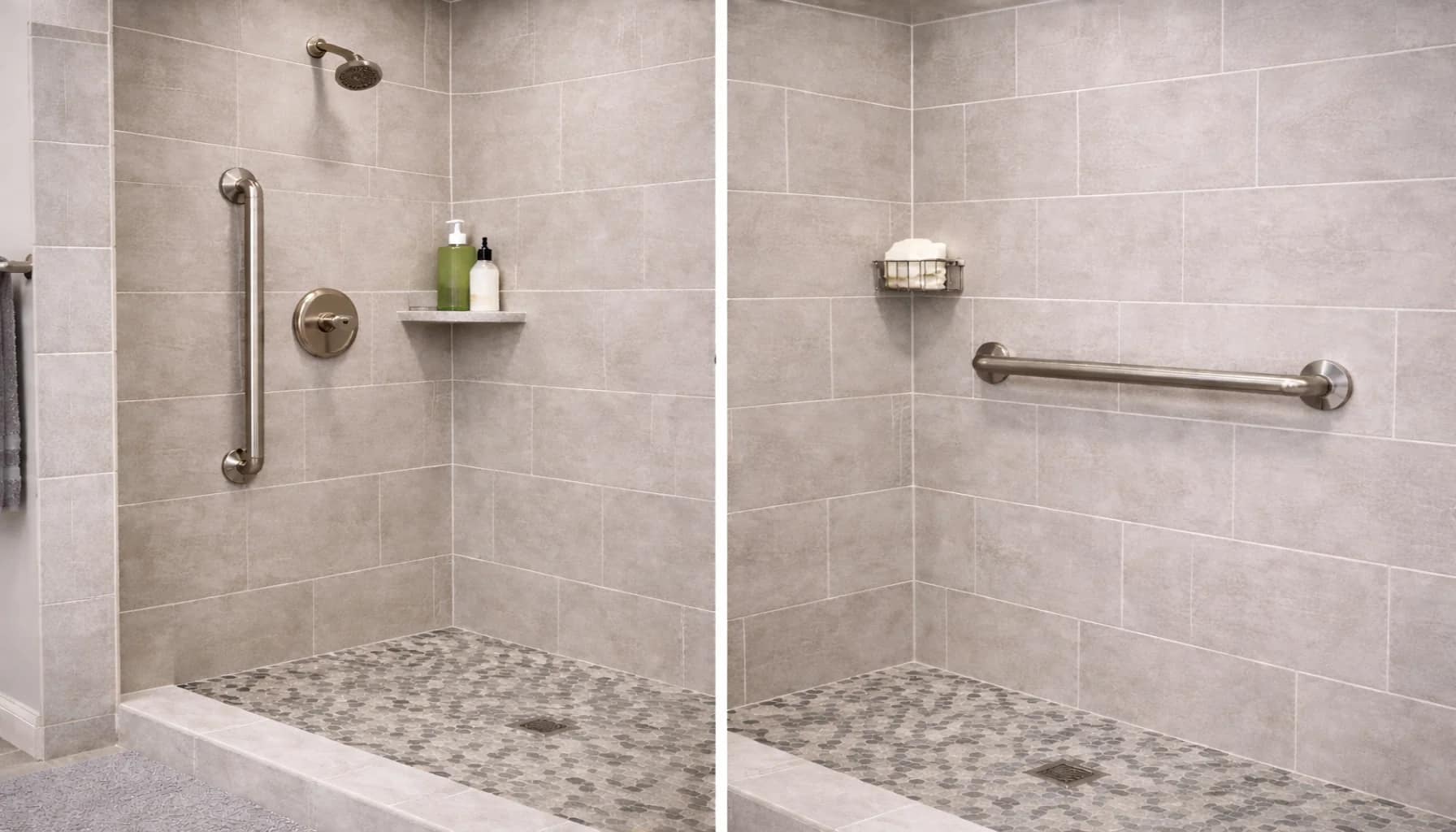
Vertical and horizontal grab bars serve different purposes in a shower.
Vertical grab bars help with:
- entering and exiting the shower
- adjusting grip height during movement
- maintaining balance during transitions
Horizontal grab bars are better for:
- maintaining balance while standing
- pushing upward for support
- stabilizing body weight during longer movements
Real-Life Example:
Many bathrooms use both types together to provide better overall support.
- Vertical grab bar near the entrance
- Horizontal grab bar along the side wall
If you’re planning a full shower safety layout, it can also help to review where to place grab bars in a shower so vertical and horizontal bars work together effectively.
Common Placement Mistakes to Avoid
Even when vertical grab bars are installed, poor placement can reduce their usefulness.
Some common mistakes include:
Installing the bar too far from the entrance
If the bar cannot be reached before stepping into the shower, it may not help during the most risky moment.
Mounting the bar only into drywall
Grab bars must be installed securely into wall studs to support body weight.
Installing the bar where water controls block access
The bar should be positioned so it remains easy to reach without interference from fixtures.
Relying only on one grab bar
Many showers benefit from having multiple support points.
Avoiding these mistakes helps ensure grab bars provide dependable support when needed. It can also help to understand common grab bar installation mistakes so placement and mounting problems do not reduce the bar’s effectiveness.
What I Recommend
If the goal is to set up a safe and functional shower, keeping the layout simple and focusing on the most useful support points is usually the best approach.
Start with two grab bars inside the shower:
- One should be placed vertically near the shower entrance to assist with stepping in and out.
- The second should be installed horizontally along the side wall where the user stands during use.
This combination supports the two most important movements:
- entering the shower
- maintaining balance while standing
If the shower includes a seat or has a larger layout, adding a third grab bar can provide additional stability.
When choosing bars for this type of setup, it helps to focus on models designed specifically for wet environments and standing support, such as shower grab bars built for senior use.
The key is making sure each grab bar is securely mounted and positioned where the user naturally reaches for support.
FAQ
Where should vertical grab bars be placed in a shower?
Vertical grab bars are usually installed near the shower entrance or along the front wall of the shower where users need support while stepping in or out.
Are vertical grab bars better than horizontal grab bars?
Vertical and horizontal grab bars serve different purposes. Vertical grab bars help with entering and exiting the shower, while horizontal bars provide support while standing.
How long should a vertical grab bar be?
Many vertical grab bars range from 36 to 48 inches in length, allowing users to grip the bar at different heights during movement.
Can vertical grab bars be used in walk-in showers?
Yes. Vertical grab bars are commonly installed near the entrance of walk-in showers to help maintain balance when entering or exiting.
Do vertical grab bars need to be installed into studs?
Yes. Grab bars should always be securely mounted into wall studs so they can safely support body weight.
Final Thoughts
Knowing where to place vertical grab bars in a shower can significantly improve bathroom safety.
Vertical grab bars are especially useful near the shower entrance because they allow users to adjust their grip height while stepping in or out.
When combined with horizontal grab bars inside the shower, they help provide stable support throughout different movements.
With proper placement and secure installation, vertical grab bars can make daily shower routines safer and more comfortable.
