
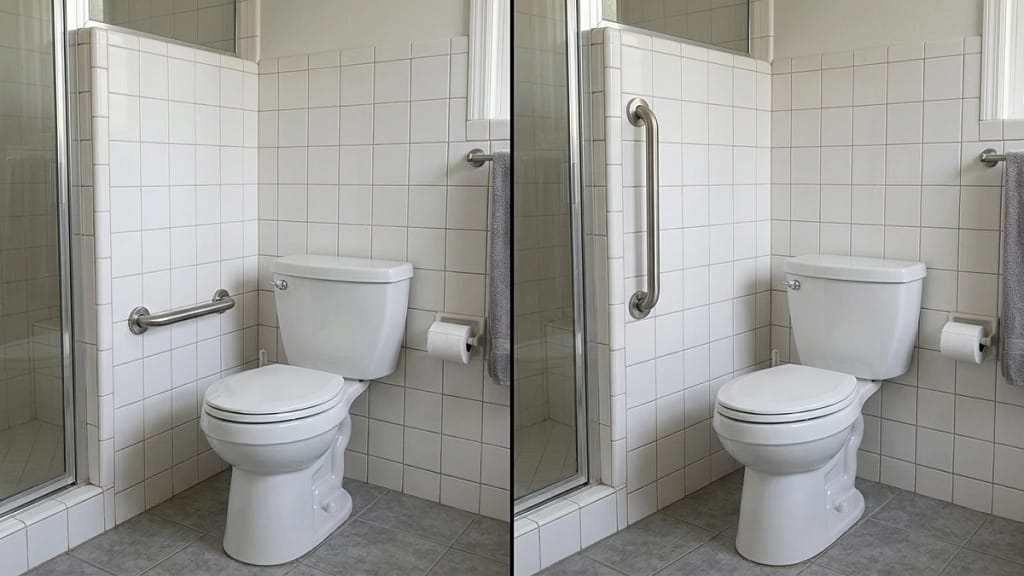
Grab bars are one of the simplest upgrades that can improve bathroom safety. When installed correctly, they provide stable support while stepping into a shower, standing up from a toilet, or maintaining balance on wet floors.
However, even a good grab bar can be less useful or unsafe if it is installed incorrectly. Common problems include poor mounting, incorrect placement or height, and choosing an orientation that does not match how the bar will be used. Knowing these mistakes can help you install grab bars that provide reliable support when they are needed most.
Disclosure: As an Amazon Associate, I earn from qualifying purchases. This post may contain affiliate links. If you purchase through these links, I may earn a small commission at no extra cost to you. I only recommend products I would feel comfortable using in my own home. Learn more.
On This Page
- Installing Grab Bars Into Drywall Instead of Studs (Major Safety Risk)
- Placing Grab Bars Too Far From Where Support Is Needed
- Installing Grab Bars at the Wrong Height
- Installing the Right Grab Bar in the Wrong Orientation
- Using Suction Grab Bars for Full Support
- Using the Wrong Anchors or Fasteners
- Choosing Grab Bars That Are Too Short
- Failing to Check the Installation After Mounting
- What I Recommend
- FAQ
- Final Thoughts
Quick Answer
The most common grab bar installation mistakes involve inadequate mounting, poor placement, incorrect height or orientation, and relying on the wrong type of grab bar or hardware.
The full list includes:
- Installing grab bars without adequate structural support
- Placing grab bars too far from where support is needed
- Installing grab bars at the wrong height
- Installing the right grab bar in the wrong orientation
- Using suction grab bars for full body support
- Using the wrong anchors or fasteners
- Choosing grab bars that are too short
- Failing to check the installation after mounting
Avoiding these mistakes helps ensure grab bars provide stable and reliable support when they are needed most.
Installing Grab Bars Into Drywall Instead of Studs (Major Safety Risk)

One of the most serious grab bar installation mistakes is mounting the bar directly into drywall.
Grab bars are designed to support full body weight, especially when someone slips or loses balance.
Drywall alone cannot provide enough structural support for this kind of pressure. This guide on do grab bars need to be screwed in explains why secure mounting matters so much for safe installation.
When grab bars are installed only into drywall:
- screws may loosen over time
- wall anchors may pull out under pressure
- the grab bar may detach suddenly when weight is applied
This creates a dangerous situation because the user may rely on the bar during a slip.
A grab bar needs to be anchored to structural support that can handle the forces placed on it. Wall studs or properly installed blocking are common ways to provide that support. Some grab bars may also use mounting systems designed for specific wall types.
If you’re planning a DIY installation, it helps to review how to install grab bars in studs so the bar remains stable and safe.
Placing Grab Bars Too Far From Where Support Is Needed
Another common mistake is installing grab bars in locations that look convenient but are not actually useful during everyday movement.
Grab bars should be installed where the user naturally reaches for support.
This can happen when a bar is installed:
- near the shower entrance
- along the side wall where a person stands while showering
- beside the toilet where users push upward when standing
If the bar is positioned too far away, it may not be reachable when balance is suddenly lost.
Proper placement ensures the bar can be grabbed instantly and comfortably.
If you’re planning your bathroom layout carefully, it may help to review where to install grab bars in a bathroom to understand how placement affects real-world usability.
Installing Grab Bars at the Wrong Height

Height is another factor that strongly affects how useful grab bars feel.
Bars installed too high may force users to reach upward, which reduces leverage when pushing upward. Bars installed too low may not provide enough support for standing.
For accessible installations, grab bars are commonly positioned between 33 and 36 inches above the finished floor, measured to the top of the gripping surface. However, the most useful height can vary depending on the user and the movement the bar needs to support.
However, the ideal height can vary depending on:
- the user’s height
- balance ability
- whether the bar is used while standing or sitting
How to sanity-check the height:
Picture the exact movement the bar needs to support. If the user would have to reach upward, lean forward, or pull from an awkward wrist angle, the height probably needs adjustment.
The best height usually feels natural during the real movement, not just when the user is standing still beside the wall.
For example, grab bars near a toilet may need slightly different positioning than those used in showers.
Following proper height guidelines ensures the grab bar feels natural to reach and comfortable to use.
Installing the Right Grab Bar in the Wrong Orientation
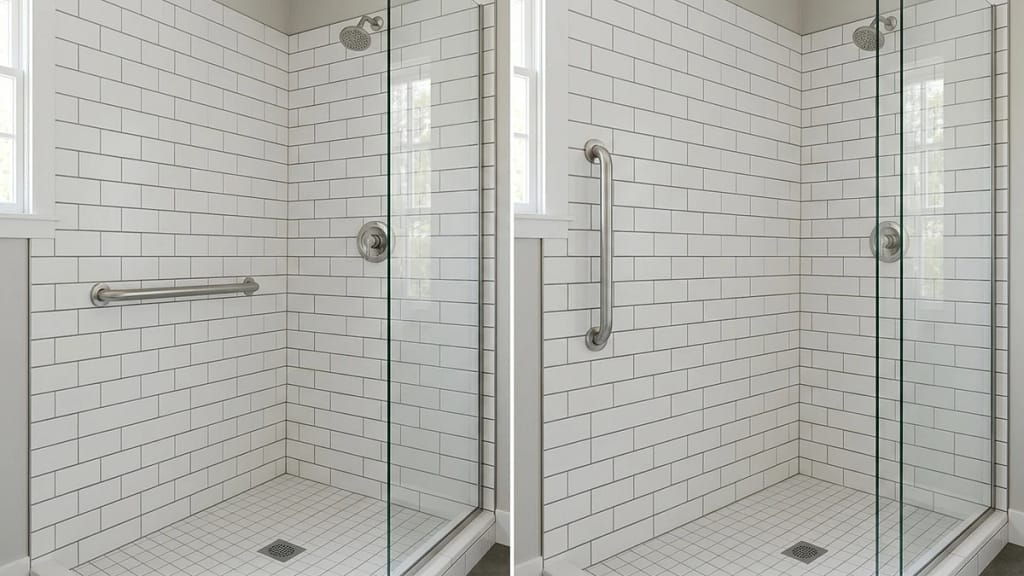
Another common installation mistake is choosing the right location but the wrong bar orientation.
Grab bars work best when their direction matches the movement they are meant to support. A bar that is installed securely can still feel awkward or less useful if the user has to reach for it at the wrong angle.
This often shows up when:
- a horizontal bar is used where support is needed at different hand heights
- a vertical bar is installed where the user really needs a longer support path
- the bar angle does not match how the person sits, stands, or steps into the shower
For example, a vertical bar can provide support at different hand heights during movements such as stepping into or out of a shower. A horizontal or angled bar may be more useful when the user needs support while standing, turning, or moving along a wall.
Good grab bar installation is not just about strong mounting. It is also about making sure the bar supports the movement it is intended to assist and can be reached naturally.
Using Suction Grab Bars for Full Support
Suction grab bars are often marketed as quick safety solutions because they do not require drilling into the wall.
Many suction grab bars are intended for balance assistance rather than supporting a person’s full body weight. Because products differ, always check the manufacturer’s instructions and support rating before relying on a suction bar for safety. If you’re deciding between temporary and permanent options, it may help to compare suction vs permanent grab bars to understand which type provides more reliable support.
Over time, suction grips may weaken due to:
- humidity
- soap residue
- small air leaks
This means the bar may detach unexpectedly when pressure is applied.
Permanent grab bars with properly secured structural mounting provide a much more reliable safety solution than relying on drywall alone.
Suction bars may still be helpful for temporary balance support, but they should not be relied on as the primary safety device.
Support problems are not always about the type of grab bar alone. In many bathrooms, the bigger issue is that there are not enough support points overall.
Using the Wrong Anchors or Fasteners
A grab bar can be installed in the right location and still be unsafe if the mounting hardware is not appropriate for the wall and the forces placed on the bar.
Standard drywall anchors are not automatically suitable for grab bars because the bar may need to support much more force than an ordinary wall fixture.
The appropriate mounting method depends on factors such as:
- the wall structure
- the type of grab bar
- the location of the mounting points
- the manufacturer’s installation requirements
For example, a tile wall may require a different installation approach than a drywall wall, while a fiberglass shower may require specific mounting hardware or reinforcement.
Using the wrong fasteners can leave the grab bar looking secure while providing much less support than expected.
Always follow the manufacturer’s installation instructions and use a mounting system that is designed for the specific wall and grab bar.
Choosing Grab Bars That Are Too Short
Grab bars come in many different lengths, and choosing a bar that is too short can limit its usefulness.
Short grab bars provide only a small gripping area, which may not allow users to adjust their grip while moving.
Longer grab bars allow users to:
- shift their hand position during movement
- maintain support while stepping or turning
- keep their hand on the bar during longer movements
The appropriate length depends on where the grab bar is being installed and the movement it needs to support. A shower entrance, toilet, and shower wall may each require a different length or configuration.
For a more detailed breakdown, this guide on choosing the right grab bar length explains how bar length affects support during different bathroom movements.
Choosing the right length ensures the bar supports movement instead of restricting it.
Failing to Check the Installation After Mounting
Even when a grab bar is mounted using the correct method, the installation should be checked before anyone relies on it for support.
A quick check can reveal problems that are easy to miss during installation, such as:
- the bar moving or rotating when pressure is applied
- mounting hardware that does not feel secure
- an uncomfortable or difficult reach
- interference with nearby fixtures or shower controls
- insufficient clearance around the bar
The user should also be able to reach the bar naturally during the movement it is intended to support.
If anything feels loose, awkward, or difficult to reach, the installation should be corrected before the grab bar is relied on for support.
What I Recommend
A practical approach is to keep the setup simple and focus on what actually improves safety.
A good starting point is:
- one inside the shower
- one near the toilet
- optionally one near the shower entrance
More importantly, make sure every grab bar is:
- securely installed into wall studs
- placed where the hand naturally reaches
- long enough to support the full movement
When these basics are done correctly, even a simple grab bar setup can make a bathroom feel much safer and more reliable.
FAQ
What is the most common grab bar installation mistake?
One of the most serious mistakes is mounting a grab bar without adequate structural support. Drywall alone may not provide enough strength, so the mounting method should be appropriate for the wall and the forces placed on the bar.
Can grab bars be installed without mounting them into a stud?
Grab bars need adequate structural support, but that does not always mean mounting directly into a stud. Depending on the wall and grab bar, properly installed blocking or a mounting system designed for the specific wall type may provide the necessary support.
How do you know if a grab bar is installed correctly?
The grab bar should remain secure when pressure is applied and should not move or rotate within its fittings. It should also be positioned where the user can reach it naturally without interfering with nearby fixtures or controls.
What height should grab bars be installed?
For accessible installations, grab bars are commonly positioned between 33 and 36 inches above the finished floor, measured to the top of the gripping surface. The most useful height can vary depending on the user and the movement the bar needs to support.
Are suction grab bars safe to use?
Many suction grab bars are intended for balance assistance rather than supporting a person’s full body weight. Always check the manufacturer’s instructions and support rating before relying on one for safety.
Final Thoughts
Grab bars are one of the most effective ways to improve bathroom safety, but they only work when installed properly.
Many accidents occur not because grab bars are missing, but because installation mistakes make them unreliable.
Avoiding common grab bar installation mistakes—such as mounting into drywall, poor placement, or relying on suction bars—helps ensure grab bars provide dependable support.
With proper installation and thoughtful placement, grab bars can make everyday bathroom routines safer and more comfortable.
