
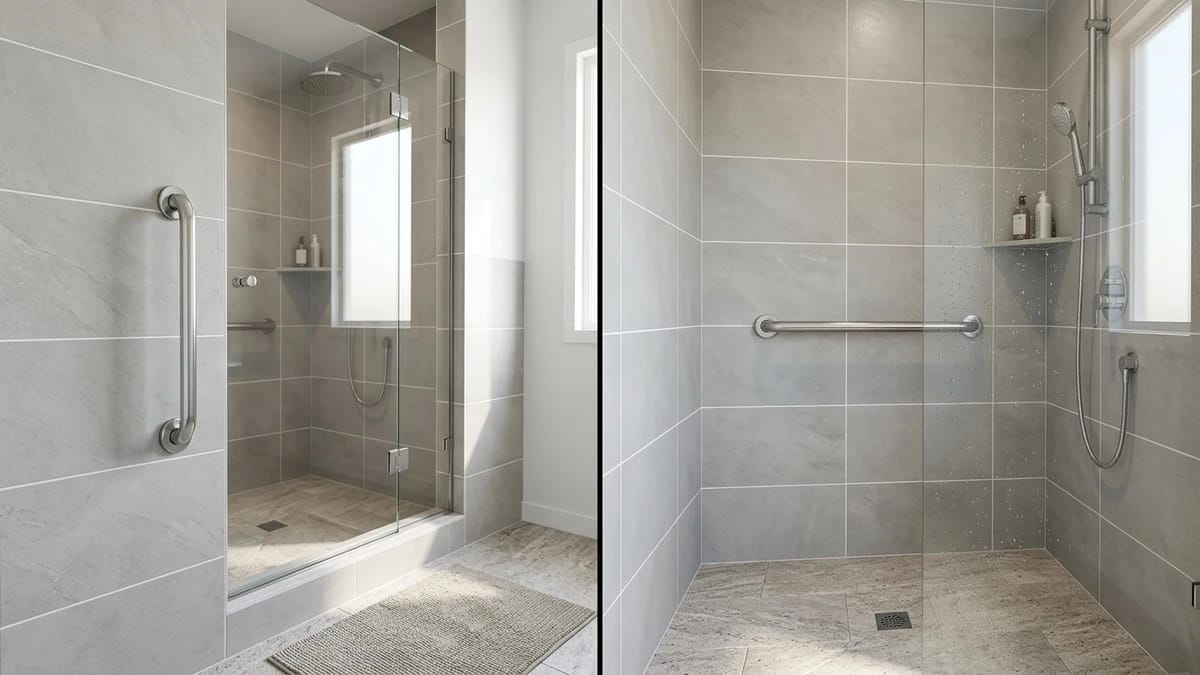
Grab bars play an important role in improving bathroom safety. They provide stability when stepping into a shower, maintaining balance on wet floors, or standing up from a seated position.
However, not all grab bars are installed the same way. Some are mounted vertically, while others are installed horizontally along the wall.
This raises a common question for homeowners and caregivers: when comparing vertical vs horizontal grab bars, which option is safer?
The answer depends on how the grab bar will be used. Each orientation supports different types of movement, and the safest bathrooms often use a combination of both.
Understanding the differences between vertical and horizontal grab bars can help ensure the bars provide support exactly where it is needed.
If you’re planning a full bathroom safety setup, reviewing where to install grab bars in a bathroom can also help determine the safest locations for each type.
Disclosure: As an Amazon Associate, I earn from qualifying purchases. This post may contain affiliate links. If you purchase through these links, I may earn a small commission at no extra cost to you. I only recommend products I would feel comfortable using in my own home. Learn more.
On This Page
Quick Answer
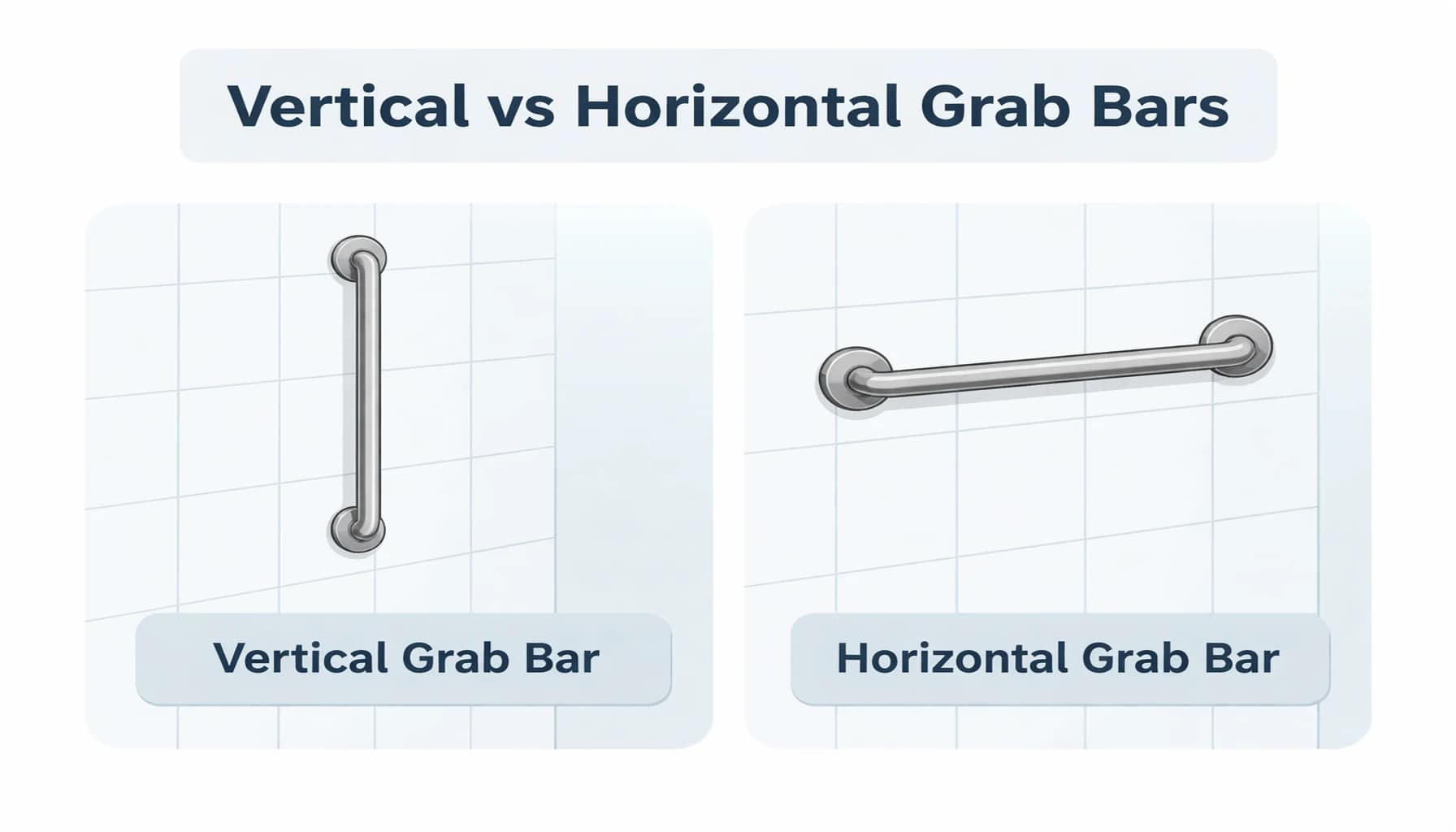
Horizontal grab bars are generally safer for maintaining balance while standing, while vertical grab bars are better for transitions such as entering or exiting a shower.
In most bathrooms:
- Vertical grab bars help stabilize the body during upward or downward movements
- Horizontal grab bars provide steady balance support along a wall
Because they serve different purposes, many safe bathroom layouts include both types.
In either case, the bar is only as safe as its installation, so proper anchoring matters just as much as orientation.
Vertical vs Horizontal Grab Bars: Key Differences
← Swipe to see more →
| Feature | Vertical Grab Bars | Horizontal Grab Bars |
|---|---|---|
| Primary Purpose | Support during movement transitions | Balance support while standing |
| Common Locations | Shower entrance, bathtub entry | Shower walls, beside toilets |
| Grip Flexibility | Allows gripping at multiple heights | Provides continuous support along the wall |
| Best Use Case | Stepping into or out of bathing areas | Maintaining balance on wet surfaces |
| Best For | Transitions and changes in body height | Continuous balance while standing |
What Are Vertical Grab Bars?
Vertical grab bars are mounted straight up and down on the wall. Their main advantage is that users can grip the bar at different heights, making the available handhold more flexible than a fixed horizontal position.
They are often installed where a person may need support at more than one grip height during the same movement.
Common locations include:
- shower entrances
- bathtub entry points
- near bathroom doorways
The exact location matters because a vertical bar should be positioned where its full length provides a useful range of grip positions.
What Are Horizontal Grab Bars?
Horizontal grab bars run parallel to the floor and are one of the most commonly installed grab bar orientations.
Their long, continuous grip area allows the hand to remain supported across a wider section of the wall rather than at a single fixed point.
Typical locations include:
- shower side walls
- beside the toilet
- along bathtub walls
Because the bar extends across the wall, placement and length should be chosen based on the area where support is needed.
For height recommendations when installing horizontal bars, reviewing grab bar placement height guidelines can help ensure comfortable positioning.
Important Note:
Regardless of orientation, a grab bar is only as strong as what it’s anchored into. Bars should be mounted into wall studs or backed with reinforced blocking rated for at least 250–300 lbs — mounting into drywall or tile alone with standard anchors isn’t considered safe, even if the bar itself is rated for more.
When Vertical Grab Bars Work Best
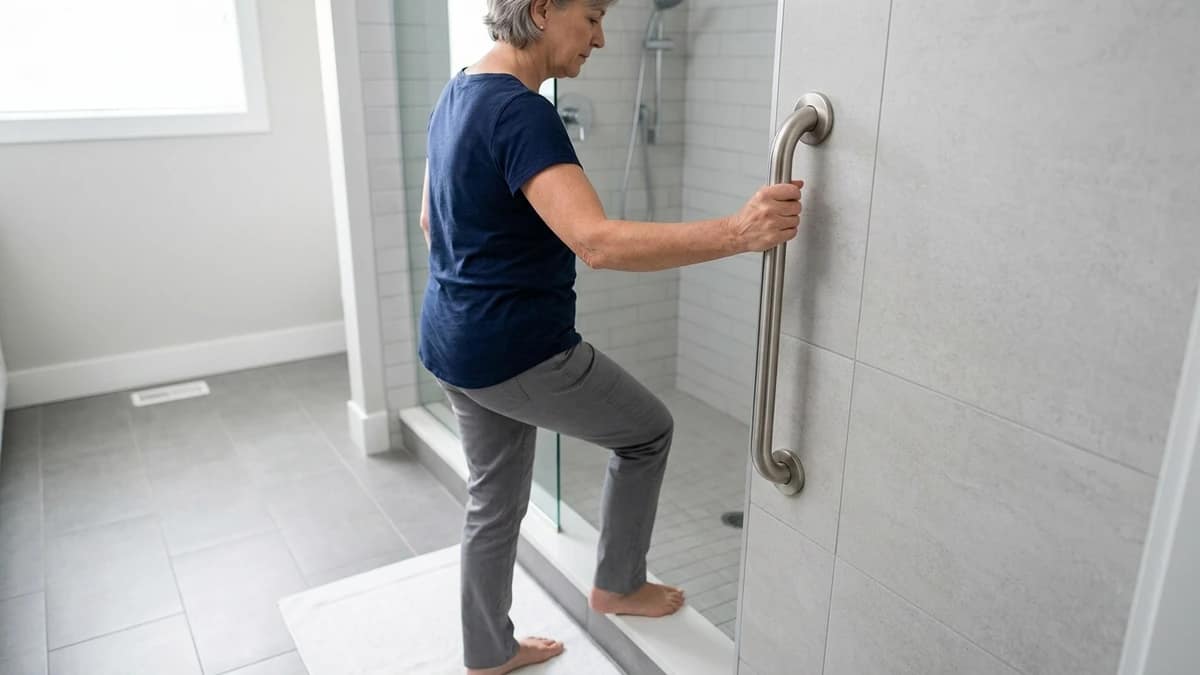
Vertical grab bars are most useful when the body is moving between levels.
Examples include:
Entering or exiting a shower
A vertical bar near the entrance allows the user to grab the bar at different heights while stepping in. For a more detailed look at safe shower placement, see our guide on where to place grab bars in a shower.
Stepping over a bathtub wall
A vertical bar can help stabilize the body during the transition over the tub edge.
Limited wall space
Sometimes the wall area does not allow a long horizontal bar, making a vertical installation a practical alternative.
Because vertical bars allow flexible grip height, they often provide strong support during transitional movements.
Compact Transition Support
FANHAO 16-Inch Grab Bar (2-Pack)
This compact 16-inch grab bar can be a practical option for targeted support near a shower entrance or bathtub transition. Its knurled grip adds texture for a more secure handhold, while the two-pack can cover more than one support location.
- Compact 16-inch length suits targeted support locations
- Knurled surface provides added grip texture
- Two bars included for multiple support locations
Choose the installation orientation based on the movement and location that need support.
When Horizontal Grab Bars Work Best
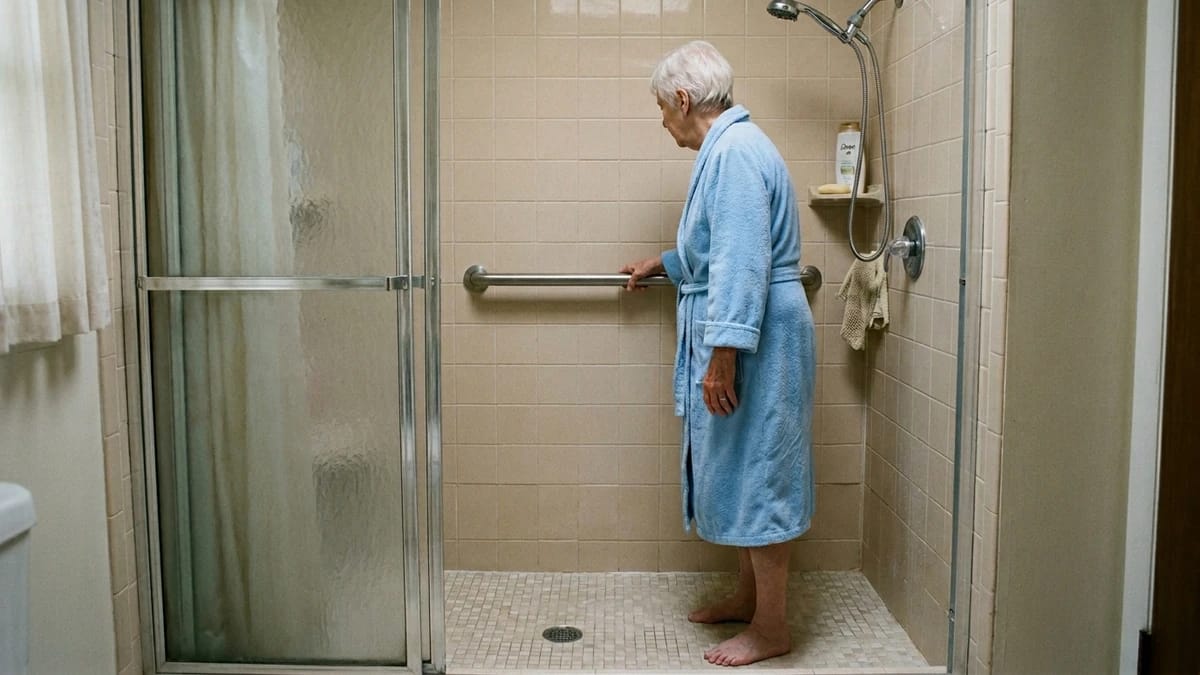
Horizontal grab bars are most effective when someone needs continuous support while standing.
Common situations include:
Standing in the shower
A horizontal bar along the side wall helps maintain balance while washing or turning.
Shifting body weight
Users can slide their hand along the bar as they move, which helps maintain balance during position changes.
Toilet assistance
A horizontal bar beside the toilet can help provide leverage when sitting down or standing up.
Horizontal bars are widely used because they support a wide range of movements in the bathroom.
Continuous Balance Support
Amazon Basics 24-Inch Grab Bar
The 24-inch length provides a longer handhold for areas where continuous support is more useful, such as along a shower wall or beside a toilet. Its straightforward design makes it a practical option when a wider grip area is needed.
- 24-inch length provides a wider continuous handhold
- 1.25-inch diameter offers a substantial grip size
- Stainless steel construction for bathroom use
Its longer length works especially well where support is needed across more of the wall.
Should Bathrooms Use Both Types?
When evaluating vertical vs horizontal grab bars, many bathrooms benefit from installing both types.
Each orientation supports different movements, so combining them can create a more complete safety system.
MATCH THE BAR TO THE MOVEMENT
The simplest way to decide is to look at the movement taking place in each area rather than choosing one orientation for the entire bathroom. A location involving a transition may need a different type of support than an area where someone remains standing or moves along the wall.
For instance:
- a vertical bar near the shower entrance
- a horizontal bar along the shower wall
- another horizontal bar near the toilet
This combination provides support for both transitions and balance.
Real-Life Example:
A typical walk-in shower might use a vertical bar beside the entry threshold for stepping over, a horizontal bar along the back wall for balance while washing, and a second horizontal bar beside the toilet a few feet away — three bars, two orientations, each matched to a different movement.
A grab bar placement diagram can help visualize how different grab bar orientations work together within the same bathroom layout.
What I Recommend
The safest approach is usually to match each grab bar to the movement it needs to support, place it where that support is actually needed, and make sure it is securely installed.
Orientation matters, but the right orientation only works well when the bar is also in the right location and properly anchored.
For example:
- a vertical bar near the shower entrance for stepping in and out
- a horizontal bar along the shower wall for balance while standing
- a horizontal bar beside the toilet for sitting and standing support
This type of layout covers the most common balance challenges in the bathroom.
For setups that prioritize stability in wet areas, reviewing grab bars designed for shower safety can help identify options better suited for high-risk environments.
Finally, each grab bar should be securely installed into wall studs or other appropriate structural backing so it can safely support the intended load.
FAQ
Are vertical grab bars safe for showers?
Yes. Vertical grab bars are commonly installed near shower entrances to provide support while stepping in or out.
Are horizontal grab bars stronger than vertical ones?
The strength depends on installation. Both orientations can safely support body weight when installed correctly into wall studs.
Can vertical grab bars replace horizontal ones?
Not completely. Vertical grab bars support transitions, while horizontal bars provide balance support while standing.
What height should vertical grab bars be installed?
The height often varies depending on the installation location, but the bar should allow users to grip it comfortably during movement.
Should grab bars be installed diagonally instead?
Some bathrooms use angled grab bars, which combine features of vertical and horizontal bars. These can be useful in certain situations, but the best option still depends on the user’s movement needs and the installation location.
Final Thoughts
When comparing vertical vs horizontal grab bars, the safest bathroom layouts usually match each orientation to the movement it supports best.
Vertical grab bars are especially useful for transitions such as entering a shower or stepping over a bathtub wall, while horizontal grab bars provide steadier support for standing balance and movement along a wall.
Choosing the right orientation for each location helps ensure grab bars provide reliable support exactly where it is needed.
