

Grab bars are an important part of bathroom safety, helping provide stability when stepping into a shower, maintaining balance on wet surfaces, or standing up from a toilet.
While placement and installation are often the main focus, the length of the grab bar also plays a major role in how effective it will be.
If a grab bar is too short, it may not provide enough support during movement. If it is too long, it may not fit properly within the available wall space.
Understanding what length grab bar should you use helps ensure the bar provides support exactly where it is needed.
Choosing the correct length depends on factors such as the location of the bar, the type of movement it supports, and the layout of the bathroom.
Disclosure: As an Amazon Associate, I earn from qualifying purchases. This post may contain affiliate links. If you purchase through these links, I may earn a small commission at no extra cost to you. I only recommend products I would feel comfortable using in my own home. Learn more.
On This Page
Quick Answer
Most bathrooms use grab bars between 18 and 36 inches long, depending on the installation location and available wall space.
Common grab bar lengths include:
- 18 inches – compact support areas
- 24 inches – medium wall sections
- 32–36 inches – larger balance support areas
The best length depends on where the grab bar will be installed and how it will be used.
Why Grab Bar Length Matters
Grab bar length determines how much support area the user has while holding the bar.
Longer grab bars allow users to:
- maintain balance while moving along a wall
- shift their grip during movement
- reach the bar more easily from different positions
Shorter grab bars may still provide support but offer less flexibility during movement.
Real-Life Example:
- A short grab bar beside a toilet may provide enough leverage to stand up.
- A longer bar inside a shower can help maintain balance while turning or adjusting posture.
When deciding what length grab bar should you use, it helps to think about how the bar will actually be used during everyday bathroom movements.
Common Grab Bar Lengths
Most residential grab bars fall within a few standard size ranges.
When deciding what length grab bar should you use, it helps to understand the most common grab bar sizes available.
Typical lengths include:
12–18 inches: Short grab bars used in tight spaces or as secondary support bars.
24 inches: A versatile mid-length grab bar often used near toilets or small shower walls.
32 inches: A longer bar that provides greater balance support along the wall.
36 inches: One of the most common sizes for shower installations, offering a wide support area.
These standard sizes make it easier to find grab bars that fit common bathroom layouts.
For a detailed comparison of these sizes, see 18 vs 24 vs 36 inch grab bars.
How Wall Studs Affect Grab Bar Length
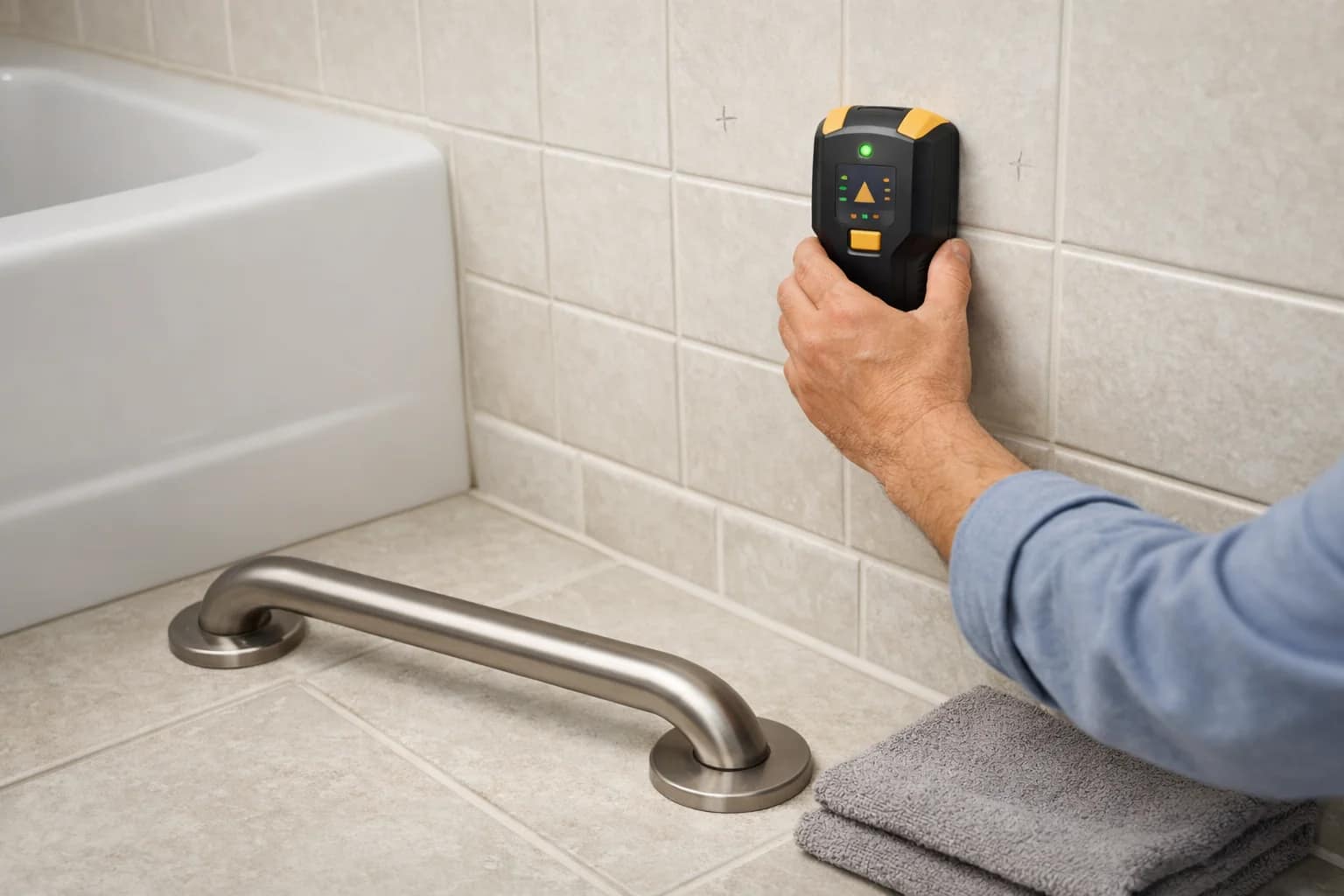
Another factor that affects grab bar length is the position of wall studs behind the drywall.
Grab bars are typically mounted into studs for maximum strength. In most homes, studs are spaced 16 inches apart.
Because of this spacing, some grab bar lengths naturally align with stud positions.
For example:
- 16–18 inch bars may align with a single stud
- 24 inch bars often span two studs
- 32–36 inch bars may require multiple mounting points
Choosing a grab bar length that aligns with studs can make installation easier and ensure the bar is securely anchored.
If you are planning installation, reviewing how to install grab bars in studs can help ensure the bar is mounted safely.
Grab Bar Length for Showers
Shower walls often benefit from longer grab bars because users may need continuous support while standing or shifting balance.
A common setup includes:
- 24–36 inch grab bar along the side wall
- shorter vertical bar near the shower entrance
Longer bars provide a wider grip area and allow users to slide their hand along the bar while maintaining stability.
This can be particularly helpful when adjusting position while showering or when stepping around a shower seat.
Because shower surfaces are often wet and slippery, having a longer grab bar can make it easier to reach support quickly.
If you’re planning shower installation, reviewing where to place grab bars in a shower can help determine the safest placement locations.
Grab Bar Length for Toilets
Grab bars near toilets are typically shorter than those used in showers because the wall space is often limited.
Common sizes include:
- 18–24 inches beside the toilet
- 36 inches behind the toilet in some layouts
These bars help provide leverage when sitting down or standing up.
If you’re planning placement near a toilet, reviewing where to install grab bars around a toilet can help visualize the safest positions.
Grab Bar Length for Bathtubs
Bathtub installations often use a combination of grab bar sizes.
Typical setups include:
- 24 inch grab bar near the tub entry
- 32–36 inch grab bar along the interior wall
These bars help support the transition between standing outside the tub and stepping inside.
A longer grab bar along the interior wall allows users to maintain balance while bathing or showering.
When Longer Grab Bars Are Better
In many situations, longer grab bars provide greater safety because they offer a wider support area.
Longer grab bars can be helpful when:
- users need to shift their grip during movement
- multiple people use the same bathroom
- the bar supports balance along a larger wall section
For example, a 36 inch grab bar along a shower wall allows users to hold the bar at different positions as they move.
This flexibility can make the grab bar more useful during everyday movements.
However, longer bars are not always necessary. In smaller bathrooms, shorter bars may be more practical if wall space is limited.
Choosing the Right Grab Bar Length
When deciding what length grab bar should you use, it helps to consider several factors.
These include:
- available wall space
- the type of movement being supported
- user height and reach
- bathroom layout
- wall stud locations
Longer bars generally provide more flexibility because users can adjust their grip position.
This becomes more noticeable for individuals with a longer reach, where a standard bar may feel limiting in real use—something often discussed when looking at grab bars suited for taller seniors.
However, shorter bars may be necessary when space is limited or when the bar only needs to support a specific movement.
Choosing the correct size ensures the grab bar provides reliable support where it is needed most.
What I Recommend
If I were installing grab bars in a bathroom, I would typically choose bars in the 24–36 inch range for most support areas.
These sizes provide enough grip space to support balance while still fitting within typical bathroom walls.
For example:
- 24 inch bars work well near toilets or smaller walls
- 32–36 inch bars are ideal for showers and larger wall sections
Using a mix of sizes often provides the most practical setup.
FAQ
What is the most common grab bar length?
Grab bars between 24 and 36 inches are the most commonly used sizes in residential bathrooms.
Are longer grab bars better?
Longer grab bars provide more grip area, but the correct length depends on the available wall space and installation location.
What size grab bar is best for showers?
Shower installations often use grab bars between 24 and 36 inches long to provide wider balance support.
What size grab bar should be installed near a toilet?
Grab bars near toilets are commonly 18 to 24 inches long, depending on the wall space available.
Can multiple grab bars be installed in one bathroom?
Yes. Many bathrooms include multiple grab bars in different locations to provide support during various movements.
Final Thoughts
Understanding what length grab bar should you use helps ensure the bar provides the right type of support in each part of the bathroom.
Most grab bars fall within the 18–36 inch range, with longer bars typically used in showers and shorter bars used near toilets.
Choosing the correct length improves both safety and usability, especially when combined with proper placement and secure installation.
