
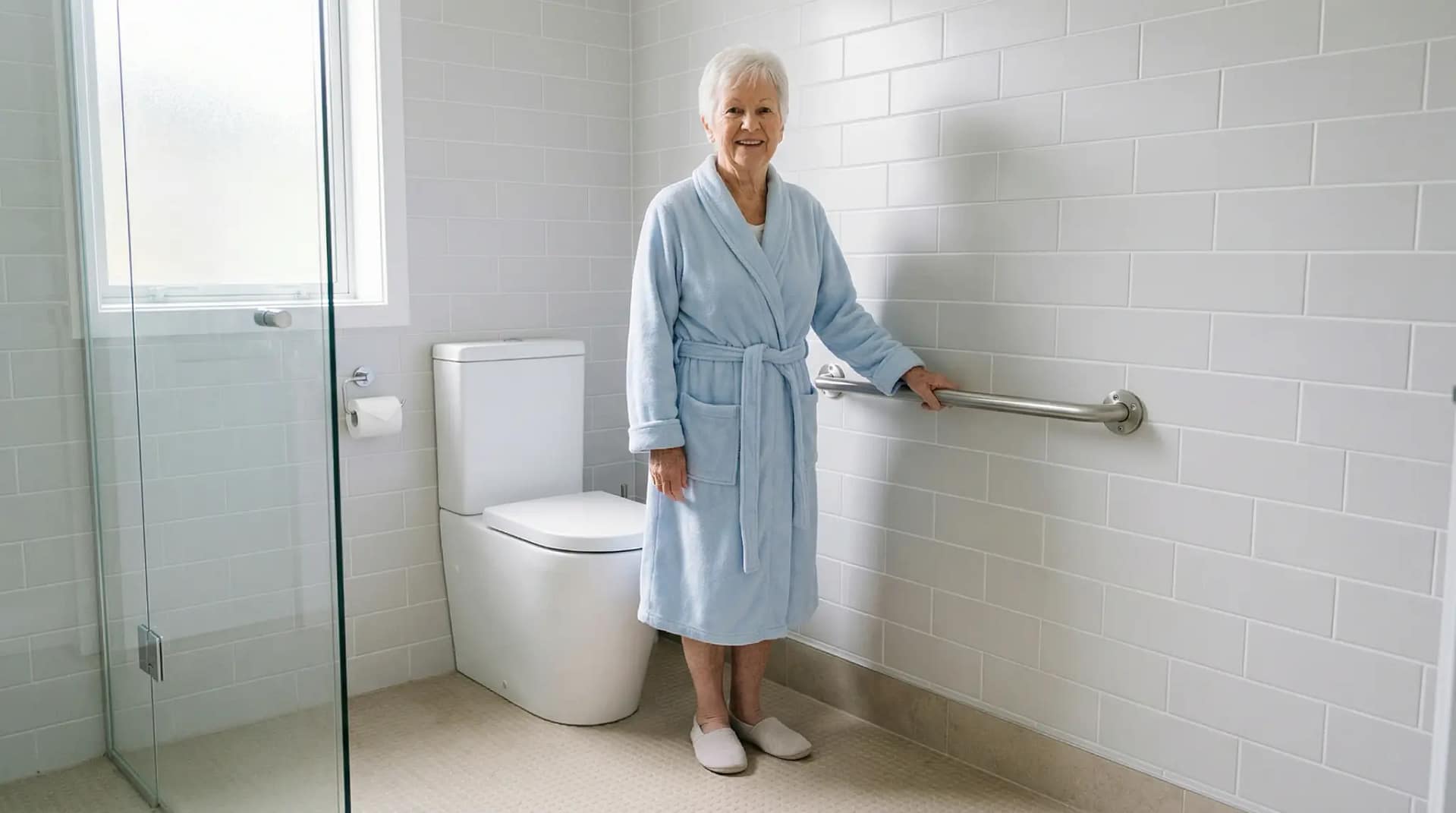
Most grab bar placement guidelines are designed around average height. For shorter individuals, these standard positions may not provide comfortable or effective support.
If grab bars are installed too high, they can be difficult to reach quickly and may reduce control during movement. This can affect balance at critical moments such as standing or stepping into a shower.
Adjusting grab bars for short seniors ensures that support is available at a natural hand position, improving both safety and ease of use.
Disclosure: As an Amazon Associate, I earn from qualifying purchases. This post may contain affiliate links. If you purchase through these links, I may earn a small commission at no extra cost to you. I only recommend products I would feel comfortable using in my own home. Learn more.
On This Page
- Why Standard Grab Bar Heights May Not Work for Short Seniors
- Problems Caused by Grab Bars That Are Too High
- How to Adjust Grab Bar Height for Short Seniors
- Best Placement Areas for Short Seniors
- Height Considerations by Location
- Common Mistakes to Avoid
- Are Lower Grab Bars Enough on Their Own?
- How to Find the Right Height (Simple Method)
- What I Recommend
- FAQ
- Final Thoughts
Quick Answer
Grab bars for short seniors should be installed lower than standard guidelines to match natural hand position, ensuring easy reach and effective support during movements such as standing, turning, and stepping in or out of showers and bathtubs.
- Standard height may be too high for shorter users
- Placement should match natural hand position
- Avoid positions that require upward reach
- Adjust based on movement type and location
- Ensure secure and stable installation
In most cases, lowering the grab bar by a few inches from standard height improves reach and allows better force application. The exact height should always be based on how the user naturally moves within the space.
Why Standard Grab Bar Heights May Not Work for Short Seniors
Standard grab bar height guidelines are typically based on average adult proportions. This often places grab bars at a height that may feel too high for shorter individuals.
When a grab bar is positioned above natural hand level, it can reduce the ability to apply effective force during movements such as standing or stabilizing.
This is the inverse of the problem faced by taller individuals, where grab bars may be positioned too low, as explained in grab bars for tall seniors.
Adjusting height based on actual reach allows the user to apply downward or forward force more effectively, which is critical for maintaining balance during movements like standing or stepping.
Problems Caused by Grab Bars That Are Too High
Grab bars that are too high can reduce both safety and usability.
Reaching upward may reduce grip strength and control, especially during moments that require quick support.
For example, when stepping into a shower, a grab bar placed too high may not be within immediate reach. This delay can reduce stability during a critical transition.
Similarly, when standing up from a toilet, reaching upward instead of pushing forward can reduce leverage and make the movement less controlled.
Higher placement can also lead to awkward arm positioning, which may affect balance and increase strain on shoulders and arms.
Over time, poorly positioned grab bars may be used less frequently, reducing their effectiveness.
How to Adjust Grab Bar Height for Short Seniors

Adjusting grab bars for short seniors should focus on natural movement rather than fixed measurements.
Standard guidelines provide a starting point, but effective placement depends on how the user actually reaches and applies force during everyday movements.
- Lower grab bars below the standard 33–36 inch range when necessary
- Align placement with natural hand position when standing upright
- Ensure the arm remains slightly bent, not fully extended upward
- Test reach during real movements such as standing or stepping
- Adjust placement based on location and movement type
For example, when standing upright, the hand should reach the grab bar without lifting the shoulder or stretching upward. This allows the user to push or stabilize using body weight more effectively.
Testing placement before installation is essential. Temporary positioning or marking the wall can help confirm that the grab bar supports natural movement patterns rather than forcing adjustments.
For general height benchmarks, it can also help to understand standard grab bar placement height guidelines before making adjustments.
Best Placement Areas for Short Seniors
Grab bars should be placed in areas where support is needed most during movement.
- Shower walls: Support during standing and turning
- Bathtub entry: Assist with stepping in and out
- Around the toilet: Help with sitting and standing
To understand how grab bar placement works across different areas of the bathroom, see where to install grab bars in a bathroom.
Each placement should reflect how the space is used and where balance support is required.
Height Considerations by Location
Height adjustments should also account for how each area is used. Different movements require different hand positions, so grab bar height may vary depending on the location within the bathroom.

Shower Grab Bars
Shower grab bars often need to be positioned lower for short users to match standing height.
- Align with natural hand position while standing
- Ensure easy reach during turning and washing
- Avoid placing too high relative to shoulder level
Proper placement helps maintain balance on wet surfaces.
For more precise positioning in this area, see where to place grab bars in a shower.
Toilet Grab Bars
Toilet grab bars should support upward movement during standing.
- Position lower to improve leverage
- Align with hand position during sit-to-stand motion
- Ensure easy reach without stretching
Correct height improves control during one of the most demanding bathroom movements.
For proper positioning around this area, see where to install grab bars around a toilet.
Bathtub Grab Bars
Bathtub grab bars should support stepping and balance during entry and exit.
- Position at a height that supports stepping motion
- Ensure reach from both inside and outside the tub
- Avoid placements that require upward reach
Correct positioning helps stabilize body weight shifts during transitions.
Common Mistakes to Avoid
Installing grab bars too high is one of the most common mistakes for shorter users.
Using standard height without adjusting for user reach can place the grab bar outside immediate hand range, reducing its usefulness during fast or unstable movements.
Ignoring reach limitations may lead to placements that look correct but do not work well in practice.
Failing to test placement before installation can result in a setup that does not match actual movement needs.
Many of these issues can be avoided by understanding common grab bar installation mistakes and how they affect safety.
Are Lower Grab Bars Enough on Their Own?
Lowering grab bar height improves reach, but height alone is not enough to ensure safety.
Placement, grab bar type, and overall layout also affect effectiveness. A correctly lowered grab bar may still be difficult to use if it is positioned too far from the natural movement path.
In some cases, selecting the right bar length can also improve usability, as explained in what length grab bar you should use.
For example, even if the height is correct, a grab bar placed too far from the toilet or shower entry may not provide timely support when needed.
Combining correct height with proper placement and stable installation creates a more effective support system.
A well-positioned grab bar should be easy to reach, easy to hold, and aligned with how movement actually occurs.
How to Find the Right Height (Simple Method)
A simple method can help determine the most effective grab bar height based on actual use rather than standard measurements.
- Stand naturally in the area where support is needed
- Let the arm rest at a comfortable, relaxed position
- Note where the hand naturally reaches without lifting the shoulder
- Mark that position as the starting height for the grab bar
- Adjust slightly based on specific movements such as sitting or stepping
This approach ensures the grab bar aligns with natural body mechanics. A properly positioned bar allows the user to apply downward or forward pressure instead of pulling upward, which improves stability and control.
For areas like showers or bathtubs, testing reach from both inside and outside the space can further refine placement and ensure consistent support during transitions.
What I Recommend
Start by identifying natural hand position during key movements such as standing, turning, or stepping into the shower.
First, lower grab bar height to match that natural position rather than following standard ranges exactly.
Next, confirm placement aligns with how movement actually occurs in the space. The grab bar should be within easy reach without requiring repositioning.
Then, test placement before final installation to ensure it supports real movement.
Finally, prioritize secure installation so the grab bar provides stable and reliable support.
FAQ
How low should grab bars be for short seniors?
Grab bars should be installed at a height that allows comfortable reach without lifting the arm significantly.
Can grab bars be installed below standard height?
Yes, lowering grab bars is often necessary for shorter users to improve control and accessibility.
Is standard ADA height too high for short users?
It can be, depending on the individual’s height and reach.
What happens if grab bars are too high?
They may be difficult to reach, reduce control, and limit their effectiveness during movement.
Final Thoughts
Standard grab bar height guidelines are useful starting points, but they may not suit shorter individuals without adjustment.
Customizing height based on natural reach improves both safety and usability.
Adjusting grab bar height by even a few inches can improve reach, control, and stability during everyday movements such as standing, turning, and stepping into the shower.
