
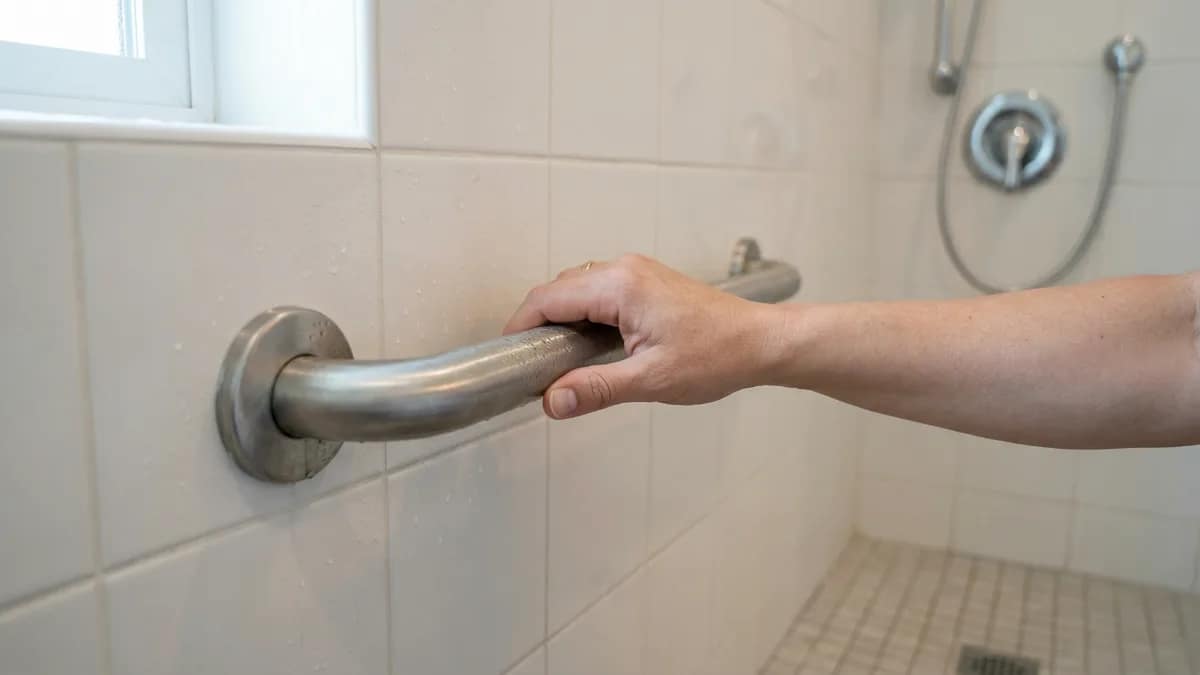
Showers are one of the most common places where slips and falls happen, especially for seniors. Wet surfaces, limited traction, and constant movement make it harder to maintain balance compared to other areas of the home. The data on senior bathroom falls provides more context on the risks associated with bathroom falls.
Installing a grab bar is one of the most effective ways to reduce this risk. However, not all grab bars provide the same level of safety. Some are designed to support full body weight, while others are only meant for light balance assistance.
In this guide, you’ll find the best grab bars for shower safety, along with clear explanations of when to choose permanent options, when temporary solutions make sense, and how to select the safest setup for your specific situation.
Disclosure: As an Amazon Associate, I earn from qualifying purchases. This post may contain affiliate links. If you purchase through these links, I may earn a small commission at no extra cost to you. I only recommend products I would feel comfortable using in my own home. Learn more.
On This Page
- Quick Answer: What Are the Best Grab Bars for Shower Safety?
- Which Grab Bar for Shower Safety Makes the Most Sense?
- Best Grab Bars for Shower Safety by Situation
- Best Grab Bars for Shower Safety (Top Picks)
- How to Choose Grab Bars for Shower Safety
- 36-Inch vs 48-Inch Grab Bars for Shower Safety
- Where to Place Grab Bars in a Shower
- When One Grab Bar Is Enough vs When Two Are Better
- Permanent vs Suction Grab Bars for Shower Safety
- Which Type of Grab Bar Is Right for Your Shower
- When Grab Bars Alone Are NOT Enough
- How to Use Grab Bars Safely
- What I Recommend
- Final Thoughts
- FAQ
Quick Answer: What Are the Best Grab Bars for Shower Safety?
The best grab bars for shower safety are permanently installed wall-mounted bars that provide stable, weight-bearing support in wet environments, especially when secured into studs or proper anchors.
- Permanent grab bars are the safest and most reliable option
- Stainless steel bars with strong mounting offer the best durability
- 36–48 inch bars provide continuous support along the wall
- 12-inch bars work for targeted support in small spaces
- Suction grab bars are only suitable for temporary or light use
For most users, a permanently installed grab bar is the safest choice. Suction models can help in limited situations, but they should not replace a fixed grab bar in higher-risk environments.
Which Grab Bar for Shower Safety Makes the Most Sense?
This table compares the top options based on support level, ideal use case, and the trade-offs that matter most in real shower-safety setups.
| Product | Best Use Case | Support Level | Why It Stands Out | Watch-Out | Action |
|---|---|---|---|---|---|
| Moen 36-Inch Stainless Steel Grab Bar | Most showers that need a safe permanent grab bar for daily use | Very High | 500-lb capacity, peened grip, and reliable permanent support in wet conditions | Requires drilling and proper stud or anchor installation | Check on Amazon |
| Moen 48-Inch Stainless Steel Grab Bar | Users who need longer continuous support while moving in the shower | Very High | 48-inch length reduces release-and-regrip movement across a wider wall area | Needs more wall space than shorter bars | Check on Amazon |
| Reyiu Suction Grab Bar (2-Pack) | No-drill setups that still need better-than-basic temporary support | Moderate | Locking latches and a built-in suction indicator make it one of the stronger temporary options | Not suitable for full body-weight support | Check on Amazon |
| Moen 12-Inch Stainless Steel Grab Bar | Tight showers that need one strong targeted support point | High | Compact 12-inch size keeps full-strength support available in narrow spaces | Shorter bar covers less area and works best for targeted placement | Check on Amazon |
| Safe-er-Grip Suction Grab Bar | Travel, guest bathrooms, or short-term temporary support needs | Light | Portable design makes temporary placement easy without permanent installation | Lower stability than fixed bars and should only be used for balance assistance | Check on Amazon |
Note: Even high-quality suction grab bars are not designed for full body weight support and should always be tested before each use.
Best Grab Bars for Shower Safety by Situation
Choosing the right grab bar depends on how much support is needed, how the shower is used, and whether permanent installation is possible.
Best overall for maximum safety:
The Moen 36-inch stainless steel grab bar is the most reliable choice for most showers. It provides strong, consistent support in wet conditions and works well for everyday use where safety is the priority.
Best for maximum support and movement:
The Moen 48-inch grab bar is ideal for users who need continuous contact while moving or repositioning. The extended length allows you to maintain grip across a wider section of the wall.
Best no-drill option:
The Reyiu suction grab bar is the strongest temporary alternative when drilling isn’t possible. Its locking mechanism and built-in suction indicator make it easier to confirm a secure hold than basic suction models, but it should still be used for balance support only.
Best for small showers:
The Moen 12-inch grab bar works well in tight spaces where a longer bar would not fit. It allows for targeted support at key points like the shower entry or near a corner.
Best for travel or temporary use:
The Safe-er-Grip suction grab bar is designed for portability and flexible placement. It works well for short-term setups, guest bathrooms, or travel situations where a temporary support option is needed.
Below is a closer look at each recommended grab bar, including how they perform in real shower conditions and which situations they are best suited for.
Best Grab Bars for Shower Safety (Top Picks)
BEST OVERALL FOR SHOWER SAFETY
Moen 36-Inch Stainless Steel Grab Bar
This is the best overall pick because it gives most showers the strongest balance between dependable weight-bearing support, wet-environment grip, and practical everyday length. It is long enough to create a meaningful support zone without demanding as much wall space as an extra-long bar.
Best for: Most users who want one permanently installed grab bar that can provide dependable daily support in a shower.
Watch-outs: It still depends completely on proper installation into studs or approved anchors, so the bar is only as safe as the mounting behind it.
Why it stands out:
- Supports up to 500 lbs when properly installed
- 36-inch length works well in most standard shower layouts
- Peened finish improves grip in wet conditions
- Strong stainless steel construction from a trusted grab bar brand
A strong default choice when long-term shower safety matters more than installation convenience.
BEST FOR MAXIMUM SUPPORT
Moen 48-Inch Stainless Steel Grab Bar
This is the best choice when the main goal is to maintain contact along a larger section of the shower wall. The 48-inch length gives more continuous support during movement, which can make stepping, turning, and repositioning feel more controlled.
Best for: Users who need longer continuous support across a wider shower area instead of one shorter support point.
Watch-outs: It needs substantially more wall space than shorter bars, so it is not the best fit for tighter or interrupted shower layouts.
Why it stands out:
- 48-inch length reduces release-and-regrip movement
- Supports up to 500 lbs when properly installed
- Strong option for movement-heavy shower use
- Durable stainless steel construction for wet environments
Best when longer continuous support matters more than compact fit.
BEST NO-DRILL OPTION
Reyiu Suction Grab Bar (2-Pack)
This is the strongest no-drill option in the article when permanent installation is not possible. Its locking latches, built-in suction indicator, and reinforced suction cup bases make it a more confidence-inspiring temporary option than simpler suction bars.
Best for: Users who cannot drill into shower walls and want a way to confirm the suction is holding before relying on it.
Watch-outs: Like all suction bars, it is still not appropriate for full body-weight support and should never replace a permanent bar in higher-risk situations.
Why it stands out:
- Built-in green/red suction indicator shows at a glance whether the seal is secure
- Dual suction cups with locking latches for a more secure hold than basic suction designs
- Reinforced suction cup bases and connecting parts add durability
- 2-pack format makes it easier to support more than one shower location
Best used as a temporary or secondary support option, not as a full safety replacement for a mounted grab bar.
BEST FOR SMALL SHOWERS
Moen 12-Inch Stainless Steel Grab Bar
A strong compact option for smaller showers where a longer bar would not fit well. It gives full-strength permanent support at one targeted point without overcrowding the wall.
- Supports up to 500 lbs when properly installed
- Compact 12-inch size works well near entries or tight wall sections
- Strong permanent support without needing a long bar
Best for: Small showers that need one strong targeted support point.
BEST FOR TRAVEL AND TEMPORARY USE
Safe-er-Grip Suction Grab Bar
A practical choice when portability and flexible placement matter most. It is better suited to travel, guest bathrooms, or short-term recovery setups than to high-risk daily shower use.
- Tool-free installation and removal
- Easy to reposition for short-term needs
- 16-inch length offers a useful temporary grip point
Best for: Travel, guest bathrooms, or other short-term situations where permanent installation is not practical.
How to Choose Grab Bars for Shower Safety
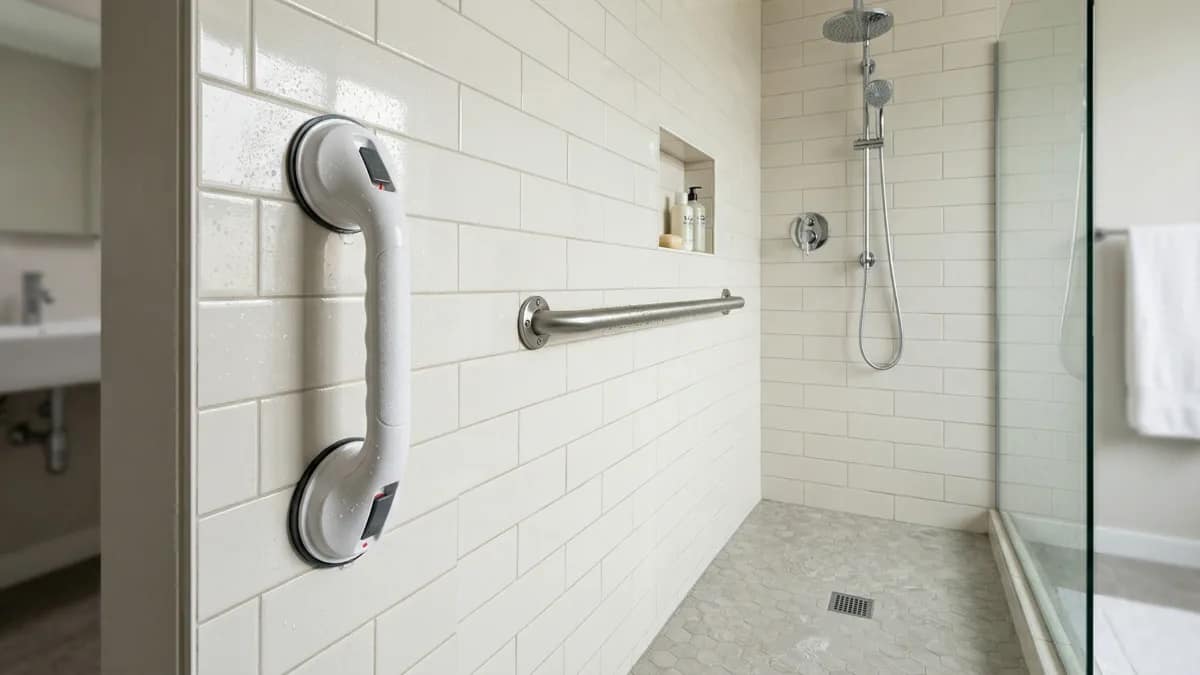
Choosing the best grab bars for shower safety depends on how reliably they perform under real conditions, especially in wet and high-risk environments.
Mounting Type (Most Important)
Permanent grab bars provide the highest level of safety because they are secured into studs or proper anchors and can support full body weight.
Suction grab bars can be useful when drilling isn’t possible, but they should only be used for balance support and not as a primary safety solution.
Example:
A suction grab bar may feel helpful in a shower where drilling is not allowed, but if the user may lean hard on it during a slip or use it to help stand back up, that situation already points toward a permanently mounted bar being the safer choice.
For a clearer understanding of installation requirements, see do grab bars need to be screwed in.
Material and Durability
Stainless steel is the most reliable choice for shower use because it resists corrosion, maintains strength over time, and performs well in wet environments.
That matters in showers because the bar may be exposed to constant moisture while also handling repeated force during entry, turning, and balance correction. A good shower grab bar needs to stay strong not just when new, but after long-term daily use in a wet environment.
If you want a closer look at how different materials affect long-term reliability, this guide on grab bar materials explains what to expect from stainless steel and other common options.
Lower-quality materials may weaken over time, show more wear, or provide less dependable performance when exposed to repeated moisture and regular use.
Length and Coverage
- 36–48 inches → best for continuous support while moving
- 12 inches → best for targeted support in tight spaces
Longer bars reduce the need to release and re-grip, which improves overall stability.
Grip and Comfort
A diameter between 1.25 and 1.5 inches provides the most secure and comfortable grip for most users.
Textured or peened finishes also help maintain control when hands are wet.
Real-Life Setup
In many cases, the safest setup includes more than one grab bar.
Example:
One grab bar near the shower entry can support the first step in and out, while a second bar along the main standing area helps with turning, rinsing, or shifting weight once inside. In many showers, that two-point setup feels safer than expecting one bar to support every movement.
36-Inch vs 48-Inch Grab Bars for Shower Safety
For most showers, a 36-inch grab bar is the better starting point because it provides strong support without requiring as much uninterrupted wall space. It works well when the goal is to create one dependable support zone near the shower entry or along the main standing area.
A 48-inch grab bar makes more sense when the user needs to maintain contact while moving across a wider section of the shower. This can be especially helpful in larger showers or in situations where turning, repositioning, or steady movement happens along a longer wall.
In general, choose a 36-inch bar for balanced everyday shower support and easier fit, and choose a 48-inch bar when longer continuous coverage is more important than compact placement.
Where to Place Grab Bars in a Shower
Placement should match how the shower is used during everyday movement.
- Near the shower entry
Provides support when stepping in and out, where balance is most often lost - Along the main standing area
Helps maintain stability while turning, reaching, or shifting weight - Near seating areas (if used)
Makes sitting down and standing up safer - In small showers
Use shorter bars at key points instead of trying to cover a large area
How to sanity-check the placement:
Picture the exact movement the bar is supposed to support. If the user would need to stretch, twist, or change direction before reaching it, the placement probably needs adjustment.
In a shower, the best spot is usually where the hand naturally reaches during entry, turning, or steadying—not just the first open wall section that seems available.
For a more detailed breakdown of placement strategies, this guide on where to place grab bars in a shower explains how to adjust positioning for different layouts.
When One Grab Bar Is Enough vs When Two Are Better
One grab bar may be enough when support is mainly needed at one movement point, such as stepping into the shower or steadying in one small standing area.
Two grab bars are usually the better choice when support is needed across more than one stage of movement, such as entering the shower, turning, and standing safely once inside.
- One bar is often enough in smaller showers with one clear support point
- Two bars are better when the shower is larger, the fall risk is higher, or the user needs support during both entry and movement
In general, the safer setup is the one that keeps support available through the full movement path rather than only at the beginning or end of it.
Permanent vs Suction Grab Bars for Shower Safety
The biggest difference between grab bars comes down to how they are mounted and how much support they can safely provide.
Permanent Grab Bars
- Fully weight-bearing support when installed correctly
- Secured into studs or proper anchors
- Provide consistent, reliable stability in wet conditions
- Best choice for daily use and higher fall-risk situations
Suction Grab Bars
- Designed for balance support only, not full body weight
- Rely on smooth, non-porous surfaces to maintain suction
- Can lose grip over time and require regular checking
- Useful for temporary setups or when drilling isn’t possible
Key Takeaway
- Permanent grab bars = primary safety solution
- Suction grab bars = secondary or temporary support only
If you’re considering suction options, this guide on are suction grab bars safe for seniors explains when they can be used safely and when they should be avoided.
Once you understand how each type performs, the next step is choosing the right option based on your specific situation and level of support needed.
Which Type of Grab Bar Is Right for Your Shower
Choosing the right grab bar becomes much easier when you match the type to how the shower is actually used.
- Choose a permanent grab bar if daily support is needed, fall risk is higher, or the bar may need to handle significant weight during real movement
- Choose a suction grab bar only when drilling is not possible and the need is limited to light balance support on a suitable smooth surface
- Choose a shorter bar when the shower is tight and support is needed at one exact point
- Choose a longer bar when the user needs more continuous support while moving, turning, or repositioning
The key is to choose based on real support needs, not just convenience. In most cases, a permanent grab bar is the better long-term choice for shower safety.
When Grab Bars Alone Are NOT Enough
Grab bars improve safety, but they are not always enough on their own.
- Users with limited strength or mobility
May need additional support such as a shower chair or assistance - High fall-risk situations
Require more than a single support point - Overreliance on suction grab bars
Can be risky since they are not designed for full weight support - Unsafe shower environments
Slippery floors, poor lighting, or clutter can increase risk even with grab bars
The safest setup usually combines grab bars with other adjustments to create a more stable and controlled environment.
How to Use Grab Bars Safely
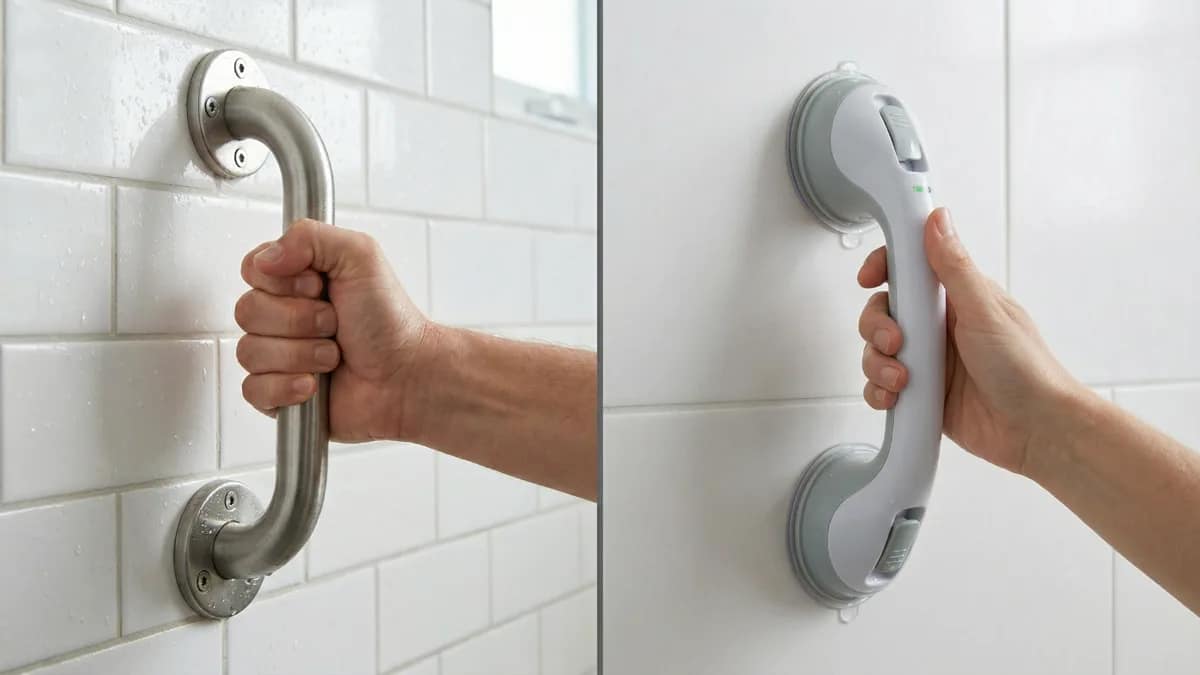
Using grab bars correctly is just as important as choosing the right one.
- Install permanent bars properly
Always secure into studs or use proper anchors - Check suction grab bars regularly
Test before each use to ensure suction is still secure - Use on the right surfaces
Suction bars only work on smooth, non-porous materials - Avoid misuse
Do not rely on suction bars for full body weight
How to do a quick safety check:
Before relying on the bar, press on it in the same direction it would be used during a real movement. If a suction bar shifts, lifts, or feels uneven, do not use it until it is removed and reattached correctly.
For permanent bars, any visible looseness, wall movement, or unusual wobble should be treated as a warning sign that the installation needs to be checked.
Regular checks and proper installation are key to making sure your grab bar remains safe and reliable over time.
If you’re unsure how to confirm stability, this guide on how to test grab bar stability explains simple ways to check for movement or weakness.
What I Recommend
For most showers, the safest and most reliable choice is the Moen 36-inch stainless steel grab bar.
It provides true weight-bearing support, performs consistently in wet conditions, and offers a practical balance between coverage and fit for most standard shower layouts.
For long-term shower safety, a permanently installed bar like this is usually the strongest choice because it gives dependable support exactly when it is needed most.
Final Thoughts
Shower safety depends on more than just adding a grab bar—it depends on choosing the right type, placing it correctly, and using it in a way that matches real daily needs.
Permanent grab bars provide the highest level of protection and should be the default choice whenever possible. Suction options can still help, but only when their limitations are clearly understood.
A well-planned setup, even with a simple combination of properly placed grab bars, can significantly reduce fall risk and make everyday use more stable and predictable.
FAQ
Q: What is the safest type of grab bar for a shower?
A: Permanent wall-mounted grab bars are the safest option because they are securely installed and can support full body weight in wet conditions.
Q: Are suction grab bars safe to use in showers?
A: They can be safe for light balance support if installed correctly, but they should not be used for full weight-bearing support.
Q: Where should grab bars be placed in a shower?
A: Grab bars are typically placed near the entry point, along the main standing area, and near seating areas to support the most common movements.
Q: What shower surfaces are suitable for suction grab bars?
A: Suction grab bars work best on smooth, flat, non-porous surfaces such as large smooth tile, glass, or glossy acrylic and fiberglass without texture. They are much less reliable on grout lines, textured tile, stone, uneven surfaces, or shower walls with curves or surface variation. If the suction cups cannot make a full, flat seal, the surface should be treated as unsuitable.
Q: How often should grab bars be tested?
A: Suction grab bars should be checked before each use, and permanent grab bars should be inspected periodically to ensure they remain secure.
