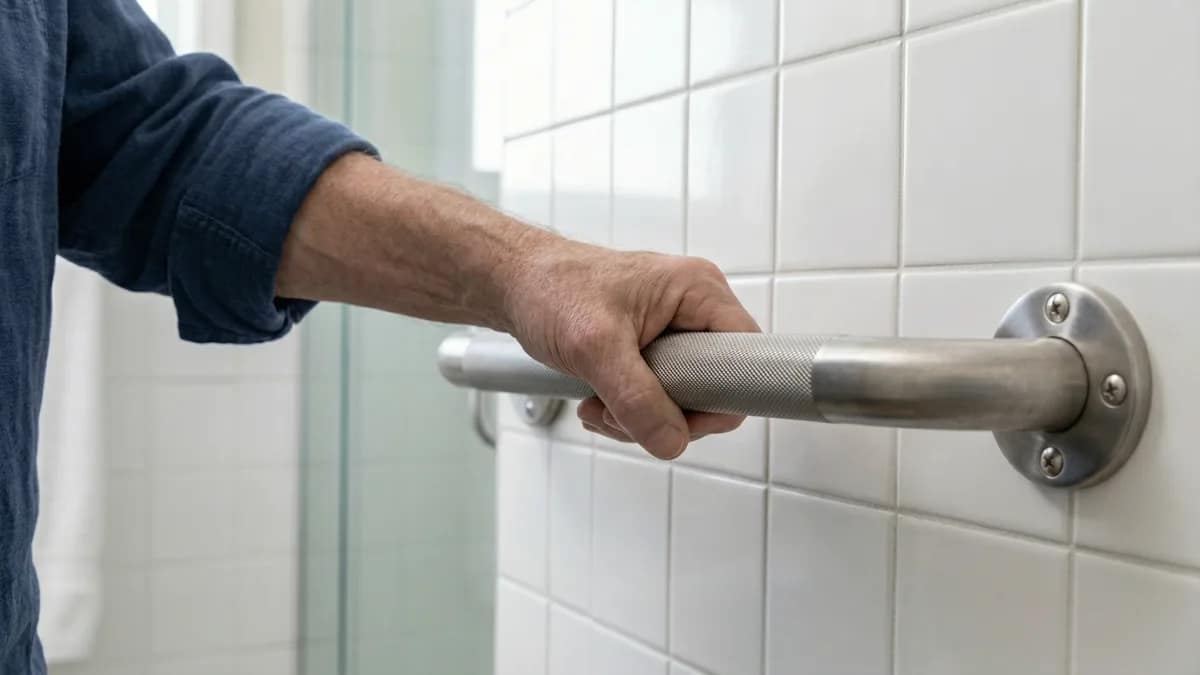
Bathrooms are one of the most common places where falls occur, especially in situations that require standing, turning, or transferring weight.
Standard grab bars may not provide sufficient support in situations where significant weight or force is applied.
The best heavy duty grab bars are designed to handle greater force, whether due to higher body weight, reduced mobility, or the need for consistent support during daily use.
Choosing the right type can help reduce risk and improve confidence in high-use areas like showers and toilet spaces.
Disclosure: As an Amazon Associate, I earn from qualifying purchases. This post may contain affiliate links. If you purchase through these links, I may earn a small commission at no extra cost to you. I only recommend products I would feel comfortable using in my own home. Learn more.
Quick Answer: What Are the Best Heavy Duty Grab Bars?
The best heavy duty grab bars are reinforced, wall-mounted bars designed to support higher weight loads and provide stable, full-body support in high-risk situations.
- Designed to handle 300–500+ lbs or more when properly installed
- Permanent mounting into studs provides the highest reliability
- Stainless steel construction offers long-term durability
- Longer bars (36–48 inches) improve continuous support
- Suction grab bars are not suitable for heavy-duty use
For most situations, a permanently installed grab bar with strong mounting and durable material provides the highest level of support. The right choice depends on how much weight will be applied and how the space is used daily.
Which Heavy Duty Grab Bar Makes the Most Sense?
This table compares the top options based on support level, ideal use case, and the trade-offs that matter most in real-world heavy-duty setups.
| Product | Best Use Case | Support Level | Why It Stands Out | Watch-Out | Action |
|---|---|---|---|---|---|
| Moen 36-Inch Stainless Steel Grab Bar | Most users who need strong daily support in showers or toilet areas | Very High | 500-lb capacity, trusted build quality, and peened grip for better wet-hand control | Still depends on proper stud or anchor installation for full heavy-duty performance | Check on Amazon |
| Moen 48-Inch Stainless Steel Grab Bar | Users who need continuous support while moving or repositioning along the wall | Very High | Long 48-inch coverage reduces release-and-regrip movement in larger spaces | Needs substantially more wall space than shorter bars | Check on Amazon |
| Vive 12-Inch Grab Bar | Tight spaces that still need strong targeted support at key points | High | Compact size fits narrow placements while still offering 440-lb support | Shorter bar limits coverage and works best for one exact support zone | Check on Amazon |
| Amazon Basics 24-Inch Grab Bar | Budget-conscious buyers who still want dependable heavy-duty support | High | 500-lb capacity and stainless steel construction at a lower price point | More basic finish and less premium presentation than top-tier models | Check on Amazon |
| Delta 18-Inch Contemporary Grab Bar | Visible installations where appearance matters but strong support is still needed | High | Modern polished design with 450-lb support for style-conscious bathrooms | Higher price for a shorter bar with less overall coverage | Check on Amazon |
Note: Heavy duty grab bars must be securely installed into studs or proper anchors to safely support full body weight. Incorrect installation can significantly reduce their effectiveness.
Best Heavy Duty Grab Bars by Situation
Choosing the right grab bar depends on how much support is needed, how the bathroom is used, and where the bar will be installed.
Best overall for maximum safety:
The Moen 36-inch stainless steel grab bar is the most reliable choice for most bathrooms. It provides strong, consistent support for daily use and works well in both shower and toilet areas where stability is essential.
Best for maximum support and movement:
The Moen 48-inch grab bar is ideal for users who need continuous contact while moving or repositioning. The extended length allows you to maintain grip across a wider section of the wall, improving stability during movement.
Best for small spaces:
The Vive 12-inch grab bar works well in tight areas where a longer bar would not fit. It provides targeted support at key points such as shower entry or near corners.
Best budget option:
The Amazon Basics 24-inch grab bar offers strong, reliable support at a lower cost. It’s a practical choice for standard installations or as a secondary grab bar where full-length coverage is not needed.
Best designer option:
The Delta 18-inch contemporary grab bar is ideal for bathrooms where appearance matters. It combines modern design with solid support, making it suitable for visible installations without compromising safety.
Below is a closer look at each recommended grab bar, including how they perform in real-life use and which situations they are best suited for.
Best Heavy Duty Grab Bars (Top Picks)
BEST OVERALL
Moen 36-Inch Stainless Steel Grab Bar
This is the best overall pick because it gives most bathrooms the strongest balance between heavy-duty support, dependable daily usability, and practical length. It is long enough to provide meaningful coverage, but still easier to fit than an extra-long bar in many shower and toilet-area layouts.
Best for: Most users who need strong, reliable daily support in showers, toilet areas, or other high-use bathroom zones.
Watch-outs: It still depends completely on proper installation into studs or approved anchors, so the bar is only as strong as the mounting behind it.
Why it stands out:
- Supports up to 500 lbs when properly installed
- 36-inch length gives strong daily support without requiring as much wall space as a 48-inch bar
- Peened finish improves grip in wet conditions
- Trusted Moen construction with corrosion-resistant stainless steel
A strong default choice when safety, consistency, and everyday heavy-duty support matter most.
BEST FOR EXTENDED SUPPORT
Moen 48-Inch Stainless Steel Grab Bar
This is the best choice when continuous support matters more than compact fit. The 48-inch length gives a much longer grip path, which can make movement, repositioning, and steady wall contact feel more controlled in larger showers or longer support zones.
Best for: Users who need to maintain contact while moving along the wall instead of relying on one shorter support point.
Watch-outs: It needs significantly more wall space than shorter bars, so it is not the best fit for tighter layouts or highly interrupted wall sections.
Why it stands out:
- 48-inch length provides continuous grip coverage across a wider area
- Supports up to 500 lbs when properly installed
- Strong option for movement-heavy shower or transfer zones
- Trusted stainless steel Moen construction for long-term heavy-duty use
Best when the main priority is longer continuous support rather than compact placement.
BEST FOR SMALL SPACES
Vive 12-Inch Grab Bar
This is the best compact heavy-duty option when a longer bar simply will not fit. It gives strong targeted support at key points like shower entry, corners, or narrow wall sections while still offering a higher-duty feel than typical compact bars.
Best for: Tight spaces that still need strong support at one exact point rather than long continuous coverage.
Watch-outs: The short length limits the support zone, so it works better for targeted use than for movement across a wider area.
Why it stands out:
- Compact 12-inch design fits narrow installations more easily
- Supports up to 440 lbs
- Can be installed vertically, horizontally, or diagonally depending on the layout
- Available in multiple finishes for more flexible bathroom matching
A smart choice when heavy-duty support is needed in one specific spot rather than across a long wall.
BEST BUDGET OPTION
Amazon Basics 24-Inch Grab Bar
A practical budget pick for buyers who want strong heavy-duty support without paying for a premium brand finish. It covers the core needs well and works as a strong value-focused fixed grab bar.
- Supports up to 500 lbs when properly installed
- 24-inch length works well in many standard bathroom setups
- Strong value for a stainless steel heavy-duty grab bar
Best for: Budget-conscious buyers who still want dependable heavy-duty support.
BEST DESIGNER OPTION
Delta 18-Inch Contemporary Grab Bar
A strong pick for visible installations where appearance matters as much as dependable support. It blends more naturally into a polished bathroom while still offering genuinely heavy-duty performance.
- Supports up to 450 lbs
- Compact 18-inch size fits visible shower or toilet-area installs well
- Modern polished design looks less clinical than many standard bars
Best for: Style-conscious bathrooms where the grab bar will remain visible and finish matters.
How to Choose the Best Heavy Duty Grab Bars
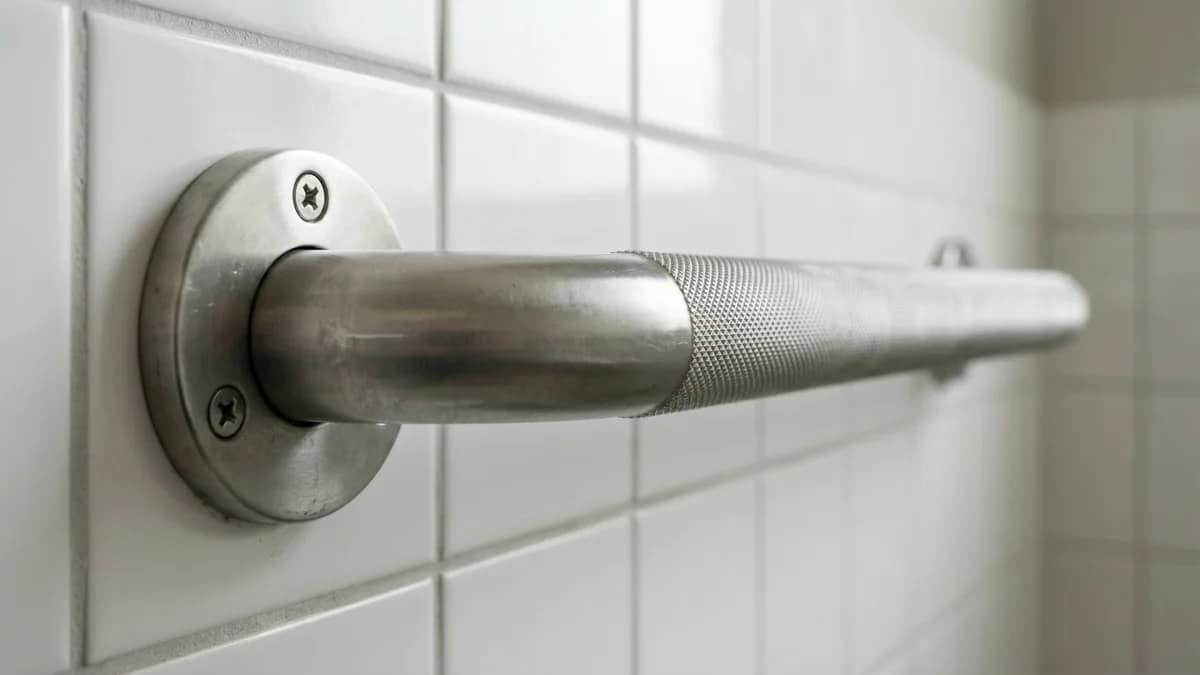
Choosing the best heavy duty grab bars requires focusing on factors that directly affect how much support they can provide during real use.
In situations like stepping into a shower or standing up from a seated position, the bar may need to handle a significant portion of body weight.
Weight Capacity
The most important factor is how much weight the grab bar can safely support. Heavy duty models are designed for higher load ranges, which is especially important for users who rely on the bar for full support rather than light balance.
Example:
When someone pushes up from a toilet or catches themselves during a slip, the force on the grab bar can be much greater than a simple handhold suggests. That is why a bar that seems “strong enough” on paper may still be the wrong choice if the setup is expected to handle real body-weight support.
To better understand how load limits affect safety, see how much weight grab bars can hold.
Mounting Strength
A grab bar is only as strong as how it is installed. Securing it into wall studs or using proper anchors is essential for handling full body weight.
In real use, mounting strength becomes critical during movements like standing up or catching balance quickly, where sudden force is applied.
Proper installation is critical for safety, especially when the bar is used for full support. You can learn more about safe setup in this guide on how to install grab bars in studs.
Material
Stainless steel is the most reliable material for heavy-duty grab bars because it combines structural strength, corrosion resistance, and long-term durability.
In bathrooms, those qualities matter because the bar may be exposed to constant moisture while also handling repeated force over time.
That makes stainless steel especially well suited for showers and other high-use areas where both wet conditions and weight-bearing use are common.
A heavy-duty bar needs to stay strong not just when it is new, but after long-term daily use in a demanding environment.
Grip Texture and Diameter
Grip texture and bar diameter matter more in heavy-duty use than many people expect. When the bar is used with wet hands or during a forceful movement, a smoother finish can feel less secure than a textured one.
A slightly textured or peened surface can improve grip confidence, especially in showers where hands may be wet or soapy. Diameter also matters because a bar that is too narrow or too thick can feel harder to control during full-support use.
In general, a grab bar should feel secure in the hand before force is applied, not just once weight is already shifting onto it. In heavy-duty situations, that difference can matter more than appearance alone.
Length and Coverage
- 36 inches → balanced support for most situations
- 48 inches → better for movement and repositioning
Longer bars allow continuous contact while moving, which reduces the need to release and re-grip. This can make a noticeable difference when turning or shifting position in a shower.
Real-Life Setup
In many cases, using more than one grab bar provides better support than relying on a single placement.
How many grab bars are needed depends on the layout and how the space is used, as explained in how many grab bars does a bathroom need.
Example:
One heavy-duty grab bar near the shower entry can help with the transition in and out, while a second bar along the standing area supports turning, rinsing, or repositioning once inside. In many bathrooms, that kind of two-point setup feels more stable than expecting one bar to handle every movement.
Choosing the right combination often leads to a safer and more practical setup.
36-Inch vs 48-Inch Heavy Duty Grab Bars
For most bathrooms, a 36-inch heavy-duty grab bar is the better starting point because it provides strong support without demanding as much wall space. It works well when the goal is to create one dependable support zone near a toilet, shower entry, or standing area.
A 48-inch bar makes more sense when the user needs to maintain contact while moving along the wall. This can be especially helpful in larger showers or in situations where turning and repositioning happen across a wider area.
In other words, choose a 36-inch bar for balanced everyday support and easier fit, and choose a 48-inch bar when longer continuous coverage is more important than compact placement.
Where to Install Heavy Duty Grab Bars
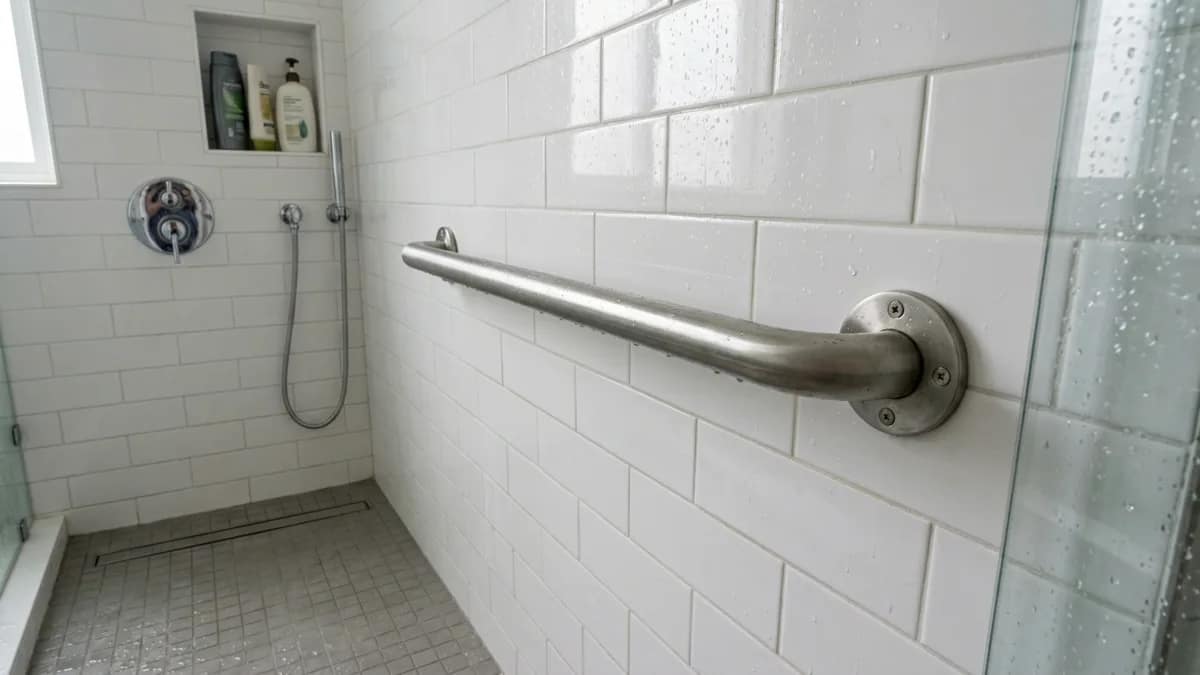
Heavy duty grab bars are most effective when placed in locations where the most force is applied during everyday use.
- Shower entry
Provides support when stepping in and out, which is one of the most common points where balance is lost - Standing area in the shower
Helps maintain stability while turning, reaching, or shifting weight - Toilet area
Assists with sitting down and standing up, where significant force is often applied - Bathtub entry
Supports balance during transitions over the tub edge
How to sanity-check the placement:
Before choosing the final location, picture the exact movement the bar is supposed to support. If the user would need to stretch, twist, or take an extra step before reaching it, the placement probably needs adjustment.
Heavy-duty bars work best when they are available at the exact moment force is applied—during entry, standing, turning, or weight transfer—not just in a spot that looks convenient on the wall.
In real use, these are the moments when users rely most on support. Placing grab bars in these areas ensures they are available exactly when needed.
If you’re unsure about exact placement, this guide on where to install grab bars in a bathroom explains the safest positioning for different situations.
Common Mistakes to Avoid
Even a strong grab bar can fail to provide safety if it is installed or used incorrectly. Avoiding common mistakes can make a significant difference in overall effectiveness.
- Installing only into drywall
This reduces the strength of the installation and increases the risk of failure under load - Using suction grab bars for heavy-duty needs
These are not designed for full weight support and can create a false sense of security - Incorrect placement
A poorly placed grab bar may not be available when support is actually needed - Underestimating required support
Choosing a standard grab bar when more support is needed can increase fall risk
In many cases, these issues are not immediately visible but become noticeable during real use. Addressing them early helps ensure the setup is both safe and reliable.
When Do You Need a Heavy Duty Grab Bar?
Heavy duty grab bars are most useful in situations where more force is placed on the bar during everyday movements.
- Higher body weight users
Require stronger support to handle increased load - Limited mobility or balance
Leads to greater reliance on the grab bar for stability - Recovery or rehabilitation situations
Often involve frequent use of support during movement - Caregiver-assisted use
Adds additional force when helping with transfers
For example, standing up from a seated position or stepping into a shower can place significant pressure on the bar. In these situations, a heavy duty option provides a safer and more stable solution.
When in doubt, choosing a stronger grab bar is generally the safer option.
When Heavy Duty Grab Bars May Not Be Necessary
Heavy duty grab bars provide the highest level of support, but they are not always required in every bathroom setup.
They may be more than necessary when:
- only light balance support is needed
and the user is not placing major weight on the bar - the environment is lower risk
with less need for transfers, push-off force, or sudden support - a standard permanently mounted grab bar is already sufficient
for the user’s weight, mobility, and daily movement patterns - the setup is temporary or low-demand
and maximum weight-bearing capacity is not the main requirement
The goal is not always to choose the strongest bar available. It is to choose a bar that matches the level of support actually needed in daily use.
What I Recommend
For most situations, the Moen 36-inch stainless steel grab bar is the strongest overall choice because it gives the best balance between heavy-duty support, practical length, and everyday usability.
- Choose the 36-inch Moen bar if you want the best all-around option for daily support in shower or toilet areas
- Choose the 48-inch Moen bar if longer continuous support during movement is the top priority
- Choose the Vive 12-inch bar if wall space is tight but a strong targeted support point is still needed
For budget-focused setups, the Amazon Basics 24-inch grab bar is a practical value option. For visible installations where appearance matters more, the Delta 18-inch contemporary grab bar is the better fit.
The safest choice is the one that matches how the bar will actually be used, where the force will be applied, and how securely it can be installed.
Final Thoughts
Heavy duty grab bars are designed for situations where consistent, weight-bearing support is needed. Choosing the right one can significantly improve safety, especially in areas like showers where balance is more difficult to maintain.
The most important factors are strength, proper installation, and placement. A well-installed grab bar in the right location will always be more effective than a stronger bar placed incorrectly.
By focusing on real usage—how you move, where support is needed, and how much force will be applied—you can create a setup that feels both safe and natural to use.
FAQ
Q: What makes a grab bar “heavy duty”?
A: Heavy duty grab bars are designed to support higher weight loads and are typically installed securely into studs for full body weight support.
Q: How much weight can heavy duty grab bars hold?
A: Many heavy duty grab bars can support 300–500 lbs or more when installed correctly, depending on the mounting and structure.
Q: Do heavy duty grab bars need to be installed into studs?
A: Ideally, yes. Stud mounting usually provides the strongest and most reliable support for heavy-duty use. Some grab bars can also work with approved anchor systems, but the mounting method still has to match the wall type and the level of force the bar is expected to handle.
Q: Are suction grab bars considered heavy duty?
A: No, suction grab bars are not designed for heavy-duty use and should only be used for light balance support.
Q: Where should heavy duty grab bars be installed?
A: They should be placed in areas where the most force is applied, such as shower entry points, standing areas, and near toilets.