
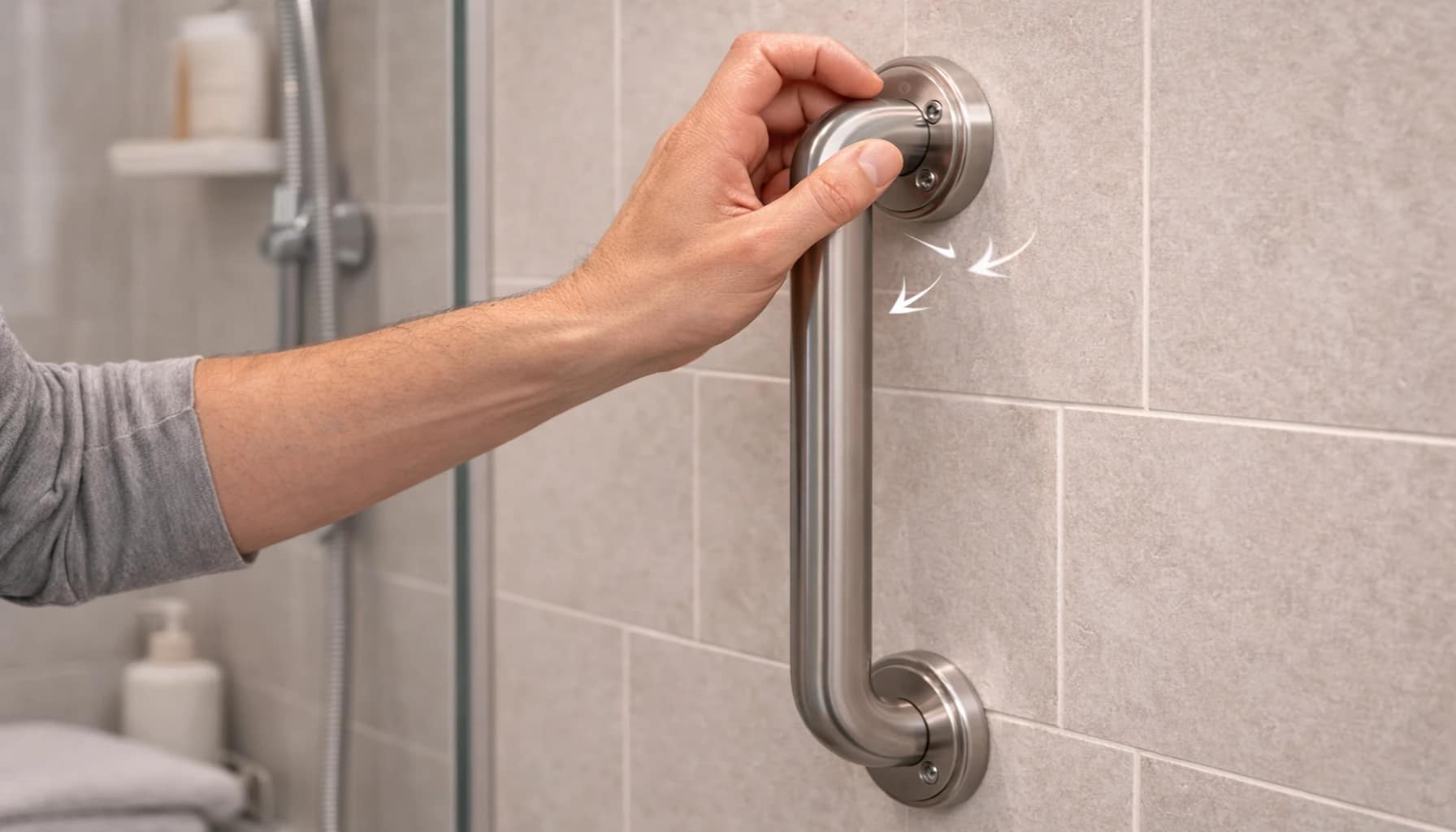
Grab bars are one of the most important safety features in bathrooms, helping provide support when stepping into a shower, standing up from a toilet, or maintaining balance on wet floors.
However, a grab bar is only useful if it is securely installed.
Over time, mounting hardware can loosen or installation mistakes can reduce the strength of the bar. Because of this, it is important to occasionally check whether a grab bar is still stable.
Learning how to test grab bar stability can help ensure the bar will provide reliable support when it is needed most.
A quick stability check only takes a few minutes and can help identify potential problems before they become safety risks.
Disclosure: As an Amazon Associate, I earn from qualifying purchases. This post may contain affiliate links. If you purchase through these links, I may earn a small commission at no extra cost to you. I only recommend products I would feel comfortable using in my own home. Learn more.
On This Page
- Why Testing Grab Bar Stability Is Important
- When You Should Test Grab Bar Stability
- Step-by-Step: How to Test Grab Bar Stability
- Signs a Grab Bar May Not Be Secure
- When Grab Bars May Become Loose
- How Much Force Should a Grab Bar Withstand?
- What to Do if a Grab Bar Feels Loose
- What I Recommend
- FAQ
- Final Thoughts
Quick Answer
To test grab bar stability, apply firm pressure in different directions and check for any movement, looseness, or unusual sounds.
A properly installed grab bar should:
- feel completely solid when pulled or pushed
- show no movement at the mounting points
- remain firmly attached to the wall
If the bar shifts, creaks, or feels loose, it should be inspected and repaired before being used for support.
Why Testing Grab Bar Stability Is Important
Testing grab bars periodically is an important part of maintaining bathroom safety, especially in areas where slips are more likely to occur.
Grab bars are often used during moments when a person suddenly needs support.
This is why knowing how to check if a grab bar is secure can be just as important as installing the bar correctly.
For example:
- catching balance when slipping
- standing up from a seated position
- stepping into or out of a shower
In these situations, the user may apply significant force to the bar very quickly.
Understanding how to test grab bar stability helps ensure the bar can safely support body weight during these movements.
Even a high-quality grab bar can become unsafe if the mounting hardware loosens or if the wall anchors weaken over time.
A quick stability check can help identify these problems before the grab bar is needed in an emergency.
When You Should Test Grab Bar Stability
Grab bars do not usually require constant maintenance, but it is still important to check them occasionally.
Knowing how to test grab bar stability becomes especially important in certain situations.
You should test grab bars:
- after the initial installation
- after bathroom renovations
- if the grab bar has been heavily used
- if you notice movement or noise when using the bar
- periodically as part of general bathroom safety checks
Regular inspections can help ensure the grab bar continues to provide reliable support.
Even a small amount of looseness should be addressed before relying on the bar for balance.
Step-by-Step: How to Test Grab Bar Stability
Testing a grab bar does not require special tools. A simple manual check can often reveal whether the bar is securely installed.
These checks should simulate normal support pressure. Avoid applying excessive force that could damage the wall or mounting hardware.
The following quick checks can help confirm whether a grab bar is still securely mounted.
1. Visually Inspect the Mounting Points
Begin by looking at the mounting plates where the grab bar attaches to the wall.
Check for:
- loose screws
- gaps between the flange and wall
- cracked wall surfaces
Any visible damage may indicate the bar is not securely mounted.
2. Apply Gentle Pressure First
Place one hand on the grab bar and apply gentle downward pressure.
This first check helps determine whether the bar feels stable before applying stronger force.
The bar should feel firmly attached to the wall.
3. Pull the Grab Bar Toward You
Next, grip the bar firmly and pull it toward you as if you were using it for balance.
This simulates how the bar would be used in real situations.
A stable grab bar should not shift or flex during this test.
4. Push the Grab Bar Downward
Push down on the bar as if you were using it to stand up.
This test helps determine whether the mounting hardware can support vertical force.
Again, the bar should remain solid and stable.
5. Listen for Movement or Noise
While applying pressure, listen for sounds such as:
- creaking
- clicking
- wall movement
These sounds can indicate that the mounting hardware is loosening or the bar is pulling away from the wall.
Signs a Grab Bar May Not Be Secure
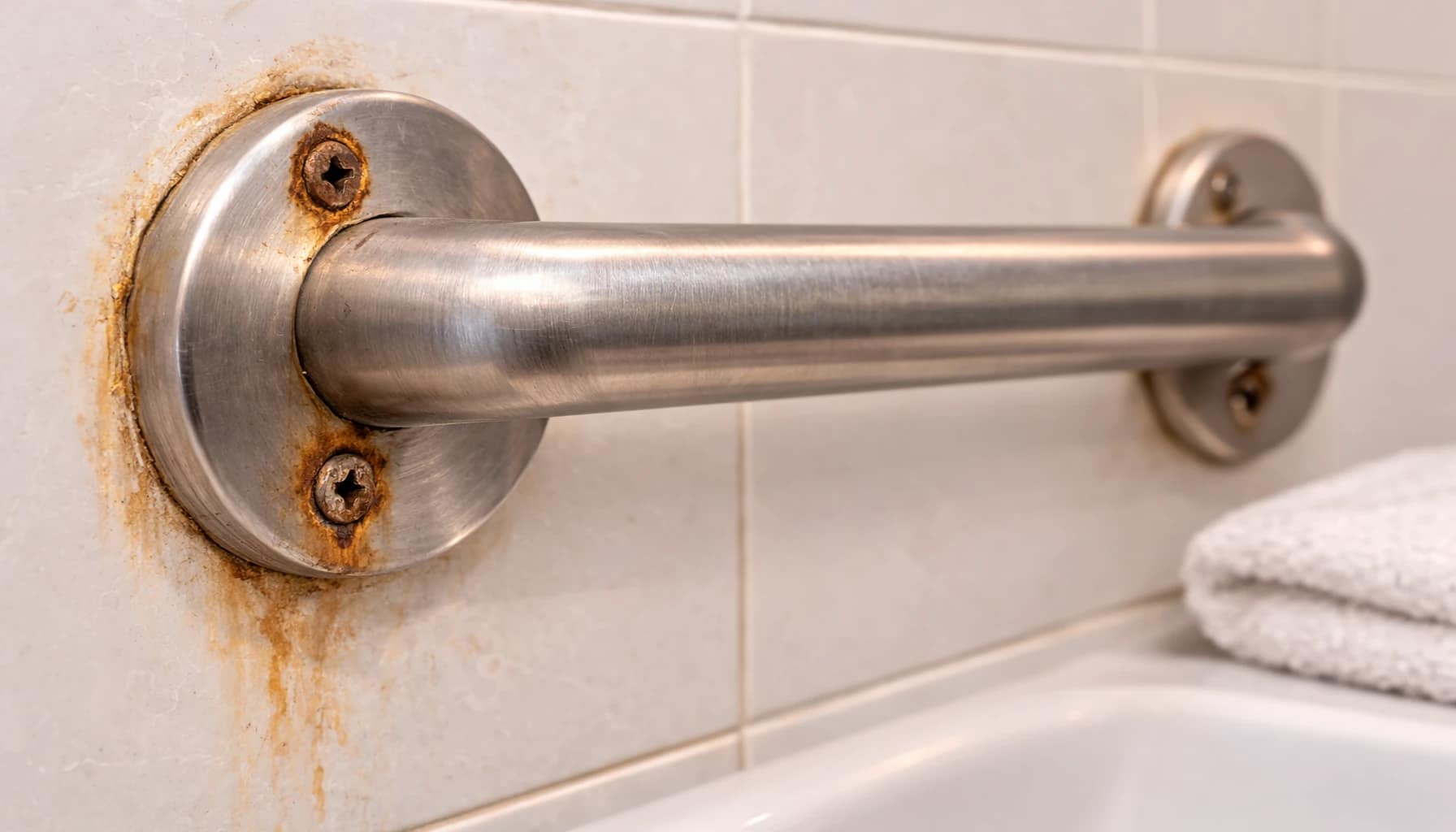
Several warning signs can indicate that a grab bar may not be properly secured.
Common signs include:
- visible movement at the mounting points
- screws that appear loose
- the bar rotating slightly when pressure is applied
- cracking or damage around the wall mounts
- a gap forming between the mounting plate and the wall
If any of these issues appear, the grab bar should be inspected before being used again.
When learning how to test grab bar stability, paying attention to these warning signs is just as important as performing the physical pressure tests.
Ignoring small problems can allow the issue to worsen over time.
When Grab Bars May Become Loose
Even properly installed grab bars can become loose over time due to repeated use, wall movement, or moisture exposure.
Some common causes include:
- repeated heavy use
- wall anchors loosening
- improper installation
- moisture affecting mounting hardware
In bathrooms with high humidity, corrosion or moisture damage may also affect mounting components.
Performing occasional stability checks can help detect these problems early.
How Much Force Should a Grab Bar Withstand?
Grab bars are designed to support significant weight when installed properly.
Accessibility guidelines typically require grab bars to support at least 250 pounds of force, which is explained in more detail in how strong grab bars should be.
This ensures the bar can safely support a person who suddenly grabs it to prevent a fall.
When testing a grab bar, you should apply firm pressure similar to how the bar would be used in real life.
Understanding how to test grab bar stability does not mean trying to apply excessive force. Instead, the goal is to confirm that the bar remains solid and does not shift under normal support pressure.
If the bar moves during this test, it may need to be tightened or reinstalled.
What to Do if a Grab Bar Feels Loose
If a grab bar moves during testing, it should not be relied on for support until the issue is fixed.
Several steps can help address the problem:
- tightening mounting screws
- replacing worn or damaged hardware
- reinstalling the bar into wall studs
- repairing damaged drywall around the mounting area
In many cases, reinstalling the grab bar into studs provides the strongest and safest solution.
Issues like this often occur when mounting grab bars on drywall without proper support, which can lead to instability over time.
What I Recommend
Testing grab bars after installation and periodically over time helps ensure they remain stable and safe to use.
A quick stability test takes only a few minutes but can help prevent serious accidents by confirming the bar will hold firm when sudden support is needed.
In addition to testing, it is important to ensure the grab bar itself is designed for safety and durability.
In situations where higher force or repeated use is expected, choosing options built for greater load capacity—such as grab bars designed for heavy-duty support—can provide more reliable long-term performance.
FAQ
How often should grab bars be tested?
It is a good idea to check grab bar stability periodically, especially after installation or if the bar has been heavily used.
Should grab bars move when pressure is applied?
No. A properly installed grab bar should remain completely stable when pushed or pulled.
Can grab bars become loose over time?
Yes. Repeated use, moisture, or improper installation can cause mounting hardware to loosen.
What should I do if a grab bar feels loose?
Stop using the bar until it has been tightened or reinstalled securely.
Do grab bars need to be installed into studs to stay stable?
Installing grab bars into studs typically provides the strongest and most reliable support.
Final Thoughts
Learning how to test grab bar stability is a simple but important step in maintaining bathroom safety.
A properly installed grab bar should feel completely solid when pressure is applied in different directions.
Regularly checking grab bars helps ensure they remain secure and capable of supporting body weight during everyday movements.
If any looseness or movement is detected, the bar should be repaired or reinstalled before it is used again.
