
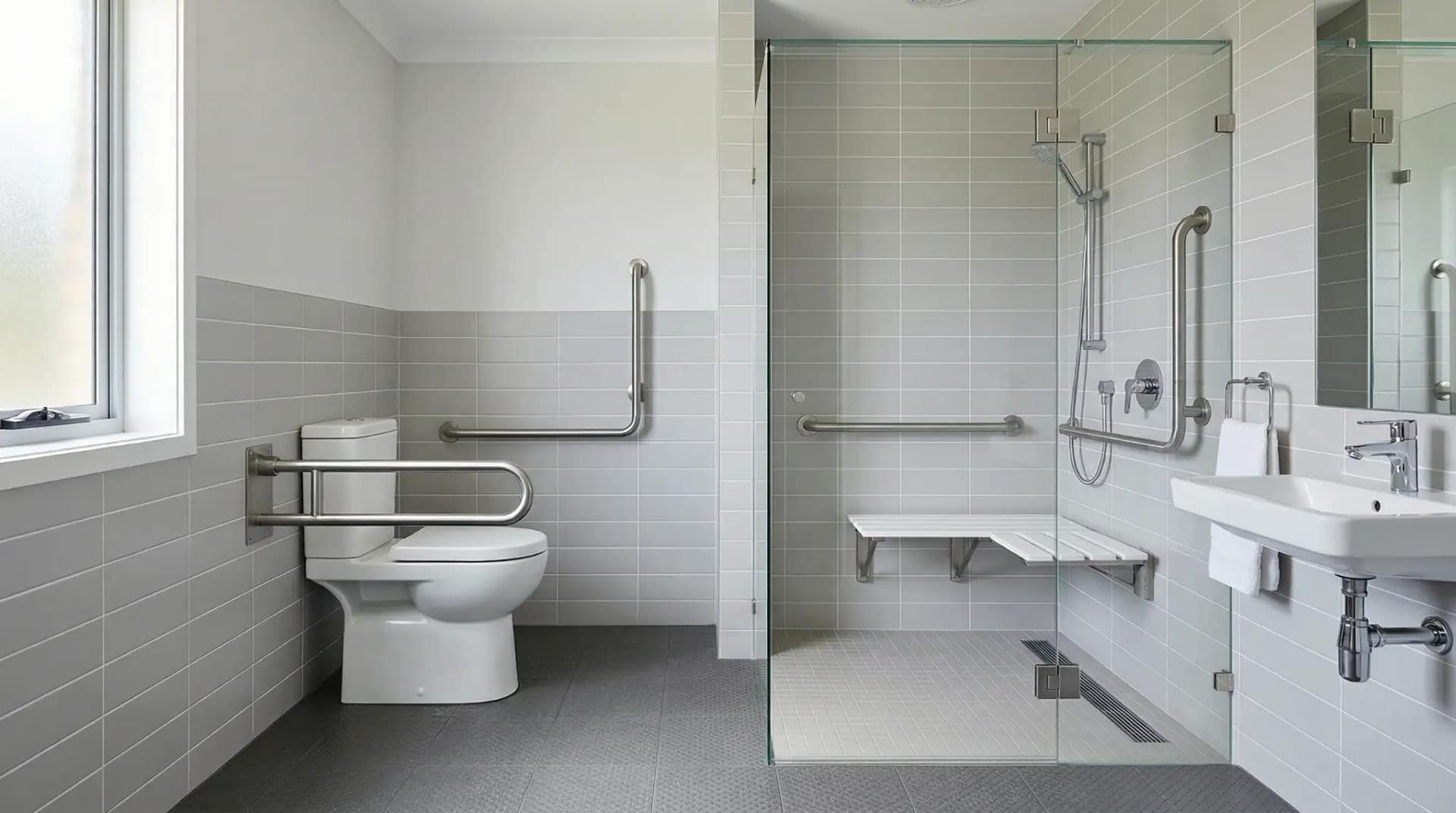
Mobility needs can vary significantly among disabled seniors. Some may experience balance issues, while others may rely on mobility aids such as walkers or wheelchairs.
Because of this, standard grab bar setups may not provide enough support. Placement, type, and design often need to be adjusted to match specific movement patterns and limitations.
Choosing the right grab bars for disabled seniors helps improve stability, support safer transfers, and make daily activities more manageable.
Disclosure: As an Amazon Associate, I earn from qualifying purchases. This post may contain affiliate links. If you purchase through these links, I may earn a small commission at no extra cost to you. I only recommend products I would feel comfortable using in my own home. Learn more.
On This Page
- Why Disabled Seniors Need Specialized Grab Bar Planning
- Common Mobility Challenges and How Grab Bars Help
- Types of Grab Bars for Disabled Seniors
- Which Grab Bar Type Is Best for Different Needs?
- Where to Place Grab Bars for Disabled Seniors
- Key Placement Considerations for Accessibility
- Common Mistakes to Avoid
- Are Grab Bars Enough for Disabled Seniors?
- How to Choose the Right Grab Bars
- What I Recommend
- FAQ
- Final Thoughts
Quick Answer
Grab bars for disabled seniors should be selected based on mobility needs and installed to provide stable support for transfers, balance, and movement while improving accessibility and safety.
- Support transfers such as sitting, standing, and shifting
- Improve stability during movement
- Must match individual mobility needs
- Require proper placement and secure installation
- Often used alongside other support equipment
These grab bars are most effective when chosen based on how movement actually occurs in the space. A setup that works for one person may not work for another without adjustments.
Why Disabled Seniors Need Specialized Grab Bar Planning
Disabled seniors often have different mobility patterns compared to general users. This affects how and where support is needed.
Some may rely on wheelchairs, requiring support at seated height. Others may have limited strength or coordination, making precise placement more important.
Because of these differences, grab bar planning should focus on how movement occurs in real situations rather than following standard layouts.
Common Mobility Challenges and How Grab Bars Help
Mobility challenges can vary, but many involve difficulty with balance, strength, or controlled movement.
- Difficulty standing up or sitting down
- Balance instability during movement
- Limited reach or reduced range of motion
- Need for support during transfers
For example, transferring from a seated position to standing often requires both strength and balance at the same time. Without stable support, this movement can feel unsteady and increase the risk of losing balance.
Grab bars help by providing a stable point of contact during these movements. They reduce reliance on unstable surfaces and improve control during transitions.
Types of Grab Bars for Disabled Seniors
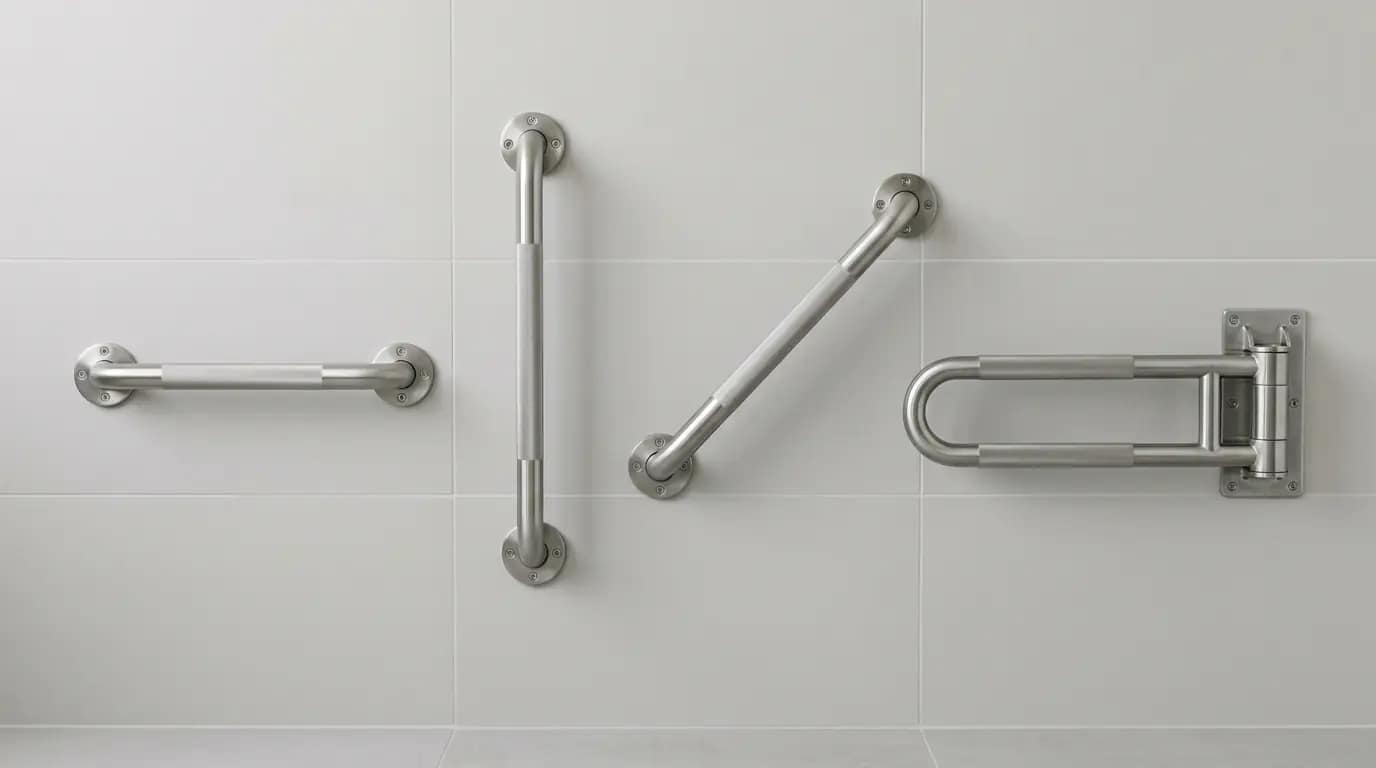
Different grab bar types support different movement patterns and should be selected based on how support is needed.
Horizontal Grab Bars
Horizontal grab bars provide steady support along a wider area and are commonly used for balance.
- Provide continuous support across movement paths
- Suitable for maintaining stability while standing
- Often installed along shower or wall surfaces
These bars allow the hand to remain in contact while moving sideways or adjusting position. This helps maintain consistent balance.
When to use:
Use horizontal grab bars in areas where continuous support is needed, such as along shower walls or near bathtubs.
Vertical Grab Bars
Vertical grab bars support upward and downward movements, making them useful for transitions.
- Require minimal horizontal wall space
- Assist with stepping in and out of showers
- Provide natural hand positioning
The vertical design allows the hand to move along the bar during motion, which supports controlled transitions.
Vertical grab bars are particularly effective near entry points, especially when placed correctly as outlined in where to place vertical grab bars in a shower.
When to use:
Use vertical grab bars near entry points where stepping in or out requires balance and control.
Angled Grab Bars
Angled grab bars combine vertical and horizontal support, offering flexibility in hand positioning.
- Support multiple grip angles
- Assist with both standing and transitioning movements
- Reduce the need for multiple grab bars
This design helps accommodate different movement patterns within a single installation.
When to use:
Use angled grab bars in areas where multiple types of support are needed but space is limited.
Swing Away / Flip-Up Grab Bars
Swing away grab bars can be moved out of the way when not in use, making them useful in tight spaces.
- Provide support when needed
- Maintain open space when folded
- Commonly used near toilets
These bars are especially helpful in layouts where fixed bars would block access or movement, as explained in swing away grab bars for toilets.
When to use:
Use swing away grab bars next to toilets or in areas where flexibility and clearance are important.
Which Grab Bar Type Is Best for Different Needs?
The best grab bar type depends on how support is used during movement.
Horizontal bars are effective for maintaining balance over a wider area, while vertical bars support controlled transitions such as stepping or standing.
Angled bars combine both functions and are useful when movement patterns vary within the same space.
For tight layouts, swing-away grab bars provide support when needed while maintaining open space.
Choosing the right type becomes easier when focusing on how the user moves rather than the type itself.
Where to Place Grab Bars for Disabled Seniors

Placement should reflect how movement actually occurs within the space.
- Shower and bathing areas: Support standing, turning, and washing
- Around toilets: Assist with sitting and standing
- Entry and transition points: Provide balance during movement between areas
Transferring from a wheelchair to a toilet requires stable support at a specific height and position. Proper placement helps stabilize this movement.
For a broader overview of optimal placement across different areas, see where to install grab bars in a bathroom.
Key Placement Considerations for Accessibility
Placement should ensure that grab bars are easy to reach and use in real situations.
- Position within natural reach from seated and standing positions
- Adjust height based on mobility level
- Maintain clear space for movement and mobility aids
- Avoid placements that require twisting or stretching
Placement should always reflect actual movement patterns rather than ideal positioning. A grab bar that is technically well-installed may still be ineffective if it cannot be reached comfortably during use.
For more detailed guidance on adjusting height based on user needs, see grab bar placement height guidelines.
Common Mistakes to Avoid
Using standard placement without considering mobility needs can reduce effectiveness.
Ignoring reach limitations may make grab bars difficult to use during critical movements.
Weak installation can compromise stability and safety.
Overcrowding the space with too many grab bars may limit movement instead of improving it.
Many of these issues can be avoided by understanding the most frequent errors outlined in common grab bar installation mistakes.
Are Grab Bars Enough for Disabled Seniors?
Grab bars provide important support, but they are often part of a larger safety setup.
They are most effective when used alongside other accessibility features that address different aspects of mobility. For example, a grab bar can support balance, but it may not reduce the effort required to stand or sit without additional aids.
In many cases, combining grab bars with equipment such as shower chairs, raised toilet seats, or non-slip flooring creates a more complete and supportive environment.
For individuals who rely on wheelchairs or have limited strength, transfer techniques and surrounding layout also play a key role in safety.
Grab bars should be viewed as one component within a broader system designed to improve stability, accessibility, and ease of movement.
How to Choose the Right Grab Bars
Choosing the right grab bars involves matching the design to the user’s needs and the layout of the space.
Focus on how movement occurs during daily activities. Select grab bar types that support those movements directly.
Placement should be considered first, followed by type and size. A well-placed grab bar is more effective than multiple poorly positioned ones.
A simple way to approach this is to first identify where support is needed, then select the grab bar type that matches that movement, and finally adjust placement to ensure it can be used naturally.
For users who need more reliable support or higher weight capacity, looking at heavy duty grab bars designed for stronger support can help you identify options that provide greater stability in demanding situations.
What I Recommend
Choosing grab bars for disabled seniors should begin with identifying key movement points such as transfers, standing, or stepping into a shower.
First, prioritize areas with the highest risk, such as the shower entry and toilet. These locations typically involve the most demanding movements.
Next, select grab bar types that match those movements. For example, vertical bars for entry support or horizontal bars for continuous balance.
Finally, ensure proper placement and secure installation. A well-placed and stable grab bar provides more benefit than multiple bars placed without a clear purpose.
FAQ
What type of grab bar is best for disabled seniors?
The best type depends on mobility needs, but angled, vertical, and swing-away grab bars are often useful for supporting different movements.
Where should grab bars be installed?
They should be installed in high-use areas such as showers, near toilets, and at key transition points.
Are grab bars enough for wheelchair users?
Grab bars help, but additional equipment such as transfer aids or raised seating may also be needed.
Can grab bars improve independence?
Yes, properly placed grab bars can improve stability and make daily movements safer and more manageable.
Final Thoughts
Grab bars for disabled seniors require a more personalized approach than standard installations. Mobility needs, reach, and strength all influence what works best.
Selecting the right type and placement based on movement patterns can significantly improve both safety and accessibility.
Even a few well-placed grab bars can make daily activities more manageable when they are tailored to actual needs.
