
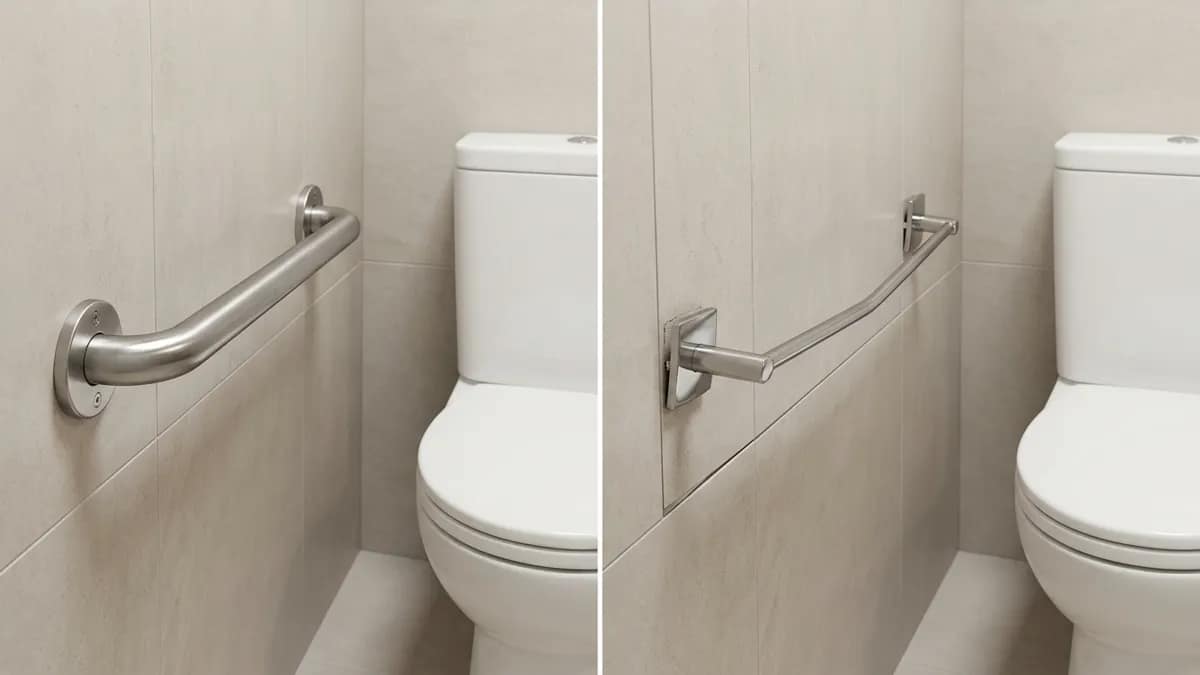
Grab bars and towel bars may look similar at first, but they are built for completely different purposes.
One is designed to support body weight and improve safety. The other is designed only to hold lightweight items like towels.
That difference matters because relying on a towel bar for support can create a serious bathroom safety risk.
If you’re trying to make a bathroom safer, understanding the difference between grab bars vs towel bars is essential.
Disclosure: As an Amazon Associate, I earn from qualifying purchases. This post may contain affiliate links. If you purchase through these links, I may earn a small commission at no extra cost to you. I only recommend products I would feel comfortable using in my own home. Learn more.
On This Page
Quick Answer
Grab bars are safety devices designed to support body weight and help prevent falls, while towel bars are lightweight bathroom fixtures designed only to hold towels and should never be used for support.
- Grab bars are built and installed for load-bearing support
- Towel bars are built only for light household use
- Grab bars should be used anywhere balance support is needed
- Towel bars should never be treated as a substitute for a safety bar
In simple terms, grab bars improve bathroom safety, while towel bars do not provide reliable protection during slips, standing, or balance loss.
Simple decision rule:
- If the bar might ever be used for balance or support, it must be a grab bar
- If the fixture is only intended to hold towels, it should never be relied on for safety
What Is a Grab Bar?
A grab bar is a safety feature designed to provide support, balance, and stability—especially in high-risk areas like bathrooms.
But what makes it different from a regular bar isn’t just how it looks—it’s how it’s built and installed.
Most grab bars:
- are made from durable materials like stainless steel
- are rated to support significant weight (often 250–500 lbs)
- are mounted using secure hardware designed for load-bearing support
They’re not just “attached” to the wall—they’re anchored in a way that allows them to handle real pressure.
In everyday use, that means they can support:
- stepping into a shower
- standing up from a toilet
- catching balance during a slip
That’s a big difference from standard bathroom fixtures.
If you want a clearer picture of that difference, it helps to understand how much weight grab bars can hold, because that is where the structural difference becomes most obvious.
What Is a Towel Bar?
A towel bar is a simple bathroom fixture designed to hold towels and other lightweight items.
Most towel bars are built with:
- lightweight metal or hollow tubing
- small mounting brackets
- basic anchors or screws
They’re designed to handle minimal load—usually just a few pounds from a damp towel.
The issue is that they often look stronger than they actually are.
Because they’re mounted to the wall and feel firm when lightly pulled, it’s easy to assume they can support more weight than they’re designed for. But under sudden pressure—like someone losing balance—they’re not built to hold up.
That difference between “feels sturdy” and “is actually load-bearing” is what makes towel bars risky in safety situations.
Why Towel Bars Are Not Safe for Support
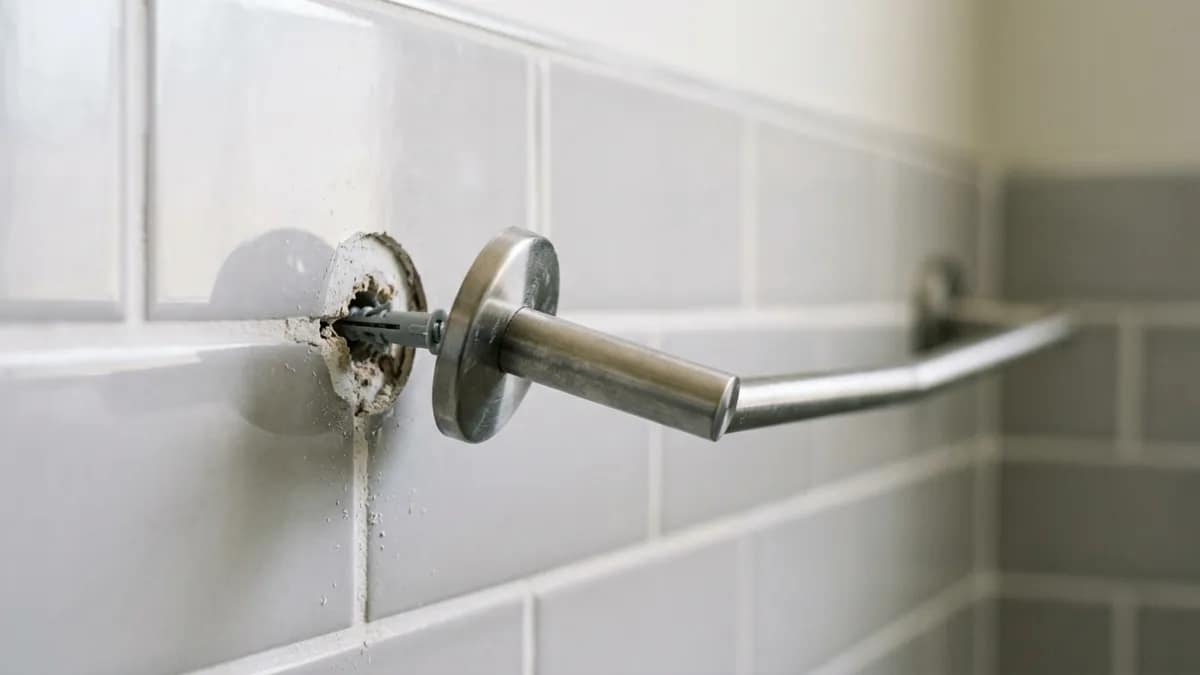
This is one of the most common bathroom safety mistakes.
Someone slips slightly, reaches out instinctively, and grabs the nearest bar—which is often a towel bar.
That is where the safety risk becomes clear.
Towel bars can:
- pull out of the wall
- bend under pressure
- loosen over time
Even if they feel secure at first, they’re not designed to handle sudden weight or force.
That is why relying on a towel bar for support is unsafe, even if it appears secure during normal use.
If safety is a concern, replacing that function with a proper grab bar is one of the simplest upgrades you can make.
Key Differences: Grab Bars vs Towel Bars
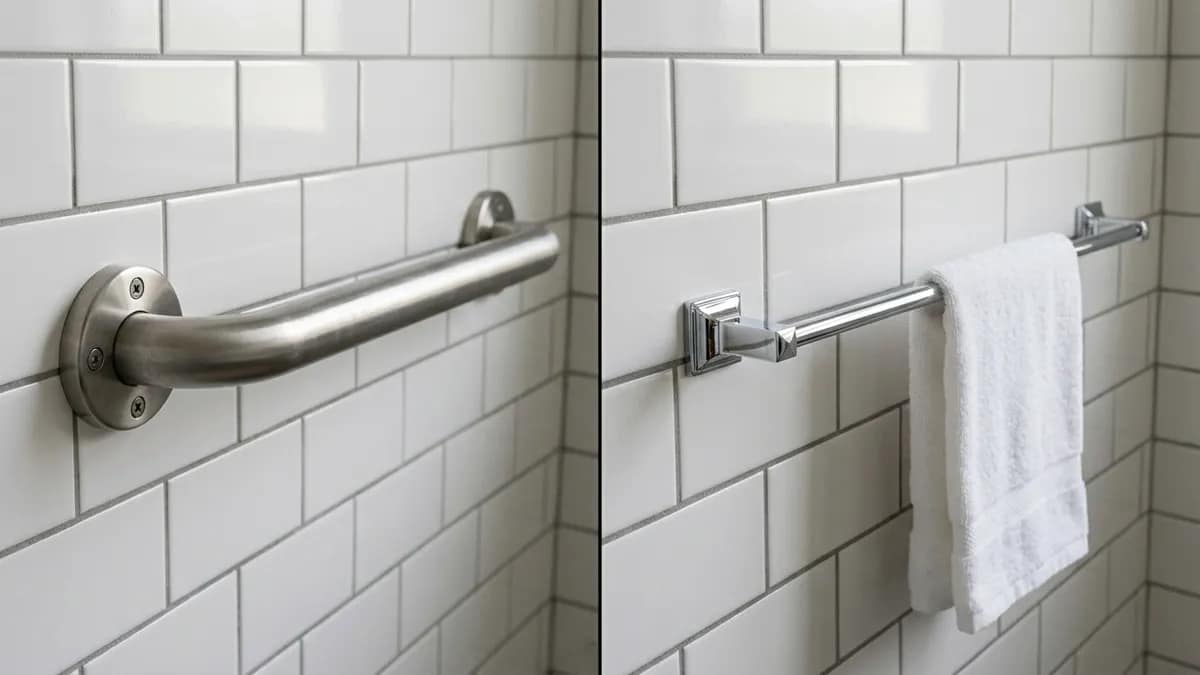
When comparing grab bars vs towel bars side by side, the differences become clear in both construction and real-world performance.
Strength and Weight Capacity
Grab bars are built to support real weight—often rated between 250–500 lbs when installed properly.
Towel bars are not designed for weight at all. Even if they feel secure, they’re not tested or built to handle body pressure.
Installation Method
Grab bars are installed using:
- screws into wall studs
- or heavy-duty anchors designed for load-bearing use
Towel bars are typically installed with:
- light-duty anchors
- small brackets
- minimal structural support
That difference alone changes everything about how they perform under pressure.
Intended Purpose
Grab bars are designed for safety and stability.
Towel bars are designed for convenience and storage.
Using a towel bar for support is like using a shelf bracket as a ladder—it might seem okay until it isn’t.
Real-World Performance
In real-life situations—like slipping in a shower or losing balance—force is sudden and uneven.
Grab bars are built for that.
Towel bars are not.
That’s why even a “strong-looking” towel bar shouldn’t be relied on for safety.
Can You Use a Towel Bar Like a Grab Bar?
No, a towel bar should never be used as a substitute for a grab bar.
Even if a towel bar feels sturdy, it’s not designed to support your weight in a sudden or forceful situation.
That is also the moment when reliable support matters most.
Lightly pulling on a towel bar does not reflect real-life safety conditions. A fixture may feel firm during a casual test but still fail under sudden or uneven pressure.
A slip in the shower or a loss of balance near the toilet creates fast, uneven pressure—not controlled pulling.
That’s why a proper grab bar is built differently from the start.
Where Grab Bars Should Be Installed Instead
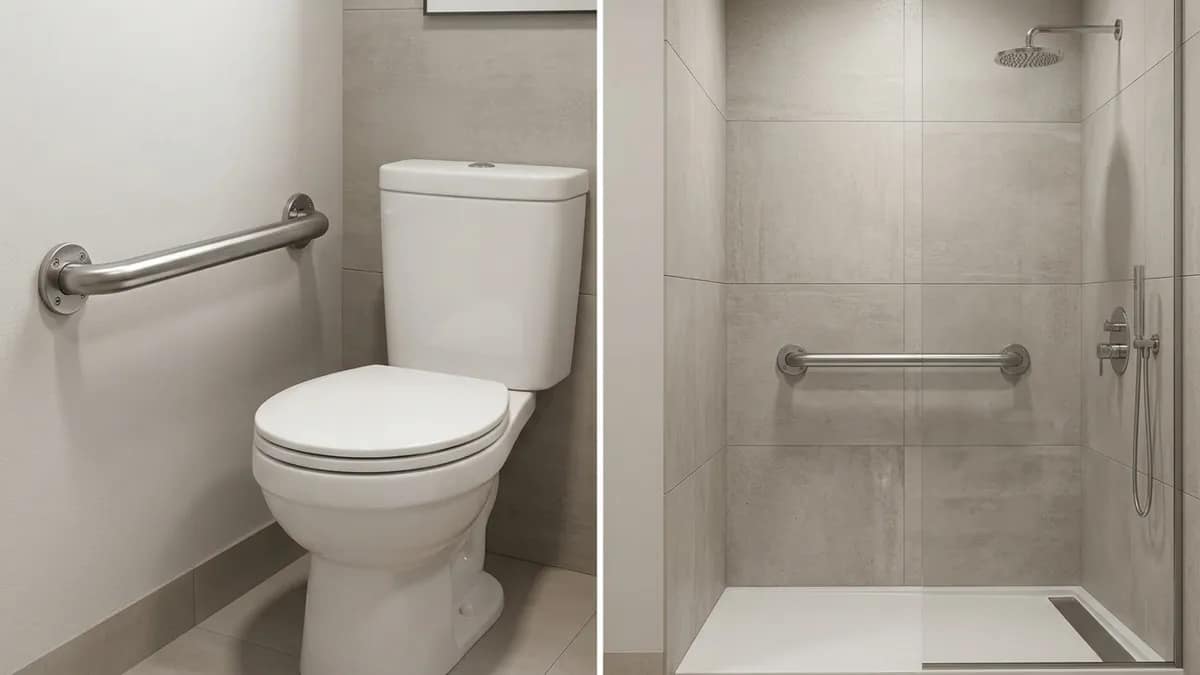
If someone is currently relying on a towel bar for support, it’s usually a sign that a grab bar is needed in that exact spot.
Most slips don’t happen randomly—they happen during specific movements.
Common high-risk areas include:
- stepping into or out of a shower or bathtub
- standing up from a toilet
- turning or shifting weight on a wet surface
That’s where grab bars should be placed.
The key is positioning them where the hand naturally reaches during those movements. If the bar isn’t within reach at the right moment, people tend to grab whatever is closest—which is often a towel bar.
If you’re unsure where proper support should go instead, it helps to look at where to install grab bars in a bathroom so the placement matches real-life movement.
A well-placed grab bar not only improves safety—it also gets used naturally without thinking, which is exactly what you want.
What I Recommend
The safest and most practical rule is simple:
Never rely on a towel bar for support.
Even if it feels secure, it’s not built for that purpose.
Instead, install a proper grab bar where support is actually needed. A wall-mounted grab bar installed into studs provides a much higher level of reliability and confidence.
For most setups, a simple 18–24 inch grab bar placed in a high-risk area can make a noticeable difference.
If you’re ready to replace that unsafe support with a proper solution, this guide to the best grab bars for seniors explains which models are better suited to everyday bathroom safety needs.
This is not just a fixture upgrade—it is a practical step to reduce bathroom safety risk.
FAQ
Can a towel bar support body weight?
No. Towel bars are not designed to support body weight and can fail under pressure.
Why do towel bars look similar to grab bars?
They have a similar shape, but the internal structure, materials, and installation methods are completely different.
Is it dangerous to use a towel bar for support?
Yes. It can create a risk of injury if the bar pulls out or breaks under pressure.
Can I replace a towel bar with a grab bar?
Yes, and in many cases, it’s a smart upgrade for improving bathroom safety.
What’s the safest alternative to a towel bar for support?
A wall-mounted grab bar installed into studs or with proper anchors.
Final Thoughts
The difference between grab bars vs towel bars may appear minor at first, but it has serious safety implications in bathroom use.
They may look similar, but they serve completely different purposes.
One is designed to support weight and help prevent falls. The other is not.
If there’s even a small chance someone might reach for support in a bathroom, it’s worth making sure there’s something reliable to grab onto.
Even a simple change like replacing a towel bar with a properly installed grab bar can significantly improve everyday bathroom safety.
