
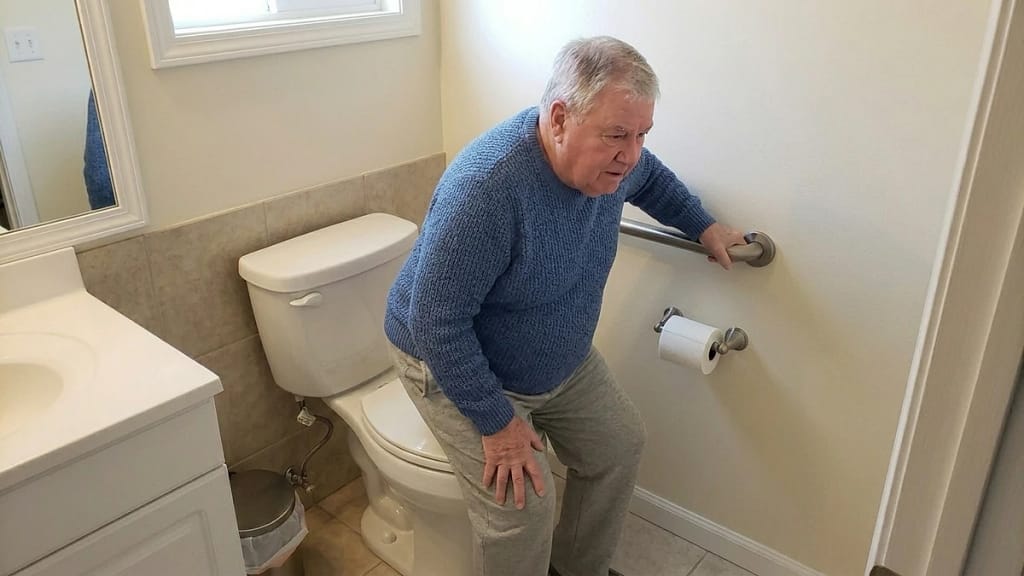
One of the most common questions when choosing a grab bar is simple: how much weight can grab bars hold?
At first glance, this seems straightforward. Many products list a maximum weight capacity, and it’s easy to assume that number tells the full story.
In reality, that number does not tell the full story.
A grab bar’s true weight capacity depends on more than just the product itself. Factors like installation method, wall structure, and how the bar is used all play a critical role in real-world performance.
Understanding these factors is essential when selecting a grab bar that provides safe and reliable support.
Disclosure: As an Amazon Associate, I earn from qualifying purchases. This post may contain affiliate links. If you purchase through these links, I may earn a small commission at no extra cost to you. I only recommend products I would feel comfortable using in my own home. Learn more.
On This Page
Quick Answer
Most grab bars are designed to support about 250 to 500 pounds when installed properly, but the real safe load depends on installation quality, wall support, and how force is applied during use.
High-quality wall-mounted grab bars installed into studs are typically rated for 300 to 500 pounds, but those ratings only apply when the full setup is done correctly.
However, those ratings assume:
- correct installation
- solid wall support
- proper usage
If any of those factors are off, the actual safe weight can be much lower.
What Determines How Much Weight a Grab Bar Can Hold?
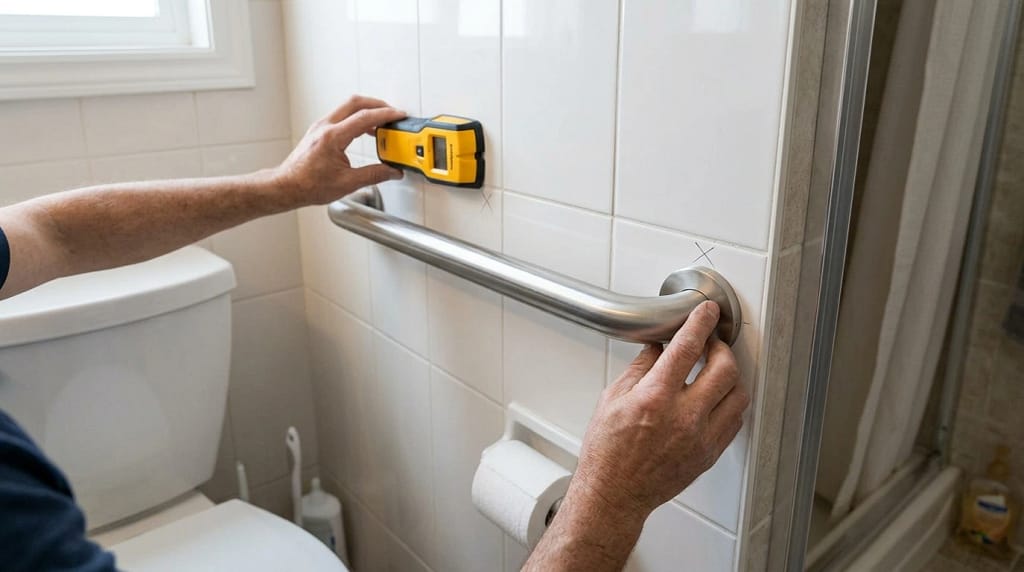
The weight capacity of a grab bar is not just about the number printed on the box. It depends on how the full setup comes together, including the bar itself, how it is installed, what kind of wall it is attached to, and how force is applied during real use.
The sections below explain the factors that matter most.
Installation Method
This is the biggest factor by a wide margin.
A grab bar installed directly into wall studs is going to be significantly stronger than one mounted with basic anchors. Studs are solid wood, so they can handle real force, including sudden weight shifts.
On the other hand, drywall alone isn’t designed to support that kind of load. Even if the grab bar feels secure at first, it may not hold up when someone actually leans on it during a slip.
That is why proper stud installation matters so much. It is what turns a grab bar into a real safety feature instead of something that only looks secure.
Wall Material
What’s behind the wall matters more than what you see on the surface.
For example:
- Tile can look strong, but it’s often just a surface layer
- Drywall has very limited strength on its own
- Fiberglass surrounds can flex under pressure
If there’s no solid backing behind the mounting points, the weight capacity drops quickly.
In many cases, people assume drywall equals strength, but the actual support depends on what’s underneath.
If you’re working with this type of wall, this guide on installing grab bars on drywall safely explains the main precautions and limitations to keep in mind.
Type of Grab Bar
Not all grab bars are designed for the same purpose, and this affects how much weight can grab bars hold.
Wall-mounted grab bars are built for full support. When installed properly, they can handle a person putting most or all of their weight on them.
Suction grab bars are different. They rely on surface tension rather than structural support, which means their strength is limited and can change over time.
If you’re unsure how big that difference really is, comparing suction vs permanent grab bars makes it much easier to see why they’re used in completely different ways.
Quality of Materials
The material and build quality also play a role.
Most reliable grab bars are made from stainless steel or other strong metals. These tend to have consistent performance and higher weight ratings.
Lower-quality bars might still list high weight limits, but the actual durability can vary. Over time, cheaper materials may loosen, corrode, or wear down faster.
How the Force Is Applied
Force is not always applied evenly in real use.
People do not always lean on a grab bar slowly and straight. In real situations, they may grab it quickly, pull at an angle, or shift weight suddenly during a slip or loss of balance.
That creates dynamic force, which can be higher than the person’s actual body weight. This is one reason grab bar strength depends on more than the user’s weight alone.
A 300-pound rating does not simply mean the bar is only for users under 300 pounds. It means the full setup has been tested to handle that level of force under specific conditions, which is why body weight alone does not tell the full story.
Why Weight Capacity Numbers Can Be Misleading
Weight ratings can be misleading when they are treated as a simple guarantee.
A grab bar might say “500 lbs capacity,” but that number is based on controlled testing conditions rather than every real bathroom installation.
Manufacturers usually test under assumptions such as:
- correct mounting
- solid wall support
- proper hardware
- force applied in predictable ways
Real-life installation is less predictable. If the wall support is weaker, the hardware is not ideal, or the bar is used under more stressful conditions, the safe load may be lower than the listed number suggests.
Example:
A person may weigh much less than the listed rating and still put heavy stress on the installation during a slip. That does not mean the rating is false. It means the number only makes sense when the full setup matches the conditions behind it.
That is why it is better to treat the listed rating as one part of the safety picture, not the whole answer by itself.
Are Suction Grab Bars Strong Enough?
Short answer: not for full body weight.
Suction grab bars are designed for:
- balance support
- light assistance
- controlled movements
They are NOT designed to:
- catch a fall
- support full weight
- handle sudden force
Even if a suction bar feels secure, that doesn’t mean it will stay that way under pressure.
If you want a deeper breakdown, this guide on are grab bars safe for seniors explains why safety depends on more than just strength.
How to Make Sure Your Grab Bar Is Strong Enough

If the goal is dependable safety, a few installation choices make the biggest difference.
Install Into Studs Whenever Possible
This is the most important step because it gives the grab bar the strongest possible support.
Mounting a grab bar into wall studs gives you the strongest possible support. It allows the bar to handle full body weight and sudden pressure without shifting.
If you’re not familiar with the process, it’s worth learning how to install grab bars in studs so you can make sure everything is properly secured.
Even one screw into a stud can significantly improve stability compared to relying only on anchors.
Use Proper Anchors When Studs Aren’t Available
Sometimes the ideal placement does not line up with a stud. That situation is common, which is why anchor choice matters so much.
In those cases, the next best option is to use heavy-duty anchors designed specifically for grab bars. These are built to handle higher loads than standard drywall anchors.
Basic anchors meant for light fixtures or shelves should be avoided because they are not designed for safety equipment.
Choose the Right Length for Better Support
Length doesn’t necessarily increase the weight rating, but it does improve how force is distributed.
A longer grab bar (like 18–24 inches) gives more room for hand placement and allows weight to be spread across a wider area. That makes it feel more stable, especially during movement.
Shorter bars still have their place, but they’re better suited for specific, controlled movements.
Make Sure Placement Matches Real Movement
A strong grab bar in the wrong place won’t help much.
The most useful way to judge placement is to think about how the person will actually use it:
- stepping into a shower
- standing up from a toilet
- turning on a wet surface
If the hand can’t naturally reach the bar when needed, the strength doesn’t matter.
If you’re unsure about positioning, it helps to understand where to install grab bars in a bathroom so everything lines up with real movement and daily use.
Test the Grab Bar After Installation
Testing the grab bar after installation is the easiest way to confirm that the setup feels truly solid in real use.
How to sanity-check the installation:
Test the bar the way it will actually be used. Apply steady pressure, then check whether it stays completely solid from more than one direction.
If there is any looseness, flex, or shifting at the mounting points, the setup should be corrected before regular use.
A grab bar should feel fully secure when tested, not mostly secure or “probably fine.” If anything moves, the installation needs to be corrected before the bar is relied on for safety.
Think About Long-Term Use
Safety needs often change over time.
Even if the grab bar feels more than strong enough today, it’s worth setting it up in a way that will still be reliable a year or two from now.
That usually means:
- choosing a stronger setup than you think you need
- installing it as securely as possible
- placing it where it will still be useful as mobility changes
What I Recommend
For most situations, a wall-mounted grab bar made from stainless steel and installed directly into studs provides the most reliable support.
This type of setup offers the highest level of stability and is better suited for real-world use compared to temporary solutions.
When strength and weight capacity are the top priority, the safest approach is to focus on a permanently mounted bar with a strong rating and a secure installation into solid wall support.
For readers comparing stronger setups in more detail, this guide on heavy-duty grab bars for seniors shows what higher-capacity options are designed to do under real use.
FAQ
What is the standard weight capacity for grab bars?
Most grab bars are rated between 250 and 500 pounds when installed correctly.
Can grab bars support full body weight?
Yes, wall-mounted grab bars installed into studs are designed to support full body weight.
Are suction grab bars rated for weight?
Some list ratings, but they are not designed to support full body weight safely.
Do longer grab bars hold more weight?
Not necessarily more weight, but they distribute force better and provide more stability.
What happens if a grab bar isn’t installed properly?
Its effective weight capacity can drop significantly, making it unsafe.
Final Thoughts
So, how much weight can grab bars hold?
In most cases, 250–500 pounds—but only when everything is done right.
The real takeaway is that weight capacity isn’t just about the number on the box. It’s about installation, placement, and how the grab bar is used.
A properly installed grab bar can provide strong, reliable support for everyday use. A poorly installed one can do the opposite.
If you take the time to get it right, it’s one of the simplest upgrades that can make a bathroom significantly safer.
