
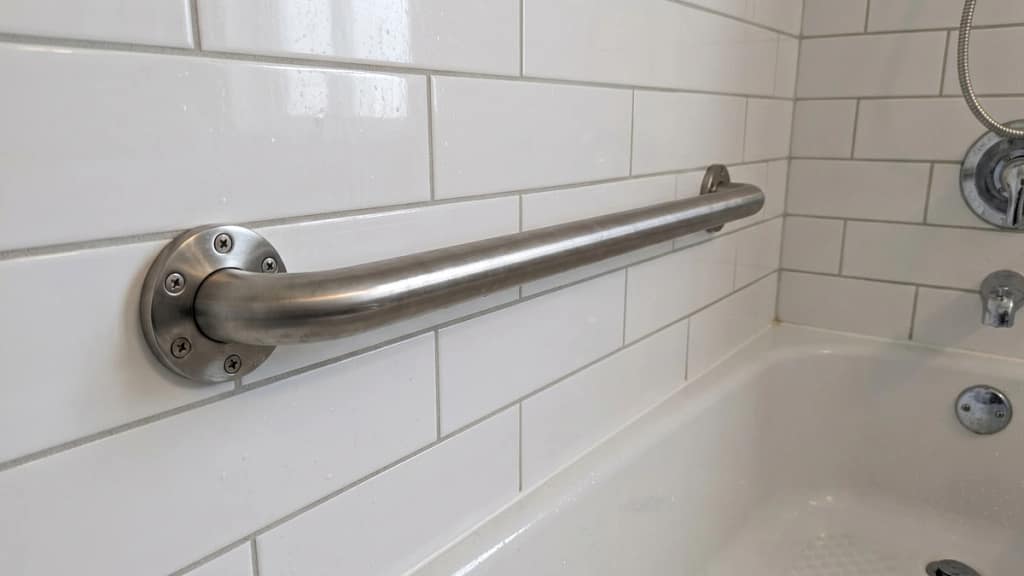
Grab bars are designed to provide stability in areas where slips and balance loss are most likely to occur, particularly bathrooms and showers.
Because grab bars are often used to support body weight during sudden movements, many people wonder how strong they actually need to be.
If a grab bar fails or pulls away from the wall, it can create a serious safety risk. This is why both grab bar design and installation strength are extremely important.
The question how strong should grab bars be is really about more than the bar itself. The grab bar, fasteners, mounting hardware, and wall support all need to work together when someone reaches, pulls, pushes, or steadies themselves.
Disclosure: As an Amazon Associate, I earn from qualifying purchases. This post may contain affiliate links. If you purchase through these links, I may earn a small commission at no extra cost to you. I only recommend products I would feel comfortable using in my own home. Learn more.
On This Page
- Real-World Situations Where Grab Bar Strength Matters
- ADA Strength Requirements for Grab Bars
- Can Grab Bars Support More Than 250 Pounds?
- Why Installation Strength Matters More Than the Bar Alone
- What Makes a Grab Bar Strong?
- Do Grab Bars Need to Be Installed Into Studs?
- Grab Bar Strength vs Weight Capacity
- What I Recommend
- FAQ
- Final Thoughts
Quick Answer
Grab bars should be strong enough to withstand at least 250 pounds of force when properly installed. This strength depends on the full setup: the grab bar, fasteners, mounting hardware, and the wall structure behind it.
The 250-pound figure is a common accessibility strength standard, but it should not be treated as only a body-weight number. A grab bar may be pulled, pushed, or loaded suddenly during a slip, shower entry, or toilet transfer.
The most important factors affecting grab bar strength include:
- secure installation into studs or another approved structural support
- mounting hardware that matches the wall and grab bar design
- a durable grab bar material, such as stainless steel or another bathroom-safe metal
- correct placement so the user can reach the bar naturally during the movement being supported
A grab bar that is strong on paper can still be unsafe if it is mounted into weak drywall, loose anchors, damaged tile, or unsupported wall material.
Real-World Situations Where Grab Bar Strength Matters

Grab bar strength becomes clearer when you think about how the bar is used during real bathroom movements.
Grab bars are rarely used gently. In many cases, a person may grab the bar suddenly when they begin to slip or lose balance.
For example:
- stepping into a wet shower
- standing up quickly from the toilet
- catching yourself during a slip
Example:
A person may only weigh 170 pounds, but the grab bar can still receive sudden force if they slip while stepping out of the shower or push hard while standing from the toilet. That is why grab bar strength should be judged by the full installation, not only by the user’s body weight.
In these moments, the grab bar may need to support a large portion of the user’s body weight very quickly.
This is why grab bars are designed to handle sudden force, not just slow weight transfer.
A properly installed grab bar can provide immediate stability during these moments and may help reduce the chance of a dangerous fall.
ADA Strength Requirements for Grab Bars
The Americans with Disabilities Act (ADA) provides widely recognized structural-strength guidance for grab bars.
Under ADA accessibility standards, grab bars must be able to withstand a vertical or horizontal force of 250 pounds at any point on the grab bar, fastener, mounting device, or supporting structure.
This is why the 250-pound figure should be understood as a full installation requirement, not just a simple body-weight number.
In many cases, grab bars installed into wall studs can support far more than this minimum requirement.
For readers who want the broader accessibility context beyond strength alone, this guide to ADA grab bar requirements explains related rules for placement, sizing, clearance, and support.
Can Grab Bars Support More Than 250 Pounds?
Some grab bars and mounting systems advertise capacities higher than 250 pounds, but those ratings only matter when the bar is installed according to the manufacturer’s instructions and the wall can support the load.
The key factor is not only the strength of the bar itself. The mounting hardware, wall structure, anchors, screws, and installation method all affect how much real support the grab bar can provide.
For example:
- a strong grab bar mounted into studs or proper structural backing may support more force than the minimum standard
- the same bar mounted into weak drywall, damaged tile, or unsuitable anchors may not perform according to its listed rating
Higher capacity can be useful, but it should never replace proper installation and wall support.
Why Installation Strength Matters More Than the Bar Alone

A grab bar is only as strong as the full installation. The bar itself may be made from strong material, but the setup can still fail if the fasteners, anchors, or wall structure are not strong enough.
The full support system includes:
- the grab bar material
- the screws or fasteners
- the mounting flanges or plates
- the anchors, if anchors are used
- the wall studs, blocking, or other structural support behind the wall
This is why a listed weight capacity should never be judged by the product alone. A strong grab bar mounted into weak support may not perform like the same bar mounted into studs or properly reinforced backing.
If the wall structure is uncertain, the safest next step is to have the installation checked by someone qualified before relying on the bar for daily bathroom support.
What Makes a Grab Bar Strong?
Several factors determine the overall strength of a grab bar installation.
Bar Material
High-quality grab bars are usually made from durable materials such as:
- stainless steel
- reinforced steel
- heavy-duty aluminum
These materials provide strong structural support and resist corrosion in humid environments.
Stainless steel is especially common in bathrooms because it combines durability with resistance to rust.
Strength is not only about the material. The bar also needs to be easy to grip during sudden movement, which is why grab bar diameter and grip size can affect how secure the support feels in real use.
Mounting Hardware
Strong mounting hardware helps keep the grab bar securely attached to the wall.
Most grab bars use heavy-duty screws and reinforced mounting flanges designed to anchor the bar firmly into the wall.
The mounting plates distribute weight across the wall surface, which helps prevent the bar from loosening over time.
Installation Method
Even the strongest grab bar can fail if it is installed incorrectly.
Mounting the bar directly into wall studs is typically the safest installation method.
If you’re planning installation, reviewing how to install grab bars in studs can help ensure the bar is mounted securely.
Do Grab Bars Need to Be Installed Into Studs?
In most cases, installing grab bars into wall studs provides the strongest and safest support. Wall studs are structural framing elements behind drywall that can hold significant weight.
Mounting a grab bar into studs allows the screws to anchor directly into solid wood framing.
Some heavy-duty wall anchors can also provide strong support when studs are not available.
However, stud mounting remains the most reliable installation method for ensuring maximum strength.
After a grab bar is installed, the next concern is whether there are any visible signs that the bar, mounting plate, or wall support may not be secure.
How to check without unsafe stress-testing:
Look for movement at the mounting plates, loose screws, rotation, wall flex, cracked tile, or gaps around the flange. Do not test a grab bar by hanging from it or pulling aggressively. If anything moves or the wall structure is uncertain, stop relying on the bar and have the installation checked.
If drilling into studs is not possible, it is important to understand the trade-off before choosing a temporary option. This guide on suction vs permanent grab bars explains why removable support should not be judged by convenience alone.
Grab Bar Strength vs Weight Capacity
Grab bar strength and advertised weight capacity are related, but they are not exactly the same thing.
Weight capacity usually refers to the amount of weight or force a product is rated to support under the manufacturer’s stated conditions. Structural strength also depends on the fasteners, mounting device, and supporting wall structure.
Many grab bars advertise capacities such as:
- 250 pounds
- 300 pounds
- 500 pounds
These ratings usually assume the grab bar is installed correctly according to the manufacturer’s instructions. If the wall support is weak, the screws are not anchored properly, or the mounting surface is damaged, the grab bar may not perform according to its listed rating.
If the main question is weight capacity, this guide on how much weight grab bars can hold explains how listed ratings, installation quality, and real-use force should be understood together.
This is why installation quality is just as important as the strength of the grab bar itself.
What I Recommend
For the strongest practical setup, prioritize both high-quality materials and secure installation.
A strong grab bar should:
- meet or exceed ADA strength requirements
- be mounted securely into wall studs whenever possible
- use durable materials such as stainless steel
Even the strongest grab bar can become unsafe if it is not installed properly.
If the user places heavier force on the bar during daily transfers, or if standard support does not feel adequate for the user’s size or strength needs, it may be worth comparing heavy-duty grab bars designed for higher load support.
The most reliable setup is a quality grab bar installed into proper structural support and checked if it ever feels loose, shifts, or shows signs of wall movement.
FAQ
How much weight should grab bars hold?
Most safety guidelines recommend grab bars that can support at least 250 pounds of force.
Can grab bars hold a person’s full body weight?
Many properly rated grab bars are intended to support strong bathroom-use forces when installed correctly, but reliable support depends on the product rating, fasteners, mounting hardware, and wall structure.
Are stainless steel grab bars stronger?
Stainless steel grab bars are commonly used because they provide strong structural support and resist corrosion.
What happens if grab bars are not installed into studs?
The bar may not be able to support as much weight and could loosen or detach from the wall.
Are suction grab bars as strong as permanent ones?
Suction grab bars generally provide temporary support and are not designed to support the same weight as permanently installed grab bars.
Final Thoughts
Understanding grab bar strength is an important part of creating a safer bathroom because the bar must support real movement, not just look sturdy on the wall.
Accessibility guidelines recommend grab bars that can support at least 250 pounds of force, and some properly installed grab bars or mounting systems may be rated for more.
The most important factor is ensuring the grab bar is securely mounted into structural support such as wall studs.
When properly selected and installed, grab bars can provide dependable stability and may help reduce fall risk in bathrooms and showers.
