
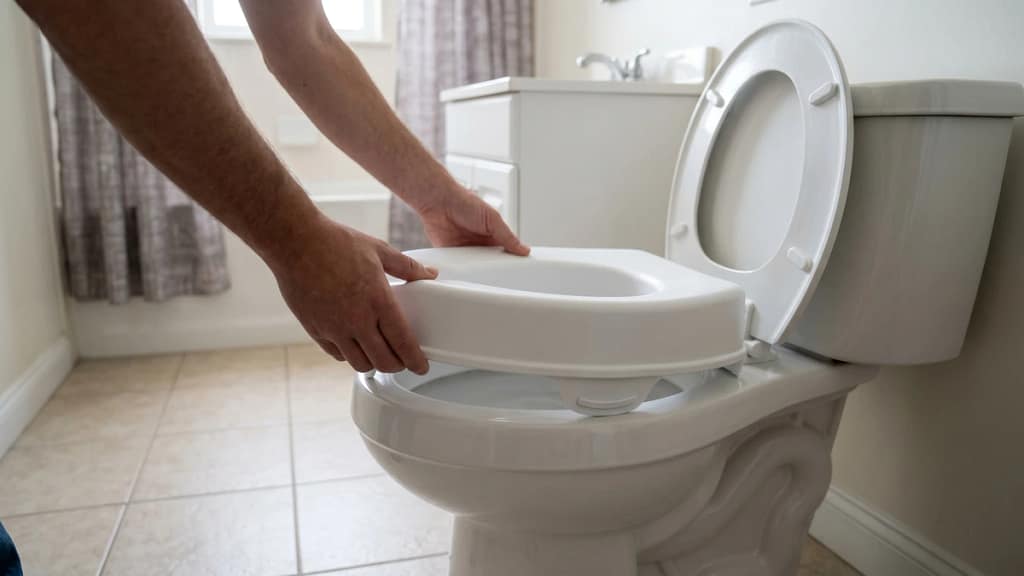
Many people want extra toilet height without drilling, replacing bathroom parts, or using tools. This is especially common during short-term recovery, in shared bathrooms, or when a more permanent setup is not practical.
If the question is can you use a raised toilet seat without tools, the answer is yes in some cases. Some raised toilet seats are designed for tool-free setup, but that does not mean every no-tool option will fit every toilet or feel stable enough for daily use.
The main things to check are toilet compatibility, attachment style, stability, and how the seat feels during sitting and standing.
Disclosure: As an Amazon Associate, I earn from qualifying purchases. This post may contain affiliate links. If you purchase through these links, I may earn a small commission at no extra cost to you. I only recommend products I would feel comfortable using in my own home. Learn more.
On This Page
- What “Without Tools” Usually Means
- Which Raised Toilet Seat Types Are Usually Tool-Free?
- When a Tool-Free Raised Toilet Seat Works Well
- When Tool-Free Setup May Not Be Secure Enough
- Can Tool-Free Raised Toilet Seats Be Removed Easily?
- Fit Still Matters More Than Tool-Free Convenience
- How to Choose a Raised Toilet Seat Without Tools
- When It Makes Sense to Compare Broader Raised Toilet Seat Options
- Common Mistakes with No-Tool Raised Toilet Seats
- What I Recommend
- FAQ
- Final Thoughts
Quick Answer
Yes, some raised toilet seats can be used without tools because they are designed to attach with clamps, locking knobs, or removable placement systems. However, tool-free setup still requires a secure fit, the right toilet shape, and careful stability checks before regular use.
- Some raised toilet seats are made for tool-free setup
- Tool-free does not mean the seat fits every toilet
- Stability still needs to be checked during real use
- Some models tighten by hand with knobs or clamps
- Other seats may need tools for a more secure installation
A no-tool raised toilet seat can work well when the toilet is compatible and the user does not need a more permanent installation. It can be especially useful for temporary needs, rental bathrooms, or situations where easy removal matters.
The key point is that convenience should not come before stability. A raised toilet seat should not rock, shift, or feel uncertain during sitting and standing.
What “Without Tools” Usually Means
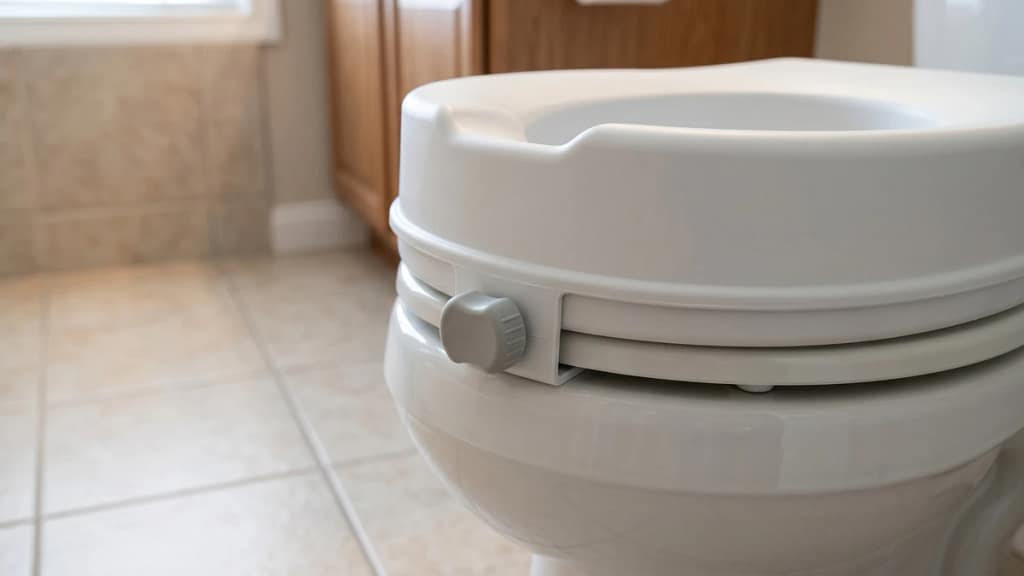
A raised toilet seat that works without tools usually does not require drilling, replacing the toilet, or using a wrench or screwdriver for basic setup. It is designed to be positioned and secured by hand.
In most cases, “without tools” means the seat may use:
- hand-tightened knobs
- side clamps
- pressure-based attachment
- removable placement over the bowl
- simple locking mechanisms
This does not mean there is no setup at all. The seat still needs to be positioned correctly, tightened if needed, and checked before use.
Example:
A raised seat with side knobs may not need tools, but the knobs still need to be tightened evenly. If one side is loose or the seat is not centered, the setup may feel unstable even though it is technically tool-free.
A no-tool design is useful only when it stays secure during the movements that actually happen in daily bathroom use.
Which Raised Toilet Seat Types Are Usually Tool-Free?
Several raised toilet seat styles are commonly designed for tool-free use. The exact setup depends on the model, but the general idea is to add height without permanent changes.
Common tool-free styles include:
- clamp-on raised seats
- raised seats with hand-tightened locking knobs
- removable raised toilet seats
- portable or temporary risers
- some over-the-bowl raised seat designs
These options are often chosen when the need is temporary or when the bathroom cannot be modified. That can include short-term recovery, shared bathrooms, or rental homes where permanent changes are not ideal.
This is why tool-free designs often overlap with temporary bathroom setups. For people who need extra height without changing the bathroom permanently, this guide on temporary raised toilet seats for renters explains what makes a raised seat more practical for short-term or non-permanent use.
Tool-free designs can be convenient, but the next step is deciding whether that convenience is enough for the user’s daily support needs.
When a Tool-Free Raised Toilet Seat Works Well
A tool-free raised toilet seat works best when the toilet is compatible, the user mainly needs added height, and the seat feels secure after hand-tightening or placement.
It is usually a better fit when:
- the need is temporary
- the user has mild to moderate height needs
- the toilet shape is compatible
- the seat does not move after setup
- the user does not need a highly permanent support system
For example, someone recovering from a temporary mobility setback may need the toilet to feel less low for a few weeks. If the seat fits the toilet securely and stays stable during sitting and standing, a tool-free option may be enough.
A tool-free raised seat is less ideal when the person depends heavily on the seat for support or pushes down forcefully while standing. In those cases, the attachment method and overall stability become more important than convenience.
The best use case is a setup where the seat is easy to install, easy to remove, and still stable during normal movement.
When Tool-Free Setup May Not Be Secure Enough
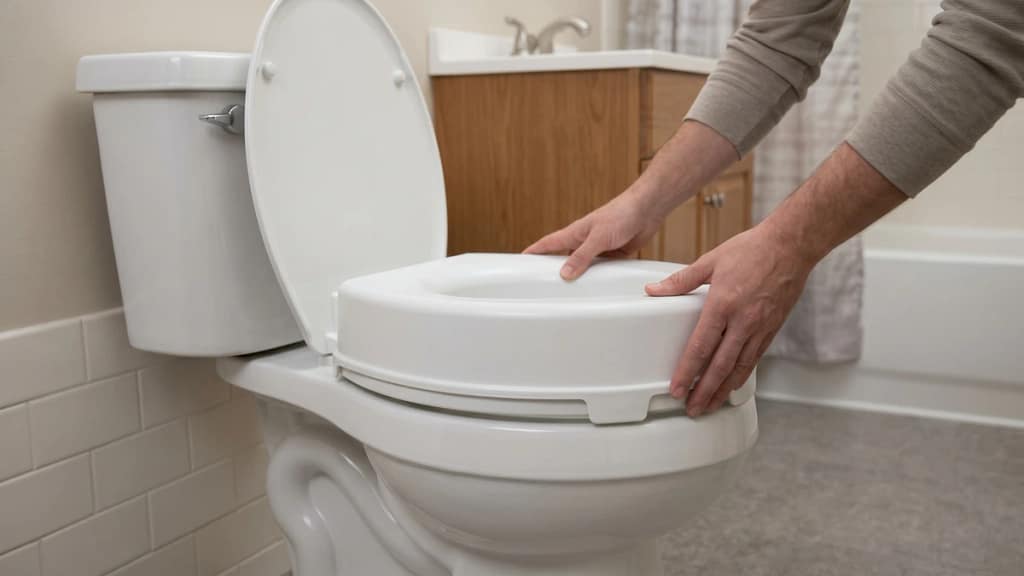
Tool-free setup may not be secure enough when the seat moves, slips, or feels uncertain during transfers. A raised toilet seat should feel stable before it becomes part of a regular bathroom routine.
A more secure setup may be needed when:
- the seat rocks or shifts
- the user pushes heavily while standing
- the toilet shape does not match well
- the attachment points do not grip securely
- the seat is used many times per day
- the user needs more support than height alone provides
For example, a no-tool seat may seem convenient but still feel loose when the user shifts weight while standing. In that situation, the issue is not only convenience. The seat may need a more secure attachment style or a different installation approach.
How to check the setup:
After the seat is positioned and tightened by hand, press gently on both sides, sit down slowly, and stand back up while noticing whether the seat rocks, shifts, or feels uneven. If it moves during this test, do not rely on it for daily use.
When stability is the concern, it helps to understand what proper setup should look like. This guide on how to install a raised toilet seat explains how installation and positioning affect safety and daily use.
Tool-free setup can be helpful, but it should not be used as a shortcut around proper fit and stability.
Can Tool-Free Raised Toilet Seats Be Removed Easily?
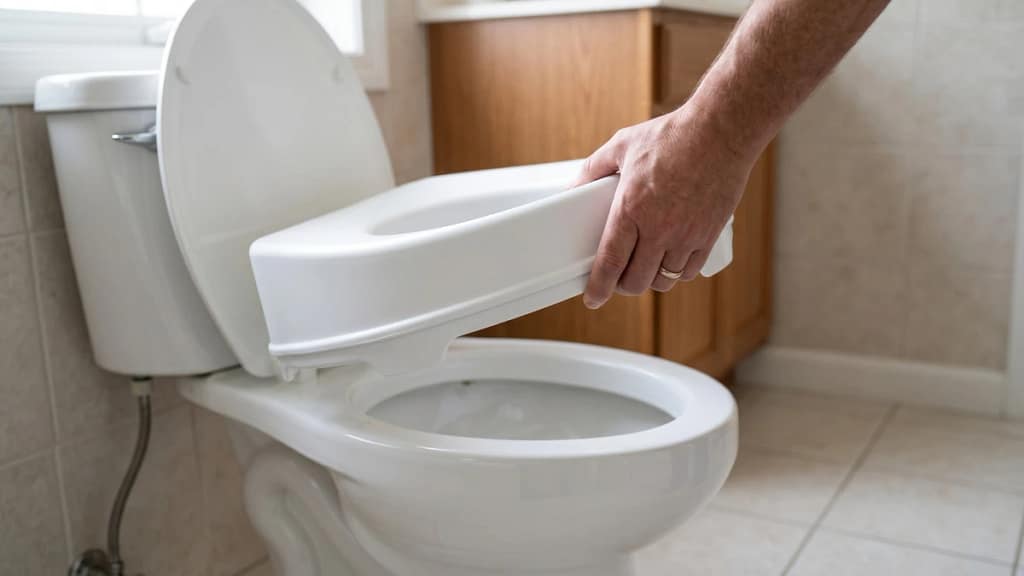
Many tool-free raised toilet seats are easier to remove than bolt-on or more permanent designs. That is one reason they are often used in temporary or shared bathroom situations.
Easy removal can help with:
- cleaning
- shared bathroom access
- short-term recovery
- caregiver assistance
- moving or storage
- returning the bathroom to its original setup
However, easy removal also means the seat should be checked again after it is reinstalled. A seat that was stable before removal may not feel exactly the same if it is placed back unevenly or not tightened correctly.
For example, a raised seat may be removed for cleaning and then reattached slightly off-center. That small change can affect how steady it feels during use. This guide on whether raised toilet seats can be removed easily explains what affects removal, cleaning, and repeated setup.
Removability is useful, but every reinstall should still be treated as a new stability check.
Fit Still Matters More Than Tool-Free Convenience
A no-tool raised toilet seat still needs to fit the toilet properly. If the seat does not match the bowl shape, rim, or attachment area, it may feel unstable even if the setup process is simple.
Important fit factors include:
- round vs elongated toilet shape
- rim shape
- seat width and opening alignment
- clamp or knob contact points
- side and front bathroom clearance
For example, a tool-free seat may work well on one toilet but feel loose on another because the rim shape gives the clamps less stable contact. Another seat may sit on the bowl but crowd the surrounding space if the bathroom is narrow.
Convenience should always come after fit. A raised toilet seat that is easy to place but hard to trust during movement is not a good setup.
The right no-tool seat should match the toilet closely enough to feel secure before, during, and after use.
How to Choose a Raised Toilet Seat Without Tools
Choosing a raised toilet seat without tools means looking at the full setup, not just the installation method. The goal is to find a seat that is simple to use but still stable enough for the person’s needs.
Key factors include:
- toilet compatibility
- amount of added height
- attachment style
- stability during transfers
- temporary vs long-term use
- whether handles or side support are needed
A person who only needs mild height help may do well with a simple removable raised seat. Someone who relies heavily on support during standing may need a more secure style, even if it is less convenient.
It is also important to avoid choosing by tool-free setup alone. Height, fit, support, and bathroom layout all affect whether the seat works in real life. This guide on how to choose a raised toilet seat explains how to weigh those factors together.
A no-tool raised seat is usually best when it solves the height problem without creating a stability problem.
When It Makes Sense to Compare Broader Raised Toilet Seat Options
A basic no-tool raised toilet seat may not be enough if the user needs more support, better stability, or a design that fits daily use more securely.
Comparing broader options makes sense when:
- a simple seat feels loose
- handles may be needed
- the toilet shape is harder to match
- the user expects longer-term use
- the setup needs better stability during transfers
At this stage, the question is no longer only whether tools are required. The better question is which seat design best matches the user’s toilet, movement pattern, and support needs.
For readers ready to compare complete options, this guide to the best raised toilet seats for seniors compares models based on support, fit, and everyday usability.
Comparing broader options is most useful after the limits of a simple no-tool setup are clear.
Common Mistakes with No-Tool Raised Toilet Seats
Several mistakes can make a no-tool raised toilet seat less secure than expected.
The most common ones are:
- Assuming tool-free means stable
A seat can be easy to set up and still move if the fit is poor. - Ignoring toilet shape
Round and elongated toilets may need different raised seat designs. - Not tightening or checking the seat properly
Hand-tightened parts still need to be secure and evenly adjusted. - Choosing convenience over support
A seat that installs quickly is not helpful if it does not match the user’s needs. - Using a seat that rocks or shifts
Movement during transfers should be treated as a warning sign, not a normal inconvenience.
Most problems happen when tool-free setup is treated as the main goal. The real goal is a seat that adds height and still feels secure during daily movement.
What I Recommend
A tool-free raised toilet seat makes sense when the toilet is compatible, the seat feels stable, and the user mainly needs added height rather than a more permanent support system.
A practical approach is:
- choose tool-free only when the fit is secure
- check the seat for movement before regular use
- prioritize stability over quick setup
- avoid any no-tool seat that rocks or slips
- choose a more secure setup if daily use or higher support needs require it
Tool-free installation can be convenient, especially for temporary needs, shared bathrooms, and rental spaces. It should still meet the same basic standard as any other raised toilet seat: stable, compatible, and secure during real use.
The best no-tool setup is simple to install, but it should still feel secure, stable, and dependable during real sitting and standing.
FAQ
Can you use a raised toilet seat without tools?
Yes. Some raised toilet seats are designed for tool-free setup using clamps, knobs, or removable placement systems.
Are tool-free raised toilet seats safe?
They can be safe when they fit the toilet properly, attach securely, and do not move during sitting or standing.
Do no-tool raised toilet seats fit every toilet?
No. Toilet shape, rim design, and attachment style can affect whether a no-tool seat fits securely.
Can tool-free raised toilet seats be removed easily?
Many can be removed more easily than bolt-on models, but they should be checked for stability after each reinstall.
When is a tool-free raised toilet seat not enough?
It may not be enough when the user needs stronger support, the seat moves during transfers, or the toilet shape does not allow a secure fit.
Final Thoughts
So, can you use a raised toilet seat without tools? Yes, in some cases, but tool-free setup is only helpful when the seat fits correctly and feels stable during use.
A no-tool design can be useful for temporary recovery, rental bathrooms, shared spaces, or people who want a simpler setup. However, convenience should not outweigh fit, attachment, and stability.
The right raised toilet seat should be easy to manage and secure during sitting and standing. If a no-tool seat moves, shifts, or feels uncertain, a different attachment style may be the better choice.
