
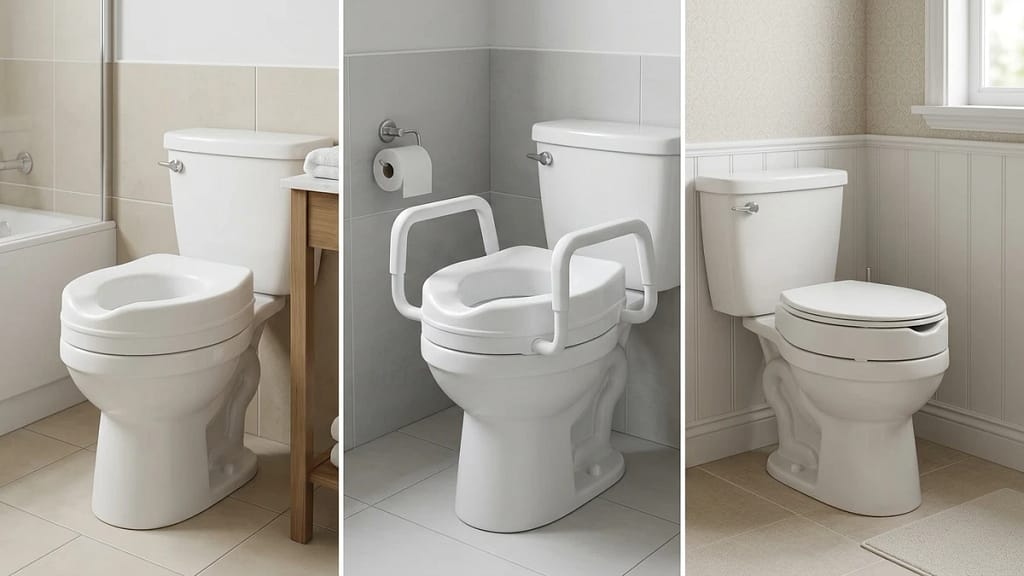
Finding the best raised toilet seats for seniors is not just about choosing the highest model or the one with the most features. The right choice depends on how the toilet feels during real use, especially when sitting down, standing up, and shifting weight safely.
For some seniors, a simple height increase is enough to reduce strain. Others need handles, a wider seat, or a design that feels more stable during daily use. Bathroom size, toilet shape, body size, and mobility limits can all change what works best.
This guide focuses on the decision-making side first. It explains how to judge height, fit, safety, support, and usability so the final product choice is based on real needs, not guesswork.
Disclosure: As an Amazon Associate, I earn from qualifying purchases. This post may contain affiliate links. If you purchase through these links, I may earn a small commission at no extra cost to you. I only recommend products I would feel comfortable using in my own home. Learn more.
On This Page
- Which Raised Toilet Seat Makes the Most Sense?
- Best Raised Toilet Seats for Seniors (Top Picks)
- How to Choose a Raised Toilet Seat for Seniors
- Which Type of Raised Toilet Seat Is Best for Different Senior Needs
- Raised Toilet Seat vs Toilet Safety Frame
- When Height Alone Is Not Enough
- What Features Matter Most in Daily Use
- What I Recommend
- FAQ
- Final Thoughts
Quick Answer
The best raised toilet seats for seniors are the ones that match the user’s height needs, support needs, toilet fit, and daily comfort, not just the ones with the most padding or the highest lift.
- Choose the right height first, because too much or too little elevation can both cause problems
- Add handles or extra support when balance or control is part of the issue
- Make sure the seat fits the toilet shape and feels stable in real use
- Think about bathroom space, especially if the setup needs to stay easy to use every day
- Match the seat to the senior’s actual movement difficulty, not just age alone
In practical terms, the best option should make sitting and standing easier while still feeling secure and predictable.
Which Raised Toilet Seat Makes the Most Sense?
This table compares the top options based on support level, ideal use case, and the trade-offs that matter most in real use.
| Product | Best Use Case | Support Level | Stands Out | Watch-Out | Action |
|---|---|---|---|---|---|
| Our PickBest Overall Bemis Assurance 3″ Raised Toilet Seat with Handles |
Balanced everyday support | High | Secure hinges, Clean Shield guard, 1,000 lb capacity | Check tank clearance first | Check on Amazon |
| Best With Handles Drive Medical Raised Toilet Seat with Removable Arms |
Stronger transfer support | High | Padded arms assist sit-to-stand | 5-inch rise can feel too high | Check on Amazon |
| Small Bathrooms KOHLER Hyten 3″ Elevated Toilet Seat |
Tight bathroom layouts | Light | Compact, less bulky in small spaces | No handles for transfer support | Check on Amazon |
| Arthritis / Weak Grip Vive Raised Toilet Seat Riser for Seniors (with Handles) |
Arthritis or weak grip | Moderate | Soft padded handles, easier on sore hands | Bulkier than simpler risers | Check on Amazon |
| Best Budget Carex Toilet Seat Riser |
Budget-friendly basic height help | Light | Simple 3.5-inch rise at a lower price | No arms or extra transfer support | Check on Amazon |
Best Overall
Bemis Assurance 3″ Raised Toilet Seat with HandlesBalanced everyday supportCheck on Amazon
Best With Handles
Drive Medical Raised Toilet Seat with Removable ArmsStronger transfer supportCheck on Amazon
Small Bathrooms
KOHLER Hyten 3″ Elevated Toilet SeatTight bathroom layoutsCheck on Amazon
Arthritis / Weak Grip
Vive Raised Toilet Seat Riser for Seniors (with Handles)Arthritis or weak gripCheck on Amazon
Best Budget
Carex Toilet Seat RiserBudget-friendly basic height helpCheck on Amazon
Best Raised Toilet Seats for Seniors (Top Picks)
These are the top raised toilet seat picks for seniors based on support level, bathroom fit, comfort, and everyday usability.
Best Overall
Bemis Assurance 3″ Raised Toilet Seat with Handles
A balanced all-rounder from one of the most established names in toilet seats, without the heaviest, most medical-looking setup.
- Sturdy aluminum support arms with ergonomic hand grips and a 3-inch raise
- Clean Shield guard and Snap 2 Secure system reduce wiggling
- Self-sustaining hinges prevent slamming and lift off easily for cleaning
- 1,000 lb weight capacity, well above what most seniors will need
- Handles detach if not needed, and round and elongated versions are available
Best With Handles
Drive Medical Raised Toilet Seat with Removable Arms
A support-first seat built around padded arms, giving more sit-to-stand assistance than a basic raised seat or a lighter handle design.
- Strong review depth from a well-known medical brand adds trust
- Removable arms increase flexibility compared with fixed support designs
Small Bathrooms
KOHLER Hyten 3″ Elevated Toilet Seat
A cleaner, more compact alternative to bulkier riser-style seats.
- 3-inch raise is practical for everyday use
- From Kohler, a familiar name in bathroom fixtures
Arthritis / Weak Grip
Vive Raised Toilet Seat Riser for Seniors (with Handles)
A comfort-first riser for seniors who need more than height alone but not the most heavy-duty transfer setup.
- Padded comfort-grip handles make hand contact easier and less harsh during sitting and standing
- 3.5-inch raise offers useful lift without being overly aggressive
- Supports up to 300 lb according to the product page
Best Budget
Carex Toilet Seat Riser
A no-frills riser that keeps the design simple.
- Affordable price without looking overly flimsy
- 3.5-inch raise gives a broadly usable height boost
How to Choose a Raised Toilet Seat for Seniors
Choosing a raised toilet seat depends on more than just adding height. The right option should make sitting down and standing up easier while still feeling stable, comfortable, and appropriate for the user’s actual mobility needs.
The decision usually becomes much easier when you look at height, support, fit, and daily use together rather than treating them as separate issues.
Choose the Right Height First
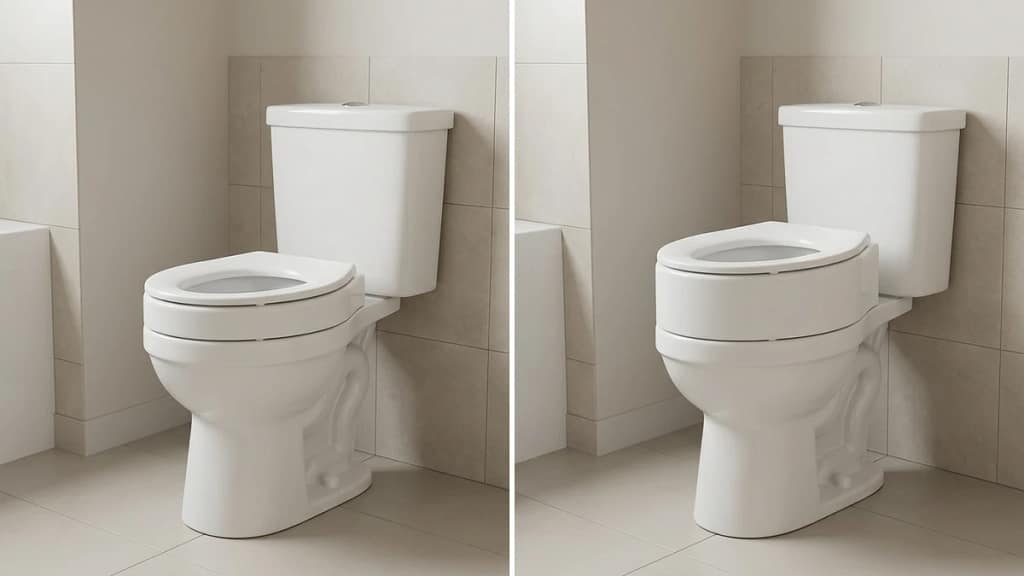
Height is usually the most important starting point because it changes how much effort is needed to lower down and stand back up.
- A lower toilet may need more added height to feel comfortable
- A taller toilet may only need a smaller adjustment
- Too much height can make some seniors feel less grounded and less controlled
For example, a senior with mild knee stiffness may feel much better with a modest height increase, while someone with more limited bending may need a more noticeable lift.
Matching the elevation to real movement needs gets easier with this breakdown of choosing the right raised toilet seat height.
Look at Support, Not Just Height
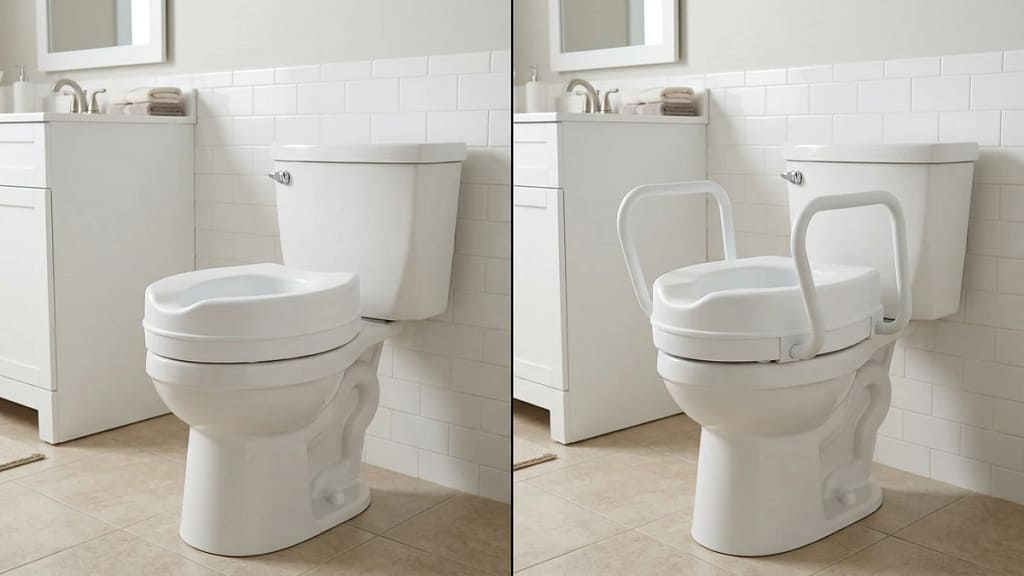
Some seniors only need help reducing bending, but others need extra control while sitting down and standing up.
- Basic seats work better when height is the only problem
- Seats with handles help when balance or control is also a concern
- More support usually matters more when daily movement already feels uncertain
This is also why safety should be part of the decision from the beginning. A raised toilet seat that adds height but still feels insecure is not the right choice.
Where do safety problems usually come from? Our guide to raised toilet seat safety for seniors covers what tends to matter most.
Make Sure the Seat Will Actually Fit the Toilet
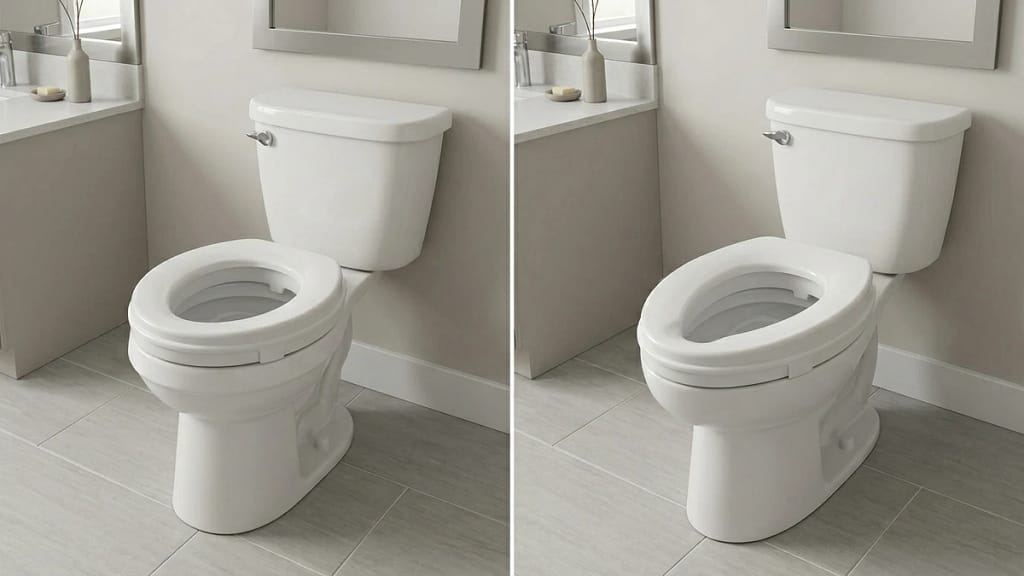
A raised toilet seat can only work well if it matches the toilet underneath it. Bowl shape, seat dimensions, and attachment style all affect whether the final setup feels secure.
- Round and elongated toilets do not always use the same seat shape
- Some designs fit a wider range of toilets than others
- A poor fit can affect stability even if the height looks correct
How to sanity-check the fit:
Confirm that the seat matches the bowl shape, sits evenly without rocking, and leaves enough usable contact area for the attachment system to grip securely.
If the seat only seems “close enough” on paper, it often feels less stable in real use, especially during sitting down or pushing back up.
Compatibility is the bigger question to settle before comparing products, and the most common fit limitations are covered in whether raised toilet seats fit every toilet.
Match the Seat to the Senior’s Specific Needs
Different seniors need different features, and a seat that works well for general daily use may not suit everyone.
- Seniors with arthritis or weak grip may need easier hand support and more controlled movement
- Seniors with balance concerns may need more than height alone
- Smaller bathrooms may call for a more compact design with a smaller footprint
Think About Daily Use, Not Just Features
The best raised toilet seat is not necessarily the one with the longest feature list. It is the one that fits the toilet, suits the user, and feels reliable during repeated daily use.
- Daily use puts more importance on comfort and stability
- Bathroom layout affects whether larger or more supportive designs are practical
- Body weight and movement patterns can change what feels secure over time
For example, a model that looks ideal on paper may still be the wrong choice if it feels bulky in a small bathroom or too basic for a senior who needs more support during standing. The better option is usually the one that fits the actual routine, not just the product description.
For a broader framework before comparing products, read how to choose a raised toilet seat, which walks through the full decision process step by step.
Which Type of Raised Toilet Seat Is Best for Different Senior Needs
Not every senior needs the same kind of raised toilet seat. The right choice usually depends on whether the main issue is grip strength, overall mobility, bathroom space, or the need for a sturdier setup.
Seniors with Arthritis or Weak Grip
When arthritis or weak grip is part of the problem, height alone may not be enough. In those cases, handle comfort and controlled movement matter more because the challenge is often pushing up safely rather than just reducing bending.
Arthritis and weak grip shift the priorities, and raised toilet seats for seniors with arthritis explains which features make the biggest difference.
Disabled Adults with Broader Mobility Limitations
Some seniors need more than added height. When mobility limitations are broader, the better choice usually depends on how stable and controlled the full sitting and standing movement feels from start to finish.
In those situations, the choice is less about convenience and more about building a setup that feels consistently safe. For more complex support needs, see raised toilet seats for disabled adults.
Seniors in Small Bathrooms
In smaller bathrooms, compact designs often make more sense than wider or more support-heavy models. Width, side clearance, and how bulky the seat feels can matter just as much as height.
Tight layouts call for a different shortlist, which the best raised toilet seats for small bathrooms compares side by side.
Seniors Who Need Higher Weight Support
When body weight and daily support demands are higher, sturdier construction and a more secure fit usually matter more than extra comfort features. In those cases, a heavier-duty model is often the safer long-term choice.
For seniors who need higher weight capacity, the best raised toilet seats for heavier users covers the models built to stay secure in everyday use.
The best type of raised toilet seat is the one that matches the senior’s actual movement difficulty, not just the general idea of needing more height.
Raised Toilet Seat vs Toilet Safety Frame
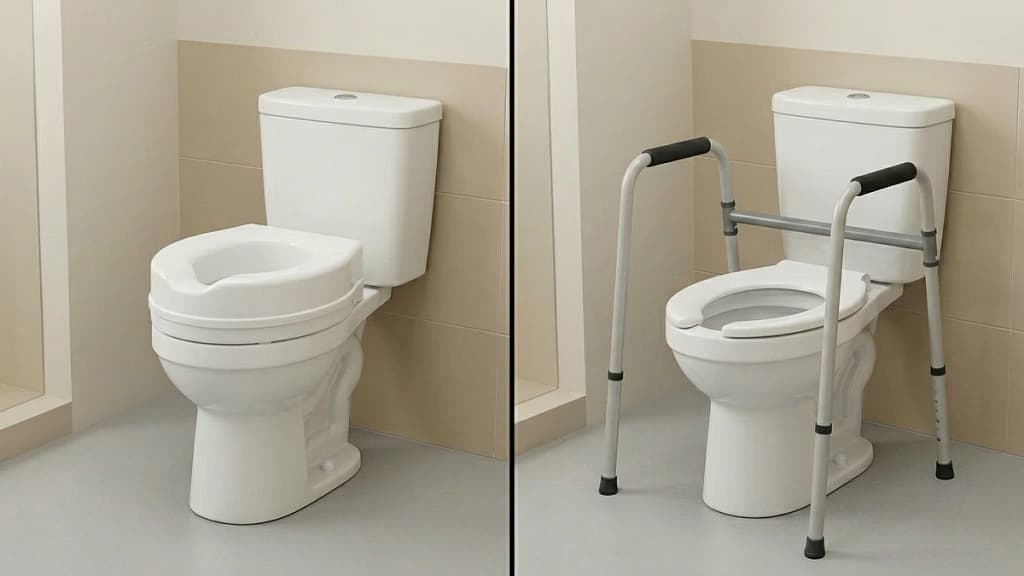
A raised toilet seat and a toilet safety frame solve related problems, but they do not do the same job.
A raised toilet seat helps by reducing how far the user has to lower down and push back up. A toilet safety frame helps by adding support on the sides, giving the user something stable to hold during movement.
A raised toilet seat is usually the better choice when:
- the main problem is toilet height
- sitting feels too low
- standing up requires extra effort
A toilet safety frame is usually the better choice when:
- balance is the bigger concern
- the user needs side support
- control during sitting and standing matters more than height alone
Example:
A senior with knee stiffness may feel much better with a raised seat because the lower position is the main problem. But a senior who feels unsteady during movement may benefit more from side handles even if the toilet height is not the main issue.
A closer comparison in toilet safety frames compared with raised toilet seats shows which one makes more sense in a given bathroom.
In many cases, the right answer depends on whether the main challenge is height, support, or both.
When Height Alone Is Not Enough
A raised toilet seat can reduce strain without fully solving the movement problem.
This usually becomes clear when:
- the senior still feels unsteady even with extra height
- standing up still feels risky after the height problem is addressed
- the user reaches for walls, counters, or other unstable surfaces
Example:
A senior may feel immediate relief from the added height but still hesitate when pushing back up because there is nothing secure to hold onto. In that case, the raised seat helps, but the setup still needs more support.
This is often the point where added support becomes more important than more elevation. To spot that shift earlier, read up on when seniors should add grab bars.
What Features Matter Most in Daily Use
The most useful features are the ones that improve daily use in ways the user will actually notice.
- A secure attachment system
Stability matters more than convenience if the seat will be used every day. - Support features, if needed
Handles, arm supports, or a wider seating area can make a major difference for seniors who need more control. - Comfort that matches daily use
For some users, hard plastic is fine. For others, a more comfortable surface matters because the seat is used frequently or for longer periods. - Realistic weight support
Stated capacity matters, but daily stability matters just as much; raised toilet seat weight limits shows why listed numbers and real-world stability are not always the same thing.
What I Recommend
For most seniors, the best starting point is the option that fits the widest range of needs rather than the most specialized design. That is the Bemis Assurance 3″ Raised Toilet Seat with Handles: the other picks each give up something to excel at one job, while this one stays dependable across most situations.
Bemis Assurance 3″ Raised Toilet Seat with Handles
FAQ
What is the best raised toilet seat for seniors?
The best one is the model that matches the senior’s height needs, support needs, toilet fit, and daily comfort requirements.
Are raised toilet seats safe for seniors?
Yes, when the seat fits the toilet correctly, stays stable during use, and matches the user’s real movement needs. A model that adds height but shifts, feels awkward, or lacks enough support can still be the wrong choice even if it looks fine on paper.
What height is best for seniors?
It depends on the user, but the right height should reduce strain without making the setup feel unstable.
Do seniors need handles on a raised toilet seat?
Some do, especially when balance or control during sitting and standing is a concern.
Will a raised toilet seat fit any toilet?
No. Bowl shape, attachment style, and overall toilet compatibility still need to be checked.
When is a toilet safety frame better than a raised toilet seat?
A safety frame is often better when side support and balance matter more than extra height alone.
Final Thoughts
Answering one question first makes everything else easier: is the main problem height, support, or both? Once that is clear and the seat has been checked against the toilet’s shape and tank clearance, the choice usually narrows to one or two models.
