
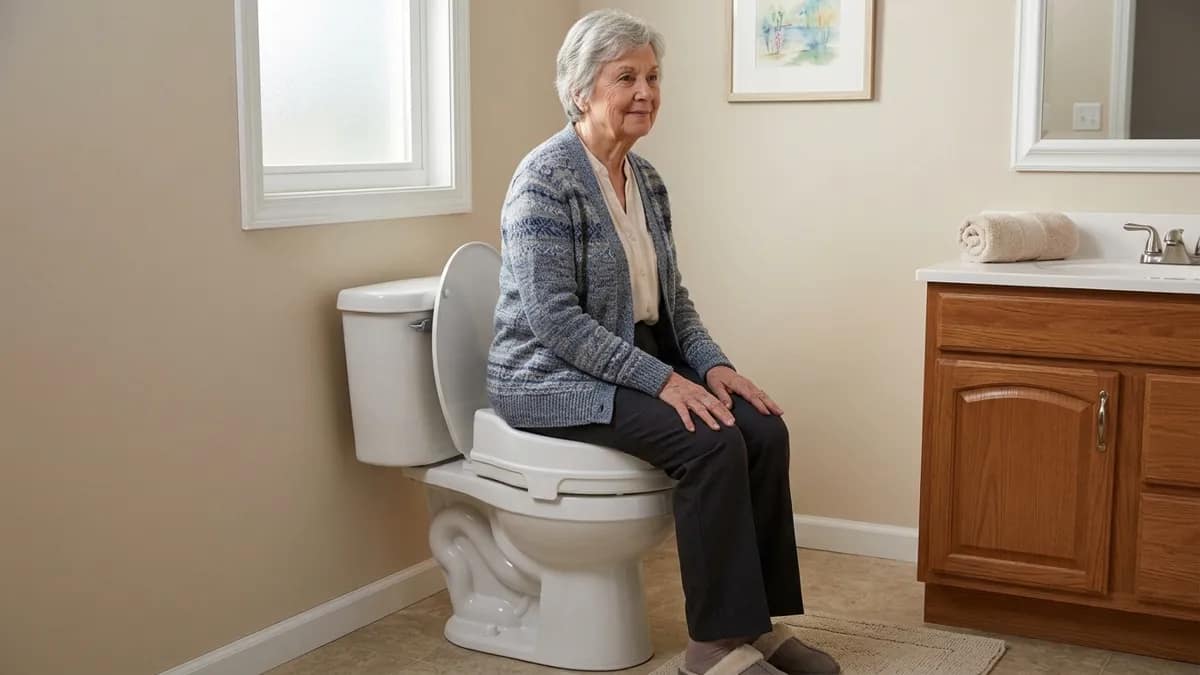
Choosing the right raised toilet seat can make a clear difference in comfort, safety, and independence. But with different heights, styles, and support features available, it is not always obvious which option is the right fit.
If you’re wondering how to choose a raised toilet seat, the key is to look at height, fit, stability, and mobility needs together rather than focusing on one feature alone.
This guide breaks the decision into simple steps so you can choose a setup that feels practical, stable, and comfortable in daily use.
Disclosure: As an Amazon Associate, I earn from qualifying purchases. This post may contain affiliate links. If you purchase through these links, I may earn a small commission at no extra cost to you. I only recommend products I would feel comfortable using in my own home. Learn more.
On This Page
Quick Answer
To choose a raised toilet seat, measure your current toilet height, decide how much extra height you need, and select a design that fits your toilet and provides the right level of support.
- Measure your current toilet height first
- Choose a height that reduces strain without affecting balance
- Pick a seat type based on comfort and support needs
- Make sure the seat fits your toilet shape properly
- Prioritize stability and ease of use over extra features
The best choice should make sitting and standing easier while still feeling stable and secure during everyday use.
If safety is your main concern, this guide on whether raised toilet seats are safe for seniors explains what affects stability most and when a raised seat may need extra support.
When Seniors Should Consider Using a Raised Toilet Seat
A raised toilet seat is worth considering when using the toilet starts to feel physically difficult, even if the bathroom is still otherwise manageable.
In many cases, the issue is not a complete loss of independence, but a growing strain during everyday movements like sitting down and standing back up.
This usually becomes noticeable when:
- Sitting down feels too low or uncomfortable
- Standing up requires extra effort or multiple attempts
- Knee, hip, or joint stiffness makes movement harder
Example:
A senior with mild arthritis may still move around independently but start to notice that using a standard toilet takes more effort than it used to. In that situation, a raised toilet seat can reduce strain before the movement becomes disruptive enough to affect confidence or independence.
The same can apply after a temporary setback, such as illness, recovery, or a drop in mobility. What matters most is not whether the person can still use the toilet, but whether the movement feels safe and controlled without unnecessary effort.
If you’re unsure whether now is the right time, this guide on when seniors should use a raised toilet seat explains the most common signs to look for.
In practice, a raised toilet seat is most useful when the toilet has started to feel physically demanding, but added height could still make daily use noticeably easier and safer.
Step-by-Step: How to Choose the Right Raised Toilet Seat
Understanding how to choose a raised toilet seat becomes much easier when the decision is broken into a few practical steps.
The goal is not just to pick a seat that looks right on paper, but to choose one that feels stable, comfortable, and appropriate for daily use.
Step 1: Measure Your Current Toilet Height
Start by measuring the height of your current toilet from the floor to the top of the seat. This gives you the baseline you need before deciding how much extra height to add.
- Standard-height toilets usually sit lower and may require more added height.
- Comfort-height toilets already sit higher, so they often need less adjustment.
For example, someone using a standard-height toilet may benefit from a 3- or 4-inch raised seat, while the same amount of added height might feel excessive on a comfort-height toilet.
Before choosing a raised seat, it helps to understand the starting point. This guide on standard toilet vs comfort height toilet explains how base toilet height affects the amount of extra elevation you may actually need.
Step 2: Decide How Much Height You Need
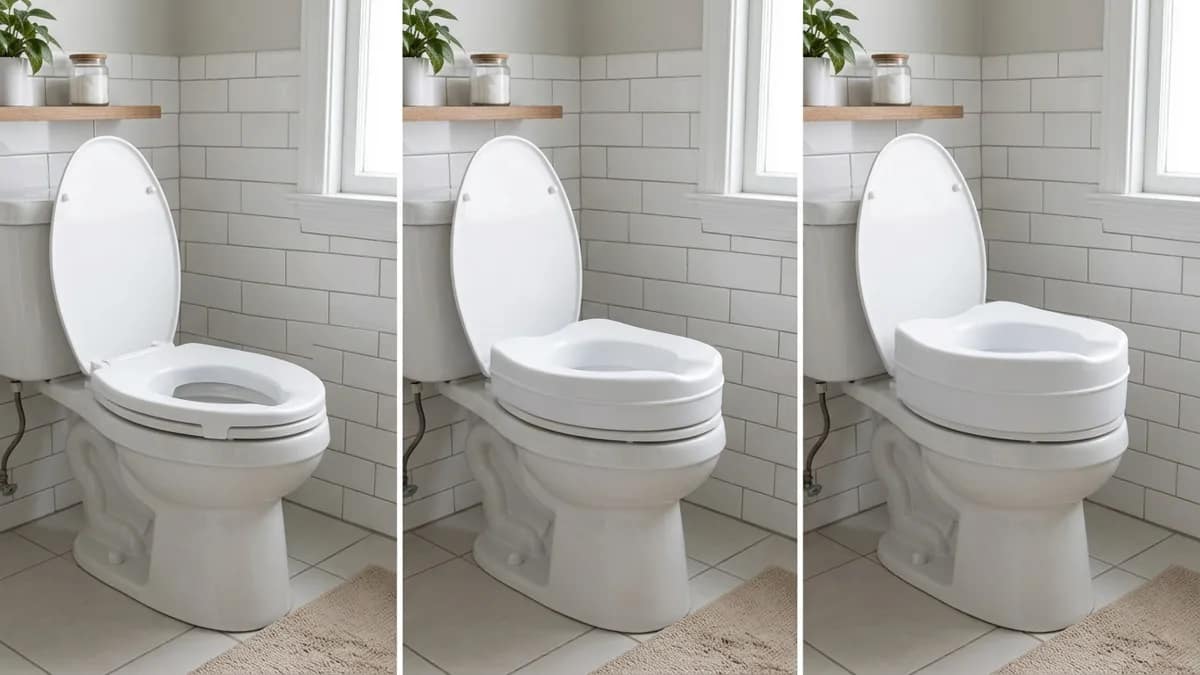
Once you know your current toilet height, the next step is deciding how much additional height will actually make movement easier.
Most people do not need the highest option available—they need the height that reduces strain without affecting balance.
- 2 inches often works for mild stiffness or minor difficulty standing.
- 3 inches is a common middle-ground option for general support.
- 4 inches or more is often better when bending is very limited.
For example, someone with mild knee discomfort may feel comfortable with a 2-inch rise, while someone recovering from hip surgery may need 4 inches or more to reduce bending enough.
If you are unsure which option makes the most sense for your situation, it helps to compare seat height with your comfort and mobility needs. This guide on what height raised toilet seat do I need explains how different height options affect everyday control, stability, and ease of movement.
Step 3: Choose the Right Type of Seat

Raised toilet seats come in several styles, and the right type depends on what kind of support you actually need. Height is only one part of the decision. Comfort, stability, and ease of use matter just as much.
- Basic raised seats are best when you only need height adjustment.
- Padded seats are more comfortable when sitting for longer periods is common.
- Seats with handles provide better control when sitting down and standing up.
For example, someone with mild mobility issues may do well with a standard raised seat, while a person who feels unsteady during movement may need handles to make the setup feel more secure.
Step 4: Check Compatibility with Your Toilet
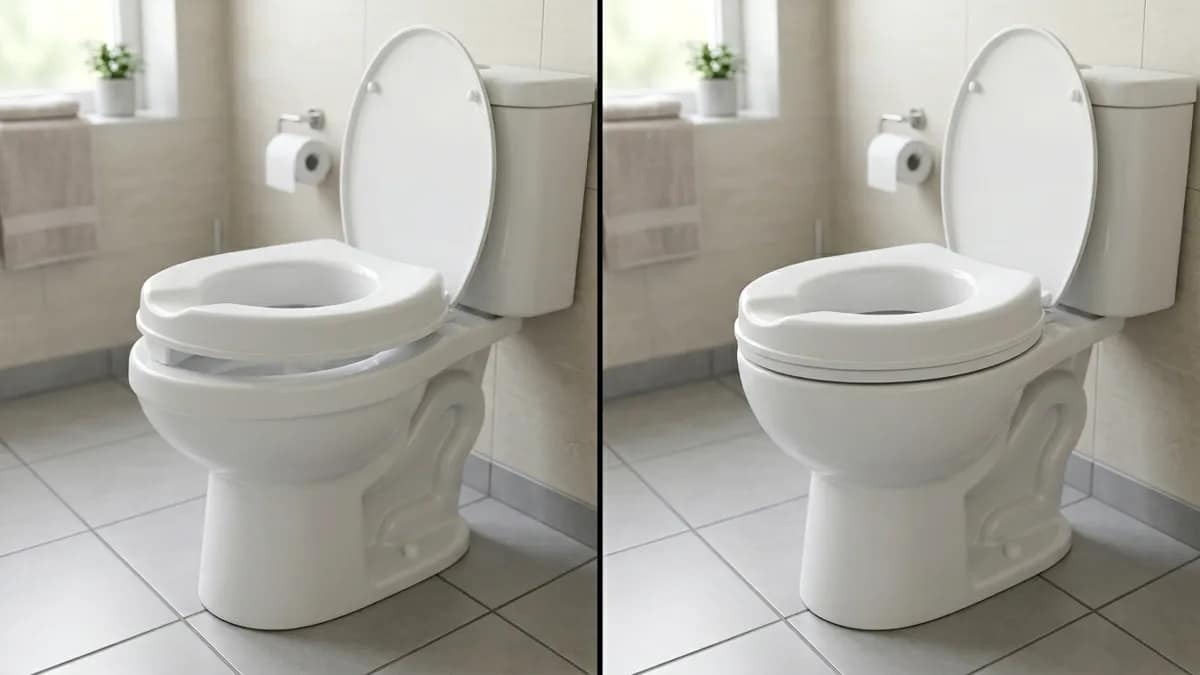
Even the right height and style will not work well if the seat does not fit the toilet properly. Shape and fit are easy to overlook, but they directly affect stability.
- Round toilets need seats designed for round bowls.
- Elongated toilets need longer seat shapes for a stable fit.
- Attachment design should match how firmly you want the seat secured.
How to sanity-check the fit:
Confirm that the seat matches the toilet shape, rests evenly without rocking, and leaves enough flat contact area for the attachment system to hold securely.
If the seat only seems “close enough” on paper, it often feels unstable in real use—especially during sitting down or pushing back up.
A poor fit may not be obvious right away, but it often shows up during real use as slight shifting, uneven pressure, or reduced confidence when sitting down.
If you are not sure whether a seat will match your toilet at all, an article on do raised toilet seats fit all toilets can help explain the most common compatibility limits and fit issues to check before buying.
Because bowl shape is one of the most common reasons a seat feels wrong in practice, an article on raised toilet seat round vs elongated can help explain how shape changes what will fit securely.
Step 5: Consider Stability and Safety Features
A raised toilet seat should not only add height—it should also feel secure during everyday movement. Stability becomes especially important when the user already feels hesitant or unsteady.
- Look for designs with secure locking or clamping systems.
- Pay attention to whether the seat sits flat and evenly on the toilet.
- Consider handles or added support if balance is a concern.
For example, a seat that adds the right amount of height but still shifts slightly can feel less safe than a slightly lower model that stays completely stable.
If the user will place significant pressure through the seat during transfers, it also helps to understand how much weight a raised toilet seat can hold and when a sturdier design may be the safer option.
Support features become even more important when body weight and movement put extra stress on the setup. This is similar to how other bathroom supports are evaluated. This guide on how much weight grab bars can hold helps explain why support capacity and stability matter in real use.
Step 6: Match the Seat to Your Mobility Needs
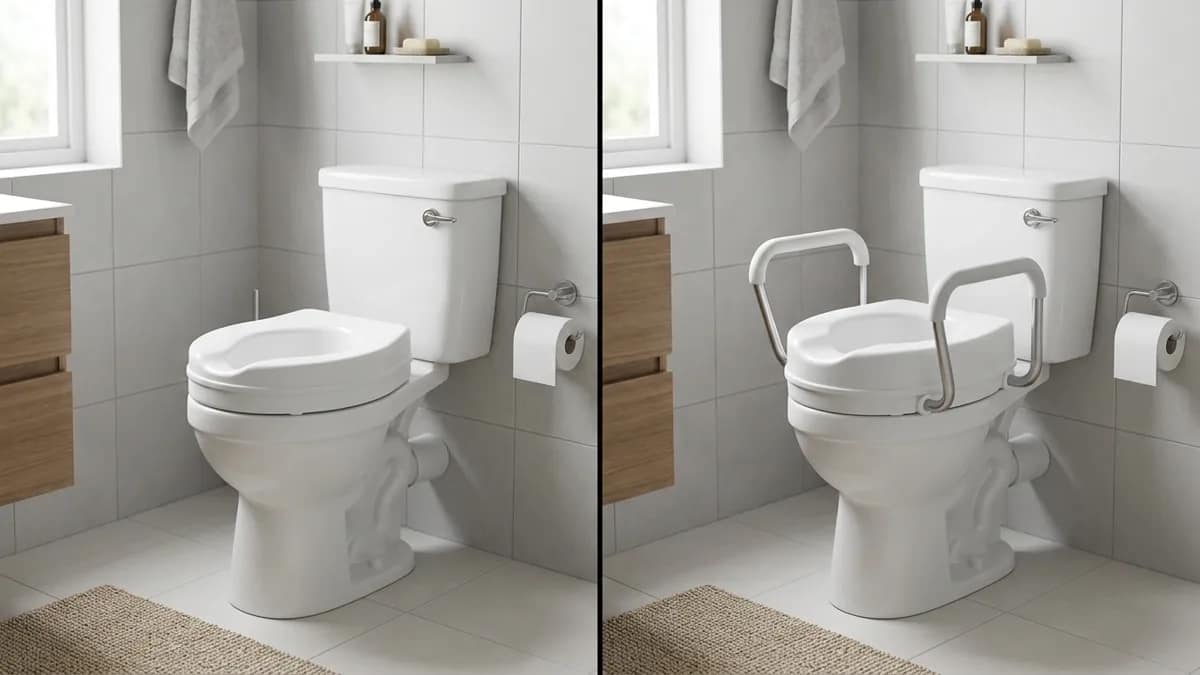
The final step is making sure the seat matches the user’s actual physical needs, not just the toilet setup. A raised toilet seat that works well for one person may feel completely wrong for another.
- Mild mobility difficulty may only require a simple height increase.
- Reduced strength or balance may call for handles or additional support.
- More significant physical limitations may require a seat designed for higher support needs.
Example:
Someone with mild stiffness may only need extra height to reduce strain, while a disabled adult with more complex mobility needs may need a seat that supports safer, more controlled movement from start to finish. The right seat depends on how much support the full movement actually requires.
Taken together, these steps make the decision much more practical. Instead of choosing a raised toilet seat based on one feature alone, you can evaluate height, fit, support, and daily usability as part of the same setup.
Key Features That Matter Most
When learning how to choose a raised toilet seat, the features that matter most are the ones that directly affect comfort, fit, stability, and everyday use.
This is where many choices start to feel similar on the surface, even though small differences can make one model much better suited to your situation than another.
The most important features are not just about convenience. They directly affect how the seat feels during real use—especially when sitting down, standing up, or adjusting your position.
- Height
Height is the feature most people notice first because it changes how far you need to lower yourself and how much effort it takes to stand back up. The right height should reduce strain without making the seated position feel unstable or overly elevated. - Fit and toilet shape
A raised toilet seat should match the shape of the toilet bowl closely. If the fit is off, even by a small amount, the seat may feel less secure or less comfortable during daily use. - Width and seating area
Width affects how supported and comfortable the seat feels. A seat that is too narrow may feel restrictive, while one that is too wide for the toilet can create fit or stability issues. - Attachment system
Some seats rely on simple clamp-on designs, while others use more secure locking systems. The attachment method affects both stability and ease of setup, especially if the seat will be removed or adjusted later. - Material and surface comfort
Hard plastic surfaces are common and easy to clean, while padded options may feel more comfortable for longer use. The right material depends on how often the seat is used and how much comfort matters in that setup. - Weight capacity and overall stability
A raised toilet seat should not only fit well but also feel solid under normal movement. Stability is especially important for users who shift weight slowly, rely on controlled sitting, or need more confidence while standing.
For example, someone may choose the correct height but still feel uncomfortable because the seat shape does not match the toilet properly, or because the seating area feels too narrow. In those cases, the problem is not height—it is fit and overall design.
If the seat may need to be taken off for cleaning, sharing a bathroom, or short-term recovery, the attachment system matters even more in practice. This guide on whether raised toilet seats can be removed easily explains how different designs affect everyday removal and reattachment.
This is where dimensions become more important than many people expect.
Looking at width, depth, and overall seat measurements can help you avoid buying something that technically works but feels awkward in daily use. This guide on raised toilet seat dimensions and fit explains which measurements matter most and how they affect usability.
In practice, the best raised toilet seat is not the one with the longest feature list. It is the one that combines the right height, fit, and stability for the person who will actually use it every day.
Raised Toilet Seat vs Other Options
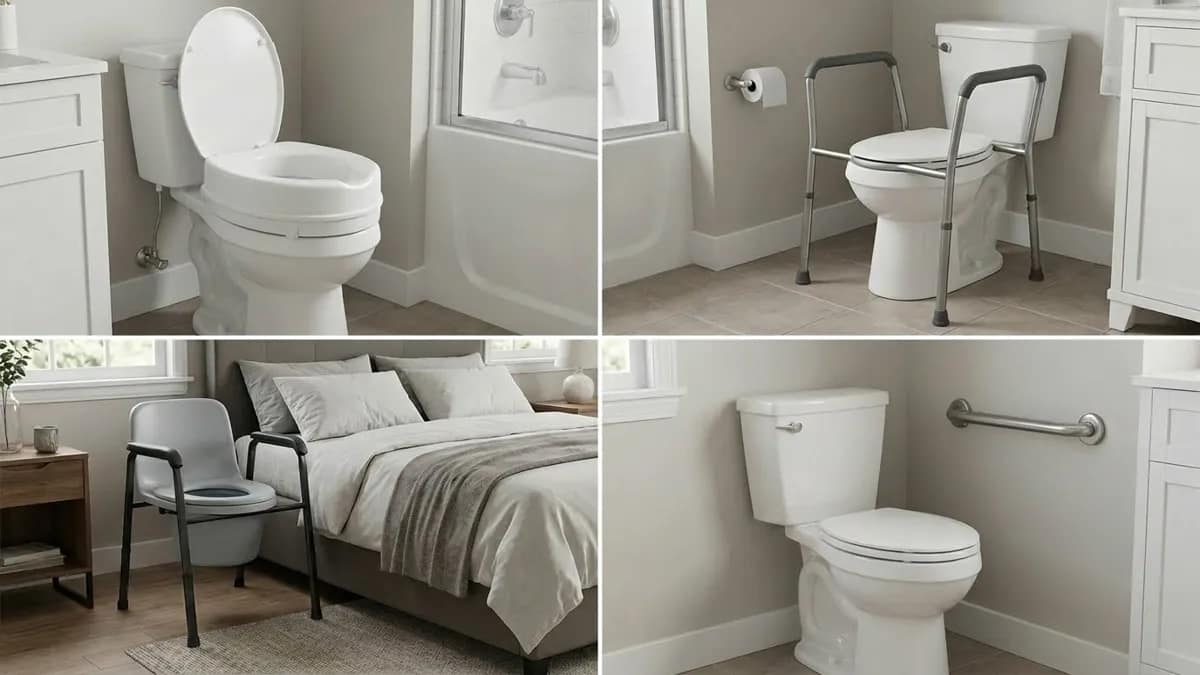
A raised toilet seat is helpful when the main goal is to reduce bending, but it is not the only option available. In many real-life situations, the better choice depends on whether the user needs more height, more support, or easier access to the toilet.
Looking at the alternatives side by side makes the decision clearer, especially when the problem is not just discomfort but also balance, mobility, or limited bathroom access.
- Raised toilet seat
Best when the main issue is sitting down too low or needing to reduce strain when standing up. It works well for people who can still use the bathroom independently but need extra height to make movement easier. - Toilet safety frame
Best when support is the bigger issue than height. Safety frames add handles on both sides of the toilet, which can make sitting and standing feel more controlled for someone who needs something stable to hold onto. - Bedside commode
Best when getting to the bathroom is difficult or unsafe. Unlike a raised toilet seat, a bedside commode is a separate portable toilet solution, so it is more appropriate when mobility is significantly limited or nighttime access is a concern. - Grab bars near the toilet
Best when the user needs a fixed support point during movement. Grab bars do not add height, but they can improve confidence and control while sitting down or standing up, especially when balance is part of the problem.
For example, someone with mild knee stiffness may only need a raised toilet seat to make standing easier. But if the same person also feels unsteady while lowering themselves or pushing back up, added support from a safety frame or grab bar may make a bigger difference than height alone.
Among these alternatives, toilet safety frames are one of the most commonly compared options because they solve a different part of the same problem.
If you want a closer look at how handle-based support compares with added toilet height, this guide on toilet safety frames compared with raised toilet seats explains when each one makes more sense.
In practice, the best option depends on what feels difficult during real use. If the problem is bending, height usually matters most. If the problem is balance or control, support often matters more.
Common Mistakes When Choosing a Raised Toilet Seat
Many problems with raised toilet seats start before installation, simply because the wrong type or height was chosen from the beginning.
- Choosing too much height
A seat that is too high can make sitting feel less controlled and reduce overall stability. - Ignoring toilet shape and fit
Even the right height can feel unsafe if the seat does not match the toilet properly. - Focusing only on comfort
A softer or more comfortable seat is not always the safest if stability is poor. - Overlooking support needs
Some users need handles or grab bars in addition to added height, not height alone. - Skipping installation and stability checks
A good seat can still feel unreliable if it is not attached and tested correctly.
A lot of these issues only become obvious after the seat is already in use, which is why proper setup matters as much as product choice.
If you want to avoid problems caused by poor attachment or uneven fit, this guide on installing a raised toilet seat correctly explains what to look for from the start.
And once the seat is installed, this guide on how to secure a raised toilet seat properly explains how to keep it stable during everyday use.
Most of these mistakes are avoidable once you focus on fit, stability, and how the seat will actually be used day to day.
When a Raised Toilet Seat Is Not Enough
A raised toilet seat can make sitting and standing easier, but it does not solve every toilet safety problem. In some situations, added height helps with one part of the movement while other limitations still remain.
This is most common when the difficulty involves more than just bending. If balance, bathroom access, or full movement support are also part of the problem, a raised toilet seat may need to be combined with another solution.
- Balance problems in addition to low toilet height
A raised seat may reduce strain, but it does not provide anything stable to hold onto during sitting or standing. - Very limited mobility during recovery
In some recovery situations, even reaching the bathroom can be difficult, so a raised toilet seat alone may not be practical. - Need for more controlled movement
Some users need both reduced bending and added support to feel safe from start to finish.
These situations usually become clearer when you look at how raised toilet seats are combined with other support options in real life.
- Raised toilet seat during the day, bedside commode at night
A senior with limited mobility may still manage regular bathroom use during the day, but need a bedside commode at night to avoid longer walks and reduce fall risk. If you want to understand how these two options differ, this guide on raised toilet seat compared with a bedside commode explains when each one makes more sense. - Raised toilet seat with a grab bar nearby
This works well when toilet height is part of the problem, but balance is also a concern. The raised seat reduces bending, while the grab bar provides a steady handhold during movement. - Raised toilet seat with a toilet safety frame
This combination is useful when the user needs both extra height and side support. The raised seat changes the sitting height, while the frame helps control sitting down and standing up. - Raised toilet seat with temporary support during recovery
In short-term recovery situations, a raised seat may handle the height issue, but additional removable support may still be needed until strength and confidence improve.
In practice, a raised toilet seat works best when height is the main issue. When balance, access, or support become equally important, combining solutions usually creates a safer and more practical setup.
What I Recommend
The best raised toilet seat is the one that solves the specific movement difficulty the user is actually facing, rather than the one with the most features.
- Start with a height that reduces strain without making sitting feel unstable
- Choose a seat shape and attachment style that fits the toilet properly
- Add handles or other support features if control during sitting and standing is a concern
For many people, the right choice becomes much clearer after comparing how different designs perform in real situations. This guide to the best raised toilet seats for seniors breaks down options based on comfort, stability, and ease of use.
If the seat still does not solve the full problem, that is usually a sign that more support is needed rather than just more height.
FAQ
What height raised toilet seat should I choose?
Most people benefit from a 2–4 inch increase, depending on mobility, comfort, and the height of the existing toilet. The best choice should reduce strain without making sitting feel unstable or overly high.
Will a raised toilet seat fit my toilet?
It depends on whether your toilet is round or elongated, and whether the seat’s attachment system matches the toilet properly. A good fit is important for both comfort and stability during real use.
Do I need handles?
Handles are helpful if balance or control is a concern. They make sitting down and standing up feel more stable for users who need extra support during the movement, not just extra height.
Are raised toilet seats safe?
Yes, when properly chosen and installed. Safety depends on the right fit, a secure attachment system, and whether the seat provides enough stability for the user’s actual movement needs.
What is the best option for seniors?
The best option depends on how much height, stability, and support the user actually needs. For some people, a simple raised seat is enough, while others may need handles or added support nearby to feel safe and controlled.
Do I need a raised toilet seat with handles?
Handles are helpful when the main difficulty is not just toilet height, but also control during sitting and standing. They can make movement feel more stable for users who feel unsteady or need extra support.
Final Thoughts
Knowing how to choose a raised toilet seat comes down to matching height, fit, stability, and support needs to the person who will actually use it.
A well-chosen seat should make daily movement easier without creating new balance, comfort, or setup problems.
When the right height, toilet fit, and support features come together, the result is a setup that feels safer, more practical, and easier to rely on every day.
