
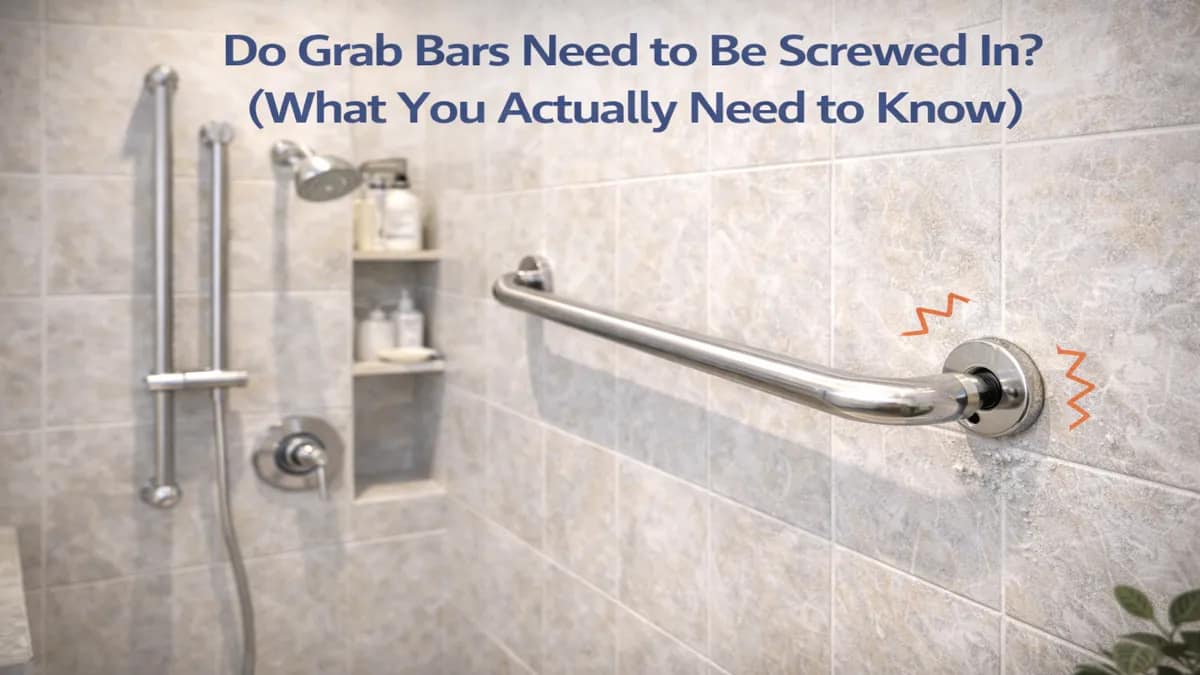
Many people ask: do grab bars need to be screwed in to provide safe and reliable support, or are there alternatives that work just as well?
At first glance, it may seem possible to avoid drilling. However, this is where confusion often leads to unsafe setups.
For a grab bar to provide real support—especially in areas like showers or near toilets—it must be able to handle sudden weight and pressure. That level of reliability depends heavily on how the bar is installed.
Understanding when and why secure mounting is required is essential for making a safe and effective decision.
Disclosure: As an Amazon Associate, I earn from qualifying purchases. This post may contain affiliate links. If you purchase through these links, I may earn a small commission at no extra cost to you. I only recommend products I would feel comfortable using in my own home. Learn more.
On This Page
Quick Answer
In most cases, grab bars should be screwed into the wall, ideally into wall studs.
This allows them to:
- support body weight
- stay stable under pressure
- provide reliable support during slips
There are alternatives—like suction grab bars—but those are meant for temporary balance assistance, not full support.
If safety is the priority, a properly screwed-in grab bar is the better choice.
Why Screwing Grab Bars Into the Wall Matters
When I first started learning about bathroom safety, I underestimated how much force a grab bar might need to handle.
It’s not just about gently holding on. It’s about those sudden moments—when someone slips on a wet surface or loses balance and grabs the bar quickly.
That kind of movement puts real pressure on the installation.
A grab bar that’s screwed into a solid structure—like a wall stud—can handle that force without shifting. But if it’s only attached to drywall or weak anchors, it may loosen over time or fail when it’s needed most.
That’s why proper installation isn’t just a recommendation—it’s what makes the grab bar actually work as a safety feature.
If you want a better sense of the forces involved, it helps to understand how much weight grab bars can hold, because that explains why installation matters so much.
What Happens If Grab Bars Aren’t Properly Installed?
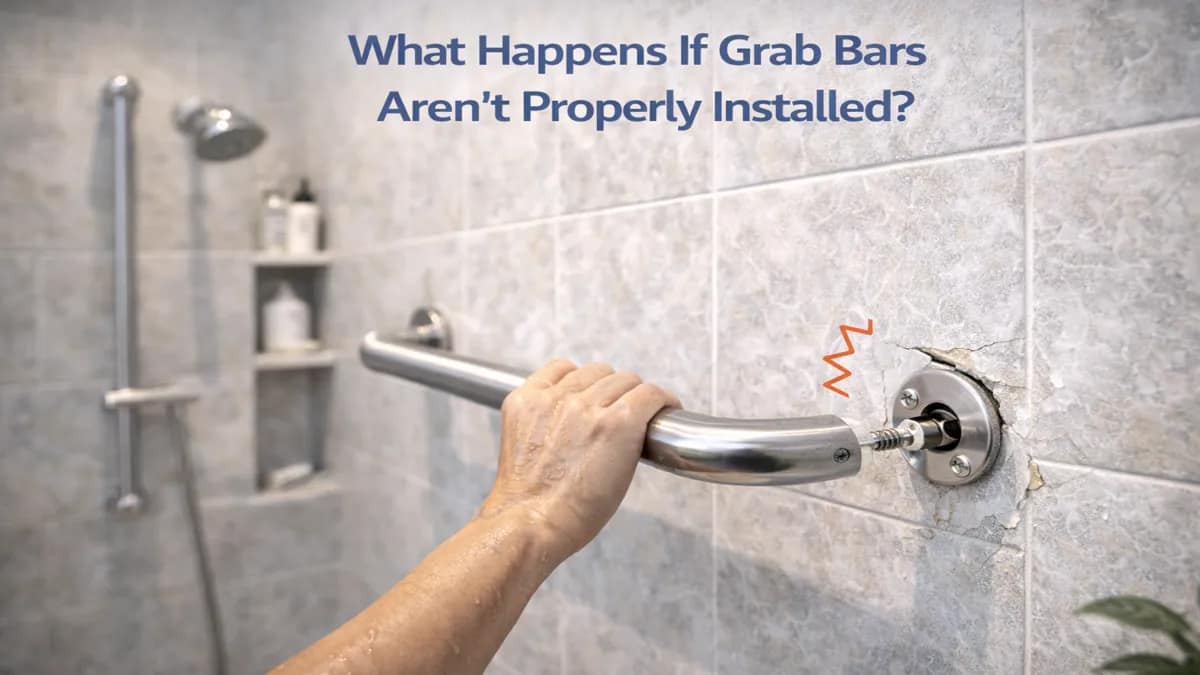
This is where things can go wrong.
A grab bar might feel secure at first—even if it’s not installed correctly. But under real pressure, that can change quickly.
I’ve seen situations where:
- the bar loosens over time
- anchors shift inside the wall
- or worse, the bar pulls out completely
The biggest issue is false confidence. If someone trusts the bar and it fails when they need it most, the risk of injury increases significantly.
That’s why installation isn’t something I’d cut corners on.
Do Grab Bars Always Need to Go Into Studs?
Ideally, yes.
Mounting into studs provides the strongest and most reliable support. That’s the gold standard for grab bar installation.
But in real life, it’s not always possible.
Sometimes:
- studs don’t line up with ideal placement
- walls are made of tile or fiberglass
- layout limitations get in the way
In those cases, you can use heavy-duty anchors designed specifically for grab bars.
The key is using the right hardware—not standard drywall anchors. There are anchor systems made to handle high loads, and they can work well when installed correctly.
Installation approaches can vary depending on the surface, especially when installing grab bars in fiberglass showers, where proper anchoring and technique are critical.
Are Screw-Free Grab Bars Safe?
This is where a lot of confusion comes in.
There are grab bars that don’t require drilling—usually suction-based models.
And to be fair, they do have a place.
I think of them as:
- temporary solutions
- travel-friendly options
- short-term support
But they’re not designed to support full body weight.
They rely on suction, which can weaken over time or fail unexpectedly—especially if the surface isn’t perfectly smooth.
If you want to understand the difference more clearly, it helps to compare suction vs permanent grab bars, because they serve very different purposes.
When a Non-Screwed Grab Bar Might Make Sense
Even though I prefer screwed-in grab bars, there are situations where alternatives can still be useful.
For example:
- temporary living situations
- rental properties where drilling isn’t allowed
- travel setups
- short-term recovery periods
In these cases, suction grab bars can provide a small amount of added stability—but it’s important to understand their limits.
They are not designed to catch a fall or support full body weight.
I always think of them as a “steadying hand,” not a safety device. As long as that expectation is clear, they can still be helpful in the right context.
What I Recommend
For applications where safety is the priority, a wall-mounted grab bar secured into wall studs provides the most reliable support.
This type of installation offers consistent stability and is better suited for handling real-world force compared to temporary or non-fixed options.
In most bathrooms, a properly positioned grab bar in the 18–24 inch range is sufficient for common movements such as standing, sitting, and maintaining balance.
While different products may vary in design, installation quality has a greater impact on overall safety than the product itself.
FAQ
Can grab bars be installed without drilling?
Yes, suction grab bars don’t require drilling, but they are not designed to support full body weight and should only be used for temporary assistance.
Do grab bars have to be installed into studs?
Ideally, yes. Stud installation provides the strongest support. If that’s not possible, use heavy-duty anchors designed for grab bars.
Are suction grab bars safe for seniors?
They can help with balance, but they are not a replacement for wall-mounted grab bars and should not be relied on for full support.
What is the safest way to install a grab bar?
The safest method is to screw it into wall studs using proper mounting hardware designed for grab bars.
Can you install grab bars on tile walls?
Yes, but it requires proper tools and careful drilling. In many cases, professional installation may be a good option.
Final Thoughts
So, do grab bars need to be screwed in? In most cases, yes.
That’s what allows them to handle real pressure and provide reliable support when it’s actually needed.
There are alternatives, but they serve different purposes. If you’re thinking long-term safety, a properly installed grab bar is hard to replace.
If you’re still comparing options, it can also help to look at the best grab bars for seniors to see which models work best across different situations.
It’s one of those small upgrades that doesn’t take much—but can make a big difference.
