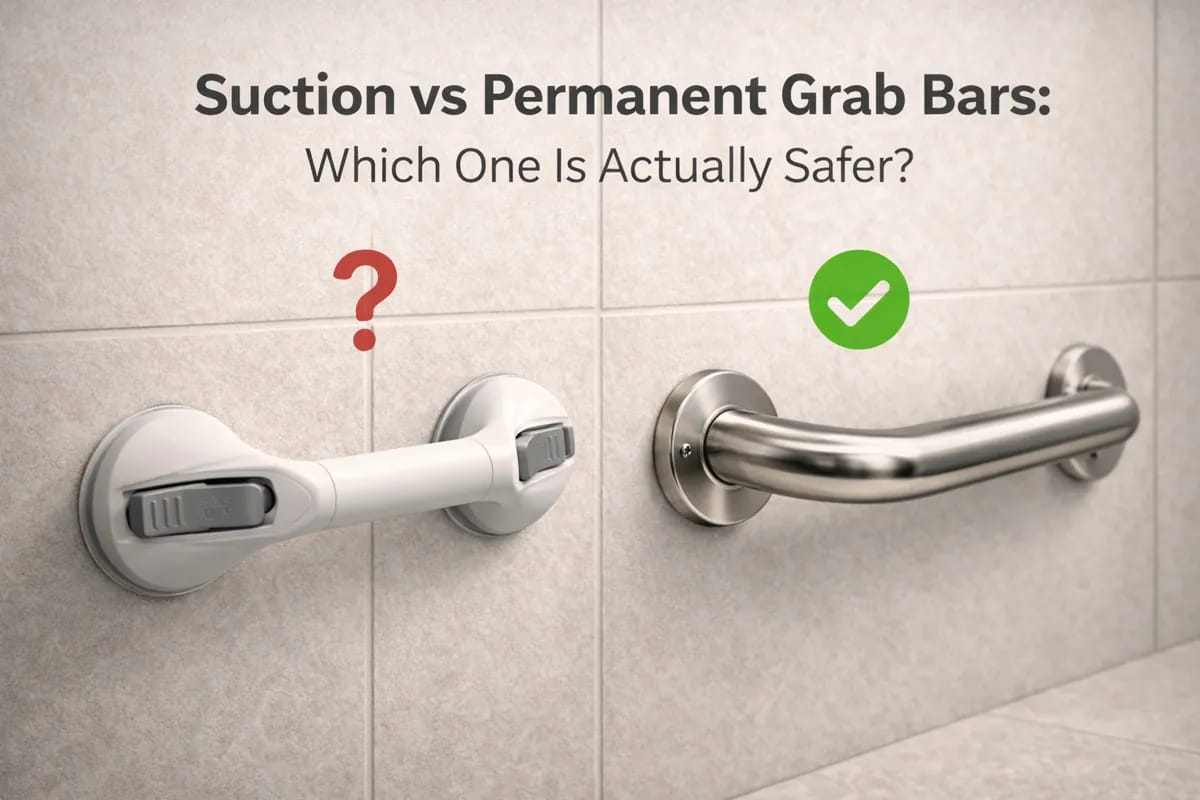
When I first looked into grab bars, I assumed they were all basically the same. A bar is a bar, right?
It didn’t take long to realize that’s not the case at all.
The biggest confusion usually comes down to one question: suction vs permanent grab bars—which one should you choose? On the surface, suction bars look easier. No drilling, no tools, just attach and go. Permanent grab bars feel like more effort, but also more secure.
The truth is, they serve very different purposes. And choosing the wrong one for the situation can create a false sense of safety.
In this guide, I’ll break down the real differences between suction and permanent grab bars, when each one works, and what I’d personally use in a real bathroom setup.
Disclosure: As an Amazon Associate, I earn from qualifying purchases. This post may contain affiliate links. If you purchase through these links, I may earn a small commission at no extra cost to you. I only recommend products I would feel comfortable using in my own home. Learn more.
What Are Suction Grab Bars?
Suction grab bars are designed to attach to smooth surfaces using suction cups. They don’t require drilling, which makes them appealing for renters or temporary setups.
You simply press them against tile or glass, lock them into place, and they feel secure at first.
That ease of use is what makes them popular. They’re quick to install and easy to remove, which makes them useful in certain situations like travel or short-term use.
However, their strength depends entirely on the surface and the suction seal. If the surface isn’t perfectly smooth—or if the suction weakens over time—the stability can change.
That’s why they’re generally considered a balance support tool, not a full safety solution.
What Are Permanent Grab Bars?
Permanent grab bars are mounted directly into the wall using screws. Ideally, they’re installed into wall studs, which allows them to support full body weight.
This is what makes them the standard choice for long-term bathroom safety.
Once installed properly, they don’t move. They provide consistent, reliable support for standing, stepping, and turning.
Of course, installation takes more effort. You need tools, proper placement, and a bit of planning. But that extra effort is what makes the difference in real-world safety.
If you’re not familiar with the process, it’s worth learning how to install grab bars in studs, because that’s what gives them their strength.
Suction vs Permanent Grab Bars: Key Differences
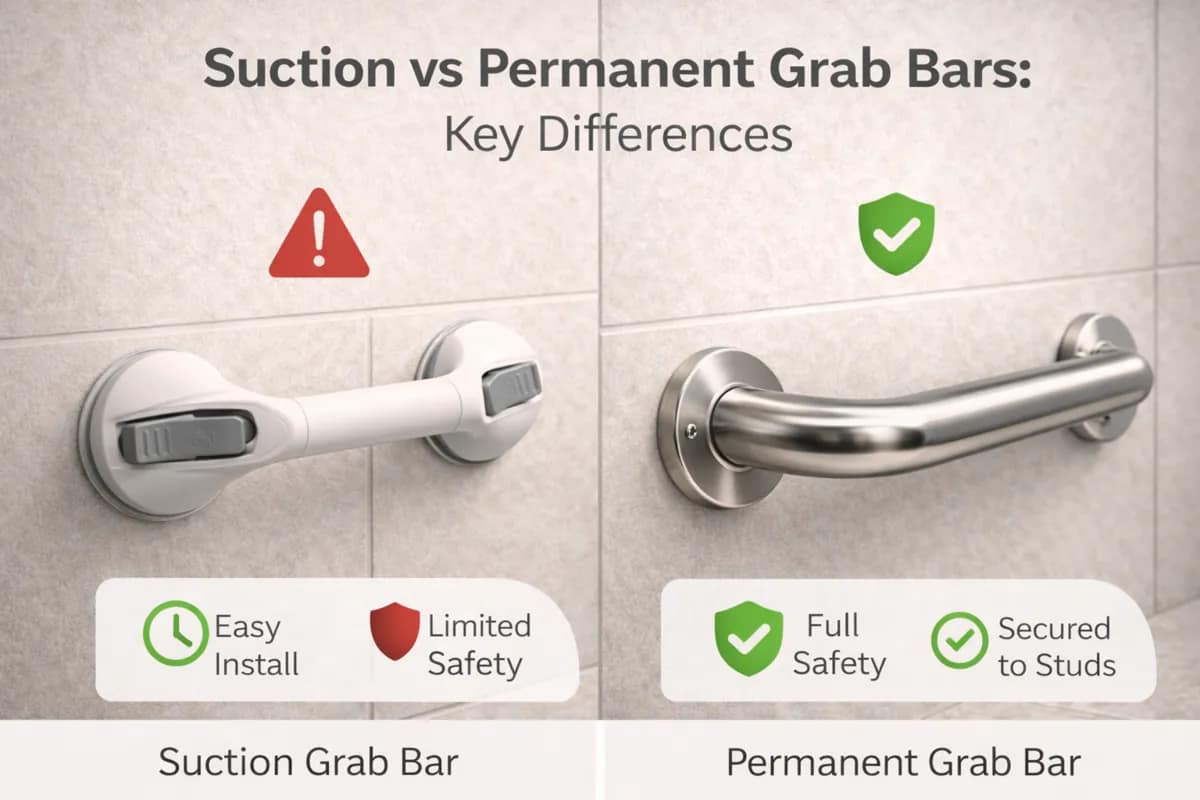
When comparing suction vs permanent grab bars, the biggest differences come down to strength, reliability, and intended use.
Strength
Permanent grab bars are designed to support full body weight. When installed correctly, they can handle significant force without moving.
Suction grab bars are not built for that. They’re meant to assist with balance, not to catch a fall.
This is why it’s important to understand are suction grab bars safe for seniors before relying on them for support.
Reliability
Permanent grab bars provide consistent support. Once installed, their strength doesn’t change unless something is damaged.
Suction grab bars can lose their seal over time. Even small changes—like moisture, temperature, or surface imperfections—can affect their grip.
Installation
Suction grab bars are quick and tool-free. This is their biggest advantage.
Permanent grab bars require proper installation, including drilling and anchoring into studs or using strong mounting systems.
Use Case
Permanent grab bars are best for:
- daily use
- high-risk areas
- long-term safety
Suction grab bars are best for:
- temporary situations
- travel
- light balance support
Are Suction Grab Bars Actually Safe?
This is where a lot of confusion comes in.
Suction grab bars can be safe—but only when used correctly.
They’re safe for:
- steadying yourself
- light support
- controlled movements
They are NOT safe for:
- catching a fall
- supporting full body weight
- high-risk users
The problem is that many people assume they can do more than they’re designed for.
If you want a deeper explanation, I’ve covered this in detail in are grab bars safe for seniors, where I break down what actually determines safety.
When Suction Grab Bars Make Sense
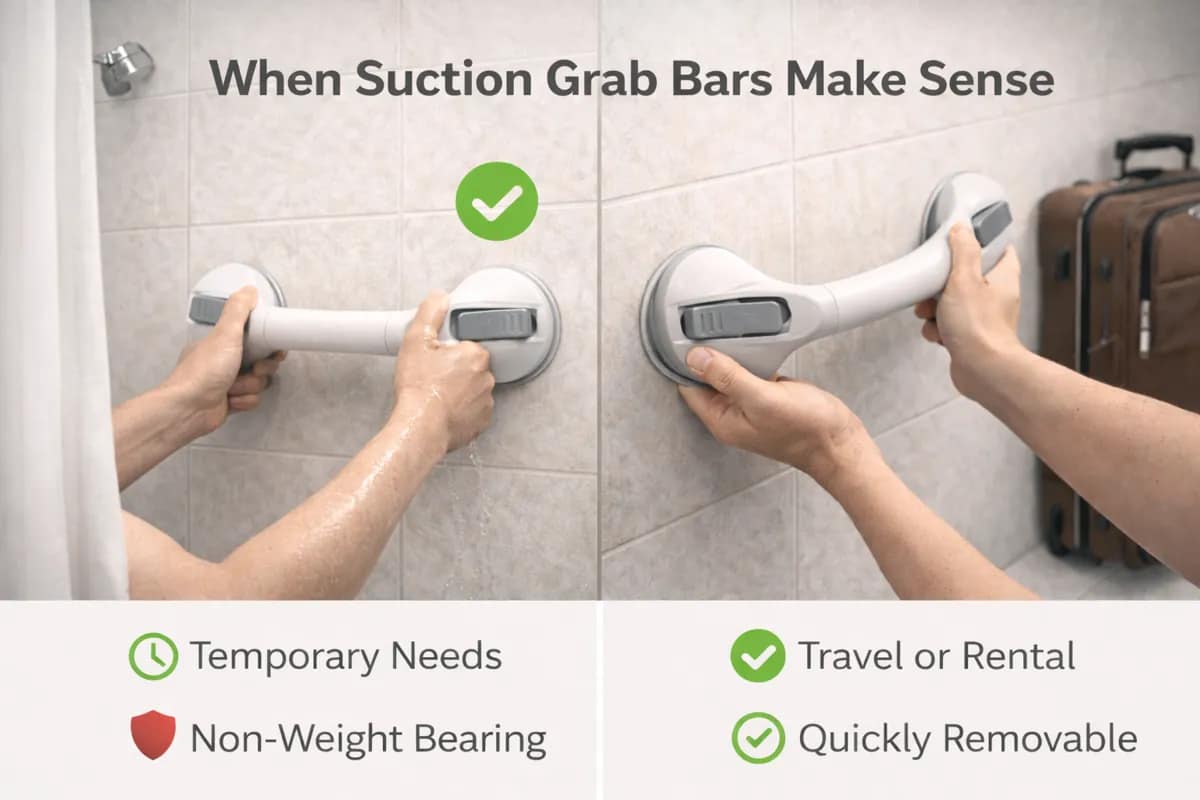
Despite their limitations, suction grab bars do have their place.
They can be useful in situations like:
- travel (hotels, short stays)
- temporary recovery periods
- rental properties where drilling isn’t allowed
In these cases, they provide a quick way to add some level of support.
However, they are best treated as a secondary safety tool rather than a primary support solution.
If suction grab bars fit your situation, reviewing the best suction grab bars for seniors can help you choose models with better locking systems and more reliable performance.
When Permanent Grab Bars Are the Better Choice
For most real-world situations, permanent grab bars are the better option.
If someone:
- has balance issues
- needs reliable support
- uses the bathroom independently
then permanent grab bars are the safer choice.
They’re especially important in:
- showers
- bathtubs
- near toilets
These are the areas where slips are most likely to happen, and where strong support matters the most.
Common Mistakes When Choosing Between Them
One of the most common mistakes is treating suction grab bars as a permanent solution.
They may feel secure at first, but that doesn’t mean they can handle real pressure over time.
Another mistake is avoiding permanent grab bars because installation seems difficult. In reality, once they’re installed properly, they require very little maintenance.
Some people also choose based on convenience instead of safety. While suction bars are easier to install, that doesn’t mean they’re the right choice.
Understanding the difference between suction vs permanent grab bars helps avoid these mistakes and leads to better decisions.
What I Recommend
If I had to make a practical recommendation, I’d keep it simple.
For long-term safety, I’d go with permanent grab bars—especially wall-mounted ones installed into studs. That’s the most reliable setup for daily use.
For temporary situations, suction grab bars can still be useful. Just treat them as a support tool, not a safety device.
A balanced setup could look like:
- permanent grab bars in high-risk areas
- suction grab bar as a backup or travel option
Final Thoughts
The debate between suction vs permanent grab bars really comes down to one thing: reliability.
Suction grab bars are convenient and useful in specific situations, but they’re limited.
Permanent grab bars require more effort to install, but they provide the level of support most people actually need.
If safety is the priority—and in bathrooms, it usually is—permanent grab bars are the better choice.
FAQ
Q: Are suction grab bars safe for everyday use?
A: They can be used for light balance support, but they are not designed to support full body weight.
Q: Do permanent grab bars require drilling?
A: Yes, they are typically mounted into the wall using screws, ideally into studs.
Q: Can suction grab bars fall off?
A: Yes, if the suction weakens or the surface isn’t suitable, they can lose their grip.
Q: Which option is better for seniors?
A: Permanent grab bars are generally the safer and more reliable option.
Q: Can you use both types together?
A: Yes, many setups use permanent bars for primary support and suction bars for temporary use.