
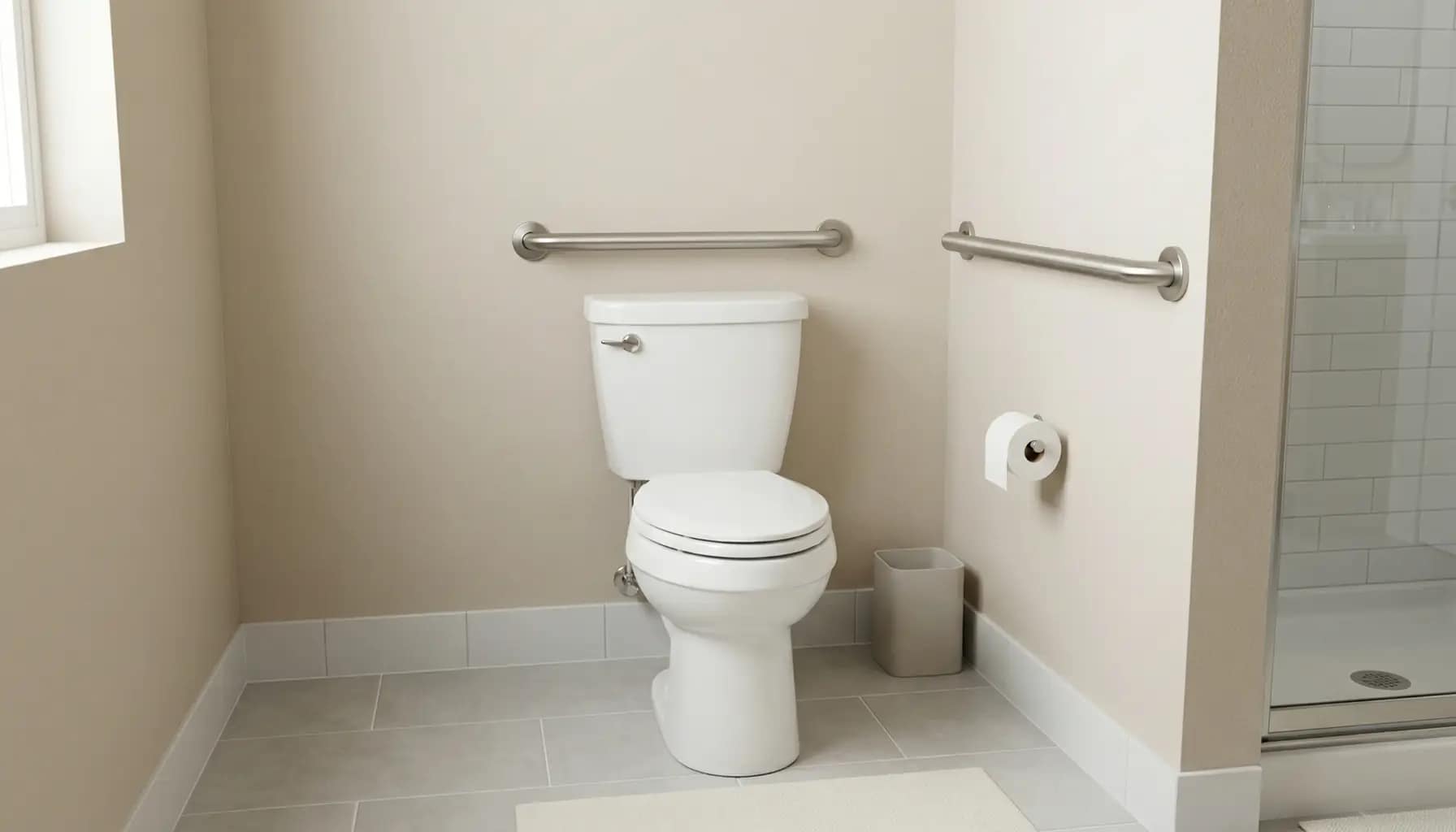
Grab bars around a toilet should be installed on the side wall at about 33–36 inches high, with an optional rear wall bar for additional support.
Bathrooms are one of the most common places where slips and falls happen, especially during simple movements like sitting down or standing up from the toilet.
Installing grab bars in the right positions around a toilet can make these movements safer and more controlled.
The key is placing grab bars where they can support sitting and standing movement safely.
This guide explains the safest and most practical placement options based on real bathroom use.
Disclosure: As an Amazon Associate, I earn from qualifying purchases. This post may contain affiliate links. If you purchase through these links, I may earn a small commission at no extra cost to you. I only recommend products I would feel comfortable using in my own home. Learn more.
On This Page
- Why Grab Bar Placement Around a Toilet Matters
- Most Common Grab Bar Positions Around a Toilet
- Quick Placement Summary by Bathroom Layout
- Recommended Grab Bar Height for Toilets
- Grab Bar Length and Distance From the Toilet
- When One Grab Bar Is Not Enough
- Common Placement Mistakes to Avoid
- What I Recommend
- FAQ
- Final Thoughts
Quick Answer
The safest setup includes a horizontal grab bar on the side wall installed about 33–36 inches above the floor, with a rear wall grab bar added for additional support when needed.
- Side wall grab bar → primary support for sitting and standing
- Rear wall grab bar → additional balance support (optional)
- Vertical grab bar → helpful near entry or transition areas
- Placement should match natural hand reach during movement
Proper placement ensures the grab bar supports real movement instead of forcing awkward positioning, which is why a side wall grab bar is the most effective starting point in most bathrooms.
For a full bathroom layout including shower areas, see where to install grab bars in a bathroom.
Why Grab Bar Placement Around a Toilet Matters
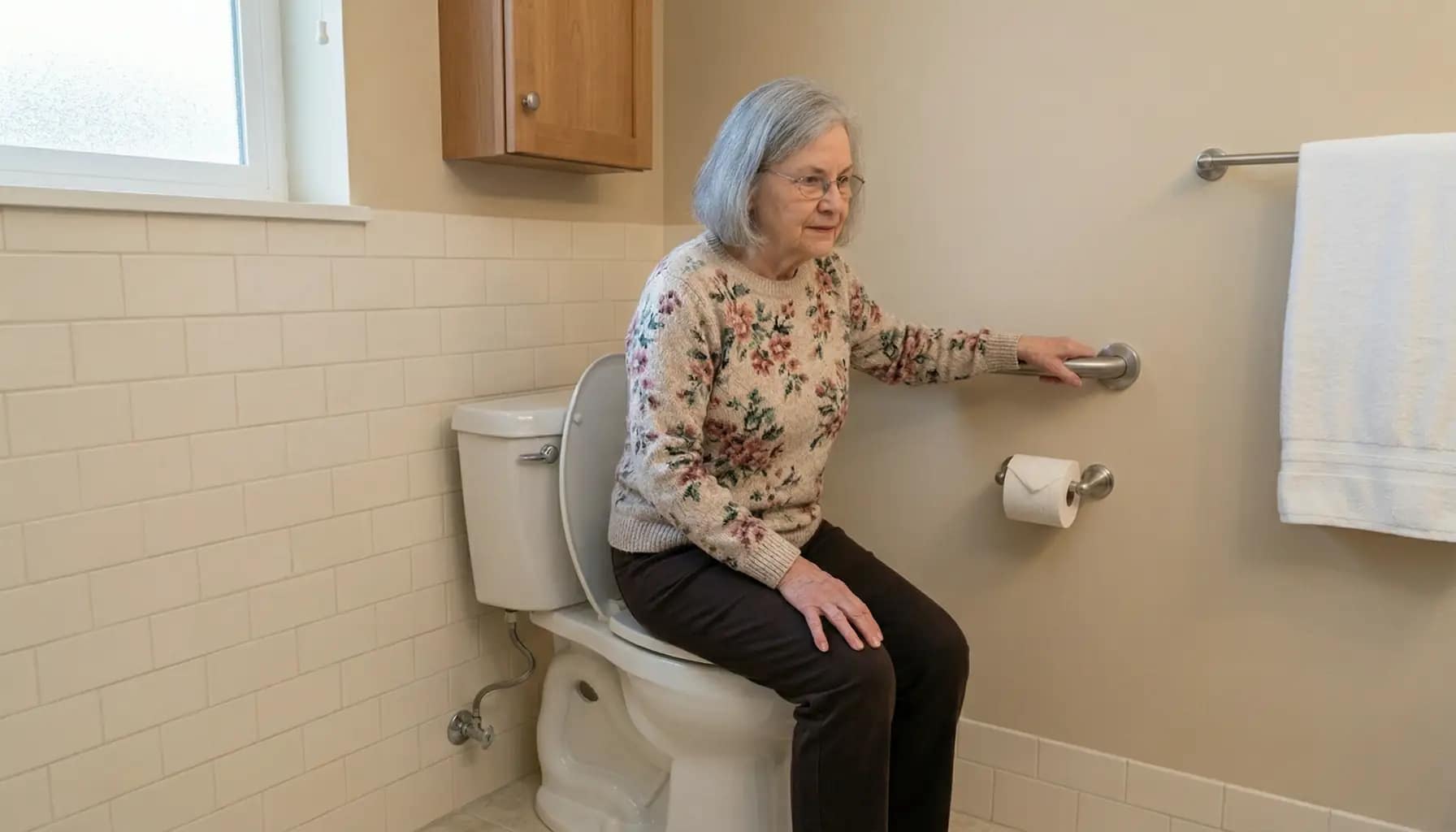
Grab bar placement around a toilet matters because the toilet is one of the few places in a bathroom where a person repeatedly shifts their body weight.
Two movements require the most stability:
- Sitting down
- Standing up
During these transitions, the body moves forward and downward, which can easily lead to loss of balance if there is no stable support.
A properly placed grab bar gives the user a solid point to hold during these movements. Instead of relying on nearby fixtures or unstable surfaces, the user can apply body weight safely through the grab bar.
Correct placement also ensures the grab bar is within natural reach, which prevents awkward stretching or twisting while standing up.
Important Note:
When grab bars are installed too far away from the toilet or at the wrong height, they may not provide meaningful support when it’s needed most.
Most Common Grab Bar Positions Around a Toilet
Different bathroom layouts require different solutions when deciding where to install grab bars around a toilet.
Side Wall Horizontal Grab Bar
This is the most common and most useful placement around a toilet.
A horizontal grab bar installed on the wall beside the toilet helps users push themselves up from a seated position.
Benefits include:
- Natural hand position while standing
- Easy support while lowering onto the seat
- Stable side balance during movement
Most installations place this bar roughly 33–36 inches from the floor and extend it forward from the rear wall.
This position allows users to grip the grab bar during both sitting and standing.
Rear Wall Grab Bar
A rear wall grab bar sits directly behind the toilet.
While it’s less commonly used alone, it can provide extra support when combined with a side grab bar.
Rear grab bars help users:
- Stabilize themselves while sitting
- Maintain balance during transfers
However, depending on the toilet tank and wall clearance, this placement may not always be possible.
Vertical Grab Bar Option
Some bathrooms include a vertical grab bar near the entry side of the toilet area.
Vertical bars help with:
- Balance while approaching the toilet
- Support during the initial standing movement
They are often installed near the side wall or close to the edge of a shower-to-toilet transition area.
While not always necessary, vertical bars can be helpful for people with reduced balance.
Quick Placement Summary by Bathroom Layout
For most bathrooms, a side wall grab bar provides the primary support needed for safe toilet use.
If space allows, adding a rear wall grab bar can improve balance during sitting.
In tighter layouts or transition areas, a vertical grab bar near the entry can provide additional stability. In very limited spaces, solutions like swing away grab bars for toilets can provide support when needed and fold out of the way to maintain accessibility.
The ideal setup depends on available wall space and how the user moves during everyday use.
Recommended Grab Bar Height for Toilets
Most guidelines recommend installing grab bars around 33–36 inches above the finished floor.
This height works well because it aligns with the natural elbow position of most adults while standing.
If the grab bar is installed too low, it won’t provide enough leverage when pushing upward.
If installed too high, users may struggle to apply proper downward pressure when standing.
In some cases, height may be adjusted slightly to match the individual user’s needs.
If you’re looking for more detailed measurements for different bathroom setups, this guide on grab bar placement height guidelines explains the safe and practical height ranges used in most bathrooms.
Grab Bar Length and Distance From the Toilet
Grab bars come in several lengths, typically ranging from 12 inches to 36 inches.
For toilet installations, the most commonly used sizes are:
- 16 inches
- 18 inches
- 24 inches
Longer bars allow more flexibility because they provide a wider gripping area during different stages of movement.
Real-Life Example:
A person may hold the back portion of the grab bar while lowering themselves onto the toilet and then shift their hand forward when pushing upward to stand.
If you want a clearer comparison of how different sizes affect usability, see 18 vs 24 vs 36 inch grab bars.
The distance between the toilet and the grab bar also matters.
If the grab bar is too far away, the user may have to lean sideways to reach it. Ideally, the grab bar should sit close enough to the toilet that the user can reach it comfortably while seated.
This allows the grab bar to support both balance and leverage during everyday bathroom use.
When One Grab Bar Is Not Enough
For many bathrooms, a single horizontal grab bar on the side wall provides enough support.
However, some situations may require additional assistance.
For example:
- Reduced balance
- Post-surgery recovery
- Limited leg strength
In these situations, installing a second grab bar or choosing a different support system may provide more stability, and understanding how many grab bars a bathroom needs can help you plan the right level of support.
Some bathrooms include both a side wall grab bar and a rear wall grab bar to offer support during different stages of movement.
These setups can improve stability during both sitting and standing movements.
Common Placement Mistakes to Avoid
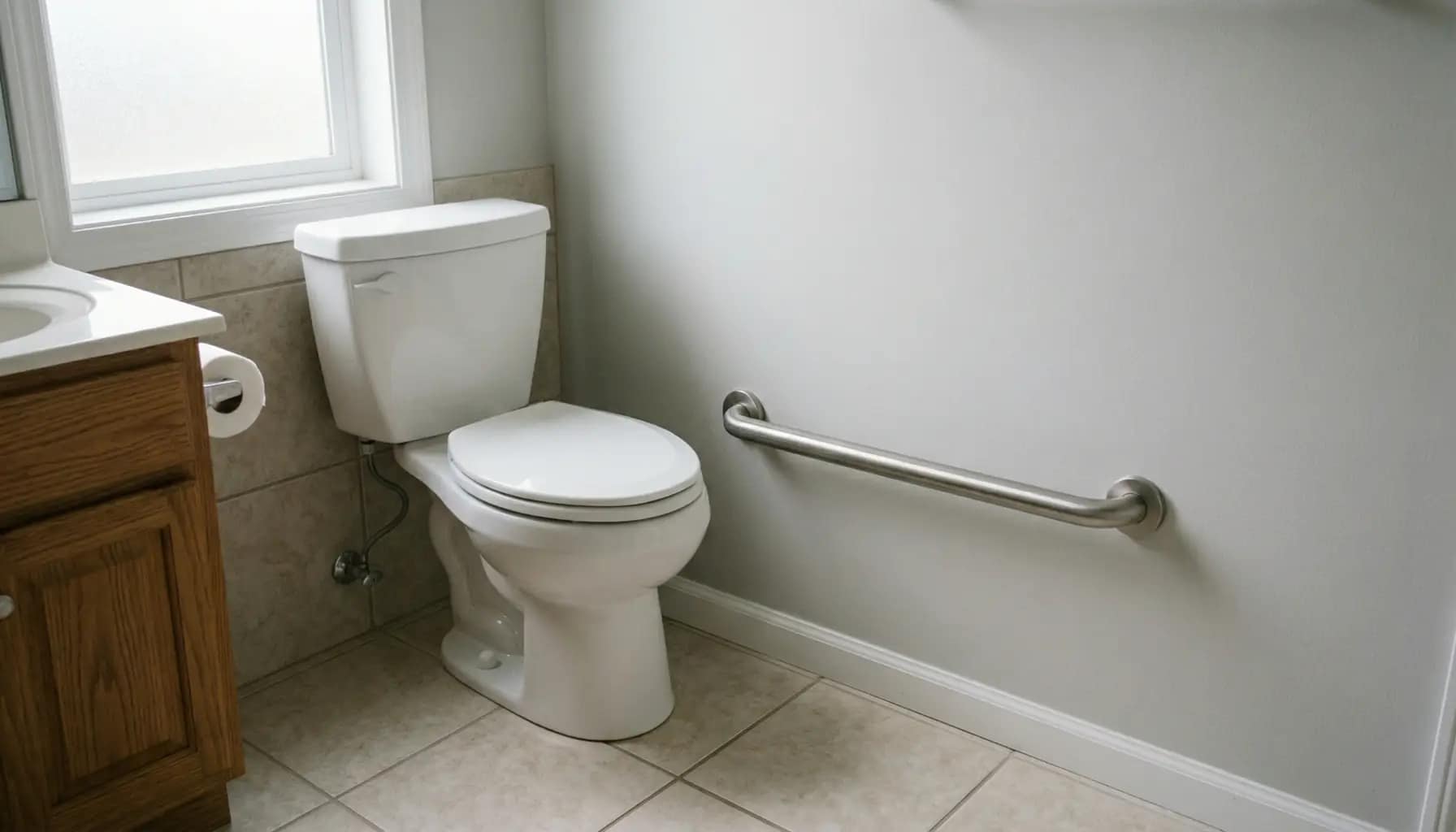
Even when grab bars are installed, incorrect placement can limit their effectiveness.
Here are some common mistakes.
Installing the Grab Bar Too Far Forward
If the grab bar is too far in front of the toilet, it becomes difficult to reach while seated.
This reduces its usefulness during standing.
Placing the Grab Bar Too High or Too Low
Incorrect height prevents the user from applying comfortable pressure during movement.
Staying within the 33–36 inch range usually works best.
Installing Into Drywall Instead of Studs
Grab bars must be anchored into wall studs or secure blocking.
Otherwise, they may fail under body weight.
To better understand what can go wrong during installation, see common grab bar installation mistakes.
What I Recommend
A practical approach is to start with a horizontal grab bar on the side wall positioned at about 33–36 inches high.
This single bar typically supports both sitting and standing movements effectively.
Additional bars can be added if the user requires more support based on mobility or balance needs.
More importantly, the grab bar should be securely mounted into studs, positioned within easy reach, and long enough to support the full movement.
A properly placed grab bar provides more safety than installing multiple bars without a clear purpose.
If you’re still deciding which type of bar works best for your setup, it can help to look at the best toilet grab bars for seniors that are designed specifically for bathroom safety.
FAQ
Where should grab bars be placed around a toilet?
Most bathrooms benefit from a horizontal grab bar installed on the side wall about 33–36 inches above the floor.
Do you need grab bars on both sides of a toilet?
Not always. Many setups work well with a single side grab bar, though additional support may help in some situations.
Can grab bars be installed behind the toilet?
Yes. Rear wall grab bars can provide additional balance support when combined with a side grab bar.
What length grab bar works best for a toilet?
Most toilet installations use grab bars between 16 and 24 inches long.
Final Thoughts
Grab bars can dramatically improve bathroom safety, but their effectiveness depends on where to install grab bars around a toilet and how securely they are mounted.
A well-positioned side wall grab bar often provides the most practical support around a toilet.
By placing the grab bar where the hand naturally reaches during movement, you create a safer and more comfortable bathroom environment.
In most cases, a properly installed side wall grab bar provides the most effective and reliable support around a toilet.
