
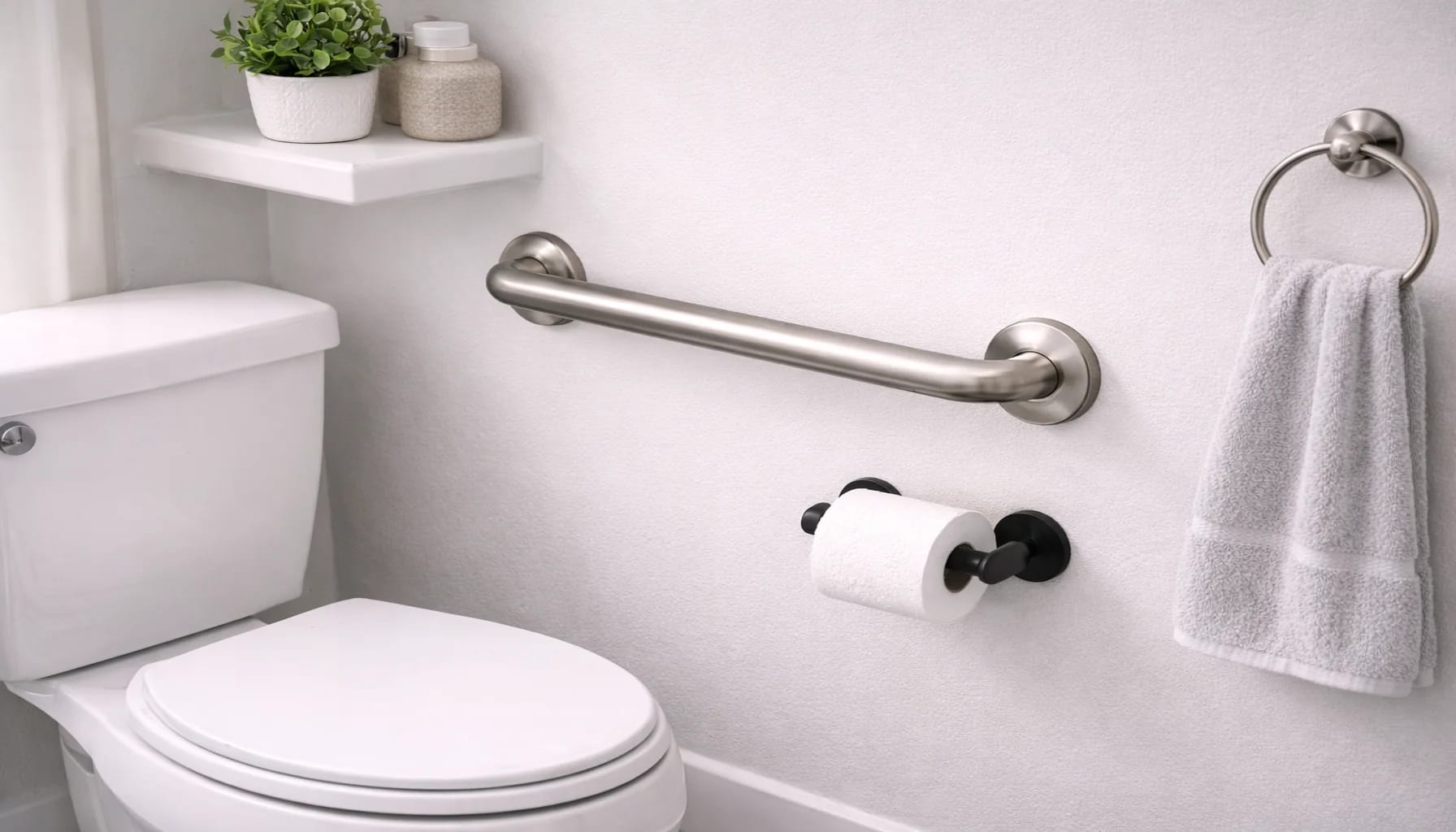
Grab bars are one of the most important safety upgrades you can add to a bathroom. They provide stability when entering a shower, stepping over a tub wall, or standing up from a seated position.
However, many homeowners worry about installing grab bars when their bathroom walls are made of drywall. Because drywall is not a structural material, people often wonder whether it can support the weight and force applied to a grab bar.
This leads to a common question many homeowners ask: can grab bars be installed on drywall safely without damaging the wall?
The short answer is yes — but only when the correct mounting method is used. In most cases, grab bars should still be secured into wall studs or reinforced mounting systems rather than relying on drywall alone.
Understanding the safest installation options can help ensure the grab bar provides reliable support when it’s needed most.
Disclosure: As an Amazon Associate, I earn from qualifying purchases. This post may contain affiliate links. If you purchase through these links, I may earn a small commission at no extra cost to you. I only recommend products I would feel comfortable using in my own home. Learn more.
On This Page
Quick Answer
Yes, grab bars can be installed on drywall, but they must be secured into wall studs or heavy-duty anchors designed for grab bars to support body weight safely.
Understanding do grab bars need to be screwed in helps clarify why proper mounting is essential for safety.
Safe installation methods include:
- Mounting the grab bar directly into wall studs
- Using heavy-duty toggle bolt anchors
- Installing reinforced grab bar mounting plates
Drywall alone cannot safely support the weight placed on a grab bar during a fall.
Why Drywall Alone Is Not Strong Enough
Drywall is designed to create a smooth interior wall surface, but it is not intended to support heavy loads.
A typical sheet of drywall is only about half an inch thick and is attached to the wall framing behind it. When pressure is applied directly to drywall, it can crack or crumble.
This is why grab bars should never be installed using small screws that only grip the drywall surface.
When someone slips in a shower or loses balance near a toilet, they may place their entire body weight on the grab bar. Without proper structural support, the drywall could fail.
Because of this, installation methods that connect the grab bar to the wall framing are strongly recommended.
This is why many homeowners researching can grab bars be installed on drywall quickly learn that drywall alone cannot provide safe support.
The Safest Way: Install Grab Bars Into Studs
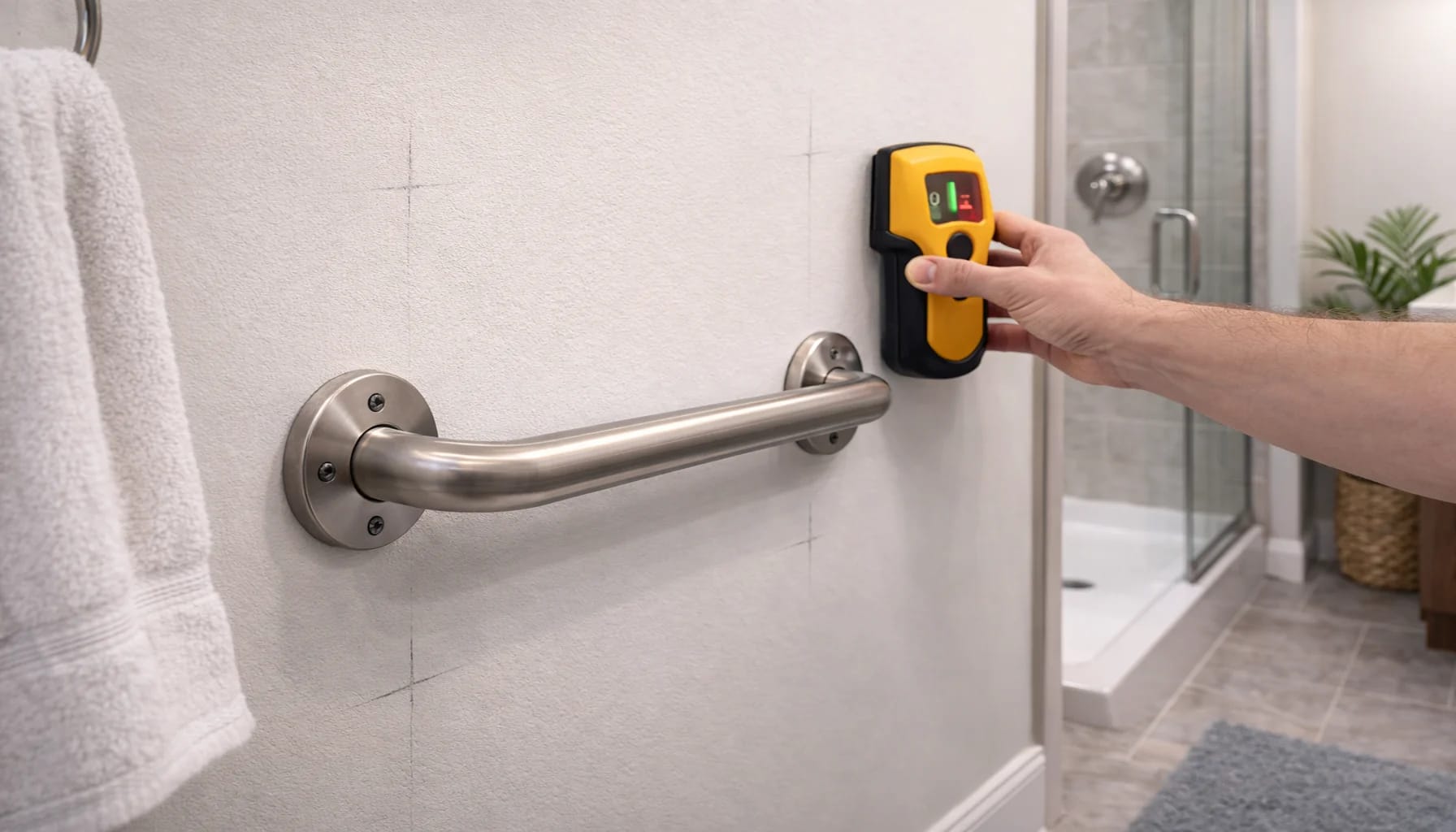
The safest way to install grab bars on drywall walls is to anchor them into the wall studs behind the drywall.
Wall studs are vertical framing members that provide the structural strength needed to support heavy loads.
Mounting grab bars directly into studs offers several advantages:
- significantly stronger attachment
- reduced risk of loosening over time
- better long-term durability
Using a stud finder can help locate these framing members behind the drywall.
If you want detailed installation guidance, reviewing how to install grab bars in studs can help ensure the mounting process is done correctly.
When Stud Mounting Is Not Possible
Sometimes studs do not line up with the ideal grab bar placement location.
For example:
- the stud spacing does not match the grab bar length
- the safest position for the bar falls between studs
- bathroom fixtures limit placement options
In these situations, installers may use heavy-duty drywall anchors designed for safety bars.
However, not all anchors are strong enough for grab bar installations.
Some anchors are only designed for light fixtures or towel bars, which do not experience the same level of force.
If studs are not available, it may help to review can grab bars be installed without studs to understand safer alternatives.
Drywall Anchors Designed for Grab Bars
Certain heavy-duty anchors are designed to support higher loads than standard wall anchors.
Common options include:
- toggle bolt anchors
- metal hollow-wall anchors
- specialty grab bar mounting plates
These anchors distribute the load across a larger area of the drywall and reduce the chance of pull-out.
Even when using anchors, proper installation and weight ratings are extremely important.
Improper anchors or poor installation can make the grab bar unsafe.
Choosing the Right Placement for Grab Bars
Even with the correct mounting method, grab bars must be placed where they can actually support movement.
Common placement areas include:
- inside the shower
- beside the toilet
- near bathroom entrances
Placement should match natural hand movement when entering or exiting these areas.
If you’re unsure about placement positions, reviewing where to install grab bars in a bathroom can help determine the safest locations.
Common Mistakes When Installing Grab Bars on Drywall
Several mistakes can make grab bars unsafe when installing them on drywall.
Common examples include:
Using standard drywall screws
Small screws that only grip drywall will not support body weight.
Installing anchors not rated for grab bars
Some anchors are designed for lightweight fixtures only.
Ignoring stud locations
Whenever possible, studs should still be used for mounting.
Poor placement
Grab bars installed too far from where support is needed may not help prevent falls.
Understanding common grab bar installation mistakes can help prevent these problems before installation begins.
What I Recommend
If I were installing grab bars on drywall walls, I would always start by checking for wall studs.
Stud mounting provides the strongest and safest installation.
If the grab bar cannot be aligned with studs, the next option would be using heavy-duty anchors specifically designed for grab bar installations.
Standard drywall anchors should never be used for safety bars.
Most importantly, the grab bar should always be positioned where it provides real support during everyday movements.
Taking time to install the grab bar correctly ensures it will remain safe and reliable for years.
FAQ
Can grab bars be installed directly into drywall?
No. Grab bars should not rely on drywall alone for support because drywall cannot safely hold the weight applied during a fall.
What anchors can be used for grab bars in drywall?
Heavy-duty toggle bolts, hollow-wall anchors, and specialized grab bar mounting systems are sometimes used when studs are not available.
Are drywall anchors safe for grab bars?
Only certain heavy-duty anchors designed for grab bars are safe. Standard drywall anchors should not be used.
Is it better to move the grab bar to hit a stud?
Yes. Adjusting placement to align with a wall stud usually results in the strongest and safest installation.
Can grab bars support full body weight?
Properly installed grab bars mounted into studs or heavy-duty anchors are designed to support significant weight and prevent falls.
Final Thoughts
So, can grab bars be installed on drywall safely in real bathrooms?
Yes, but only when the correct mounting method is used.
Drywall alone cannot support the weight placed on grab bars during a slip or fall. Whenever possible, grab bars should be anchored directly into wall studs.
When studs are not available, specialized heavy-duty anchors may provide a safe alternative.
Proper installation ensures grab bars remain secure and provide the support needed to improve bathroom safety.
