
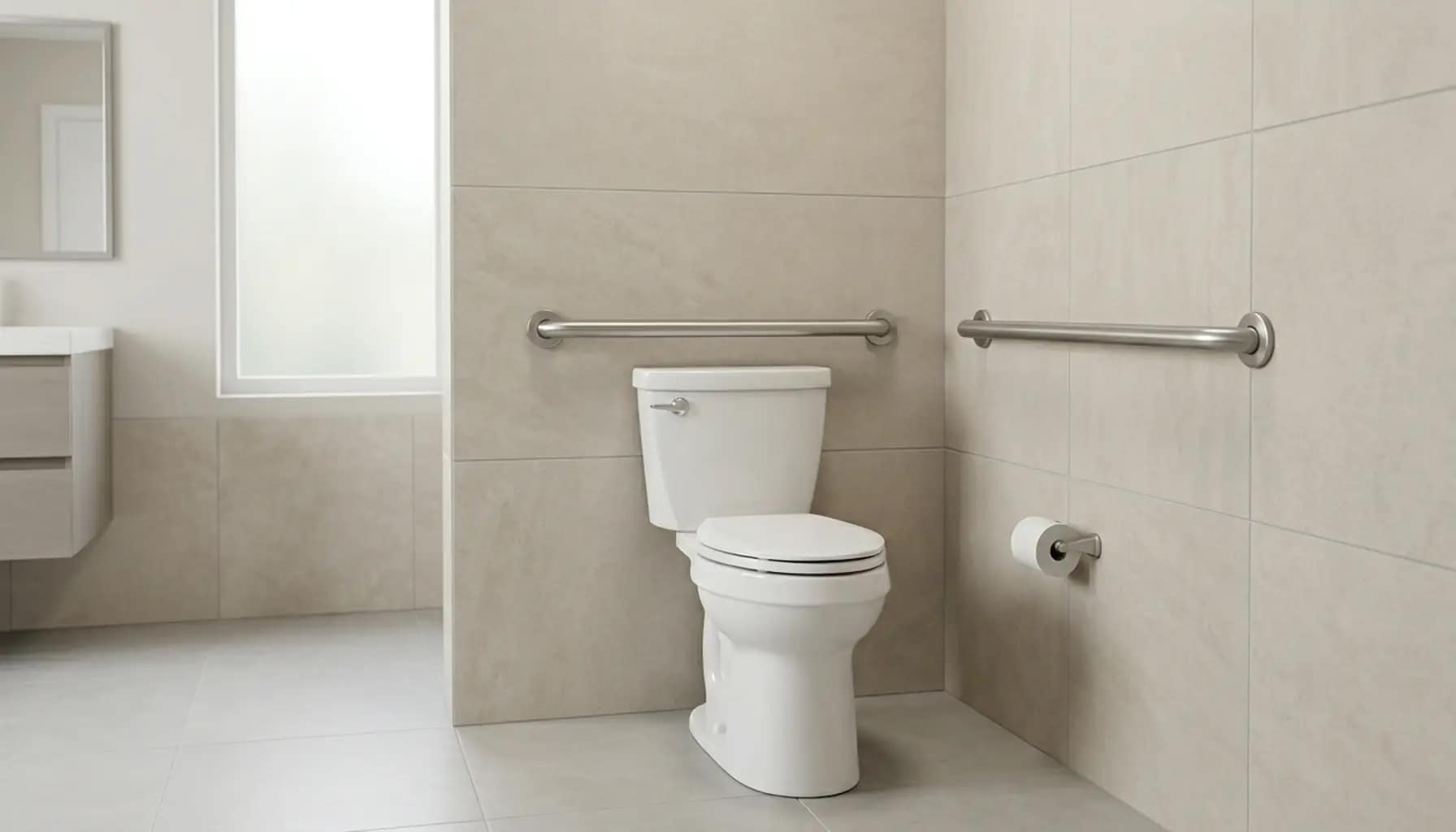
ADA grab bar requirements specify that grab bars should be installed 33–36 inches above the floor, with proper spacing, secure mounting, and placement near toilets, showers, and bathtubs.
Bathrooms present a higher risk of slips due to water, smooth surfaces, and frequent movement during everyday use.
To ensure safety and accessibility, the Americans with Disabilities Act (ADA) provides detailed guidelines for how grab bars should be installed in public and accessible bathrooms.
These measurements are based on the ADA Standards for Accessible Design, which outline accessibility requirements for public buildings and accessible facilities in the United States.
These guidelines define recommended height, length, spacing, and placement of grab bars in key areas such as showers, bathtubs, and near toilets.
Understanding ADA grab bar requirements can help homeowners, contractors, and caregivers install grab bars that provide reliable support and follow widely accepted accessibility standards.
If you’re planning a bathroom installation, reviewing where to install grab bars in a bathroom can also help determine the safest support locations.
Disclosure: As an Amazon Associate, I earn from qualifying purchases. This post may contain affiliate links. If you purchase through these links, I may earn a small commission at no extra cost to you. I only recommend products I would feel comfortable using in my own home. Learn more.
On This Page
- Summary of Key ADA Grab Bar Requirements
- How to Apply ADA Grab Bar Requirements in Real Bathrooms
- ADA Grab Bar Height Requirements
- ADA Grab Bar Wall Clearance Requirements
- ADA Grab Bar Diameter Requirements
- ADA Grab Bar Length Requirements
- ADA Grab Bar Distance from Fixtures
- ADA Grab Bar Placement Near Toilets
- ADA Grab Bar Requirements for Showers
- ADA Grab Bar Requirements for Bathtubs
- ADA Installation Requirements
- Do ADA Grab Bar Requirements Apply to Homes?
- What I Recommend
- FAQ
- Final Thoughts
Quick Answer
ADA grab bar requirements recommend installing grab bars 33–36 inches above the finished floor, with at least 1½ inches of wall clearance and secure structural mounting.
Most ADA guidelines also specify:
- minimum grab bar lengths
- required wall spacing
- placement near toilets and showers
- secure installation into structural support
These ADA grab bar requirements are designed to ensure grab bars provide consistent and reliable support across key areas such as toilets, showers, and bathtubs.
To better understand how these measurements apply in a real layout, see this grab bar placement diagram.
Summary of Key ADA Grab Bar Requirements
| Requirement | ADA Recommendation |
|---|---|
| Grab bar height | 33–36 inches above the finished floor |
| Wall clearance | Minimum 1½ inches from wall |
| Grab bar diameter | 1¼ to 2 inches |
| Toilet side bar length | Minimum 42 inches |
| Rear wall grab bar | Minimum 36 inches |
| Strength requirement | Must support at least 250 pounds of force |
These ADA grab bar requirements provide a practical reference for safe and consistent installation across different bathroom layouts.
How to Apply ADA Grab Bar Requirements in Real Bathrooms
ADA guidelines provide clear measurements, but applying them effectively depends on how the bathroom is used.
For example, the recommended height range of 33–36 inches works well for most adults, but placement may need slight adjustment depending on user height or mobility.
Similarly, grab bar length and positioning should support real movement, such as standing up from a toilet or maintaining balance in a shower.
Instead of treating ADA grab bar requirements as rigid rules, they should be used as a reliable baseline and adjusted slightly to match real-world use and individual needs.
ADA Grab Bar Height Requirements
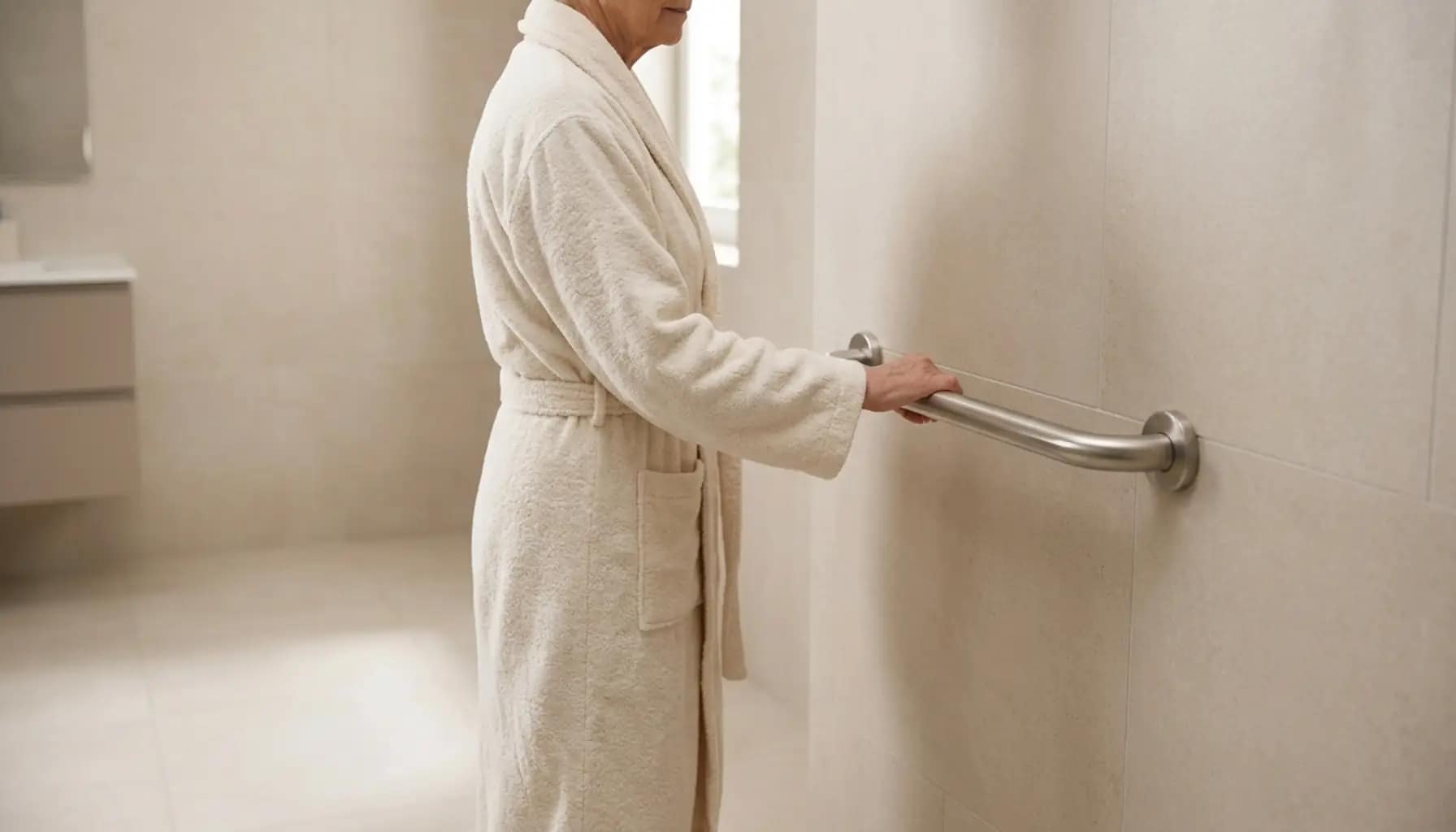
One of the most important ADA grab bar requirements is the recommended installation height.
According to the ADA Standards for Accessible Design, grab bars should typically be installed:
33–36 inches above the finished floor
This height range allows most adults to comfortably reach and grip the bar while standing or transitioning between positions.
Installing grab bars within this range helps ensure the bar provides effective leverage and support.
If you’re planning residential installation, this range is also commonly recommended in grab bar placement height guidelines.
ADA Grab Bar Wall Clearance Requirements
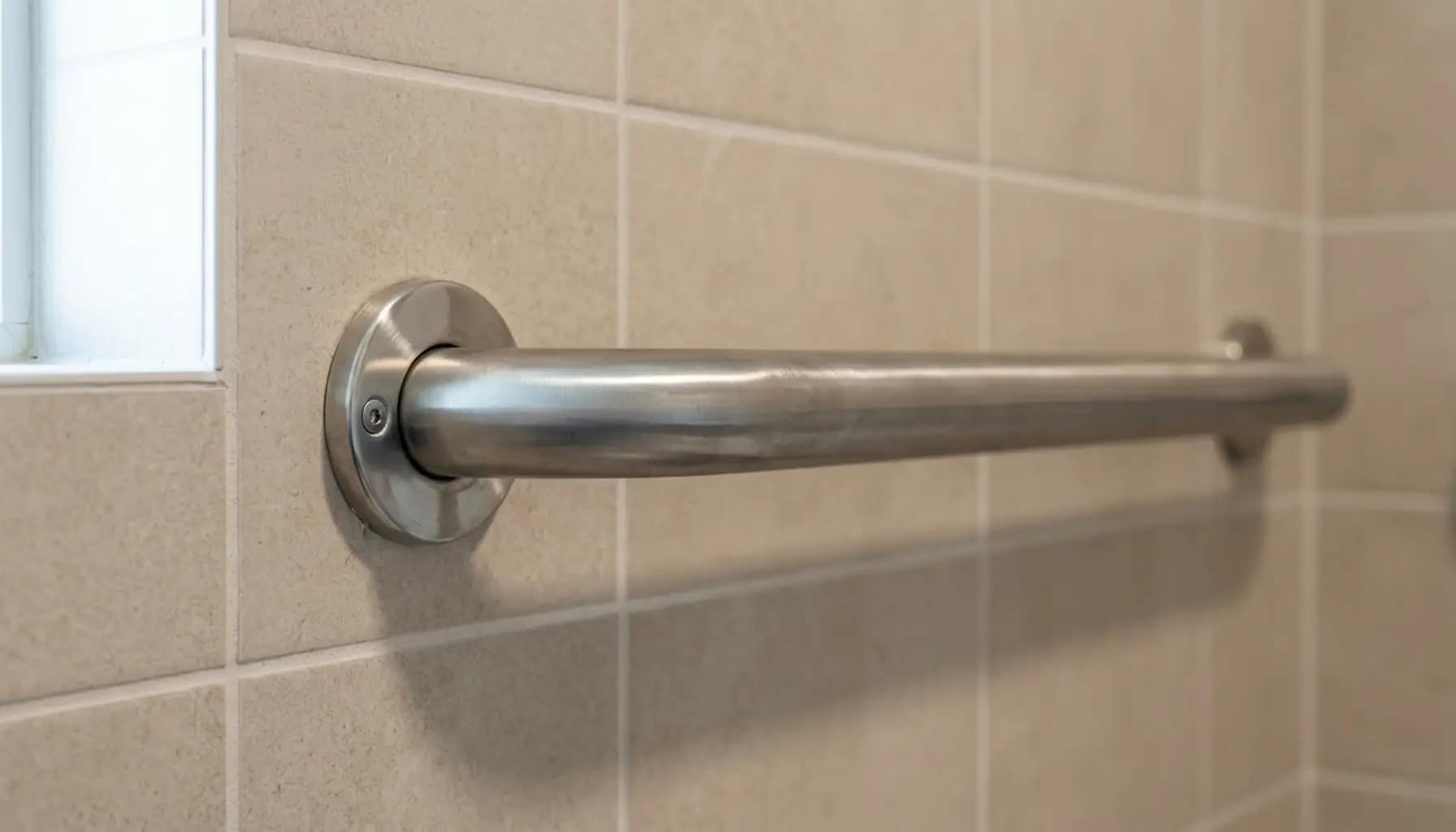
Wall clearance refers to the space between the wall and the grab bar.
The ADA requires a minimum clearance of:
1½ inches between the wall and the grab bar
This spacing ensures the user’s hand can fully wrap around the bar.
If the bar is installed too close to the wall, it may be difficult or unsafe to grip.
ADA Grab Bar Diameter Requirements
Another important part of ADA grab bar requirements is the diameter of the grab bar itself.
The ADA recommends that grab bars have a diameter between:
1¼ inches and 2 inches
This size range allows most people to grip the bar securely without straining their hands.
If the bar is too thin, it may feel unstable or uncomfortable. If the bar is too thick, it can be difficult for people with smaller hands or reduced grip strength to hold it properly.
This diameter range allows users to wrap their fingers securely around the bar while maintaining a comfortable grip.
In addition to diameter, the surface of the grab bar should be easy to grip. Many grab bars include textured or knurled finishes that help prevent slipping, especially when hands are wet.
Choosing the right size and surface finish can make a noticeable difference in how secure the grab bar feels during everyday use.
If you want to compare different grip sizes in more detail, see grab bar diameter and grip size.
ADA Grab Bar Length Requirements
ADA guidelines also define minimum lengths for grab bars depending on their location.
Common requirements include:
Toilet side wall grab bar: minimum 42 inches
Rear wall grab bar behind toilet: minimum 36 inches
Shower grab bars: typically 36 inches or longer depending on layout
These length requirements help ensure users have enough space to maintain a secure grip during movement.
ADA Grab Bar Distance from Fixtures
ADA guidelines also include recommendations for how far grab bars should be placed from bathroom fixtures.
These spacing requirements help ensure the grab bar is positioned where users can reach it comfortably.
For example:
Toilet side wall grab bar
The bar should start no more than 12 inches from the rear wall and extend at least 54 inches from the rear wall.
Rear wall grab bar
The bar should be centered behind the toilet and extend at least 36 inches.
These measurements help ensure users have continuous support while sitting down or standing up.
Proper spacing also prevents the grab bar from being too far away to reach during movement.
ADA Grab Bar Placement Near Toilets
Grab bars installed near toilets follow specific placement recommendations.
Typically two bars are required:
Side wall grab bar
Installed beside the toilet to provide leverage when sitting or standing.
Rear wall grab bar
Installed behind the toilet for additional stability.
These bars help support the transition between sitting and standing.
If you’re planning installation in this area, reviewing where to install grab bars around a toilet can help visualize the safest placement.
ADA Grab Bar Requirements for Showers
Showers often require multiple grab bars because they present a higher risk of slips.
ADA shower guidelines typically recommend:
- a horizontal grab bar along the side wall
- additional bars depending on the shower type
These bars provide support for standing balance and movement within the shower.
If you’re planning shower installation, it may also help to review where to place grab bars in a shower.
ADA Grab Bar Requirements for Bathtubs
Bathtubs often require multiple grab bars because stepping over the tub wall can be one of the most challenging movements in the bathroom.
ADA bathtub guidelines recommend installing grab bars on specific walls of the tub area to support balance during entry, bathing, and exit.
Common placements include:
Back wall grab bar
A horizontal grab bar along the back wall of the tub provides support while bathing.
Control wall grab bar
A grab bar on the wall with the faucet controls helps maintain balance while adjusting water.
Entry grab bar
In some layouts, an additional bar near the tub entry can help stabilize the body while stepping in or out.
These placements help provide support throughout the bathing process, not just during entry.
ADA Installation Requirements
Proper installation is just as important as placement.
ADA guidelines require grab bars to support significant weight without failing.
This means grab bars must be:
- securely mounted
- anchored into structural support
- able to support at least 250 pounds of force
Whenever possible, grab bars should be installed into wall studs.
If you’re planning a DIY installation, reviewing how to install grab bars in studs can help ensure the mounting is secure.
Do ADA Grab Bar Requirements Apply to Homes?
ADA guidelines are primarily required in:
- public buildings
- commercial spaces
- accessible housing units
Private homes are not legally required to follow ADA guidelines.
However, many homeowners choose to follow these guidelines because they provide reliable recommendations for safe grab bar installation.
Using ADA guidelines as a reference helps ensure grab bars are installed at practical and effective positions.
What I Recommend
ADA guidelines are often used as a starting point when installing grab bars in residential bathrooms.
These standards were developed to improve accessibility and safety across a wide range of users.
For most homes, following the ADA height range of 33–36 inches and installing grab bars in key areas such as showers and near toilets provides a practical balance between safety and usability.
However, individual needs may vary depending on height, mobility level, or bathroom layout.
In some cases, adjusting placement slightly for comfort can provide better support during everyday use.
To avoid common installation errors, reviewing common grab bar installation mistakes can help ensure safe and reliable setup.
FAQ
What height does ADA recommend for grab bars?
ADA guidelines recommend installing grab bars between 33 and 36 inches above the finished floor.
How much weight must ADA grab bars support?
ADA guidelines require grab bars to support at least 250 pounds of force.
What clearance is required between the wall and grab bars?
ADA requires a minimum clearance of 1½ inches between the wall and the grab bar.
Do ADA grab bar rules apply to private homes?
ADA guidelines mainly apply to public and accessible buildings, but many homeowners follow them as safety guidelines.
Are multiple grab bars required in ADA bathrooms?
Yes. Accessible bathrooms often require multiple grab bars near toilets and inside showers.
Final Thoughts
ADA grab bar requirements provide clear guidelines for installing grab bars safely and consistently.
They define recommended height ranges, wall clearance, bar lengths, and placement near key bathroom fixtures.
While these requirements are primarily designed for public and accessible facilities, they also provide useful guidance for residential installations.
In practice, following these measurements helps ensure grab bars provide consistent and reliable support during everyday movements.
