

Grab bars are designed to provide stability and support in areas where slips or balance loss can occur, such as showers, bathtubs, and near toilets.
While many people focus on the placement and installation of grab bars, the diameter and grip size of the bar itself also play an important role in safety.
If a grab bar is too thin, it may feel unstable or uncomfortable to hold. If it is too thick, users may struggle to wrap their hand around it securely.
Understanding grab bar diameter and grip size helps ensure the bar can be gripped firmly, even when hands are wet.
Choosing the right size allows the grab bar to provide reliable support during everyday movements such as stepping into a shower or standing up from a toilet.
Disclosure: As an Amazon Associate, I earn from qualifying purchases. This post may contain affiliate links. If you purchase through these links, I may earn a small commission at no extra cost to you. I only recommend products I would feel comfortable using in my own home. Learn more.
On This Page
Quick Answer
The ideal grab bar diameter and grip size for most people is between 1¼ inches and 1½ inches.
Accessibility guidelines recommend a diameter range of 1¼ to 2 inches
However, the 1¼–1½ inch range is the most commonly used size in residential bathrooms because it allows the hand to wrap comfortably around the bar.
This grip size helps users hold the bar securely while maintaining balance, especially when stepping into a shower or standing up from a toilet.
ADA Grab Bar Diameter Requirements
The Americans with Disabilities Act (ADA) provides guidelines for grab bar diameter to ensure accessibility and safe use.
ADA standards recommend grab bars with a diameter between:
1¼ inches and 2 inches
This range ensures the bar can be comfortably gripped by individuals with different hand sizes and levels of strength.
If the bar is too small, it may feel unstable in the hand. If it is too large, users may struggle to wrap their fingers around it completely.
For a full overview of these accessibility standards, see ADA grab bar requirements.
Why Grab Bar Diameter Matters
The diameter of a grab bar directly affects how securely a person can hold it.
When someone loses balance, they may rely on the grab bar to support their body weight. A comfortable grip can make a major difference in how quickly and securely the bar can be grasped.
A properly sized grab bar helps ensure:
- the hand can wrap around the bar easily
- fingers can apply enough pressure for a secure grip
- the bar remains comfortable during extended use
This becomes especially important in wet environments like showers where surfaces can be slippery.
Proper placement also affects how easy it is to grip a bar during movement. A grab bar placement diagram can help visualize how placement and grip position work together in a bathroom layout.
Grip Size and Hand Comfort
Grip comfort depends not only on the diameter of the bar but also on the user’s hand size and strength.
People with smaller hands may prefer thinner bars, while those with larger hands might feel more comfortable using slightly thicker bars.
However, the most widely recommended grab bar diameter and grip size still falls within the 1¼ to 1½ inch range, which works well for most users.
This size allows the fingers to wrap around the bar while still providing enough surface area for a secure hold.
If the bar is too thick, users may only be able to grip it with their fingertips rather than their full hand.
Grab Bars for Users With Weak Grip Strength
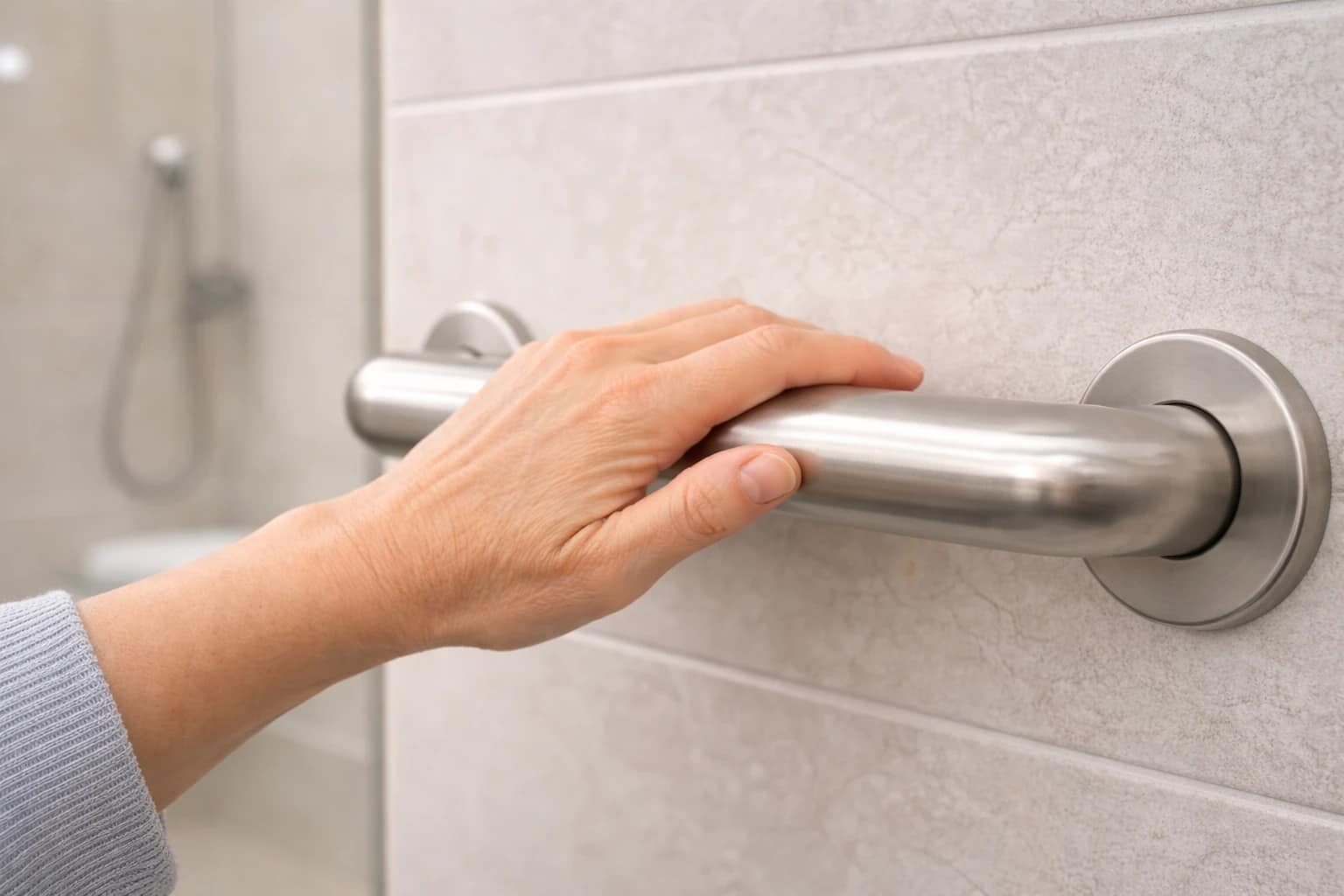
Individuals with arthritis or reduced hand strength may benefit from grab bars designed for better grip and easier handling.
Some grab bars include features such as:
- textured surfaces
- knurled finishes
- rubberized grip coatings
These designs help reduce slipping and make the bar easier to hold.
In addition to diameter, surface texture can play a major role in improving grip stability.
For users with ongoing hand weakness, choosing grab bars for arthritis and weak grip can provide more targeted support and improved comfort during daily use.
How Grab Bar Diameter Affects Safety
Grab bars are often used in situations where a person suddenly needs support.
For example:
- stepping into a shower
- standing up from a toilet
- maintaining balance on a wet floor
In these moments, the hand must be able to grip the bar quickly and securely.
Choosing the correct grab bar diameter and grip size helps ensure the bar can be grasped immediately and provide reliable support.
Choosing the Right Grab Bar Diameter
When selecting grab bars, it is usually best to choose a diameter within the recommended safety range.
Most homeowners choose bars between:
1¼ inches and 1½ inches
These sizes provide a balance between comfort and grip security.
Other factors to consider include:
- hand size of the user
- grip strength
- surface texture of the bar
- placement within the bathroom
For example, bars installed inside a shower may benefit from textured surfaces for improved grip.
The height of the grab bar also influences how comfortable the grip feels during everyday use. For recommended height ranges, see grab bar placement height guidelines.
What I Recommend
If I were installing grab bars in a bathroom, I would usually choose a bar with a 1¼-inch to 1½-inch diameter.
This range works well for most users and aligns with common accessibility guidelines.
I would also prioritize bars with a slightly textured grip rather than perfectly smooth surfaces, especially for areas exposed to water.
Even a small amount of texture can make a noticeable difference in grip security when hands are wet.
Combined with proper installation and placement, the right grab bar diameter can significantly improve bathroom safety.
FAQ
What is the standard grab bar diameter?
Most grab bars have a diameter between 1¼ and 1½ inches, which provides a secure and comfortable grip for most users.
What grab bar diameter does ADA recommend?
ADA guidelines recommend grab bars between 1¼ inches and 2 inches in diameter.
Are thicker grab bars better?
Not necessarily. Bars that are too thick may be difficult to grip securely, especially for people with smaller hands.
Do textured grab bars improve grip?
Yes. Textured or knurled surfaces can improve grip security, particularly when hands are wet.
Does grab bar size affect safety?
Yes. Choosing the right grab bar diameter helps ensure users can grip the bar securely during sudden movements.
Final Thoughts
Choosing the correct grab bar diameter and grip size is an important part of creating a safe and comfortable bathroom environment.
Most grab bars fall within the recommended range of 1¼ to 2 inches, with 1¼–1½ inches being the most commonly used and comfortable size.
Selecting the right diameter allows users to grip the bar securely and maintain balance during everyday movements.
When combined with proper installation and placement, the right grab bar size helps provide reliable support in bathrooms and showers.
