
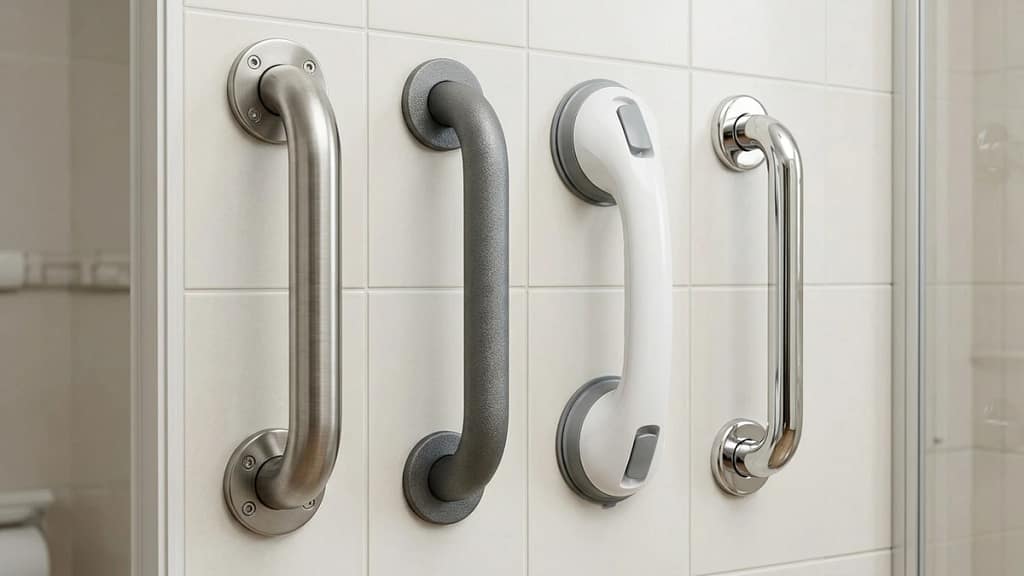
Stainless steel is usually the best grab bar material for most permanent bathroom safety setups because it combines strength, corrosion resistance, and long-term reliability in wet environments.
Material choice matters because grab bars are often used during real support moments, such as stepping into a shower, standing from a toilet, or catching balance on a wet floor. A bar that looks suitable may still be the wrong choice if the material is weak, slippery, or not designed for long-term bathroom use.
Understanding the best grab bar materials helps homeowners and caregivers compare stainless steel, coated metal, plastic, aluminum, and decorative finishes based on strength, grip, corrosion resistance, and the type of support needed.
Disclosure: As an Amazon Associate, I earn from qualifying purchases. This post may contain affiliate links. If you purchase through these links, I may earn a small commission at no extra cost to you. I only recommend products I would feel comfortable using in my own home. Learn more.
On This Page
- Why Grab Bar Material Matters
- Types of Grab Bar Materials
- How to Choose the Right Grab Bar Material by Bathroom Area
- How Grab Bar Materials Affect Grip and Comfort
- Corrosion Resistance in Bathroom Environments
- Strength, Weight Capacity, and Installation Support
- Common Mistakes When Choosing Grab Bar Materials
- What I Recommend
- FAQ
- Final Thoughts
Quick Answer
The best grab bar materials are usually stainless steel for permanent bathroom support, coated metal for added grip comfort, and plastic or suction-based materials only for temporary balance assistance.
For most showers, bathtubs, and toilet areas, stainless steel is the strongest all-around choice because it combines durability, corrosion resistance, and dependable support.
- Best overall: Stainless steel for permanent bathroom installations
- Best for grip comfort: Textured or powder-coated metal
- Best for temporary use: Plastic or suction-based grab bars used only for light balance assistance
- Best for wet areas: Stainless steel or coated metal with strong corrosion resistance
- Use caution with: Decorative chrome finishes when the core material is unclear
The material matters, but it is not the only safety factor. A grab bar also needs secure mounting, the right location, and a surface that is easy to grip in real bathroom conditions.
Why Grab Bar Material Matters
Grab bar material matters because the bar may be used during moments when support is needed quickly, such as stepping into a wet shower, standing up from a toilet, or catching balance during a slip.
In those situations, the material affects how well the bar handles force, moisture, repeated use, and daily cleaning. A grab bar that looks suitable may still be a poor choice if the core material is weak, the surface becomes slippery, or the bar is not designed for long-term bathroom use.
There are three separate things to consider:
- Core material: affects strength, durability, and long-term support
- Surface finish or coating: affects grip, comfort, appearance, and corrosion protection
- Mounting method: determines whether the bar can transfer force safely into the wall or support structure
This is why material choice should not be judged by appearance alone. A polished chrome finish, textured coating, or plastic outer shell may affect how the grab bar looks or feels, but the underlying material and installation method determine how dependable it is during real use.
Material is only one part of bathroom safety. This guide on whether grab bars are safe for seniors explains how installation, placement, and support needs affect the overall setup.
Types of Grab Bar Materials
Grab bars are made from several materials, and each one performs differently in wet bathroom environments. The main factors to compare are strength, corrosion resistance, grip comfort, and whether the bar is meant for permanent or temporary use.
The table below gives a quick overview before the material-by-material breakdown.
Quick Comparison of Grab Bar Materials
The table below compares the most common grab bar materials based on strength, corrosion resistance, and typical use cases.
← Swipe to see more →
| Material | Strength | Corrosion Resistance | Best Use |
|---|---|---|---|
| Stainless Steel | Very High | Excellent | Permanent bathroom installations |
| Aluminum | Moderate | Good | Lightweight installations |
| Plastic | Low to Moderate | Good | Temporary or portable use |
| Coated Metal | High | Good | Permanent use with added grip or comfort |
| Brass or Chrome | Varies by core material | Moderate to Good | Decorative or fixture-matching bathrooms when the core material is strong |
Stainless Steel Grab Bars
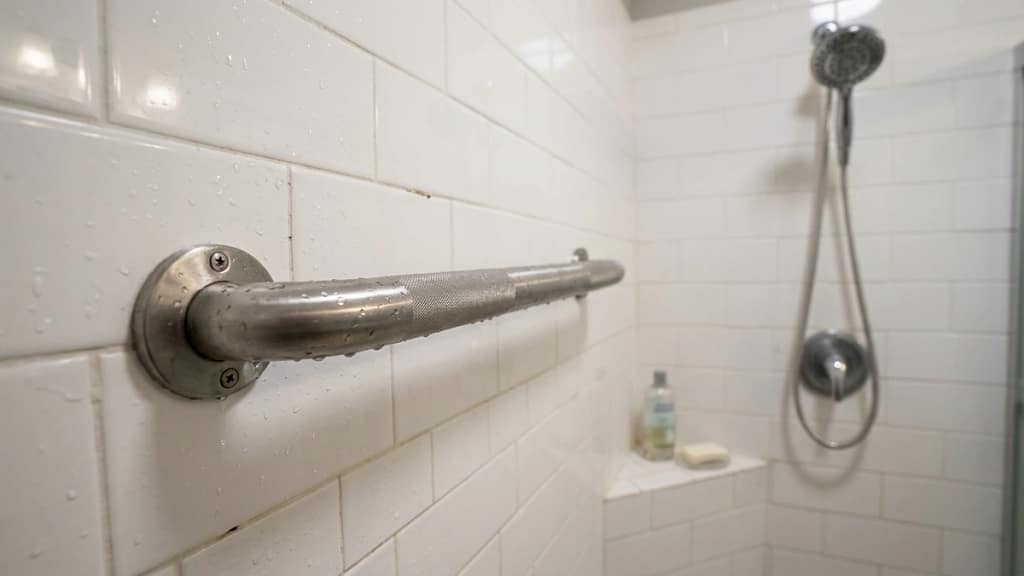
Stainless steel is the strongest all-around choice for permanent bathroom grab bars. It performs well under repeated use, resists moisture better than many lower-quality metals, and is commonly used in showers, bathtub areas, toilet areas, care facilities, and accessible restrooms.
The main advantage is dependability. A properly installed stainless steel grab bar can provide long-term support in wet environments without relying on a coating or temporary attachment method.
Best for: permanent bathroom installations, wet areas, high-use bathrooms, and situations where reliable support matters most.
Watch-out: smooth stainless steel can feel slippery when wet, so textured, peened, or knurled surfaces may be easier to grip for some users.
For a closer look at why stainless steel is often preferred for permanent bathroom installations, see this guide on whether stainless steel grab bars are better.
Aluminum Grab Bars
Aluminum grab bars are lighter than stainless steel and may be used when weight, appearance, or cost is a concern. They can resist corrosion reasonably well, but they are usually not the first choice when maximum strength is needed.
The main limitation is structural strength. Aluminum may work in some lighter-use bathroom setups, but it does not usually provide the same long-term strength margin as stainless steel for heavy or repeated support.
Best for: lighter-use areas where corrosion resistance and lower weight matter more than maximum support.
Watch-out: do not choose aluminum only because it is lighter or less expensive. Confirm the grab bar is rated for the intended support need.
Plastic Grab Bars
Plastic grab bars are usually designed for temporary, portable, or light-assistance use. They are often found in suction-style designs that attach without drilling, which can make them convenient for renters, travel, or short-term setups.
The main limitation is support level. Plastic grab bars should not automatically be treated the same as permanently mounted metal bars, especially when the user may pull hard, push up from a seated position, or grab the bar suddenly during a slip.
The main difference is that plastic grab bars are usually chosen for convenience or temporary use, while stainless steel bars are usually chosen for permanent support. That distinction matters most when the grab bar may be used during a sudden loss of balance or a difficult sit-to-stand movement.
Best for: temporary balance assistance, travel, rental situations, or short-term setups where drilling is not possible.
Watch-out: plastic or suction-based grab bars should not replace a permanently mounted metal grab bar when full support is needed.
For a clearer breakdown of where plastic bars fit and where they may fall short, this guide on whether plastic grab bars are safe explains the main limitations.
Coated Metal Grab Bars
Coated metal grab bars use a metal core with an added surface layer, such as powder coating, vinyl coating, or textured coating. The coating may improve grip, comfort, appearance, or corrosion protection.
This can be helpful in wet bathrooms where a smooth metal bar may feel harder to hold. A textured or coated surface may give the hand more traction during shower entry, bathtub use, or toilet transfers.
The key point is that the coating does not replace the need for a strong core material. If the coating chips, wears, or cracks over time, the metal underneath still determines much of the bar’s long-term durability.
Best for: users who want the strength of metal with a more comfortable or grippy surface.
Watch-out: check both the coating and the underlying material, not just the surface texture.
Brass or Chrome Grab Bars
Brass or chrome grab bars are often chosen for appearance, especially when the bathroom already has matching chrome, brushed nickel, or decorative fixtures. These finishes can make a grab bar blend into the room more easily.
The important distinction is that chrome is often a finish, not the full structural story. A chrome-looking grab bar may still depend on the core material underneath and the way it is mounted to provide dependable support.
Best for: bathrooms where appearance matters, as long as the bar still has a strong core material and proper installation.
Watch-out: do not assume a decorative finish means the bar is strong enough for safety-critical use.
How to Choose the Right Grab Bar Material by Bathroom Area
The right grab bar material depends on where the bar will be installed and how much support it needs to provide. A shower grab bar faces different conditions than a toilet-area grab bar, and a temporary travel setup should not be judged the same way as a permanent wall-mounted installation.
Use this practical breakdown:
- Inside showers: choose stainless steel or coated metal because moisture exposure is high and grip matters when hands are wet.
- Near bathtubs: choose stainless steel or coated metal because the bar may be used during stepping, lowering, or standing movements.
- Beside toilets: choose stainless steel or powder-coated metal when the bar may be used for push-off support during sit-to-stand movement.
- Rental or temporary setups: plastic or suction-based grab bars may help with light balance, but they should not replace permanent support when full body-weight assistance is needed.
- Decorative bathrooms: chrome or brass finishes can work when appearance matters, but the core material and mounting strength still need to be suitable for the user’s support needs.
A helpful rule is to start with the support need first, then consider appearance. If the bar may be pulled hard, used daily, or installed in a wet area, strength and corrosion resistance should matter more than matching the bathroom fixtures.
How Grab Bar Materials Affect Grip and Comfort
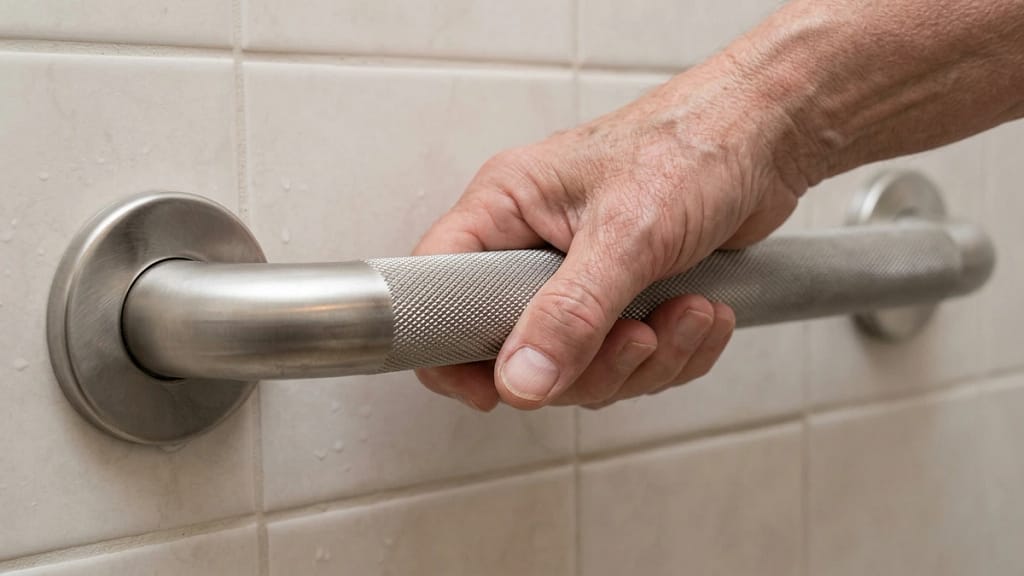
While strength is important, the surface feel of the material also affects how easy a grab bar is to hold.
Different materials can influence grip in wet conditions.
For example:
- polished metal bars may feel smooth
- textured stainless steel bars improve grip
- coated metal bars may provide a slightly softer surface
- plastic bars may feel warmer to the touch
Because grab bars are often used in showers where hands are wet, grip comfort can be just as important as structural strength.
Surface texture is only one part of grip comfort. The bar’s diameter also affects how easy it is to hold, especially for users with smaller hands, arthritis, or weaker grip strength. This guide to grab bar diameter and grip size explains how thickness changes hand control.
When comparing material options, it is helpful to consider both structural strength and how comfortable the bar feels during everyday use.
Corrosion Resistance in Bathroom Environments
Bathrooms expose grab bars to moisture, steam, soap residue, and cleaning chemicals on a regular basis. Over time, those conditions can cause some materials to rust, weaken, discolor, or lose surface quality.
Corrosion resistance matters most in showers, bathtub areas, and other locations where the grab bar is exposed to water almost every day.
Stainless steel performs especially well in humid environments because it naturally resists rust better than many lower-quality metals. This is one reason it is commonly used for permanent bathroom installations.
Coated metals can also perform well when the coating remains intact, but the core material still matters. If the coating wears, chips, or cracks, the metal underneath becomes more important for long-term durability.
For wet bathroom areas, choose a material that can handle repeated moisture exposure without depending only on appearance or a decorative finish.
Strength, Weight Capacity, and Installation Support
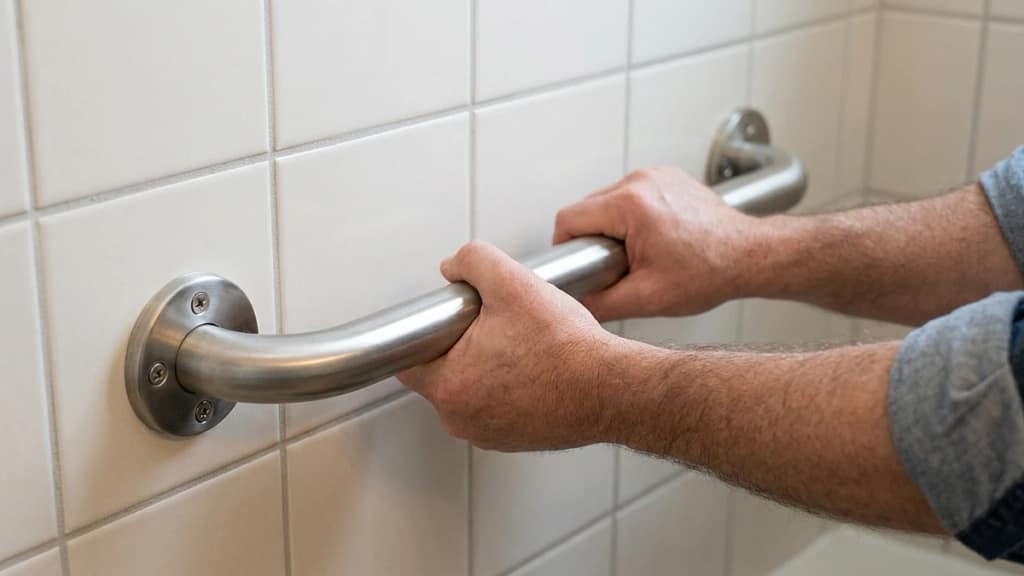
Grab bars must be strong enough to handle more than light balance support. In real use, a person may pull on the bar while standing, push against it when rising from a seated position, or grab it suddenly during a slip.
ADA structural-strength standards use a 250-pound vertical or horizontal force requirement for grab bars, including the bar, fasteners, mounting device, and supporting structure.
How to think about strength:
Material is only one part of the safety picture. A strong stainless steel bar can still perform poorly if it is installed into a weak surface, while a properly rated bar needs strong material, secure fasteners, and solid wall support working together.
Strong materials such as stainless steel or reinforced metal are commonly used in grab bars designed for permanent installation because they are better suited for repeated force over time.
Plastic, lightweight aluminum, or suction-based designs may still be useful in limited situations, but they should not automatically be treated as full-support options. The intended use of the grab bar matters as much as the material name.
When a grab bar will be used for frequent push-off support, higher body-weight support, or repeated high-force movements, standard material choice may not be enough. In those situations, heavy-duty grab bars designed for higher support needs may be a better category to compare.
Common Mistakes When Choosing Grab Bar Materials
Material mistakes often happen when the grab bar is chosen by appearance, price, or convenience instead of how it will actually be used. For bathroom safety, the material should match the level of support, moisture exposure, and installation method.
The most common mistakes are:
- Choosing by appearance only
A chrome, brushed, or decorative finish may look suitable, but the core material and mounting method matter more for support. - Treating temporary grab bars as primary support
Plastic or suction-based grab bars may help with light balance assistance, but they should not be treated the same as permanently mounted metal bars.
Example:
A renter may place a suction-style plastic grab bar on the shower wall to feel steadier while stepping in and out. That may be acceptable for light balance help, but it should not be treated the same as a permanently mounted metal grab bar that a person might pull on while catching balance or pushing up from a seated position.
- Ignoring moisture exposure
A material that works in a dry toilet area may wear faster inside a shower or near a bathtub if it is not designed to resist corrosion. - Assuming coating means strength
A textured or coated surface can improve grip, but the strength still depends on the metal core beneath the coating. - Overlooking installation strength
Even a strong grab bar material can perform poorly if the bar is not secured into proper wall support.
The safest approach is to match the material to the job. Use strong permanently mounted metal for primary support, textured or coated surfaces when grip comfort matters, and plastic or suction-based options only for limited temporary assistance.
What I Recommend
For most long-term bathroom safety setups, the most practical choice is a permanently mounted stainless steel grab bar. It provides the best balance of strength, moisture resistance, and long-term reliability for showers, bathtubs, and toilet areas.
If grip comfort is a concern, a textured stainless steel or coated metal grab bar may be a better fit than a smooth polished surface. The bar should still have a strong core material and be installed into proper wall support.
Plastic or suction-based grab bars are better treated as temporary balance aids. They may be useful in limited situations, but they should not be the main support choice when the user may need to pull, push, or catch balance suddenly.
FAQ
What is the best material for grab bars?
Stainless steel is widely considered one of the best materials for grab bars because it provides strong support and resists corrosion.
Are stainless steel grab bars better than plastic ones?
Stainless steel grab bars generally provide stronger and more reliable support than plastic grab bars designed for temporary use.
Can plastic grab bars support body weight?
Some plastic grab bars may help with light balance assistance, but many are not designed for full body-weight support or sudden force during a slip.
Do grab bars need to be metal?
Grab bars do not always need to be metal, but metal grab bars are commonly recommended for permanent bathroom safety installations.
Are suction grab bars as strong as wall-mounted grab bars?
Suction grab bars are usually intended for temporary support and may not provide the same level of strength as permanently installed grab bars.
Final Thoughts
Choosing the best grab bar materials is easier when the decision is based on real bathroom use instead of appearance alone. The safest choice depends on where the bar will be installed, how often it will be used, how wet the area gets, and how much support the user needs.
Stainless steel is still the strongest all-around option for most permanent bathroom installations. Other materials can make sense in specific situations, but they should be chosen with clear limits in mind.
The best setup combines the right material, a secure installation method, and a surface that is easy to grip during everyday bathroom movements.
