
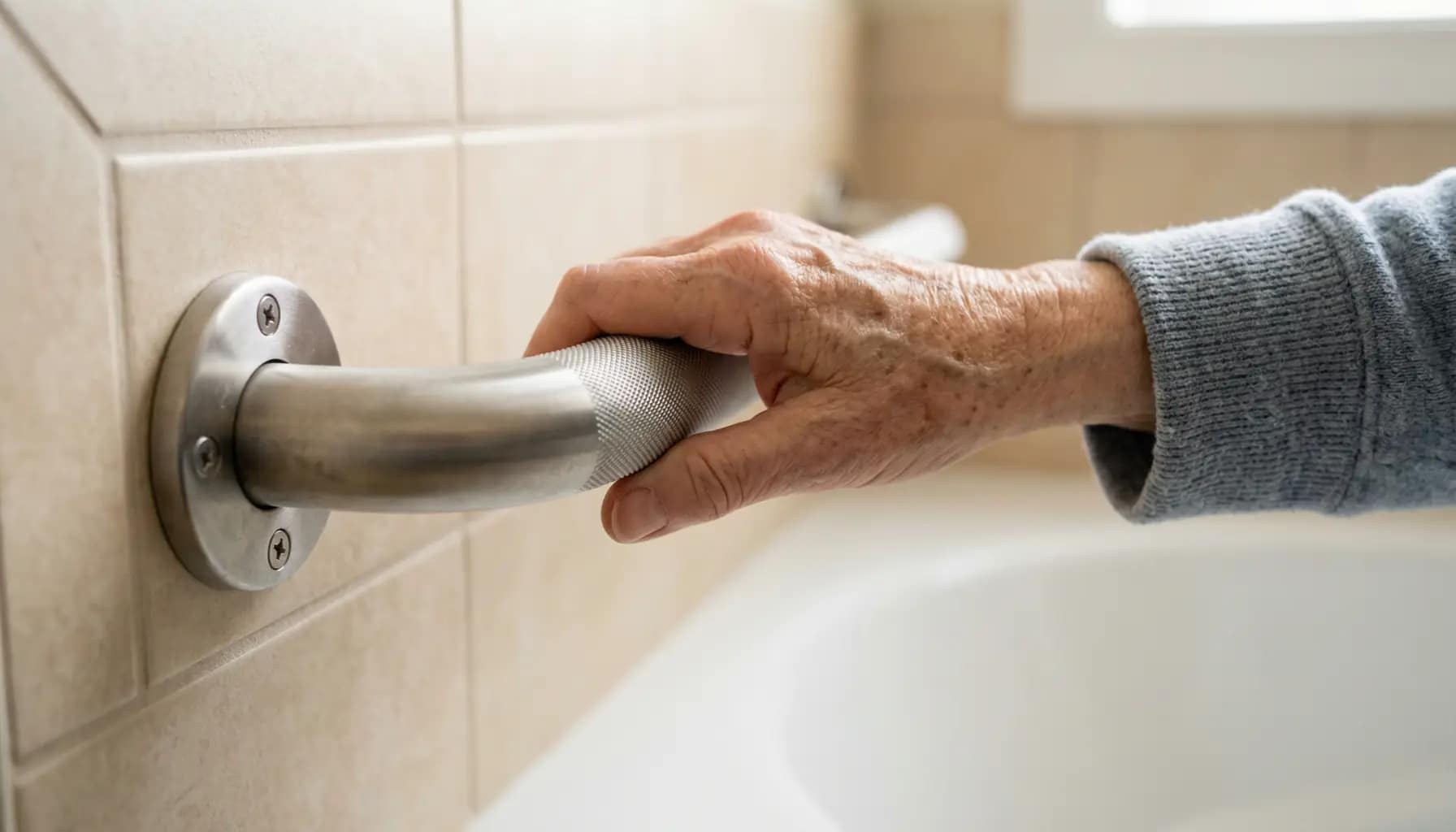
Grip strength directly affects how safely a person can move in the bathroom. Many daily movements, such as standing up, turning, or stepping into a shower, rely on the ability to hold onto a stable support.
Arthritis and weak grip can make these actions more difficult. Reduced hand strength, joint stiffness, and discomfort can affect how securely a grab bar can be held.
Choosing the right grab bars for arthritis and weak grip helps improve stability while reducing strain on the hands during movement.
Disclosure: As an Amazon Associate, I earn from qualifying purchases. This post may contain affiliate links. If you purchase through these links, I may earn a small commission at no extra cost to you. I only recommend products I would feel comfortable using in my own home. Learn more.
On This Page
- Why Grip Strength Matters for Grab Bar Safety
- Challenges Seniors with Arthritis Face
- Key Features to Look for in Grab Bars for Arthritis and Weak Grip
- Which Features Matter Most for Weak Grip?
- Where to Place Grab Bars for Easier Grip Use
- Common Mistakes to Avoid
- Are Standard Grab Bars Enough for Weak Grip?
- How to Improve Grip Safety Beyond Grab Bars
- What I Recommend
- FAQ
- Final Thoughts
Quick Answer
Grab bars for arthritis and weak grip should have a comfortable diameter, non-slip surface, and easy-to-hold shape to improve control and reduce strain during movement.
- Choose a diameter that allows a comfortable grip
- Use textured or slip-resistant surfaces
- Avoid smooth finishes that can become slippery
- Position bars within natural reach
- Ensure secure installation for stability
These features reduce strain on the hands and improve safety during everyday use.
Why Grip Strength Matters for Grab Bar Safety
Grip strength determines how effectively a grab bar can be used. Even a well-installed bar may not provide support if it cannot be held securely.
Weak grip increases the risk of the hand slipping, especially in wet environments. This can reduce the effectiveness of the grab bar during critical moments.
When stepping into a shower, a secure grip helps stabilize the body during weight transfer. If the grip is weak or uncomfortable, that stability can be reduced at the exact moment support is needed.
Comfort also plays a role. If holding the bar causes discomfort or strain, it may not be used consistently, reducing its overall benefit.
Challenges Seniors with Arthritis Face
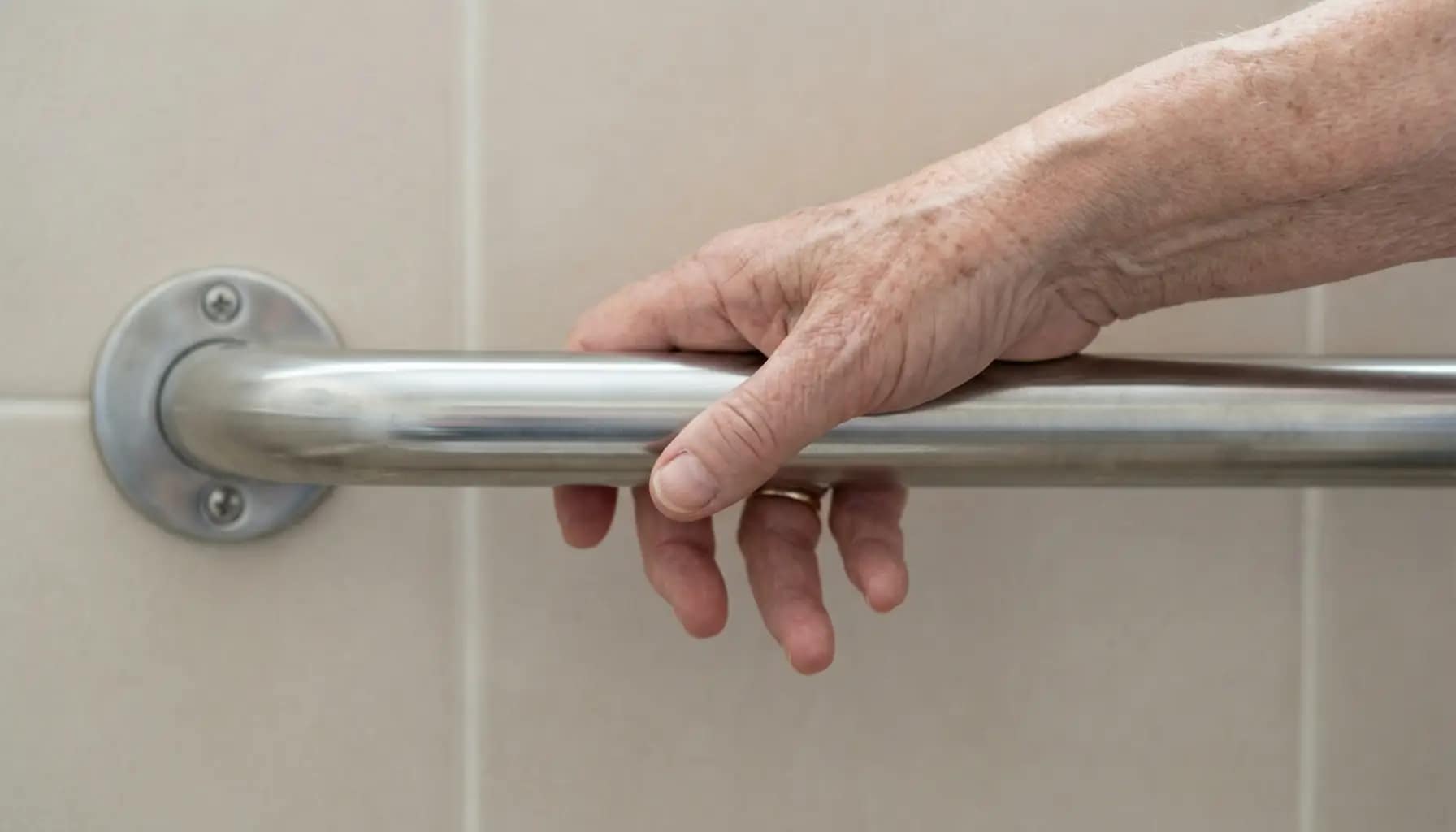
Arthritis affects both strength and flexibility, which directly impacts grip.
- Reduced hand strength makes it harder to hold onto support
- Joint pain can limit how firmly the bar is gripped
- Stiffness reduces finger movement and control
- Fatigue may affect grip over time
These challenges can make standard grab bars less effective if they are not chosen carefully.
Key Features to Look for in Grab Bars for Arthritis and Weak Grip
Choosing the right grab bar features can significantly reduce the effort required to maintain a secure grip.
The goal is to make each interaction with the grab bar feel stable, comfortable, and easy to control, even with limited hand strength or joint stiffness.
The following features have the greatest impact on grip comfort and usability.
Proper Diameter (Grip Size)
The diameter of the grab bar affects how easily it can be held. A size that is too small or too large can make gripping more difficult.
- Allows comfortable hand closure
- Reduces strain on fingers and joints
- Supports a more secure hold
A well-sized grab bar helps distribute pressure more evenly across the hand. For detailed sizing guidance, see grab bar diameter and grip size.
When to use:
Focus on proper diameter in all installations, especially when grip strength is limited or joint movement is restricted.
Textured or Non-Slip Surface
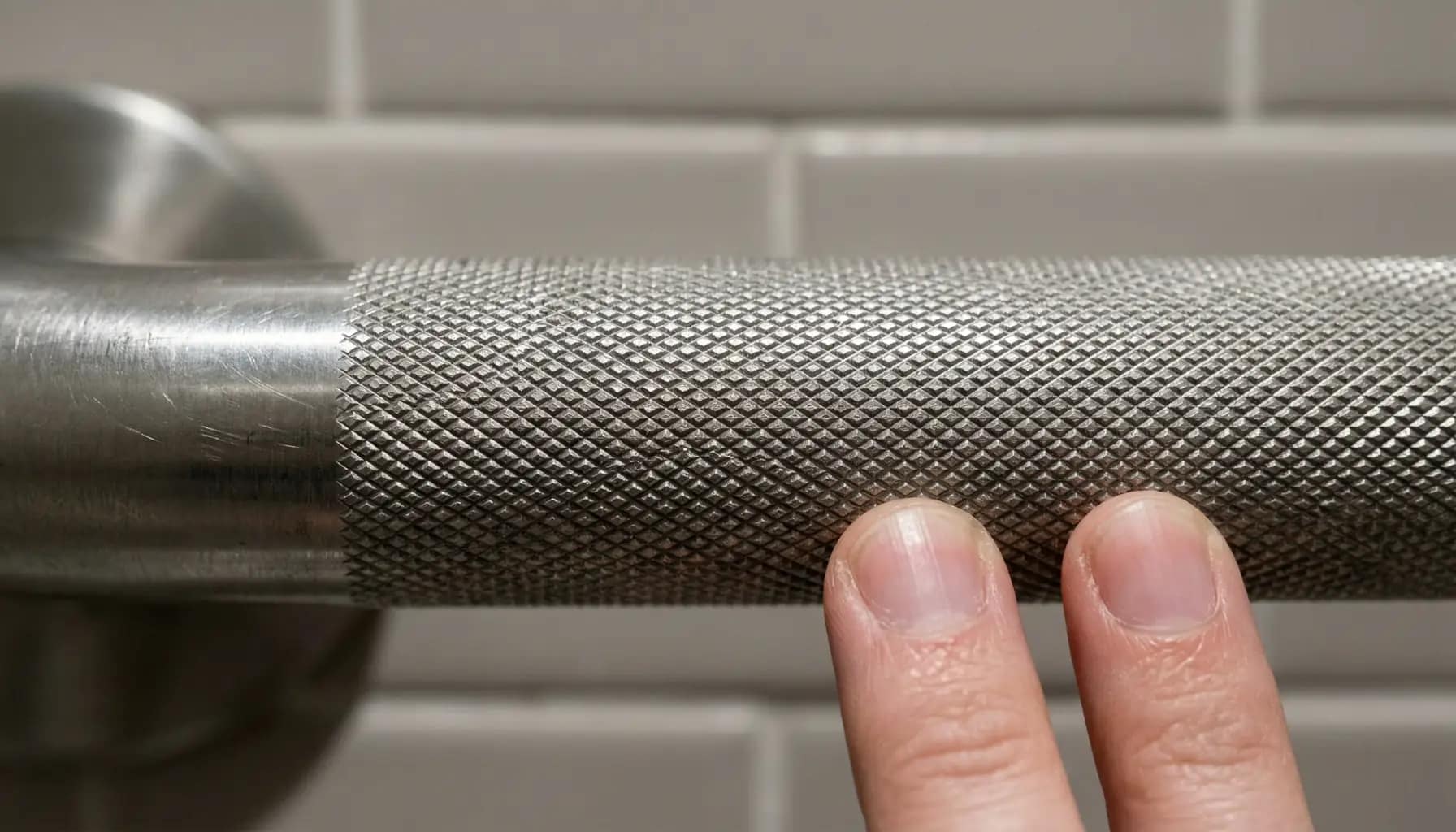
Surface texture affects how easily the hand maintains contact.
- Improves grip in wet conditions
- Reduces slipping risk
- Provides better control during movement
Textured finishes can make a noticeable difference, especially when hands are wet or soapy.
When to use:
Use textured or slip-resistant grab bars in showers, bathtubs, and any area exposed to water.
Ergonomic or Angled Design
Ergonomic designs help position the hand more naturally, reducing strain during use.
- Supports natural wrist alignment
- Allows multiple grip positions
- Reduces pressure on joints
Angled grab bars can be particularly useful when both support and flexibility are needed.
When to use:
Use ergonomic or angled grab bars in areas where movement varies, such as transitioning between standing and turning.
Secure Wall-Mounted Installation
Stability reduces the amount of grip strength required. A firmly mounted grab bar provides consistent support without movement.
- Prevents shifting during use
- Reduces the need for a tight grip
- Improves overall safety
A stable grab bar allows the user to rely on support without compensating for movement or instability.
To ensure long-term safety, review how to check grab bar stability after installation.
When to use:
Use wall-mounted grab bars in all primary support areas where full weight or balance assistance is needed.
Which Features Matter Most for Weak Grip?
For most users, surface texture and proper diameter have the greatest impact on grip comfort.
Textured surfaces help prevent slipping, especially in wet conditions, while a well-sized diameter reduces strain on the fingers and joints.
Ergonomic designs can further improve comfort, but they are secondary compared to grip and stability.
Focusing on these priorities helps simplify the decision when choosing grab bars for arthritis and weak grip.
Where to Place Grab Bars for Easier Grip Use
Placement affects how easily the grab bar can be reached and used. Poor positioning can make even a well-designed grab bar difficult to hold.
- Install within natural reach distance
- Align with common movement paths
- Avoid positions that require stretching or twisting
For example, placing a grab bar too far from the body may require extended reach, which can reduce grip strength and control.
For detailed placement guidance based on real bathroom use, see where to install grab bars in a bathroom.
Common Mistakes to Avoid
Selecting the wrong grab bar or placing it incorrectly can reduce its effectiveness.
Choosing smooth or slippery bars can make it harder to maintain grip, especially in wet conditions.
Incorrect diameter can lead to discomfort or difficulty holding the bar.
Poor placement may require awkward hand positioning, reducing control during movement.
Weak installation can cause the bar to shift, increasing the effort required to hold it securely.
For more details, see common grab bar installation mistakes.
Are Standard Grab Bars Enough for Weak Grip?
Standard grab bars can be sufficient if they meet key requirements such as proper diameter, surface texture, and placement.
However, in cases where grip strength is significantly reduced, standard designs may not provide enough comfort or control. For example, a smooth or poorly sized grab bar may be difficult to hold securely, even if it is installed correctly.
In these situations, grab bars with textured surfaces, ergonomic shapes, or optimized diameters can provide better usability. Exploring grab bars designed for easier grip and control can help identify options that reduce strain and improve handling during daily use.
The effectiveness depends on how well the grab bar matches the user’s specific grip strength and movement needs.
In most cases, small feature differences can have a greater impact than the type of grab bar itself.
How to Improve Grip Safety Beyond Grab Bars
Improving grip safety does not rely on grab bars alone and can be supported by small environmental adjustments.
- Use non-slip mats to reduce slipping
- Keep hands dry when possible
- Ensure adequate lighting
- Keep essential items within easy reach
These adjustments help reduce reliance on grip strength alone and improve overall safety.
What I Recommend
Focus first on selecting grab bars that are easy to grip and comfortable to hold. Grip comfort has a direct impact on usability.
Start with proper diameter, then prioritize textured or slip-resistant surfaces. These features reduce the effort required to maintain control during movement.
Next, ensure the grab bar is securely installed. Stability reduces the need for a tight grip and improves overall confidence during use.
Finally, adjust placement so the grab bar can be reached naturally without stretching or repositioning.
FAQ
What is the best grab bar for arthritis?
Grab bars designed with proper diameter, textured surfaces, and secure installation provide the most reliable support for users with arthritis.
What diameter is easiest to grip?
A diameter that allows the hand to close comfortably, typically within a moderate range, provides the best balance of comfort and control.
Are textured grab bars better?
Yes, textured surfaces improve grip, especially in wet conditions, and reduce the risk of slipping.
Can weak grip increase fall risk?
Yes, reduced grip strength can make it harder to maintain balance, especially during movement in slippery environments.
Final Thoughts
Choosing the right grab bars for arthritis and weak grip is essential for maintaining safety and control during daily use.
Grip strength is a key factor in how effective a grab bar will be. Arthritis and weak grip can make standard designs less practical if they are not chosen carefully.
Focusing on grip comfort, surface texture, and proper placement can significantly improve both control and safety during use.
Even small adjustments, such as choosing a better grip surface or correct diameter, can make a noticeable difference in daily use.
