
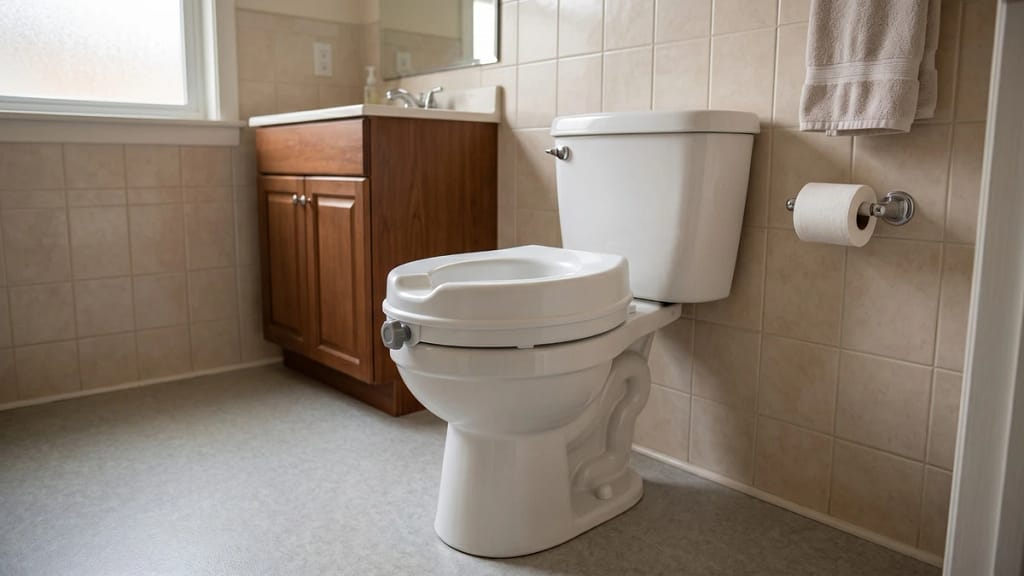
A raised toilet seat may look simple, but it does not automatically fit every toilet. The shape of the bowl, the seat design, the attachment method, and the space around the toilet can all affect whether the final setup feels secure.
If the question is do raised toilet seats fit all toilets, the practical answer is no. Many raised toilet seats fit common toilet styles, but not every model works with every toilet.
This guide explains what affects raised toilet seat fit, what to check before choosing one, and what to do if a seat looks compatible but feels unstable in real use.
Disclosure: As an Amazon Associate, I earn from qualifying purchases. This post may contain affiliate links. If you purchase through these links, I may earn a small commission at no extra cost to you. I only recommend products I would feel comfortable using in my own home. Learn more.
On This Page
- Why Raised Toilet Seats Do Not Fit Every Toilet
- Round vs Elongated Toilets
- How to Measure Before Choosing a Raised Toilet Seat
- Attachment Style Can Change Compatibility
- Bathroom Space Can Affect Whether the Seat Works
- What to Do If a Raised Toilet Seat Does Not Fit Well
- How to Choose a Raised Toilet Seat That Fits Properly
- When It Makes Sense to Compare Better-Fitting Options
- Common Mistakes When Checking Raised Toilet Seat Fit
- What I Recommend
- FAQ
- Final Thoughts
Quick Answer
Raised toilet seats do not fit all toilets because toilet shape, bowl size, rim design, and attachment style can vary. Many models fit standard round or elongated toilets, but some toilets need a more specific raised seat design to fit securely and feel stable during daily use.
- Toilet shape is one of the biggest fit factors
- Round and elongated toilets often need different seat styles
- Attachment style can affect whether the seat secures properly
- Measuring first helps avoid poor fit
- A seat that fits physically can still feel unstable if it is not matched well
In simple terms, a raised toilet seat should be checked for both fit and stability. It is not enough for the seat to sit on top of the toilet if it shifts, rocks, or feels awkward during sitting and standing.
The safest choice is usually the one that matches the toilet shape, attaches securely, and leaves enough room for the user to move comfortably.
Why Raised Toilet Seats Do Not Fit Every Toilet
Raised toilet seats do not fit every toilet because toilets are not all shaped or built the same way. Even small differences in bowl shape, rim design, or seat attachment can affect how well the raised seat sits in place.
The most common fit issues involve:
- bowl shape
- toilet size
- rim shape
- toilet seat mounting area or attachment points
- available space around the toilet
Compatibility can also be harder with less common toilet designs, such as compact toilets, unusually shaped bowls, skirted toilets, bidet-seat setups, or toilets with limited access around the seat-mounting area.
These designs may still work with some raised seats, but they usually need more careful checking before choosing a model.
Example:
A raised seat may look close enough at first, but still sit unevenly if the bowl shape does not match. Another seat may rest on the toilet correctly but fail to lock or clamp securely because the attachment style does not work well with that toilet.
Fit should always be judged by how the seat performs during real use, not only by whether it appears to sit on the bowl.
Round vs Elongated Toilets
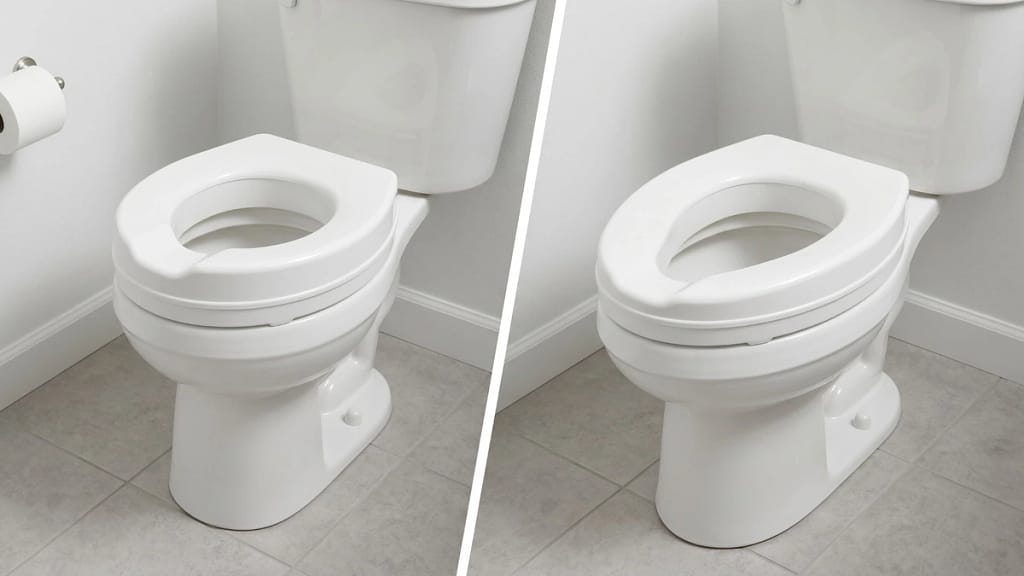
Toilet shape is one of the most important fit factors. Most toilets are either round or elongated, and a raised toilet seat usually needs to match that shape properly.
A simple way to compare them:
- Round toilets are shorter from front to back
- Elongated toilets are longer and more oval-shaped
This difference affects how the raised seat rests on the bowl. A seat made for an elongated toilet may extend too far on a round toilet, while a round model may not provide the right coverage on an elongated bowl.
For example, a raised seat that does not match the bowl shape may feel slightly off-center or less supported during use. That can make the setup feel less secure even if the height seems right.
If toilet shape is the main uncertainty, this guide on round vs elongated raised toilet seat fit explains how to tell the difference and why it matters.
Once the toilet shape is clear, the next step is measuring the toilet and surrounding area so the seat can fit securely in the actual bathroom setup.
How to Measure Before Choosing a Raised Toilet Seat
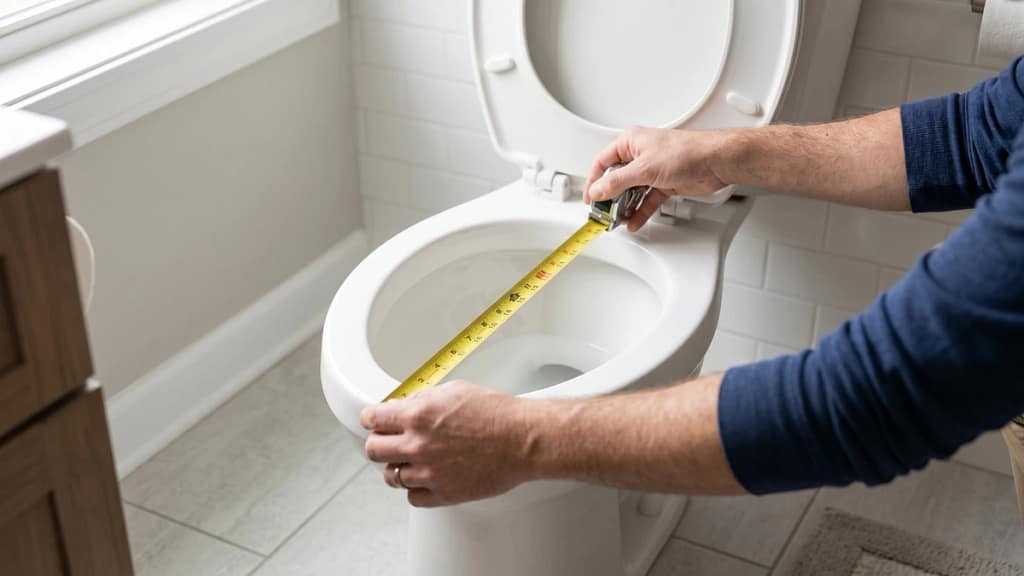
Measuring before choosing a raised toilet seat helps prevent many common fit problems. The goal is not only to confirm that the seat can fit the toilet, but also that it will feel stable and usable in the bathroom.
Check these points before choosing:
- current toilet height
- round or elongated bowl shape
- usable seating area
- rim or attachment area
- side and front clearance around the toilet
Measuring only the toilet height is not enough. A raised toilet seat also needs to match the toilet shape and leave enough space for sitting, standing, and repositioning.
For example, a seat may provide the right amount of added height but still feel wrong if the bowl shape is mismatched or if nearby fixtures make movement awkward. This is why a full measurement process is more useful than checking one number alone.
If the fit is uncertain, this guide on how to measure for a raised toilet seat explains what to check before choosing a model.
Good measurements narrow the choices, but they do not solve everything by themselves. The way the seat attaches to the toilet can still affect whether the final setup feels secure.
Attachment Style Can Change Compatibility
A raised toilet seat can fit the bowl shape but still fail to secure well if the attachment style does not match the toilet.
Common attachment styles include:
- clamp-on designs
- bolt-on designs
- hinged risers
- seats that rest over the bowl
- models with locking brackets or knobs
Each style works differently. Some seats rely on pressure or side clamps, while others replace or attach through the toilet seat mounting area.
For example, a clamp-on raised seat may work well on one toilet but feel less secure on another if the rim shape does not give the clamp enough stable contact. A hinged riser may be better in some bathrooms, but it still needs compatible mounting points.
This is why attachment style should be checked separately from bowl shape. A seat can be the right general size and still be the wrong securing method for that toilet.
Bathroom Space Can Affect Whether the Seat Works
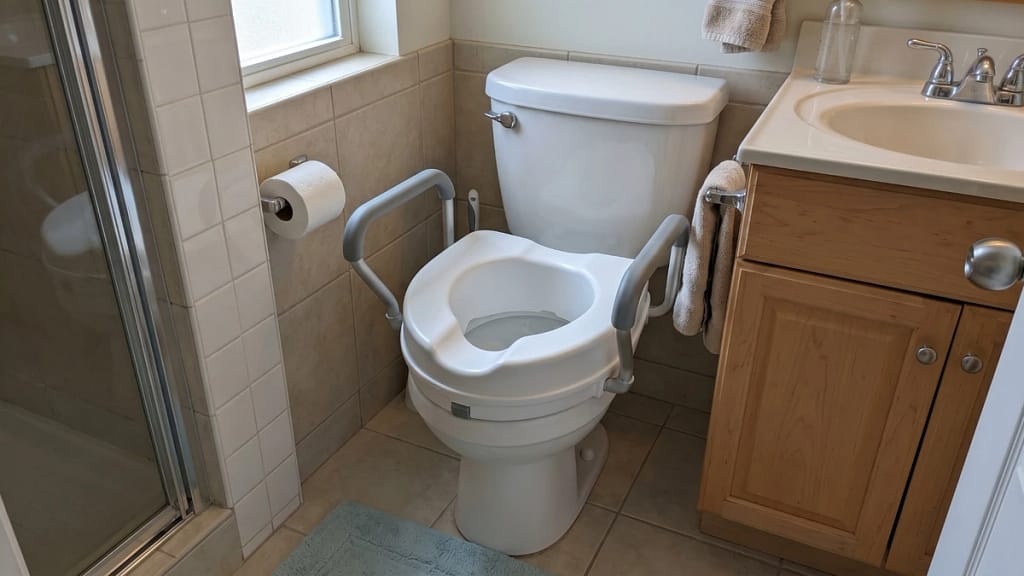
A raised toilet seat may fit the toilet itself but still feel awkward in the full bathroom layout. This is especially important when the seat has handles, a wider profile, or changes how the user positions their body during transfers.
Check the surrounding space for:
- side clearance
- front clearance
- nearby walls or vanities
- toilet paper holder position
- room for the user’s hands, knees, and feet
Example:
A raised toilet seat with handles may technically fit the toilet, but the handles may sit too close to a wall or cabinet. In that situation, the problem is not the toilet fit alone. It is the way the seat works within the whole bathroom space.
Support around the toilet may also affect what kind of seat makes sense. If the user needs something stable nearby while sitting or standing, the surrounding wall space becomes part of the decision. This guide on where to install grab bars around a toilet explains how nearby support placement affects toilet-area safety and usability.
A raised toilet seat should fit the toilet and the bathroom routine, not just the bowl.
What to Do If a Raised Toilet Seat Does Not Fit Well
A raised toilet seat that does not fit well should not be forced into daily use. If the seat rocks, shifts, clamps poorly, or feels awkward, the setup should be reassessed before regular use.
Start by checking:
- whether the toilet is round or elongated
- whether the attachment system is installed correctly
- whether the seat is sitting evenly
- whether the rim or bowl shape is interfering with the fit
- whether surrounding space is limiting normal movement
If the problem is minor, repositioning or retightening may help. If the seat still feels unstable after adjustment, a different seat style is usually the better option.
Quick check:
If the seat still rocks after retightening, the clamps do not sit securely, or the user has to shift weight awkwardly to use it, do not rely on that setup for daily transfers. Compare a different raised seat style instead.
A poor fit is not just an inconvenience. It can make the user hesitate, shift weight awkwardly, or rely on unstable surfaces while standing.
How to Choose a Raised Toilet Seat That Fits Properly
Choosing a raised toilet seat that fits properly means looking at the toilet, the user, and the bathroom space together.
The main factors are:
- bowl shape
- attachment style
- added height
- stability during transfers
- available bathroom clearance
- whether handles or side support are needed
For example, a simple riser may work well when the toilet shape is standard and the user only needs added height. A more secure locking or handle-supported design may be better when stability during standing is also a concern.
The key is to avoid choosing by height alone. Fit, support, and stability all affect whether the seat feels right during daily use.
For a broader decision framework, this guide on how to choose a raised toilet seat explains how to weigh height, fit, support, and real-world usability together.
After those basics are clear, it becomes easier to decide whether a general raised seat is enough or whether comparing more specific options would be useful.
When It Makes Sense to Compare Better-Fitting Options
If a raised toilet seat does not fit well, feels unstable, or does not match the user’s support needs, comparing different designs can help clarify the next step.
This is especially useful when:
- the current seat feels loose
- the toilet shape is harder to match
- handles or support features may be needed
- a basic seat does not feel secure enough
- the bathroom layout limits what will work
At this stage, the goal is not simply to find another raised seat. The goal is to find a design that better matches the toilet, the user, and the way the bathroom is used.
For readers who are ready to compare complete options, this guide to the best raised toilet seats for seniors compares different models based on support, fit, and everyday usability.
Comparing options is most useful after the main fit problem is understood. That also makes it easier to avoid common mistakes, such as choosing by height alone or assuming every raised seat is universal.
Common Mistakes When Checking Raised Toilet Seat Fit
Several fit mistakes are easy to make when choosing a raised toilet seat.
The most common ones are:
- Assuming every model is universal
Many models fit common toilets, but that does not mean they fit every toilet. - Ignoring round vs elongated shape
Bowl shape affects how the seat sits and how stable it feels. - Measuring only height
Height matters, but so do bowl shape, attachment, and surrounding clearance. - Forgetting attachment style
A seat can match the bowl shape but still fail to secure properly. - Overlooking bathroom space
The seat may fit the toilet but still feel awkward if walls, vanities, or fixtures are too close.
Most fit problems happen when the toilet is checked in isolation. A better approach is to check the full setup before relying on the seat every day.
What I Recommend
The most practical approach is to confirm toilet shape first, then check measurements, attachment style, and surrounding space before choosing a raised toilet seat.
A good process is:
- identify whether the toilet is round or elongated
- measure the toilet and surrounding clearance
- choose an attachment style that can secure properly
- test the seat for rocking or shifting before regular use
- avoid using any seat that feels unstable
A raised toilet seat should feel secure during normal sitting and standing. If it only fits loosely or feels uncertain, it is better to choose a different design than to keep adjusting a poor match.
Fit should always be judged by real use, not just by the product description.
FAQ
Do raised toilet seats fit all toilets?
No. Many raised toilet seats fit common round or elongated toilets, but not every model fits every toilet.
How do I know if my toilet is round or elongated?
Round toilets are shorter from front to back, while elongated toilets are longer and more oval-shaped.
Can a raised toilet seat fit an unusual toilet shape?
Sometimes, but unusual bowl shapes may need a more specific seat design or attachment style.
What should I do if a raised toilet seat feels loose?
Stop relying on it until the fit is checked. Recheck the shape, attachment, and installation, and choose a different model if it still feels unstable.
Does bathroom space affect raised toilet seat fit?
Yes. A raised toilet seat can fit the toilet but still feel awkward if nearby walls, vanities, or fixtures limit safe movement.
Final Thoughts
So, do raised toilet seats fit all toilets? No. Raised toilet seats fit many common toilets, but shape, size, attachment style, and bathroom layout can all affect whether a raised seat works well.
The best setup is one that matches the toilet and feels stable during everyday movement. A seat that technically fits but rocks, shifts, or crowds the bathroom is not a good fit in practice.
Checking shape, measurements, attachment, and space before choosing a raised toilet seat can prevent most compatibility problems.
