

Measuring correctly is one of the most important parts of choosing a raised toilet seat.
A seat that looks right on paper can still feel awkward, unstable, or uncomfortable if the toilet height, bowl shape, or surrounding space is not taken into account.
If you are trying to learn how to measure for a raised toilet seat, the goal is not just to get one number.
You need to understand the current toilet height, the shape of the toilet, the user’s body size and mobility, and how much space is available around the toilet for safe use.
When these measurements are done properly, it becomes much easier to choose a setup that feels stable, comfortable, and practical in everyday use.
Disclosure: As an Amazon Associate, I earn from qualifying purchases. This post may contain affiliate links. If you purchase through these links, I may earn a small commission at no extra cost to you. I only recommend products I would feel comfortable using in my own home. Learn more.
On This Page
- Why Measuring First Matters
- Step-by-Step: How to Measure for a Raised Toilet Seat
- How Measurements Affect the Seat You Choose
- Special Cases That Change What You Need
- Measure for Support Around the Toilet, Not Just the Seat
- Common Mistakes When Measuring for a Raised Toilet Seat
- What I Recommend
- FAQ
- Final Thoughts
Quick Answer
To measure for a raised toilet seat, start with your current toilet height, then check the toilet shape, the usable seating area, the user’s mobility needs, and the available space around the toilet.
The goal is to choose a seat that fits securely and makes sitting and standing easier without creating new balance problems.
Start with the toilet itself:
- Measure from the floor to the top of the current toilet seat
- Check whether the toilet is round or elongated
- Look at the contact area where the raised seat will rest and attach
Then consider the person using it:
- Think about the user’s height and how much extra height is actually needed
- Consider mobility limits, balance concerns, and ease of sitting and standing
Finally, check the surrounding space:
- Make sure there is enough room around the toilet for safe movement
- Allow for any support features that may also be needed nearby
A raised toilet seat that fits the toilet but does not match the user or the bathroom layout can still feel awkward or unsafe, which is why all three parts—toilet, user, and space—need to be measured together.
Why Measuring First Matters
Measuring first helps prevent many of the most common problems that come with choosing a raised toilet seat.
A seat may look right at first, but still feel awkward, unstable, or uncomfortable once it is actually in use.
That usually happens when one important part of the setup is missed, such as:
- the current toilet height
- the toilet shape
- the user’s height or mobility
- the amount of space around the toilet
These details matter because a raised toilet seat affects more than just height. It changes how the user sits down, stands up, shifts weight, and moves around the toilet area.
Example:
Someone may choose a seat based only on the listed height and later find that their feet no longer rest comfortably on the floor. Another person may buy a seat without checking toilet shape and end up with a setup that never feels fully secure.
Measuring first does not make the decision more complicated. It simply makes the final choice much more reliable.
Step-by-Step: How to Measure for a Raised Toilet Seat
Measuring for a raised toilet seat is easier when the process is broken into clear steps. Each step gives you a different piece of information, and together they tell you what type of seat is most likely to work well.
Step 1: Measure the Current Toilet Height

Start by measuring from the floor to the top of the current toilet seat. This gives you the baseline height you are working with before any added elevation.
To get a useful measurement:
- Measure from the floor, not from the toilet base
- Measure to the top of the seat, not just the rim of the bowl
- Check that the toilet seat is sitting flat when you measure
This number matters because a raised toilet seat does not exist on its own. The same 3-inch raised seat can feel very different depending on the height of the toilet underneath it.
For example, someone using a standard-height toilet may need more added height to make standing easier, while that same increase could feel too high on a comfort-height toilet.
Before deciding how much extra height to add, it helps to understand the difference between those two starting points. This guide on standard toilet vs comfort height toilet explains how base toilet height changes the final setup.
A simple floor-to-seat measurement gives you the starting point for every other decision that follows.
Step 2: Check the Toilet Shape

The next step is to identify whether the toilet is round or elongated. This matters because a raised toilet seat that does not match the bowl shape can feel awkward, unstable, or less secure during daily use.
In simple terms:
- Round toilets are shorter from front to back
- Elongated toilets have a longer, more oval shape
That difference affects how well the raised seat rests on the toilet and how supported the user feels while sitting.
For example, a seat made for an elongated toilet may extend too far on a round bowl, while a round seat on an elongated toilet may not provide enough support across the full seating area.
An easy way to check toilet shape:
Look at the bowl from above and compare how far it extends in front of the seat bolts.
A round toilet ends sooner at the front, while an elongated bowl extends farther forward with a more oval outline.
If the shape is not obvious at a glance, the front-to-back bowl length is the most useful thing to compare rather than guessing by eye.
If you are unsure how toilet shape changes the fit, this guide on round vs elongated raised toilet seat fit explains what to look for and why the difference matters.
A raised toilet seat that matches the bowl shape properly is much more likely to feel stable and natural in real use.
Step 3: Measure the Seat Area and Contact Points
Once you know the toilet height and shape, the next step is to look at the area where the raised toilet seat will actually rest. This part is easy to overlook, but it affects how stable and secure the final setup will feel.
Pay attention to:
- the usable seating surface on top of the toilet
- the points where the raised seat will make contact with the bowl or seat area
- the space available for clamps, brackets, or locking parts if the model uses them
What matters here is not just overall size, but how evenly the raised seat can sit on the toilet.
If the contact area is too narrow, uneven, or partly blocked, the seat may not feel fully secure even if the height and shape are correct.
For example, a raised toilet seat may seem compatible at first, but the locking system can still sit awkwardly if there is not enough flat, usable contact area for it to grip properly. In real use, that can lead to slight shifting or a setup that never feels completely stable.
To check this properly:
Look for flat, even contact where the raised seat will rest and make sure any clamps or locking parts will not be blocked by curves, hinges, or narrow edges.
A seat that technically matches the toilet can still feel unstable if the contact points are uneven or too limited.
This step helps you move beyond “will it fit?” and toward a more useful question: “will it sit securely enough to feel safe every day?”
Step 4: Think About User Height and Mobility
The same toilet measurements can lead to different choices depending on who will actually use the seat. That is why measuring the toilet alone is not enough.
You also need to think about the user’s height, range of motion, and how difficult sitting down or standing up currently feels.
This step matters most when:
- the user is noticeably taller or shorter than average
- knee or hip movement is limited
- standing up requires extra effort or support
Example:
A taller user may only need a small increase in height because the standard toilet already feels reasonably manageable. A shorter user, on the other hand, may need to be more careful that added height does not make the seated position feel less stable or reduce comfortable foot contact.
Body size can change what “the right measurement” actually means in practice.
When thinking about user fit, do not focus only on how much extra height sounds helpful on paper.
Think about what the final seated position will feel like:
- the feet should still rest comfortably
- the body should feel supported rather than perched too high
- standing up should become easier without making balance feel less controlled.
A good measurement should always reflect the person using the setup, not just the toilet it will sit on.
Step 5: Check Clearance Around the Toilet
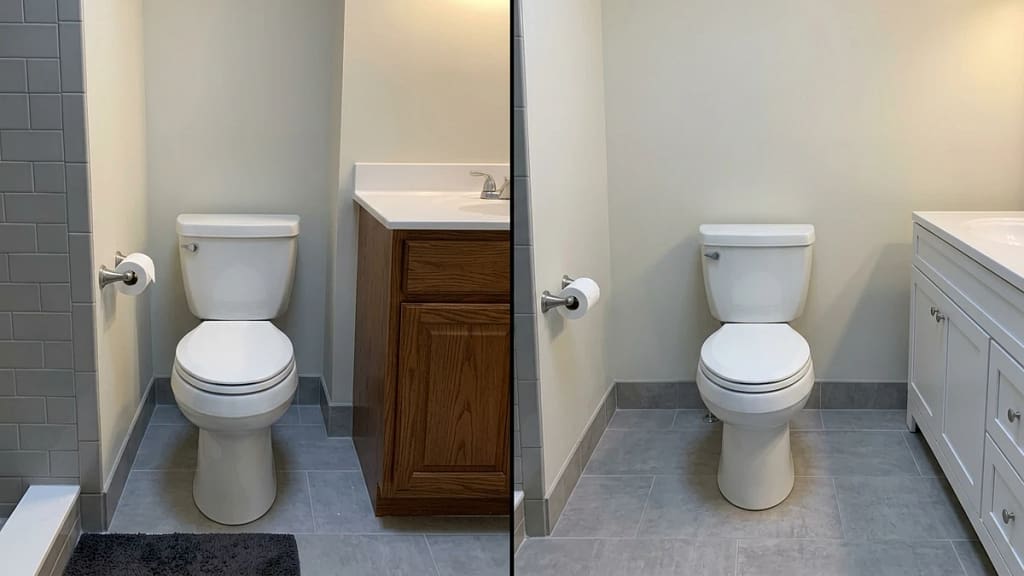
The last step is to check how much usable space surrounds the toilet. A raised toilet seat may fit the toilet itself, but still feel awkward to use if there is not enough room to sit down, stand up, or reposition safely.
Pay attention to:
- Side clearance so the user can lower down and push up comfortably
- Front clearance so there is enough space to step in and position properly
- Nearby obstacles such as cabinets, walls, toilet paper holders, or vanities
This matters even more when the setup includes handles or when the user needs extra space to move slowly and carefully.
Example:
A raised toilet seat with the right height and shape can still feel difficult to use if one side of the toilet is tight against a wall or vanity. In that situation, the problem is not the seat itself, but the lack of room around it.
This is often where small bathrooms create extra challenges. If space is limited, this guide on raised toilet seats for small bathrooms explains what to look for before choosing a model.
Checking clearance helps make sure the final setup works not just on the toilet, but in the full bathroom space where it will actually be used.
How Measurements Affect the Seat You Choose
Once the measurements are done, the next step is turning those numbers into an actual seat choice.
This is where many people realize that measuring is not just about collecting dimensions. It is about understanding what those measurements mean in everyday use.
In practical terms, measurements help answer questions like:
- How much extra height is actually needed?
- Will the seat fit the toilet securely?
- Does the user need only height, or also added support?
- Will the setup still feel comfortable in the available space?
For example, two people may measure the same toilet and still choose different seats. One person with mild knee stiffness may only need a small height increase, while another person using the same toilet may need more elevation because standing up is much harder.
That is why measuring should lead directly into height and fit decisions, rather than being treated as a separate step with no practical follow-through.
If you are trying to connect your measurements to the amount of added height that will actually help, this guide on what height raised toilet seat works best for your situation explains how to make that choice more clearly.
Good measurements do not just tell you what might fit. They help you narrow down what is most likely to feel safe, comfortable, and practical once the seat is in daily use.
Special Cases That Change What You Need
Some situations require more than a standard interpretation of the measurements. The numbers may look acceptable on paper, but the right choice can still change depending on the user’s physical needs and how the seat will be used day to day.
This matters most when the user has:
- more significant mobility limitations
- short-term recovery needs
- difficulty controlling movement while sitting or standing
- broader support needs beyond simple height adjustment
For example, a person recovering from a temporary setback may only need extra height for a short period, while another person with long-term mobility limitations may need a seat that also offers more stability and support.
In both cases, the toilet measurements are still useful, but they have to be interpreted differently because the same height or fit can feel manageable for one user and completely inadequate for another.
This is especially true when the user needs more than a basic height increase to feel safe during the full movement.
If the setup needs to account for broader physical limitations, this guide on raised toilet seats for disabled adults explains what features tend to matter most in those situations.
The key point is that measurements should always be interpreted in context. The same toilet dimensions can lead to very different choices depending on the person using the seat.
Measure for Support Around the Toilet, Not Just the Seat
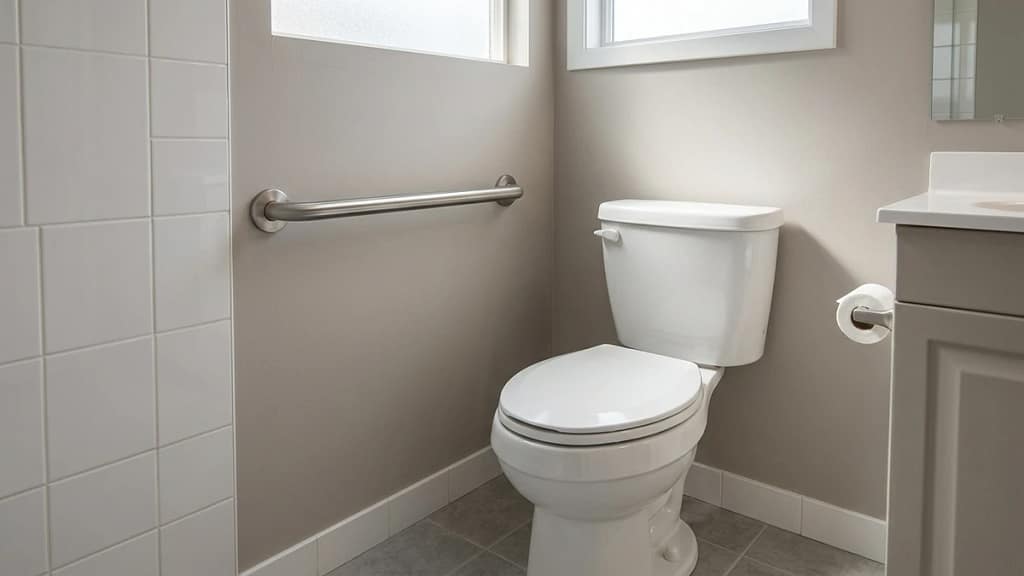
In some bathrooms, the raised toilet seat is only one part of the setup. The surrounding space may also need to accommodate support features that help with sitting down and standing up safely.
This matters most when the user needs more than added height. A raised seat may reduce strain on the knees and hips, but it does not automatically provide anything stable to hold onto during movement.
When measuring the toilet area, think about whether there is enough room for:
- safe hand placement during sitting and standing
- grab bars or other nearby support features
- comfortable movement without bumping into walls or fixtures
For example, someone may measure carefully for the raised seat itself and still find that the harder part is not the height of the toilet, but the lack of support while lowering down or pushing back up.
In that situation, the surrounding space becomes just as important as the seat measurements.
If the setup may need added support, it helps to understand where that support should actually go. This guide on placing grab bars around a toilet explains how support placement affects safety and usability.
A good measuring process should look at the full toilet area, not just the seat itself. That is often what separates a setup that technically fits from one that feels genuinely safe and easy to use.
Common Mistakes When Measuring for a Raised Toilet Seat
Most measuring mistakes happen when people focus on one number and assume the rest will work itself out later.
- Measuring only the toilet height
Height matters, but it is only one part of the decision. Shape, user fit, and surrounding space matter too. - Forgetting to check bowl shape
A raised toilet seat that does not match the toilet shape may still seem close enough, but often feels less secure in daily use. - Ignoring the user’s body size and mobility
The same measurements can lead to different seat choices depending on who will actually use the setup. - Overlooking clearance around the toilet
A seat may fit the toilet correctly but still be awkward to use if there is not enough room to sit, stand, or reposition safely. - Assuming measurement alone guarantees a good setup
Even accurate measurements still need to be followed by proper seat selection and installation.
This is where a lot of avoidable problems start. A setup may look correct on paper but still feel unstable or uncomfortable if the seat is not installed properly afterward.
If you want to see how setup affects the final result, this guide on installing a raised toilet seat correctly explains what to pay attention to after the measuring stage.
Good measuring gives you a strong starting point, but the best results come from combining accurate measurements with the right seat and a stable setup.
What I Recommend
The most useful way to measure for a raised toilet seat is to treat it as a full setup decision, not just a height check.
- Start with the current toilet height so you know your baseline
- Confirm the toilet shape before looking at seat options
- Measure with the actual user in mind, especially height, mobility, and balance needs
- Check the surrounding space so the final setup is safe and easy to use
For many people, the best choice becomes much clearer once height, fit, support needs, and bathroom space are considered together rather than one at a time.
If you want to turn those measurements into a final seat choice, this guide on choosing the right raised toilet seat brings those factors together in a more practical way.
A good measurement process should make the final decision easier, not more complicated. When the toilet, the user, and the surrounding space are all measured together, the result is much more likely to feel stable, comfortable, and safe in everyday use.
FAQ
How do you measure toilet height for a raised toilet seat?
Measure from the floor to the top of the current toilet seat.
Do raised toilet seats fit round and elongated toilets?
Not always. The toilet shape should be checked before choosing a seat.
How much space should be around the toilet?
There should be enough room on the sides and in front for safe sitting, standing, and repositioning.
Do taller people need different measurements?
Yes. The same toilet may require a different seat choice depending on the user’s height and mobility.
Can a raised toilet seat fit in a small bathroom?
Yes, but bathroom clearance should be checked carefully before choosing a model.
Final Thoughts
Measuring for a raised toilet seat is more than a quick height check. It is a practical way to avoid poor fit, unstable use, and uncomfortable movement later.
When you measure the toilet, the user, and the surrounding space together, the final choice becomes much easier and much more reliable.
A good measurement process should help you judge the toilet, the user, and the surrounding space together so the final setup feels stable, comfortable, and practical in everyday use.
