
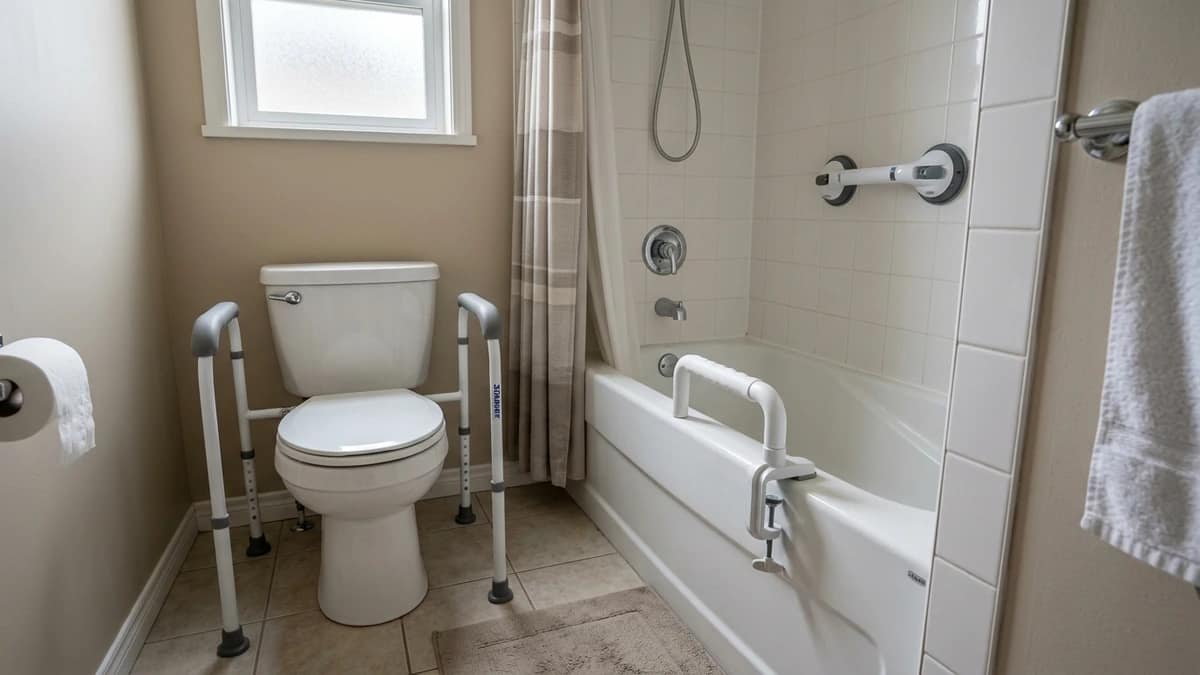
Grab bars are one of the most effective ways to improve bathroom safety, especially for seniors or anyone with mobility challenges.
However, installing traditional grab bars often requires drilling into wall studs. For renters, this can create a problem because many rental agreements restrict permanent modifications to the bathroom.
This is why many people start searching for temporary grab bars for renters that can provide additional stability without damaging walls.
Temporary grab bars can sometimes offer helpful balance support in bathrooms where permanent installation is not allowed or practical. However, it’s important to understand their limitations before relying on them for safety.
Disclosure: As an Amazon Associate, I earn from qualifying purchases. This post may contain affiliate links. If you purchase through these links, I may earn a small commission at no extra cost to you. I only recommend products I would feel comfortable using in my own home. Learn more.
On This Page
- Why Renters Look for Temporary Grab Bars
- Types of Temporary Grab Bars and Rental-Friendly Support Options
- Where Temporary Grab Bars Work Best in a Bathroom
- Limitations of Temporary Grab Bars
- What Temporary Grab Bars Should Not Be Used For
- Situations Where Temporary Grab Bars Can Help
- How to Choose Safer Temporary Grab Bars
- When Temporary Grab Bars Are Not Enough
- What I Recommend
- FAQ
- Final Thoughts
Quick Answer
Temporary grab bars for renters can provide helpful balance support, but they are generally not as strong as permanently installed grab bars.
In most situations:
- temporary grab bars attach using suction cups or pressure mounts
- they can be installed without drilling holes
- they are designed mainly for light balance assistance
Because of these limitations, temporary grab bars are best treated as balance-assistance tools rather than substitutes for permanently anchored grab bars when strong weight-bearing support is needed.
Quick decision guide:
- Choose suction grab bars only for light balance support on smooth, non-porous surfaces
- Choose clamp-on or pressure-mounted options when stronger support is needed and the setup allows secure mechanical attachment
- Choose a freestanding support frame when the goal is more stable assistance near a toilet without wall drilling
- Choose a permanent grab bar instead when the user may place substantial body weight on the support or needs stronger fall protection
Why Renters Look for Temporary Grab Bars
Renters often need safety solutions that do not require permanent changes to the property.
Traditional grab bars are usually installed using screws anchored into wall studs. This installation method provides very strong support, but it also leaves holes in tile or drywall when the bar is removed.
For renters, this can create concerns about:
- violating lease agreements
- damaging tile or drywall
- losing part of a security deposit
Because of this, many renters start looking for temporary grab bars for renters that can provide additional stability without making permanent modifications to the bathroom.
If the main concern is avoiding wall damage, it also helps to understand whether grab bars can be installed without drilling and how those options compare in real use.
Another common situation occurs when someone moves into a rental home temporarily while recovering from surgery or an injury. In these cases, installing permanent grab bars may not make sense if the living situation is short-term.
Temporary grab bars can provide a compromise by offering some level of support while avoiding permanent installation.
However, renters should still understand that temporary options may not provide the same level of stability as permanently installed grab bars.
Types of Temporary Grab Bars and Rental-Friendly Support Options
Several types of temporary grab bars are designed to provide support without drilling into walls.
Suction Grab Bars
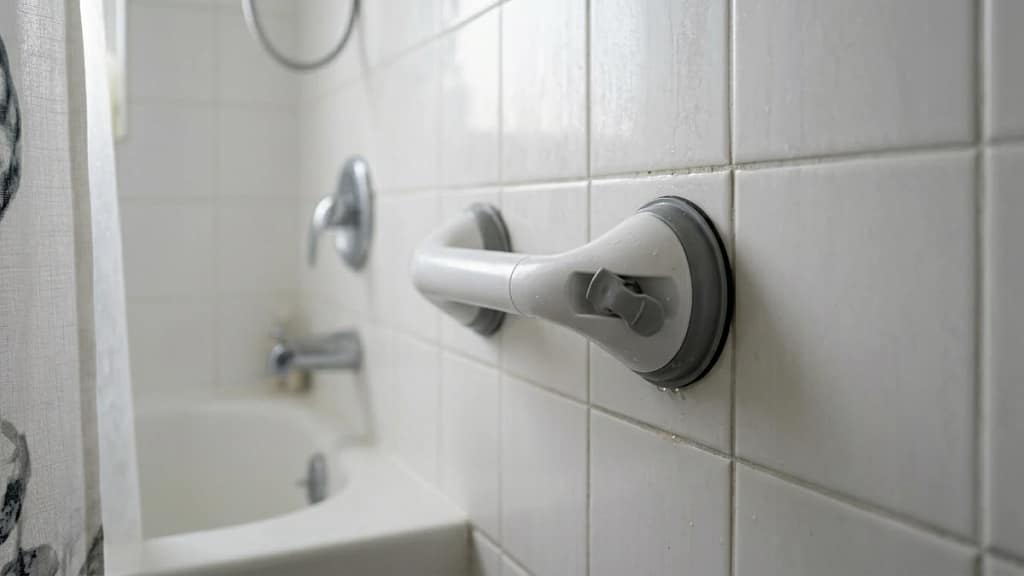
Suction grab bars attach to smooth surfaces such as tile, fiberglass, or glass using large suction cups.
These bars can be installed quickly and removed when needed, making them one of the most common types of temporary grab bars for renters.
However, suction grab bars depend heavily on the surface they are attached to and may lose suction over time.
If you want to understand their safety limitations, see are suction grab bars safe for seniors.
Clamp-On or Pressure-Mounted Grab Bars
Some temporary grab bars use clamping or pressure systems instead of suction cups.
These designs apply pressure between two surfaces to hold the bar in place.
Examples include:
- bathtub clamp grab bars
- floor-mounted safety rails around toilets
These options can sometimes provide stronger support than suction bars because they rely on mechanical pressure rather than suction.
Portable Grab Bars and Portable Support Aids
Some renter-friendly bathroom supports are designed to be portable, meaning they can be moved, removed, or used temporarily without permanent installation.
Some of these products are true temporary grab bars, while others are broader portable support aids that improve stability without attaching directly to the wall.
Examples may include:
- folding grab bars designed for travel or short-term use
- removable suction grab bars
- freestanding support frames placed near toilets or tubs
These options are often considered when flexibility matters more than permanent installation, such as during travel, short-term recovery, or temporary living situations.
However, portability usually comes with trade-offs. Products designed to be easy to move or remove may not provide the same level of stability as a permanently anchored grab bar.
For renters, portable support aids can still be useful when the goal is light assistance without drilling, but they should be chosen based on how much support is actually needed and where they will be used.
Where Temporary Grab Bars Work Best in a Bathroom

Temporary grab bars can be more effective in some areas of the bathroom than others.
Because these bars are not permanently anchored, they tend to work best in locations where light balance support is needed rather than full body weight.
Common areas where temporary grab bars may help include:
Shower entry
A suction grab bar near the entrance of a shower can provide a handhold while stepping in or out.
Bathtub edge
Clamp-mounted grab bars can sometimes attach securely to the edge of a bathtub, providing additional stability when entering or exiting the tub.
Bathroom walls for balance
Temporary bars can sometimes provide a convenient handhold when standing at a sink or moving slowly through the bathroom.
However, areas that require strong support — such as pushing up from a seated position near a toilet — usually benefit from permanently installed grab bars instead.
Limitations of Temporary Grab Bars
Although temporary grab bars can provide some support, they usually have important limitations compared with permanently installed grab bars.
Some common limitations include:
- reduced weight capacity
- reliance on surface conditions
- potential for movement or detachment
- limited long-term durability
Because temporary grab bars are not anchored into wall studs, they depend on suction pressure, clamping force, or freestanding structures to stay in place.
These systems can work well in certain situations, but they may not provide the same level of stability as permanently installed grab bars.
For example, suction grab bars can occasionally lose suction due to moisture, soap residue, or small surface imperfections.
Similarly, some clamp-mounted bars may shift slightly if they are not installed tightly enough.
Temporary grab bars should never be treated as a guaranteed fall-prevention solution when full body weight may suddenly be placed on the bar.
Understanding these limitations helps renters decide when temporary grab bars for renters are appropriate and when stronger solutions might be necessary.
For a deeper comparison between temporary and permanent options, see suction vs permanent grab bars.
What Temporary Grab Bars Should Not Be Used For
Temporary grab bars should not be treated as a substitute for permanently anchored support when strong weight-bearing assistance is needed.
- They should not be relied on to stop a full fall
- They should not be treated as a guaranteed transfer aid for someone who pushes heavily with both arms
- They should not be installed on surfaces that are textured, uneven, dirty, or poorly suited to suction
- They should not be used without regular testing and rechecking
In practice, temporary grab bars are most appropriate for light balance support, not for situations where the user may suddenly depend on the bar to carry substantial body weight.
Situations Where Temporary Grab Bars Can Help
Temporary grab bars can be useful when light support is needed but wall installation is not possible.
Suction grab bars may help near smooth shower walls when the goal is a light handhold during entry or exit.
Clamp-mounted tub bars may work better when support is needed at the bathtub edge and a secure mechanical grip is possible.
Freestanding or floor-supported rails are often more practical near toilets when a renter needs more stable assistance without drilling.
The best temporary option depends on where support is needed and how much force the user is likely to place on it during movement.
How to Choose Safer Temporary Grab Bars
If someone decides to use temporary grab bars, choosing the right design can improve safety.
Several features can make temporary grab bars more reliable.
Look for:
- large suction cups with locking levers
- strong clamp mechanisms for bathtub bars
- textured handles that improve grip
- safety indicators that show whether suction is secure
Higher-quality temporary grab bars often include indicators that change color when the suction seal is properly engaged.
It is also important to install the bar on clean, smooth surfaces and test it regularly to make sure it remains secure.
If you are unsure how to check whether a temporary bar is holding properly, reviewing how to test grab bar stability can help.
Understanding how these products work can help renters make better decisions when choosing temporary grab bars for renters.
This is especially important for renters who need added bathroom safety without making permanent changes to the property.
When Temporary Grab Bars Are Not Enough
Temporary grab bars are not always enough, especially when the user needs more than light balance support.
A stronger solution is usually needed when:
- the user places significant body weight on the support during standing or transfers
- balance is poor enough that a sudden slip is a real concern
- the support is needed for full daily use over a long period
- temporary options already feel marginal, unstable, or inconsistent
In these situations, a permanently installed grab bar anchored into wall studs is usually the more reliable option. If renting is the only barrier, it may be worth discussing a safer permanent solution with the landlord rather than relying on a temporary bar beyond its intended purpose.
What I Recommend
If you are renting and cannot install permanent grab bars, temporary grab bars may still provide helpful balance assistance.
For setups that need to work without drilling or permanent changes, exploring grab bars suited for rental-friendly bathrooms can help identify options that balance safety with flexibility.
However, it is important to choose high-quality models and install them correctly.
When possible, consider options that use mechanical support systems rather than relying entirely on suction.
Temporary grab bars can improve safety in rental homes, but they should always be used with realistic expectations about their weight capacity and stability.
FAQ
Are temporary grab bars safe for renters?
Temporary grab bars can provide balance assistance but may not support full body weight like permanent grab bars.
Can renters install grab bars without drilling?
Yes. Some grab bars use suction cups, clamps, or pressure systems that do not require drilling.
Do suction grab bars work on all surfaces?
No. They usually require smooth surfaces such as tile, glass, or fiberglass.
Are temporary grab bars strong enough to prevent falls?
Most temporary grab bars are designed for balance support and may not stop a fall.
What is the safest grab bar option for renters?
Clamp-mounted or floor-supported options may provide more stability than suction bars.
Final Thoughts
Temporary grab bars for renters can be a practical solution when permanent installation is not allowed.
They offer flexibility and convenience, especially in rental homes or short-term situations.
However, temporary grab bars are generally designed for light balance assistance rather than full weight support.
For long-term bathroom safety, permanently installed grab bars anchored into wall studs are usually the most reliable option.
