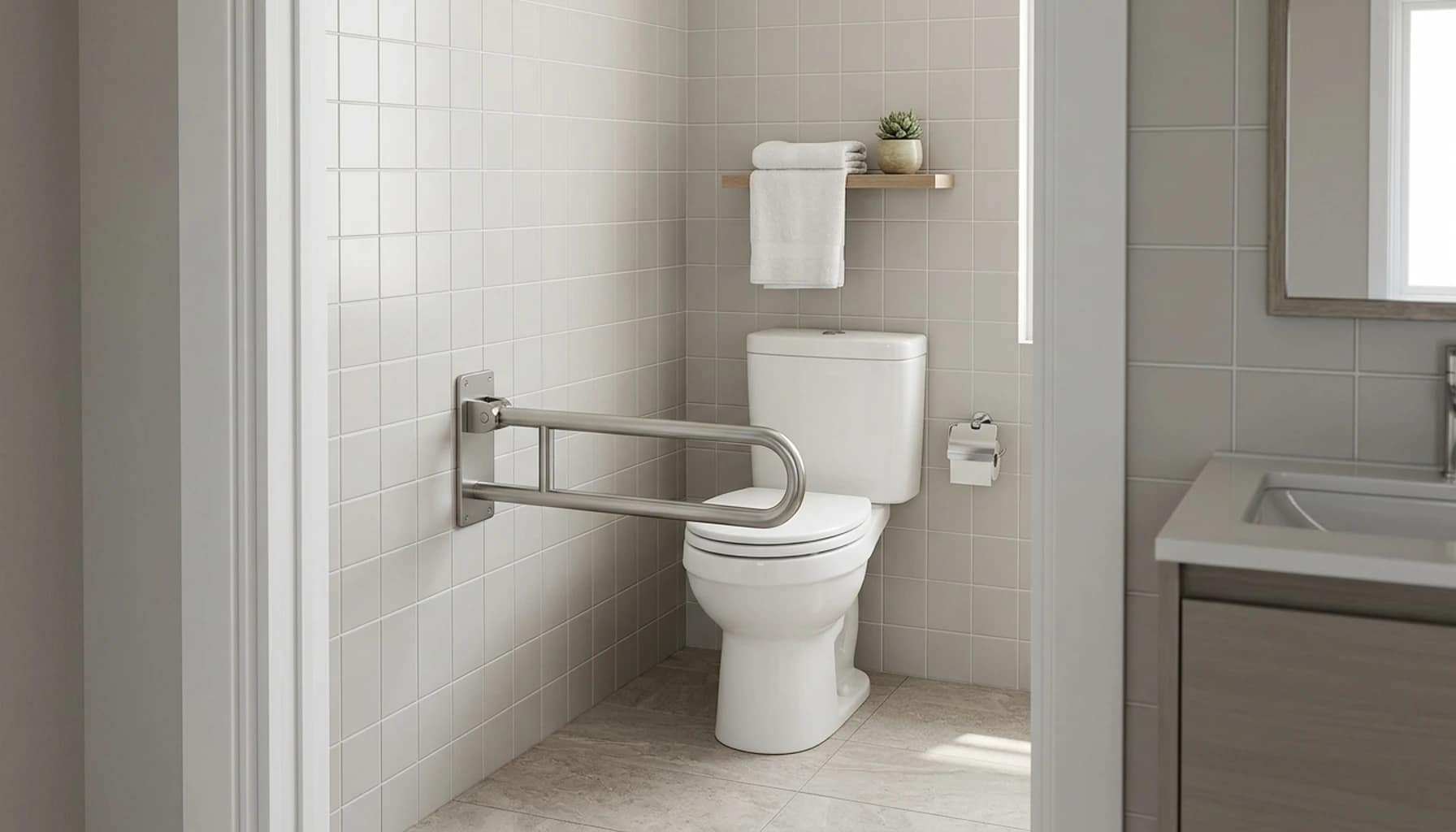
Grab bars are one of the most effective ways to improve bathroom safety, especially for seniors or people with mobility challenges.
Traditional grab bars are fixed to the wall and remain in the same position at all times. While this works well in many bathrooms, some layouts require more flexibility.
This is where folding grab bars for bathrooms can be useful.
Folding grab bars are designed to swing up against the wall when not in use and fold down when support is needed. This design allows the grab bar to provide strong support while also saving space.
Understanding how folding grab bars work can help determine whether they are a practical solution for certain bathroom layouts.
Disclosure: As an Amazon Associate, I earn from qualifying purchases. This post may contain affiliate links. If you purchase through these links, I may earn a small commission at no extra cost to you. I only recommend products I would feel comfortable using in my own home. Learn more.
Quick Answer: Folding Grab Bars for Bathrooms
Folding grab bars for bathrooms are wall-mounted safety bars that can be folded upward when not in use and lowered when support is needed.
They are commonly used:
- beside toilets
- near shower seating areas
- in accessible bathrooms
Because they can be moved out of the way, folding grab bars are often helpful in bathrooms where space is limited or where wheelchair access is needed.
How Folding Grab Bars Work
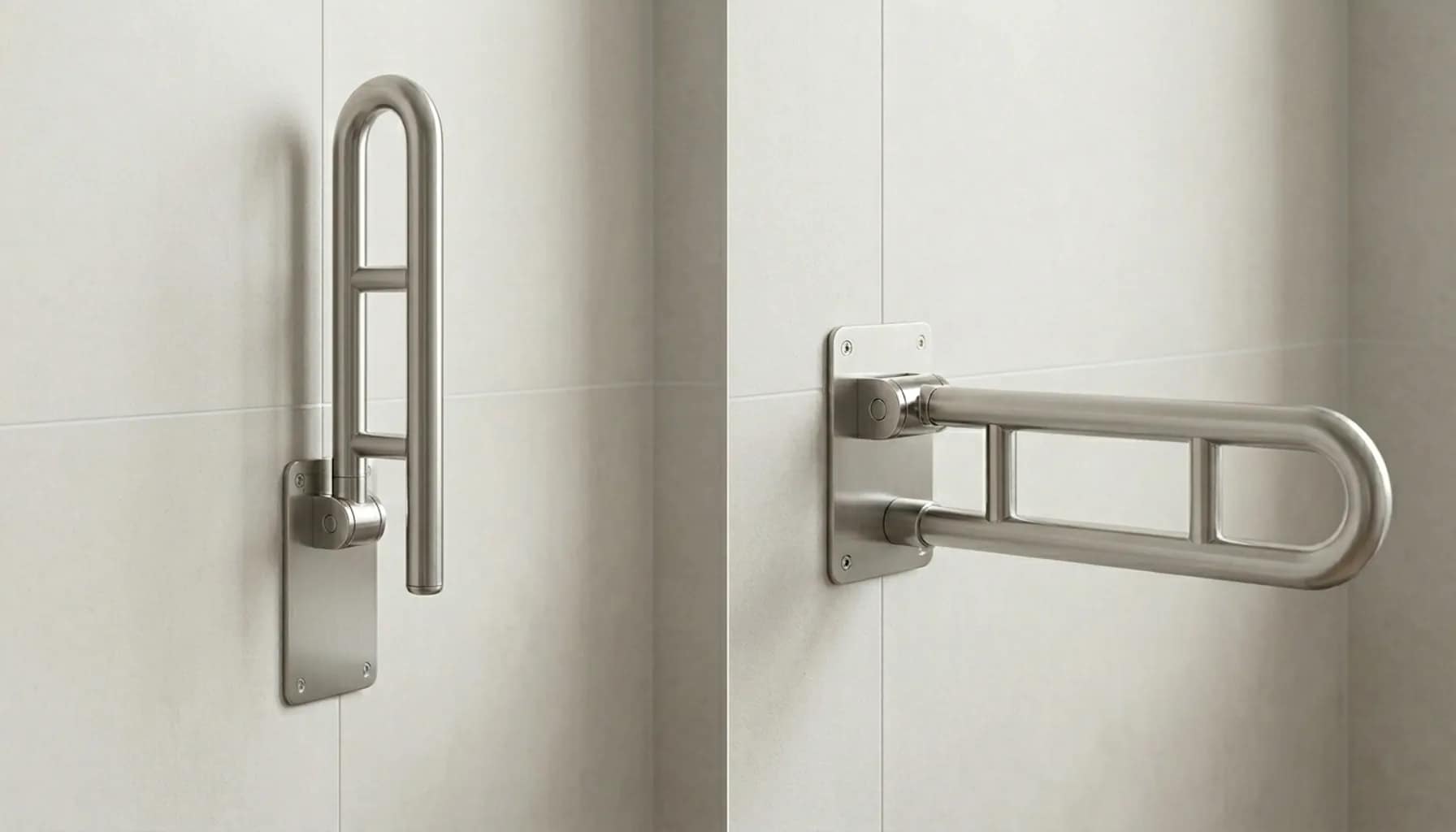
Folding grab bars are mounted to the wall using strong brackets that allow the bar to pivot.
The grab bar typically swings upward and locks against the wall when not being used. When support is needed, the bar can be pulled down into a horizontal position.
Most folding grab bars include:
- heavy-duty wall brackets
- pivoting hinge mechanisms
- textured or coated grip surfaces
These features allow the grab bar to provide support like a standard grab bar when lowered, while still folding out of the way when the space needs to remain open.
Where Folding Grab Bars Are Most Commonly Used
Folding grab bars are often installed in locations where fixed grab bars may block movement or interfere with other bathroom fixtures.
Common locations include:
Beside Toilets
Folding grab bars are frequently installed next to toilets to help someone sit down or stand up safely.
When folded down, the bar provides strong support during transfers. When folded up, it creates additional space for movement, which can be especially helpful in shared bathrooms or tighter layouts.
This is one reason folding grab bars for bathrooms are often used in accessible toilet areas.
If you are planning support near a toilet, reviewing where to install grab bars around a toilet can help determine the safest location.
Near Shower Seating
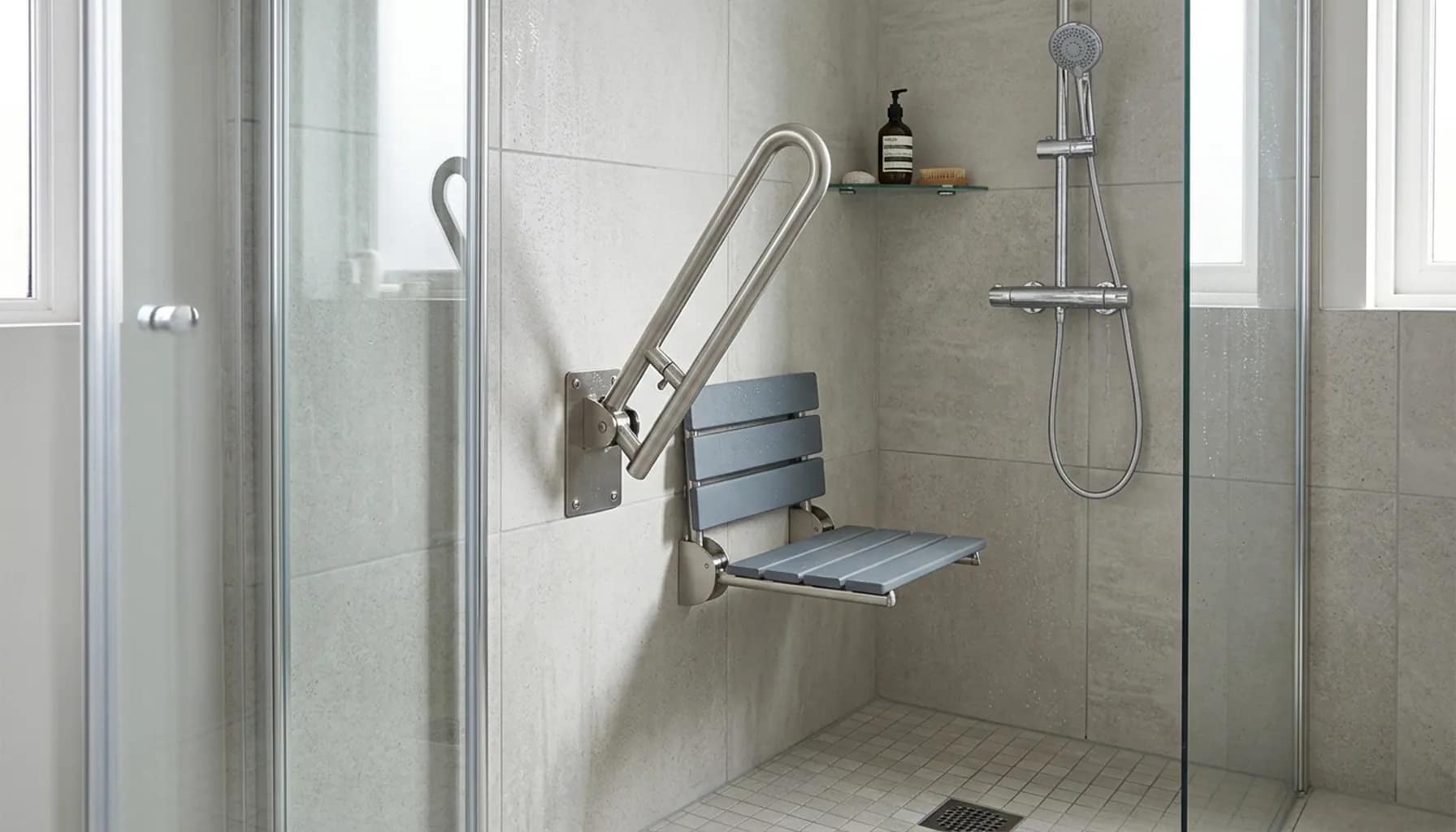
In accessible showers with built-in seats, folding grab bars can provide support while sitting down, standing up, or shifting position.
Because the bar can be folded out of the way, it allows the shower area to remain more open when support is not needed.
Accessible Bathrooms
Many accessible bathrooms include folding grab bars because they allow flexibility for different users and mobility needs.
For example, wheelchair users may benefit from extra side support near the toilet, but they may also need clear space when transferring.
A folding design helps solve both needs, especially when planning grab bars for disabled seniors that balance support and accessibility.
Advantages of Folding Grab Bars
Folding grab bars offer several advantages compared with fixed grab bars.
Some key benefits include:
- space-saving design that folds against the wall
- easier access for wheelchairs or mobility aids
- strong support when installed properly
- flexible positioning depending on user needs
Because of these advantages, folding grab bars are often used in hospitals, rehabilitation facilities, and accessible homes where flexible support is important.
For bathrooms with limited space, folding grab bars for bathrooms can provide a practical balance between safety and flexibility.
Another advantage is that they can reduce visual clutter in smaller bathrooms. A fixed grab bar always stays in the same position, but a folding model can be moved up when not in use, helping the bathroom feel more open.
This flexibility makes them especially useful in multi-user bathrooms where one person may need support and another may simply need clear movement space.
Are Folding Grab Bars Good for Small Bathrooms?
Folding grab bars can be a very practical choice in smaller bathrooms where every inch of space matters.
In compact bathrooms, fixed grab bars sometimes create obstacles near the toilet or narrow walkways. A folding model reduces this problem because the bar can be raised when it is not needed.
If space is your main concern, it may also help to review grab bars for small bathrooms for other layout-friendly options.
This makes folding grab bars for bathrooms especially appealing in:
- apartments with small toilet areas
- narrow guest bathrooms
- bathrooms shared by multiple users
- layouts where mobility aids need extra clearance
However, space-saving design alone should not be the only reason to choose them. The wall must still be strong enough to support the mounting hardware, and the bar must be placed where it can provide real support during movement.
The folded position still needs enough wall clearance, so the bathroom layout should be checked carefully before choosing this type of grab bar.
If the bar is installed mainly to save space but not to improve safety, it may not be the best solution.
Limitations of Folding Grab Bars
Although folding grab bars offer flexibility, they also have a few limitations.
Some potential drawbacks include:
- more complex installation
- higher cost compared with standard grab bars
- hinge mechanisms that may require maintenance
- fewer suitable mounting locations in some bathrooms
Because folding grab bars include moving parts, they must be installed securely to ensure they remain stable during use.
Permanent installation into wall studs or reinforced walls is usually recommended.
Another limitation is that the hinge mechanism adds one more component that can wear over time. While high-quality folding grab bars are built for repeated use, cheaper models may feel less stable if the hinge loosens.
Folding Grab Bars vs Fixed Grab Bars
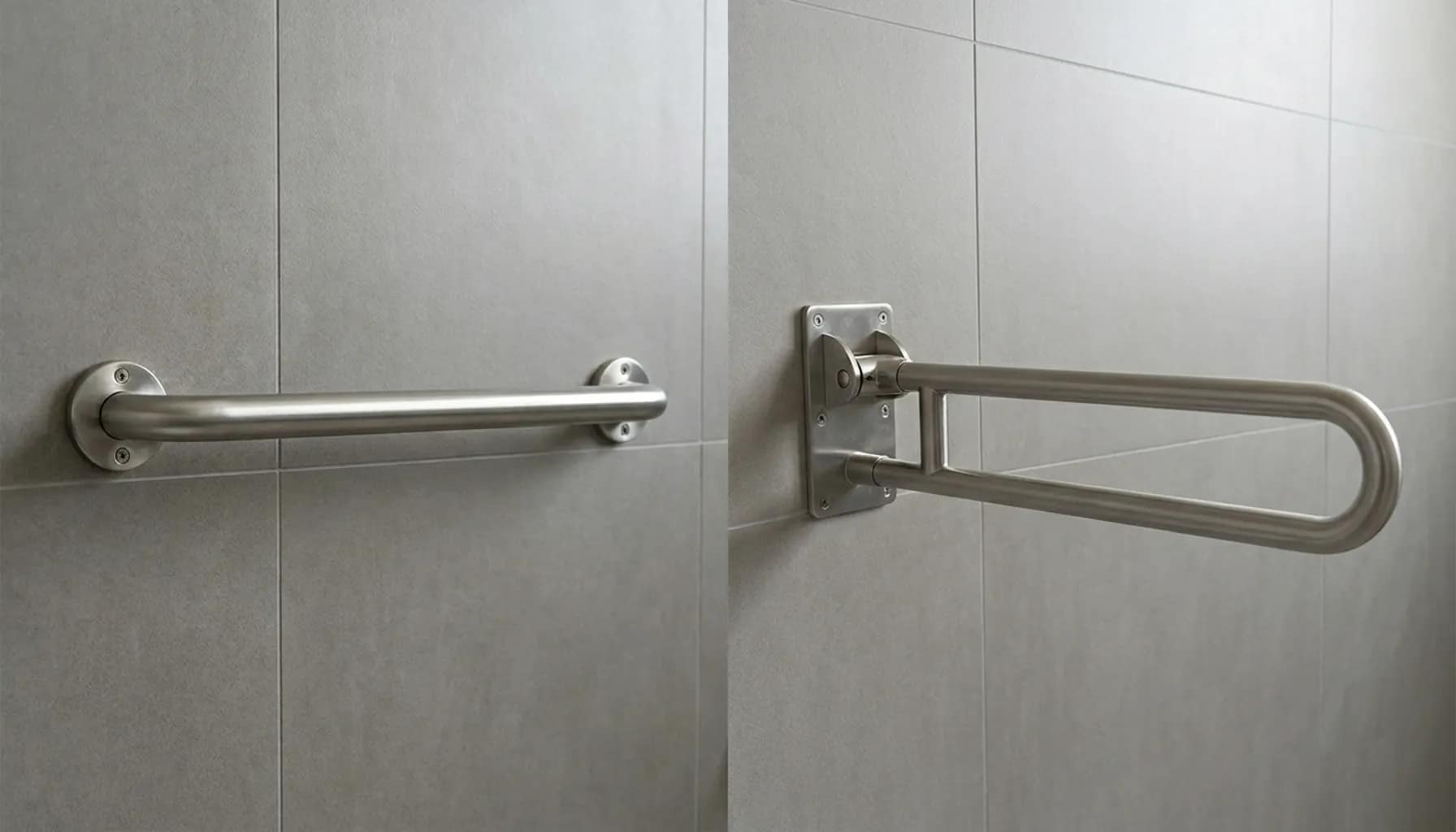
Folding grab bars and fixed grab bars serve similar purposes but differ in how they are designed.
Fixed grab bars remain permanently in one position on the wall. They are usually simpler, more affordable, and easier to install.
Folding grab bars, on the other hand, can swing up and out of the way when not needed. This gives them a clear advantage in bathrooms where flexibility and clearance are important.
Fixed grab bars are often the better choice when:
- the bathroom has enough wall space
- a bar will be used frequently
- simplicity and low maintenance are priorities
Folding grab bars are often the better choice when:
- bathroom space is limited
- wheelchair access is important
- users need support in one moment but open space in another
Understanding the differences between grab bar designs can also help when comparing other styles such as angled vs straight grab bars.
What to Check Before Choosing a Folding Grab Bar
Before buying a folding grab bar, it helps to check a few practical details.
Important things to look for include:
- whether the bar is rated for the user’s weight needs
- whether the wall can support secure mounting
- whether the hinge mechanism feels solid and stable
- whether the folded position still leaves enough usable space
It is also worth checking whether the bar locks firmly into place when lowered. A folding bar should feel secure and steady when in use, not loose or wobbly.
For some buyers, the most important factor is not just whether the bar folds, but whether it feels as dependable as a fixed grab bar when body weight is applied.
This is especially important in bathrooms where the bar will be used daily.
When Folding Grab Bars Make Sense
Folding grab bars may be particularly useful in bathrooms where space and accessibility are both important.
Examples include:
- small bathrooms where permanent bars might block movement
- accessible bathrooms designed for wheelchair users
- bathrooms with limited wall space near the toilet
- shower seating areas where a support bar is needed only during transfers
In these situations, folding grab bars for bathrooms can provide support when needed while still allowing the space to remain open when the bar is not in use.
They are often most effective when chosen for a specific layout problem rather than used as a default replacement for standard grab bars.
For situations where space is consistently limited, exploring grab bars designed for compact bathroom layouts can help identify options that balance safety with efficient use of space.
In other words, folding grab bars make the most sense when flexibility is genuinely needed.
What I Recommend
Folding grab bars can be a practical solution for certain bathroom layouts, particularly when flexibility and space are important.
However, they should still be installed properly and matched to the bathroom layout to ensure they provide reliable support.
When possible, folding grab bars should be mounted securely into wall studs or reinforced backing behind the wall.
For many bathrooms, a combination of fixed grab bars and folding grab bars for bathrooms may provide the best balance between stability and accessibility.
For example, a fixed grab bar inside the shower and a folding grab bar beside the toilet can work well in bathrooms where one area needs constant support and another needs occasional clearance.
That kind of mixed setup often provides better real-world usability than relying on one grab bar style everywhere.
Final Thoughts
Folding grab bars for bathrooms offer a flexible alternative to traditional fixed grab bars.
Their ability to fold against the wall makes them especially useful in smaller bathrooms or accessible spaces where additional clearance is needed.
However, like all grab bars, they must be installed correctly to provide safe and reliable support.
When used in the right locations, folding grab bars can be a helpful addition to a well-designed bathroom safety setup.
FAQ
Q: Are folding grab bars strong enough to support body weight?
A: Yes, many folding grab bars can support significant weight when installed properly into wall studs.
Q: Where are folding grab bars usually installed?
A: They are commonly installed beside toilets or near shower seating areas.
Q: Can folding grab bars be installed in any bathroom?
A: They require strong wall mounting, so installation into wall studs or reinforced walls is recommended.
Q: Are folding grab bars better than fixed grab bars?
A: Folding grab bars provide more flexibility but may require more complex installation.
Q: Do folding grab bars require maintenance?
A: Some models may require occasional inspection to ensure the hinge mechanism remains secure.