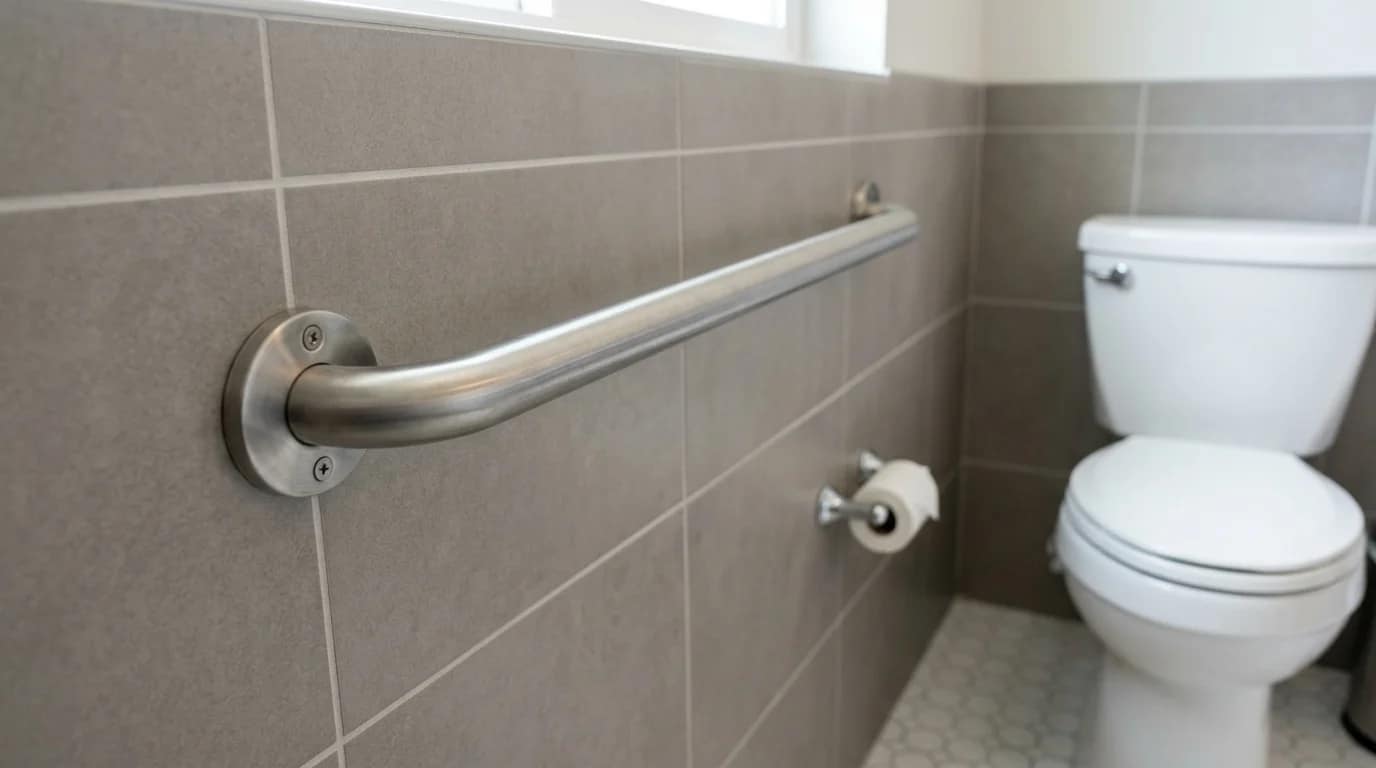
Bathrooms are one of the most common places where slips and falls occur. Wet surfaces, hard fixtures, and frequent movement increase the risk during everyday activities.
Wall mounted grab bars are widely used to improve stability in these environments. They provide fixed support in key areas where balance is most often challenged, such as showers, bathtubs, and near toilets.
Using wall mounted grab bars correctly can help improve balance and support safer movement. Proper placement and installation are essential for reliable performance.
Disclosure: As an Amazon Associate, I earn from qualifying purchases. This post may contain affiliate links. If you purchase through these links, I may earn a small commission at no extra cost to you. I only recommend products I would feel comfortable using in my own home. Learn more.
On This Page
- Why Wall Mounted Grab Bars Are Considered the Safest Option
- Types of Wall Mounted Grab Bars
- Which Type of Wall Mounted Grab Bar Should You Choose?
- Where to Install Wall Mounted Grab Bars
- How Wall Mounted Grab Bars Are Installed
- Common Mistakes to Avoid
- How to Choose Wall Mounted Grab Bars
- What I Recommend
- FAQ
- Final Thoughts
Quick Answer
Wall mounted grab bars are fixed safety bars installed directly into walls, typically secured into studs, designed to provide stable support for balance and movement in areas such as showers, bathtubs, and around toilets where reliable handholds are needed.
- Installed permanently into walls
- Provide strong and stable support
- Commonly used in bathrooms
- Available in multiple sizes and orientations
- Require proper installation for safety
These grab bars are designed to support body weight when properly installed. They are commonly used in areas where balance is most needed, such as during standing, turning, or transitioning between positions.
Why Wall Mounted Grab Bars Are Considered the Safest Option
Wall mounted grab bars are considered the most reliable option because they are secured directly into the wall structure. When installed into studs, they provide stable support that can handle full body weight.
This level of stability is especially important during high-risk movements such as standing up, shifting weight, or stepping over a bathtub edge, where even slight movement in the support bar can increase fall risk.
Temporary options, such as suction grab bars, may be easier to install but can lose adhesion over time. This can become more noticeable in humid environments where moisture affects surface grip.
For example, on a wet shower wall, a temporary bar may shift or loosen during use, while a properly installed wall mounted grab bar remains stable under pressure.
In these high-moisture environments, choosing grab bars specifically suited for this type of use—such as shower grab bars designed for senior safety—can provide more dependable support.
Types of Wall Mounted Grab Bars

Wall mounted grab bars come in different shapes and orientations, each designed to support specific types of movement. The effectiveness of each type depends on how it aligns with common bathroom activities such as standing, turning, or stepping in and out of the shower.
Each type is designed to support a specific movement pattern, which makes choosing the right orientation just as important as selecting the right location.
Selecting the right type helps ensure that support is available where it is most needed without interfering with movement or reducing usable space.
Horizontal Grab Bars
Horizontal grab bars are the most commonly used type. They are installed parallel to the floor and provide steady support during standing and movement.
- Provide continuous support across a wider area
- Suitable for maintaining balance while standing
- Commonly installed in showers and along bathtub walls
These grab bars are effective for stabilizing movement without requiring repositioning of the hand. Their length allows support across multiple positions.
When to use:
Use horizontal grab bars in areas where continuous support is needed, such as along shower walls or near bathtubs where stable balance is required.
Vertical Grab Bars
Vertical grab bars are installed perpendicular to the floor and are commonly used to assist with upward and downward movements.
- Require minimal horizontal wall space
- Support entry and exit movements
- Often installed near shower or tub entry points
The vertical orientation allows the hand to move along the bar during motion. This makes them effective for transitions where body position changes.
For placement guidance, see where to place vertical grab bars in a shower.
When to use:
Use vertical grab bars near entry points where support is needed for stepping in or out of a shower or bathtub.
Angled Grab Bars
Angled grab bars are installed at a slanted position to support multiple types of movement. They combine elements of both horizontal and vertical designs.
- Support different grip positions
- Assist with both standing and transitioning movements
- Reduce the need for multiple grab bars
This design allows flexibility in hand placement, making it suitable for areas where movement patterns vary.
When to use:
Use angled grab bars in areas where both balance and transition support are needed, especially when space limits the use of multiple bars.
Folding / Flip-Up Wall Mounted Bars
Folding grab bars are attached to the wall and can be moved out of the way when not in use. They are commonly used near toilets.
- Save space in compact bathrooms
- Provide support only when needed
- Can be folded to maintain clear movement areas
These grab bars are especially useful in narrow layouts where permanent bars may interfere with access or movement.
When to use:
Use folding grab bars next to toilets or in tight spaces where maintaining open space is important when the bar is not in use.
Which Type of Wall Mounted Grab Bar Should You Choose?
Choosing the right type depends on how the grab bar will be used and where it will be installed.
For general balance support:
Horizontal grab bars are the most practical option when continuous support is needed along a wall.
For entry and exit movements:
Vertical grab bars work best near shower or bathtub entry points where upward or downward motion is involved.
For combined movement support:
Angled grab bars provide flexibility when both balance and transition support are needed in the same area.
For tight spaces:
Folding grab bars are useful when space must remain clear while still allowing support when needed.
In most bathrooms, a combination of one horizontal bar for stability and one vertical or angled bar for transitions provides effective support.
Where to Install Wall Mounted Grab Bars
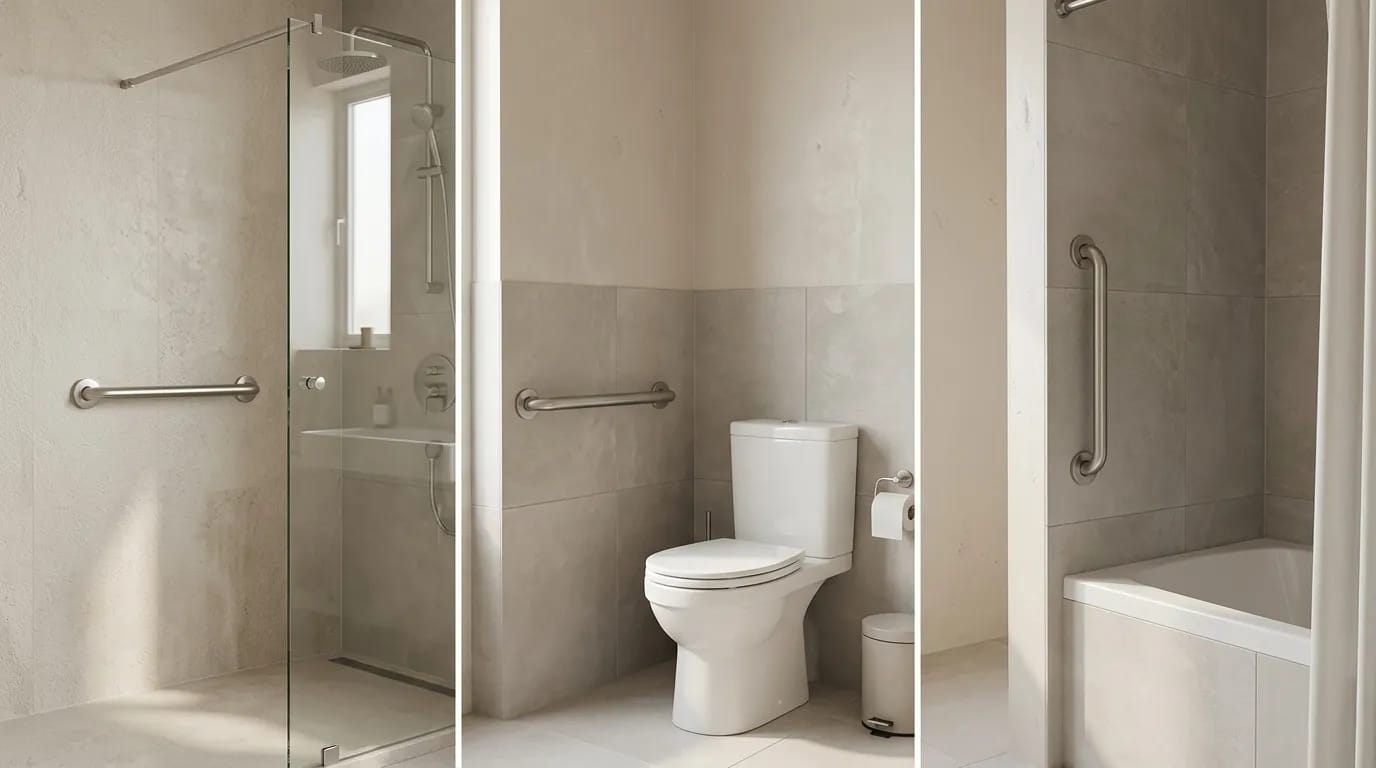
Wall mounted grab bars should be placed in areas where support is needed most during daily movement.
- Shower walls: Provide balance while standing or washing
- Near toilets: Assist with sitting and standing
- Bathtub entry: Support stepping in and out
For example, turning within a shower to reach controls or adjust position can create brief instability. A well-placed grab bar along the wall helps maintain balance during that movement.
Standing up from the toilet is another common situation where controlled movement is required. A grab bar positioned within easy reach can provide steady support during this transition.
For more detailed guidance, see where to install grab bars in a bathroom.
How Wall Mounted Grab Bars Are Installed

Proper installation is critical for safety and performance. Wall mounted grab bars should be secured into wall studs whenever possible.
Studs provide the structural support needed to hold body weight. If studs are not available in the desired location, appropriate anchors may be used depending on the wall type.
For step-by-step guidance, see how to install grab bars in studs.
After installation, the grab bar should be tested to ensure it is firmly secured and does not move under pressure.
To verify safety after installation, see how to test grab bar stability.
Common Mistakes to Avoid
Installing grab bars incorrectly can reduce their effectiveness and create safety risks.
One common mistake is mounting grab bars directly into drywall without proper support. This can lead to failure under weight.
Another issue is incorrect placement. Bars that are too high, too low, or too far from reach may not provide effective support.
Skipping stability testing is also a frequent oversight. Each grab bar should be checked to confirm it is securely installed.
For more details, see common grab bar installation mistakes.
How to Choose Wall Mounted Grab Bars
Selecting the right grab bar depends on the intended use and the layout of the space.
Length:
Longer grab bars provide extended support, while shorter ones are suitable for targeted areas.
Diameter:
A comfortable grip size helps maintain control during use, and choosing the right grab bar diameter and grip size can make a noticeable difference in safety and ease of use.
Material:
Stainless steel is commonly used due to its durability and resistance to moisture, but understanding different grab bar materials can help you choose the most suitable option based on strength, environment, and long-term use.
Placement Compatibility:
The grab bar should match the location and type of movement it is intended to support.
The right combination should match how the space is used and where support is most needed.
What I Recommend
Wall mounted grab bars are generally the most reliable option for bathroom safety when installed correctly.
Priority should be given to high-risk areas such as the shower entry and the toilet. These locations involve frequent transitions and require stable support.
Selecting the correct type based on movement needs is more effective than installing multiple bars without a clear purpose.
A practical approach is to install one or two properly placed grab bars in key areas first, then assess whether additional support is needed.
FAQ
Are wall mounted grab bars better than suction bars?
Wall mounted grab bars are generally more reliable because they are securely installed into the wall, providing consistent support over time.
Do wall mounted grab bars need to be installed into studs?
Installing into studs is recommended because it provides the strongest and most stable support for weight-bearing use.
How much weight can wall mounted grab bars hold?
When properly installed, many wall mounted grab bars are designed to support significant weight, often suitable for full body support.
Where should they be installed?
They are typically installed in high-use areas such as showers, near toilets, and at bathtub entry points where balance support is needed.
Final Thoughts
Wall mounted grab bars provide stable and consistent support in areas where balance is most needed. Their reliability depends on correct placement and secure installation into a stable structure.
Focusing on key locations and selecting the appropriate type can improve safety without unnecessary additions.
A small number of properly placed grab bars is often enough to improve stability significantly.
In most cases, proper placement and installation have a greater impact on safety than the number of grab bars installed.