
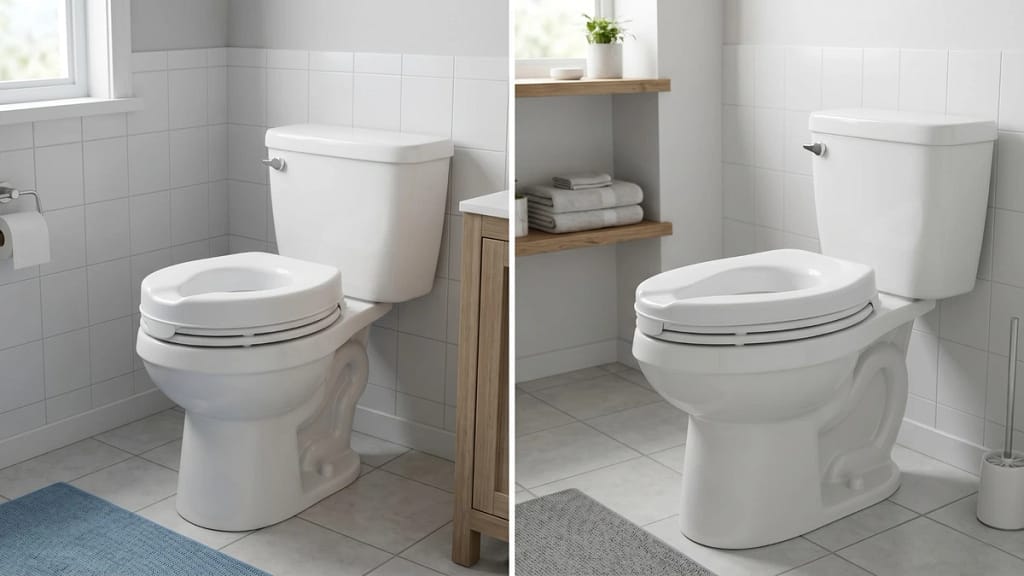
Raised toilet seats can look similar, but toilet bowl shape can change whether the seat fits securely. A seat that works well on one toilet may feel awkward, uneven, or unstable on another.
The main raised toilet seat round vs elongated difference comes down to bowl shape. Round toilets are shorter from front to back, while elongated toilets are longer and more oval-shaped.
Choosing the right shape matters because the raised seat needs enough contact with the bowl to feel stable during sitting and standing. This guide explains how to tell the difference, what to measure, and how to avoid choosing the wrong fit.
Disclosure: As an Amazon Associate, I earn from qualifying purchases. This post may contain affiliate links. If you purchase through these links, I may earn a small commission at no extra cost to you. I only recommend products I would feel comfortable using in my own home. Learn more.
On This Page
- Quick Comparison: Round vs Elongated Raised Toilet Seats
- What Is the Difference Between Round and Elongated Toilets?
- Why Toilet Shape Matters for Raised Toilet Seat Fit
- How to Tell If Your Toilet Is Round or Elongated
- What Happens If You Choose the Wrong Shape?
- Round Raised Toilet Seats: When They Make Sense
- Elongated Raised Toilet Seats: When They Make Sense
- Bathroom Space Can Still Affect the Final Setup
- How to Choose the Right Raised Toilet Seat Shape
- When It Makes Sense to Compare Better-Fitting Options
- Common Mistakes When Choosing Round vs Elongated Raised Toilet Seats
- What I Recommend
- FAQ
- Final Thoughts
Quick Answer
A raised toilet seat should usually match the toilet bowl shape: round raised toilet seats fit shorter, round bowls, while elongated raised toilet seats fit longer, oval-shaped bowls. The wrong shape may still sit on the toilet, but it can feel less stable, less comfortable, or poorly supported during daily use.
- Round toilets are shorter from front to back
- Elongated toilets are longer and more oval-shaped
- Raised toilet seats usually fit best when matched to the bowl shape
- Shape affects stability, coverage, and comfort
- Measuring first helps prevent fit problems
The safest choice is not just the seat that adds the right height. It is the seat that matches the toilet shape, attaches securely, and feels stable during real use.
If the bowl shape is uncertain, confirm it before comparing raised toilet seat options. Guessing can lead to a seat that technically fits but does not feel secure enough for daily bathroom use.
Quick Comparison: Round vs Elongated Raised Toilet Seats
This table gives a quick way to compare round and elongated raised toilet seat fit before checking the detailed sections below.
| Toilet Shape | How It Looks | Main Fit Risk |
|---|---|---|
| Round | Shorter from front to back, more circular bowl shape | An elongated model may overhang or feel poorly supported |
| Elongated | Longer from front to back, more oval-shaped bowl | A round model may feel too short or poorly aligned |
What Is the Difference Between Round and Elongated Toilets?
Round and elongated toilets differ mainly in the shape and length of the bowl.
A simple way to understand the difference:
- Round toilets have a shorter, more circular bowl
- Elongated toilets have a longer, more oval-shaped bowl
This difference affects how a raised toilet seat rests on top of the toilet. A round raised seat is designed for a shorter bowl shape, while an elongated raised seat is designed to cover a longer front-to-back surface.
For example, an elongated raised seat placed on a round toilet may extend too far forward. A round raised seat placed on an elongated toilet may not cover the bowl correctly. In both cases, the mismatch can affect comfort and stability.
Toilet shape is the first detail to confirm because it affects almost every other fit decision that comes after it.
Why Toilet Shape Matters for Raised Toilet Seat Fit
Toilet shape matters because a raised toilet seat needs enough stable contact with the bowl or seat area. If the shape does not match, the seat may not rest evenly or may feel less secure during transfers.
Shape can affect:
- front-to-back support
- side contact with the bowl
- opening alignment
- comfort while seated
- stability during sitting and standing
Real-Life Example:
A raised toilet seat may appear to sit on the toilet, but still feel slightly uneven when weight shifts during standing. That kind of problem is often easier to notice in daily use than during a quick visual check.
Bowl shape is only one part of compatibility, but it is one of the most important parts. This guide on whether raised toilet seats fit all toilets explains how shape, attachment style, and toilet design all affect fit.
Once shape compatibility is clear, the next step is checking the actual measurements so the seat fits the toilet and the bathroom setup properly.
How to Tell If Your Toilet Is Round or Elongated
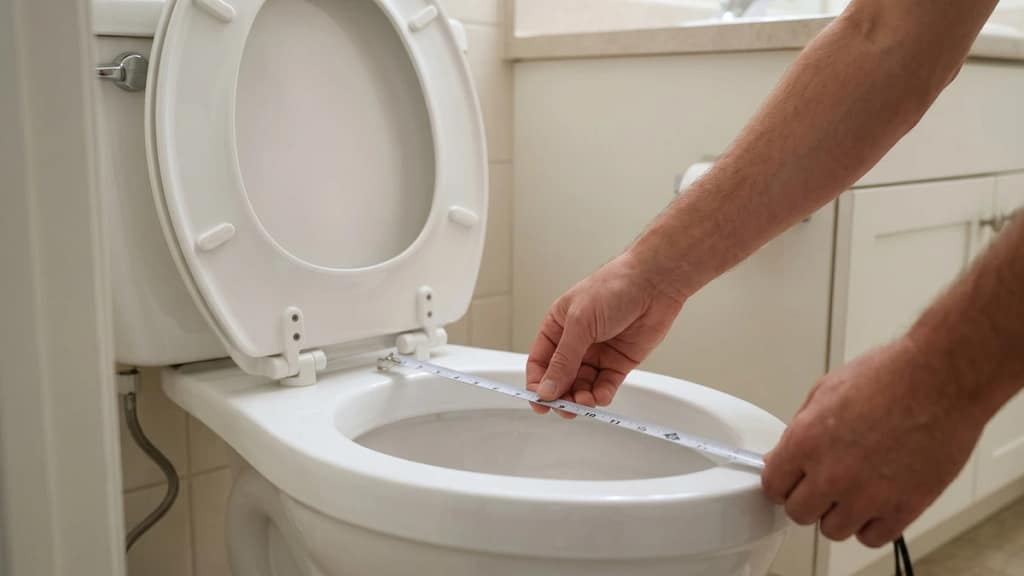
The easiest way to tell whether a toilet is round or elongated is to look at the bowl from above. A round toilet looks shorter and more circular, while an elongated toilet looks longer and more oval.
How to check the shape:
Measure from the seat bolt area to the front edge of the bowl. Many round toilets measure around 16 to 17 inches, while many elongated toilets measure closer to 18 to 19 inches. Use this as a practical reference, then confirm that the raised toilet seat listing matches the same bowl shape.
These numbers are a helpful guide, but the product listing should still be checked because raised toilet seat designs can vary.
Also confirm:
- the overall bowl shape from above
- whether the current toilet seat looks round or elongated
- whether the raised seat listing is designed for the same bowl shape
For example, some toilets may look slightly elongated at a glance, but still measure closer to a round bowl. Measuring helps avoid choosing a seat based on appearance alone.
If measurement is the main uncertainty, this guide on how to measure for a raised toilet seat explains what to check before choosing a model.
Clear measurements make the shape decision easier, but they also help prevent other fit problems such as poor attachment or limited bathroom clearance.
What Happens If You Choose the Wrong Shape?
Choosing the wrong raised toilet seat shape can make the setup feel less stable, even if the seat appears to fit at first.
Common problems include:
- the raised seat overhanging the bowl
- uneven support under the seat
- poor opening alignment
- uncomfortable seating position
- shifting or rocking during use
Real-Life Example:
- An elongated raised seat on a round toilet may extend too far forward and feel less supported at the front.
- A round raised seat on an elongated toilet may leave part of the bowl uncovered or make the sitting position feel awkward.
The main concern is not only comfort. A mismatched seat can also affect confidence during sitting and standing, especially when the user needs the setup to feel predictable.
If the seat does not feel secure because of a shape mismatch, it is better to reassess the fit than to keep adjusting a seat that was not designed for that bowl.
Round Raised Toilet Seats: When They Make Sense
Round raised toilet seats make sense when the toilet bowl is round and shorter from front to back. They are often used on older toilets, compact bathroom layouts, or smaller toilet designs where an elongated seat would extend too far.
A round raised toilet seat may be the better fit when:
- the toilet bowl is clearly round
- the bathroom has limited front clearance
- the current toilet seat is round
- an elongated model would overhang too much
The key advantage is shape match. A round raised seat is designed to sit more naturally on a round bowl, which can help the setup feel more supported.
Round models should still be checked for height, attachment style, and stability. Correct shape is important, but it does not replace the need for secure installation and usable bathroom space.
Elongated Raised Toilet Seats: When They Make Sense
Elongated raised toilet seats make sense when the toilet bowl is longer and oval-shaped. They are designed to match the longer front-to-back profile of elongated toilets.
An elongated raised toilet seat may be the better fit when:
- the toilet bowl is longer from front to back
- the current toilet seat is elongated
- the raised seat needs fuller bowl coverage
- a round model would feel too short or poorly aligned
The main benefit is better shape coverage. When the raised seat matches the elongated bowl, it is more likely to sit in the correct position and feel natural during use.
Elongated models are not automatically better than round models. They are better only when the toilet itself is elongated. The right choice depends on matching the toilet shape, not choosing the larger option by default.
Bathroom Space Can Still Affect the Final Setup
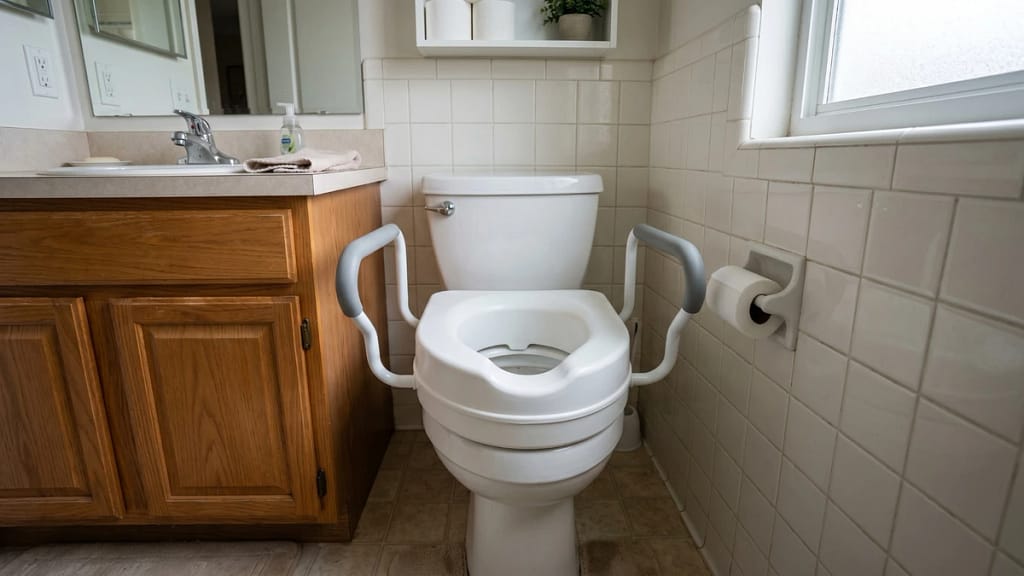
Correct bowl shape does not guarantee the raised toilet seat will work well in the bathroom. The surrounding space can still affect whether the setup feels comfortable and practical.
Check the area around the toilet for:
- side clearance
- front clearance
- nearby walls or vanities
- toilet paper holder position
- space for handles or support features
For example, a raised seat with handles may match the toilet shape perfectly but still feel crowded if one handle sits too close to a vanity. In that situation, the bowl shape is correct, but the full bathroom setup may still need adjustment.
Support needs can also affect the decision. If the user needs stable hand support during sitting or standing, the space around the toilet becomes part of the fit question. This guide on where to install grab bars around a toilet explains how nearby support placement affects toilet-area usability.
The best fit is not only the seat that matches the bowl. It is the setup that works with the full bathroom space.
How to Choose the Right Raised Toilet Seat Shape
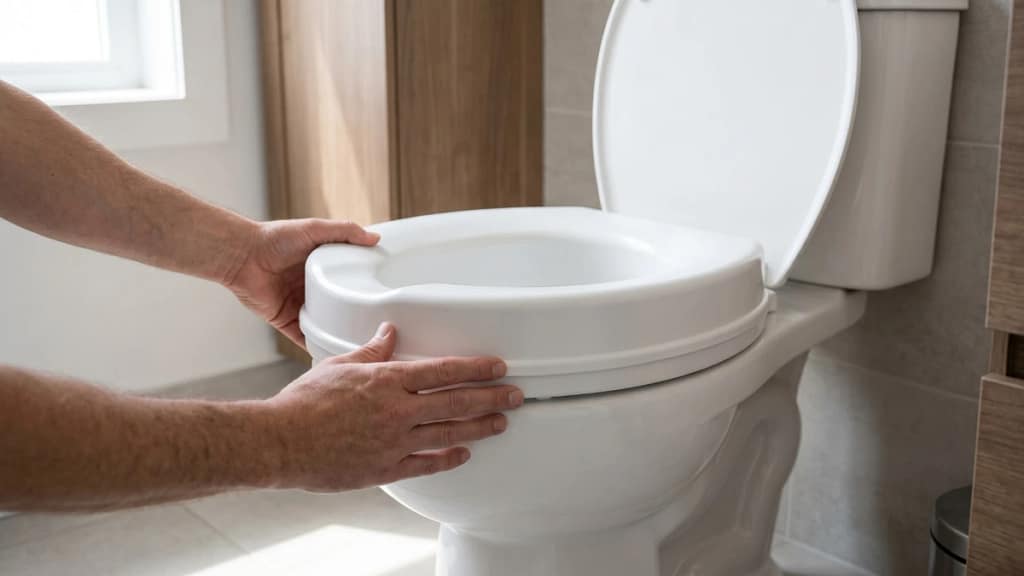
Choosing the right raised toilet seat shape starts with confirming whether the toilet is round or elongated. After that, the decision should also include height, attachment style, stability, and the user’s support needs.
A practical process looks like this:
- confirm the toilet bowl shape
- measure before choosing
- check whether the seat is round, elongated, or designed for broader compatibility
- review how the seat attaches
- make sure the added height suits the user
- consider whether handles or side support are needed
For example, a simple raised seat may work well when the toilet shape is standard and the user only needs added height. A more secure locking or handle-supported model may be better when stability during transfers is also a concern.
Shape is the starting point, but the full choice should include fit, height, support, and daily use. This guide on how to choose a raised toilet seat explains how to weigh those factors together.
After the basic fit details are clear, comparing options becomes more useful because the search is based on the correct toilet shape and support needs.
When It Makes Sense to Compare Better-Fitting Options
Comparing different raised toilet seat options makes sense when the toilet shape is confirmed but the best design is still unclear.
This is especially useful when:
- the toilet shape is unusual
- the user needs handles or more support
- the current seat feels loose or unstable
- attachment style is a concern
- bathroom space limits what will work
At this point, the goal is not simply to find any raised seat in the right shape. The goal is to find a design that matches the toilet, the user, and the way the bathroom is used.
For readers who are ready to compare complete options, this guide to the best raised toilet seats for seniors compares different models based on fit, support, and everyday usability.
Comparing options is most useful after the shape and fit problem is understood. That makes it easier to avoid common mistakes such as choosing by height alone or assuming every raised seat will work the same way.
Common Mistakes When Choosing Round vs Elongated Raised Toilet Seats
Several common mistakes can lead to poor raised toilet seat fit.
The biggest ones are:
- Guessing the toilet shape
Round and elongated toilets can look similar at first, so measuring is more reliable. - Assuming all raised seats are universal
Some models fit many toilets, but not every seat fits every bowl shape. - Measuring only height
Height matters, but bowl shape and attachment style matter too. - Ignoring attachment style
A seat may match the bowl shape but still fail to secure properly. - Forgetting bathroom clearance
The seat may fit the bowl but still feel crowded in the room.
Most fit problems happen when the decision is based on one detail instead of the full setup. Shape, measurements, attachment, and surrounding space should all be checked before relying on the seat every day.
What I Recommend
The most practical approach is to identify the toilet shape first, measure from the seat bolts to the front of the bowl, and then compare raised toilet seat options that match that shape. Round toilets should usually be paired with round raised seats, and elongated toilets should usually be paired with elongated raised seats.
A good process is:
- check the bowl shape from above
- measure from the seat bolts to the front of the bowl
- confirm the seat’s listed fit
- check the attachment method
- test the seat for movement before regular use
A raised toilet seat should not be forced onto a mismatched bowl. If the seat rocks, overhangs, shifts, or feels poorly aligned, a better-fitting shape or attachment style is usually needed.
The best choice is the one that matches the toilet shape and feels stable during real sitting and standing.
FAQ
How do I know if my toilet is round or elongated?
Look at the bowl from above and measure from the seat bolt area to the front of the bowl. Round toilets are shorter, while elongated toilets are longer and more oval-shaped.
Can an elongated raised toilet seat fit a round toilet?
It may physically sit on the toilet, but it usually will not fit as well. It may overhang or feel less supported.
Can a round raised toilet seat fit an elongated toilet?
A round raised seat may not provide enough coverage on an elongated bowl. It can feel too short or poorly aligned.
Are universal raised toilet seats reliable?
Some universal designs work well, but fit should still be checked carefully. Compatibility depends on the toilet shape, attachment style, and stability during use.
Does toilet shape affect raised toilet seat safety?
Yes. A mismatched shape can affect how stable the seat feels during sitting and standing.
Final Thoughts
Raised toilet seat round vs elongated fit matters because bowl shape affects stability, coverage, and usability. A seat that does not match the toilet shape may still appear to fit, but it can feel awkward or less secure during daily use.
The safest approach is to confirm the toilet shape, measure carefully, and choose a raised seat designed for that type of bowl.
When the shape, attachment style, height, and bathroom space all work together, the raised toilet seat is much more likely to feel secure and practical.
