
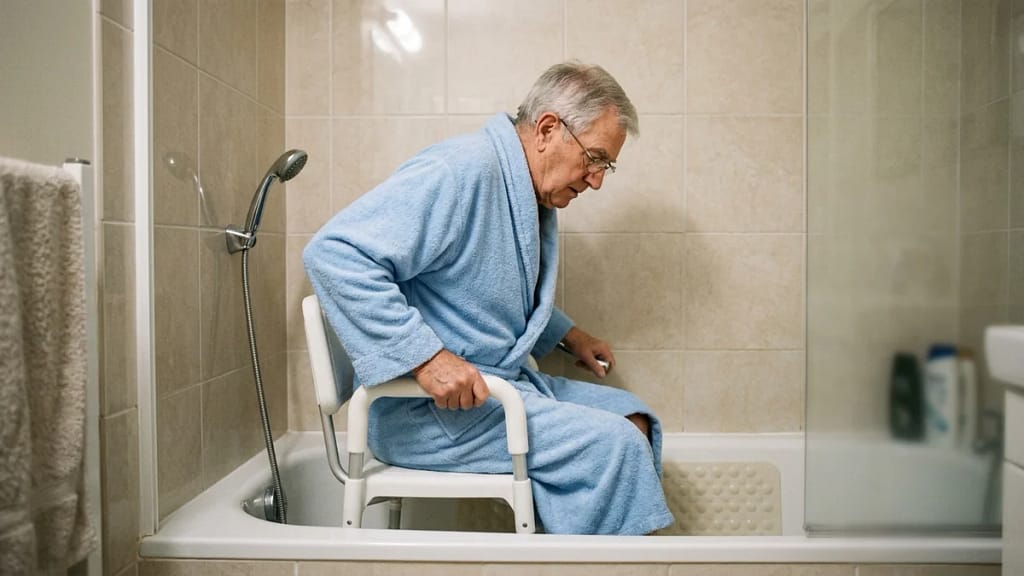
A shower chair already sitting in the closet doesn’t automatically answer the real question: can you use a shower chair in a bathtub safely, the same way it worked in a walk-in shower? Bathrooms are one of the highest-risk rooms in a home for older adults, and falls connected to bathing and toileting are a leading cause of injury among seniors, according to the CDC. Whether a shower chair works safely in a bathtub depends less on the chair itself and more on the tub underneath it: its floor width, its curve, and how well the chair’s feet grip that particular surface.
That distinction matters because a bathtub and a shower stall are not interchangeable spaces, even though both are used for bathing. A flat, textured shower floor gives a chair’s legs even contact on all four points. A bathtub floor is often narrower, sometimes curved toward the drain, and finished in a smoother material. Those differences can turn a stable chair into an unstable one without the chair itself changing at all.
Disclosure: As an Amazon Associate, I earn from qualifying purchases. This post may contain affiliate links. If you purchase through these links, I may earn a small commission at no extra cost to you. I only recommend products I would feel comfortable using in my own home. Learn more.
On This Page
- What Makes a Shower Chair Work in a Bathtub
- Standard Bathtub Dimensions and Why They Matter
- Checking Tub Floor Stability and Non-Slip Fit
- How to Measure Your Bathtub Before Choosing a Shower Chair
- Safety Considerations During Setup and Use
- When a Transfer Bench Is the Safer Choice
- Common Mistakes to Avoid
- What I Recommend
- FAQ
- Final Thoughts
Quick Answer
Yes, many shower chairs can be used safely in a bathtub, but fit is not automatic. The tub itself, not the chair, decides whether it works.
- Tub floor width: the chair’s leg spread needs to sit flat across the floor, not straddle a narrow or curved section.
- Floor curve: many tubs slope gently toward the drain, which can leave one or two legs with less contact than the others.
- Surface grip: suction feet hold differently on textured tile than on smooth porcelain or fiberglass, even when both are wet.
- Arm and back clearance: wide armrests or a tall backrest can crowd against sloped tub walls in a way they wouldn’t in an open shower.
- Entry method: sitting into a chair already inside the tub is a different movement than stepping over the tub wall, and the second one is where a transfer bench often helps more.
These factors matter more than the chair’s listed weight rating alone. A chair rated to hold well beyond the user’s weight can still be unsafe if its feet do not grip the tub floor evenly or if it rocks when the person sits down.
What Makes a Shower Chair Work in a Bathtub
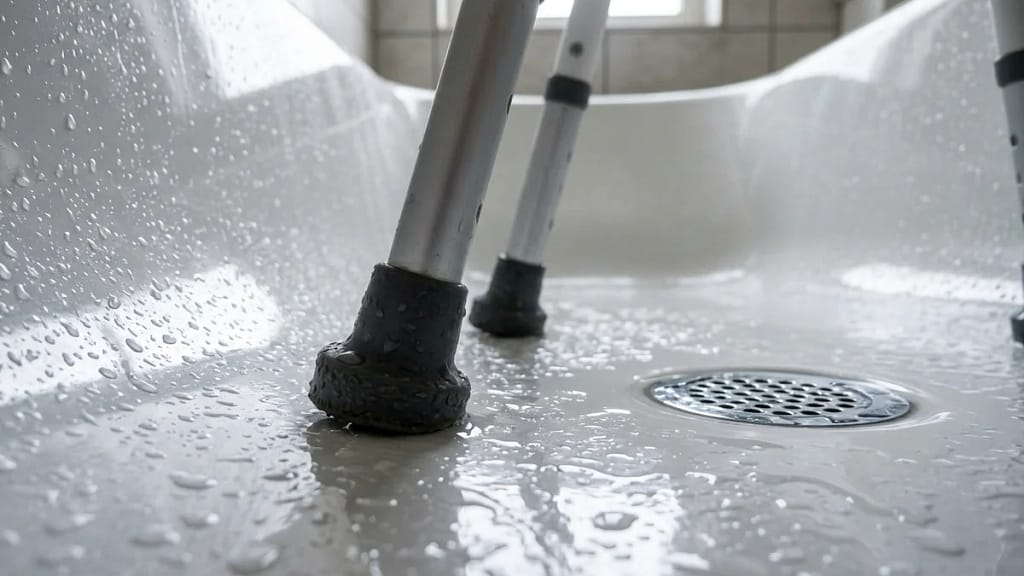
Before comparing chairs, it helps to separate what “fit” means inside a bathtub from what it means in an open shower stall. A chair that feels solid on a flat, textured shower floor may behave differently once its legs rest on a curved, glossy tub bottom instead.
- Leg spread relative to tub floor width: legs positioned too close to the tub’s curved sides can rock instead of sitting flat.
- Chair footprint versus available floor space: a wide chair can leave little room for feet, knees, or a caregiver standing nearby.
- Weight distribution across all four legs, not just total listed capacity: an unevenly loaded chair can still tip within its rated weight.
- Seat height relative to the tub wall: a low seat can make standing back up harder once the tub wall’s height is added to the movement.
Seat width, armrest fit, and backrest support are their own decision, already covered in how to choose a shower chair for elderly. The bathtub adds one filter on top of that decision: whether the chair’s footprint and grip actually match the tub floor underneath it, not just the bathroom in general.
What size shower chair do I need covers this same measuring process for shower stalls and bathtubs alike.
Standard Bathtub Dimensions and Why They Matter
Bathtubs are not built to one universal interior size, and that variation is exactly why a shower chair that fits one tub may not fit another. Many standard alcove tubs measure around 60 inches long and 30 to 32 inches wide on the outside, but the actual floor a chair’s legs rest on is smaller than that once the sloped sides and curved corners are accounted for.
Federal accessibility guidance for bathing spaces, including minimum clear floor areas around tubs, is outlined by the U.S. Access Board, and those baseline dimensions are a useful reference point even in homes with a tub that was not built to that exact standard.
A standard rectangular tub typically offers a wider, flatter floor than a rounded soaking tub or a corner-style tub, both of which trade floor space for shape. That difference alone can decide whether a given chair’s legs land on a flat, stable surface or partly on a curve.
Real-life example:
A person recovering from hip surgery may have a standard rectangular tub with a flat floor, where a shower chair sits evenly and stays stable through daily use. A relative bathing in an older home with a rounded soaking tub may find that same chair rocks slightly, simply because the curved floor doesn’t offer the same flat contact for all four legs.
Checking Tub Floor Stability and Non-Slip Fit
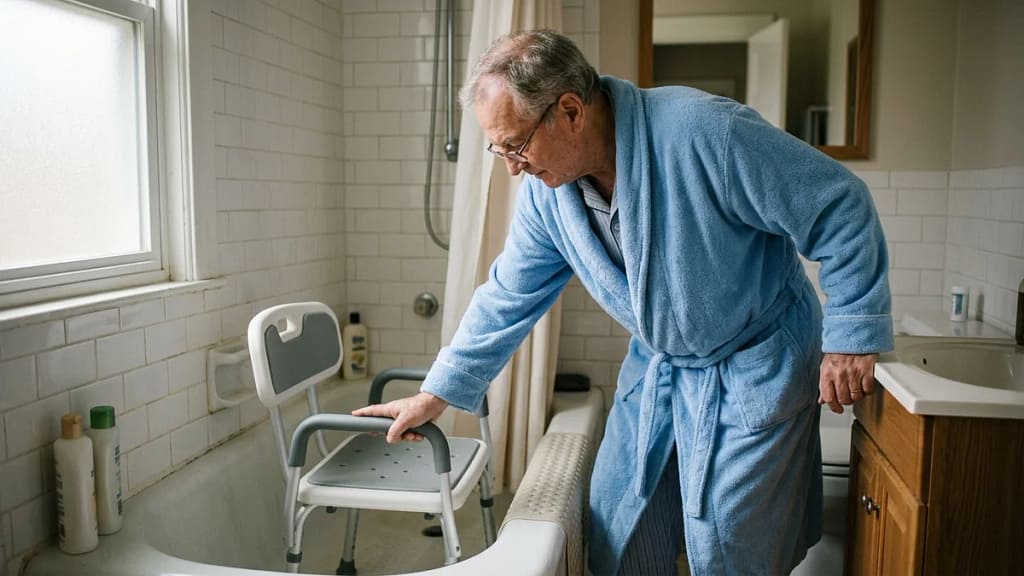
A chair can measure out correctly on paper and still behave differently once it’s actually sitting in the tub. A few checks confirm whether the floor itself will hold it steady.
- Curved or sloped floors change how evenly a chair’s feet make contact, even when all four legs are the same length.
- Textured tile grips suction feet differently than smooth porcelain or fiberglass, which can stay slick even when it looks dry.
- Not every chair uses suction cups. Some rely on textured rubber tips instead, and those need the same stability check, just without a suction grip to test.
- Worn or aging suction cups lose grip over time, so check them periodically rather than assuming they’ll hold the way they did when new.
- If you haven’t tested a chair in your specific tub, check it carefully before it becomes part of your daily routine.
None of these checks take long, but skipping them is how a chair that looked stable in the store ends up unstable at home. The tub floor, not the store display floor, is the surface that matters.
Important note:
Test a shower chair’s stability in the actual bathtub before relying on it for daily use. Sit down, shift weight from side to side, and check that all four feet stay in contact with the tub floor before treating the setup as safe for unsupervised bathing.
Once the chair passes that stability check, the next question is whether it was ever the right size for this tub in the first place.
How to Measure Your Bathtub Before Choosing a Shower Chair

A tape measure settles the question faster than any product description can. Five measurements are enough to know whether a given chair will actually sit flat in that tub.
- Measure your tub floor’s width at its narrowest point, not just near the wider section by the rim.
- Measure your tub floor’s length from the drain end to the faucet end.
- Note whether your tub floor is flat or curves toward the drain, since a curve changes how a chair’s legs make contact.
- Measure your tub wall height, since a chair placed inside sits at a different effective height than the same chair on an open shower floor.
- Compare these numbers to your chair’s own footprint and leg spread before assuming a fit.
Once the tub’s own dimensions are clear, comparing them to a chair’s listed footprint takes only a few minutes and avoids buying, or trusting, a chair that was never going to sit flat in that tub to begin with.
These five measurements follow the same basic approach laid out in how to measure for a shower chair, adapted here for a tub floor instead of an open shower stall.
Safety Considerations During Setup and Use
Confirming fit solves the biggest risk, but a few smaller habits are what keep that fit safe day after day.
- Without something to hold onto during the sit-down and stand-up moments, a stable chair only solves half the problem. The grab bar placement diagram shows where bars are typically positioned near a tub or shower to support that movement.
- Keep a non-slip mat on your bathroom floor outside the tub, since water tracked out is a separate fall risk from the tub floor itself.
- Confirm the chair’s listed weight rating against the user’s weight, leaving a comfortable margin rather than treating the number as an exact ceiling.
- Involve a caregiver for the entry and exit movements when balance is already a concern, rather than only after a fall has happened.
For the full sequence, from positioning to testing stability to sitting and standing safely, how to use a shower chair safely covers each step in more detail.
Occupational therapists who focus on bathroom safety, such as those at Shirley Ryan AbilityLab, generally recommend confirming these setup details before a person begins relying on any bathing equipment daily, not after.
When a Transfer Bench Is the Safer Choice
Not every fit problem is solved by finding the right shower chair. A few signs point toward a transfer bench instead.
- The main difficulty is stepping over the tub wall, not sitting down once already inside.
- Balance is unsteady while one leg is lifted over the tub edge, which is a different risk than sitting on a stable seat.
- A caregiver regularly assists with entry and needs a setup built around a slower, seated transfer rather than a stepping motion.
- The tub floor itself is not flat or wide enough to support a stable shower chair, even after testing it directly.
In these situations, a transfer bench, which spans the tub wall so the person can sit down outside the tub first and slide across before bringing their legs over, is usually the more dependable choice. It shifts the hardest part of the movement away from balancing on one leg while stepping, which is often where falls happen in the first place.
This step-over risk is exactly the deciding factor covered in the shower chair vs transfer bench guide, alongside bathroom layout and caregiver support differences.
Common Mistakes to Avoid
The same handful of mistakes shows up again and again in bathtub shower chair setups, and each one is easy to avoid once it’s named.
- Assuming a chair rated for showers will behave the same way on a curved tub floor without testing it directly.
- Treating a high weight rating as a complete safety guarantee instead of one part of a broader stability check.
- Skipping a stability re-test after moving the chair to a different tub or repositioning it within the same one.
- Relying on suction feet alone on a textured or worn tub surface where suction may not hold as expected.
- Placing the chair without checking arm and back clearance against sloped tub walls beforehand.
Most of these come down to skipping a test rather than choosing a genuinely wrong product, which is exactly why the checks above are worth the extra few minutes.
What I Recommend
I recommend treating this as a fit question before it becomes a shopping question. The safer path starts with the tub itself, not whichever chair already happens to be in the house.
A practical way I’d check compatibility is:
- measure the tub floor’s width, length, and any curve toward the drain
- test the chair’s feet directly on the tub’s surface rather than assuming suction will hold
- sit down and shift weight before treating the setup as safe for daily use
- confirm arm and back clearance against the tub walls
- decide whether the real difficulty is sitting down or stepping over the tub wall itself
If a shower chair turns out to be the better fit for the tub and the movement involved, I’d look for one built specifically with bathtub use in mind rather than a general shower chair. If the tub wall itself is still the bigger obstacle after going through that checklist, that’s the sign to shift toward a transfer bench instead.
FAQ
Can you use a shower chair in a bathtub?
Yes, in most cases, as long as the chair’s footprint and grip actually match the tub’s floor width, curve, and surface. The fit and safety checks that decide this are covered throughout this guide, from measuring the tub to testing stability before daily use.
Do all shower chairs fit in a bathtub?
Not automatically. A chair’s footprint and leg spread need to match the tub’s floor width and curve, which vary more between tubs than shower stalls typically do.
What weight capacity should I look for in a bathtub shower chair?
Treat the listed weight rating as one part of the decision, not a full guarantee. A chair with a comfortable margin above the user’s weight and legs that grip the tub floor evenly is a more complete picture than the number alone.
Do I need a medical reason to use a shower chair in a bathtub?
No. Seated bathing support can be worth considering any time sitting down or standing back up during bathing feels harder or less steady than it used to, not only after a diagnosis or surgery.
What’s the difference between a shower chair and a transfer bench for bathtub use?
A shower chair sits fully inside the tub, so the person still steps over the tub wall before sitting down. A transfer bench spans the tub wall, so the person sits down first and slides across, which removes the one-leg balancing moment that stepping over a tub wall requires.
How do I keep a shower chair from sliding in a bathtub?
Check suction feet on the tub’s actual surface, since grip varies between textured tile and smooth porcelain or fiberglass. Re-test stability any time the chair is moved or repositioned, rather than assuming grip that worked once will hold indefinitely.
Can a caregiver assist safely while a shower chair is in the tub?
Usually, yes, though the tub’s outer clearance matters as much as the space inside it. A caregiver needs enough room to stand or kneel beside the tub without losing their own footing on a wet floor.
How do I clean a shower chair used in a bathtub?
Rinse it after each use and check the suction feet and joints periodically for soap residue or mineral buildup, since either can reduce grip over time even when the chair itself still looks stable.
Final Thoughts
Can you use a shower chair in a bathtub for years, not just once?
That depends on the same two things covered throughout this guide: the tub’s floor width, curve, and surface grip, which decide whether a chair sits stably, and the person’s actual movement, sitting down versus stepping over a tub wall, which decides whether a chair is even the right category of support to begin with.
Measuring first and testing before relying on the setup daily is what turns a reasonable-looking product into one that’s actually safe for the specific bathroom it’s used in.
