
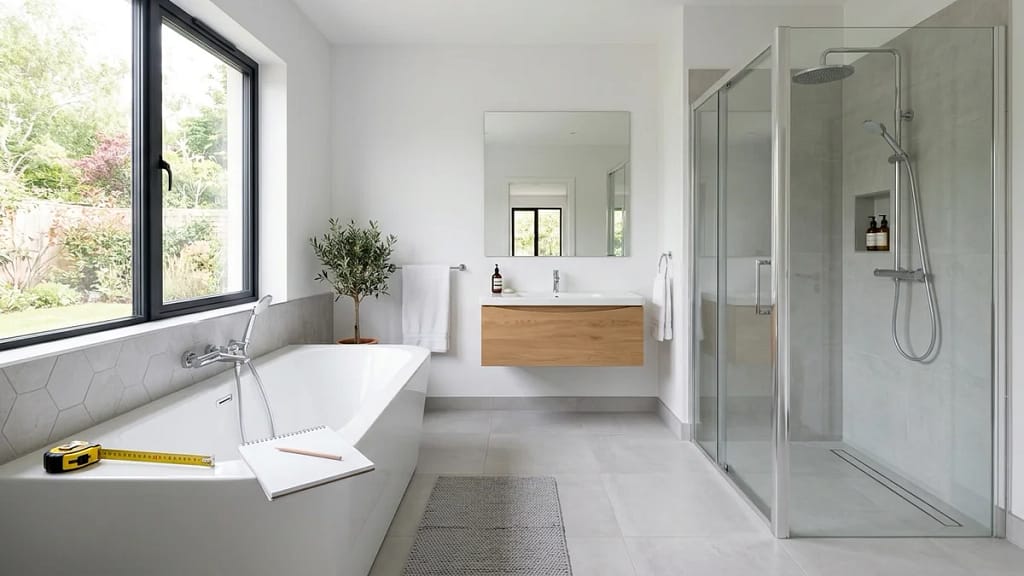
Knowing how to measure for a shower chair matters because a chair that does not fit the tub or shower can rock, tip, or simply not go where it is needed. Bathroom falls are a real risk at home and are more common among seniors. The senior bathroom falls statistics point to the tub and shower area as a frequent spot.
Most fit problems come from measuring only the seat. A chair also needs floor space for its legs, room to get through the entry, and a seat that suits the person sitting on it.
Disclosure: As an Amazon Associate, I earn from qualifying purchases. This post may contain affiliate links. If you purchase through these links, I may earn a small commission at no extra cost to you. I only recommend products I would feel comfortable using in my own home. Learn more.
On This Page
Quick Answer
To measure for a shower chair, measure the flat floor where the chair legs will stand, the entry the chair must pass through, and the seated hip width, knee height, and thigh length of the user, then compare those numbers with the chair’s overall footprint and seat height range on the spec sheet. Test the fit with a cardboard outline before buying.
- Floor, not rim: Tubs and shower floors often narrow toward the bottom, so the flat floor at leg level is the number that counts.
- Footprint, not just seat width: Legs, arms, and a backrest take more room than the seat alone.
- Three body measurements: Seated hip width, knee to floor height, and thigh length decide seat width, height range, and depth.
- Spare room: The chair should sit flat with room to get in, turn, and reach the controls.
- Test before buying: A cardboard outline on the floor shows problems a tape measure can miss.
A Simple Measuring Routine
Gather a tape measure, a notepad, and a large piece of cardboard first. The order below works for most bathrooms: measure the space, measure the user, compare the numbers with the spec sheet, then test the fit.
How to Measure a Bathtub for a Shower Chair
If the chair will go in a tub, start with these three steps. If the chair will go in a walk in shower, skip to the next section.
- Measure the floor width at leg level. Lay the tape flat on the tub floor, side wall to side wall, where the chair will sit. Measure the flat part only, not the width at the rim. The Canadian Red Cross advises using a bath or shower chair only on a floor wide enough to keep all four legs stable.
- Measure the flat depth. From the end wall, measure the length of flat floor available. Allow for the legs, arms, and backrest, not just the seat.
- Check the drain and the surface. A leg resting on the drain cover may not sit flat. Run a hand over the floor too, because a textured anti slip surface can stop suction cup feet from gripping.
Important note:
If the flat floor is narrower than the chair’s leg spread, choose a narrower chair. A chair that rests partly on the sloped side of the tub can tip.
If the numbers look tight, this guide on whether a shower chair works in a bathtub covers when a chair suits a tub and when it does not.
How to Measure a Walk In Shower for a Shower Chair
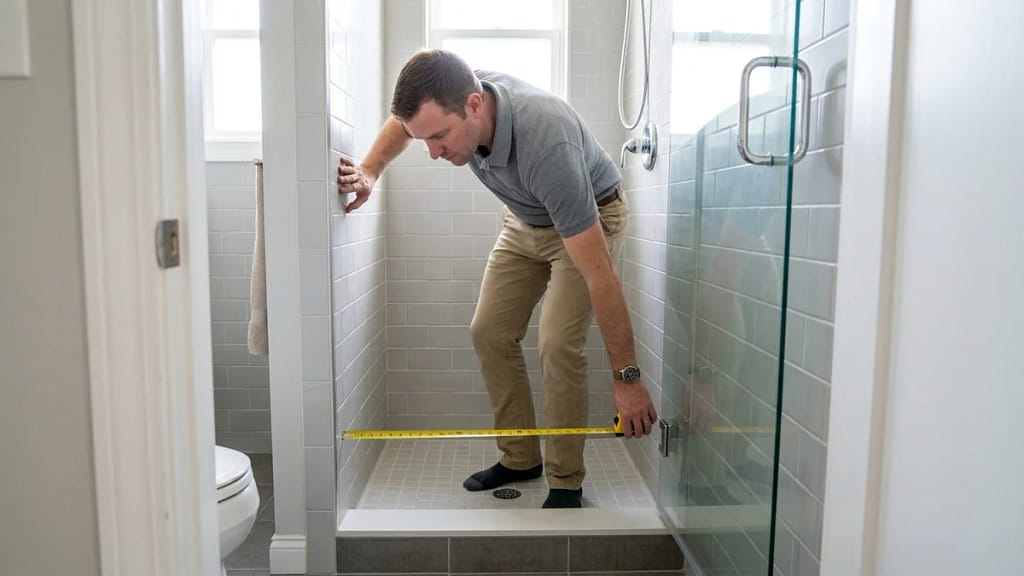
A walk in shower has more variables than a tub, mostly around the floor and the entry. Write down each of these:
- Floor width and depth: measure wall to wall at the spot where the chair will sit.
- Threshold or curb: note its height and width, since the chair has to clear it.
- Drain and slope: find the drain, then set a small level on the floor where the chair will stand. A noticeable slope can tilt the seat.
- Entry: measure the clear opening with the door open or the curtain pulled back.
Check what already sits inside the space, too: soap niches, shower controls, the reach of the handheld shower from a seated position, and any grab bars. A chair with arms or a backrest needs room beside and behind the seat, and a bar in the wrong spot can block it. A grab bar placement diagram makes it easier to picture where existing bars sit relative to the seat.
Once these numbers are written down, they also show which shower chairs can work in a walk in shower. A chair that needs the full floor width, for example, is a poor match for a narrow stall.
Before choosing a chair, the next step is to measure the person who will sit, since the chair has to fit both the space and the user.
How to Measure the Person Who Will Sit
The chair also has to suit the user. Take these three measurements:
- Seated hip width: with the user seated, measure across the widest point of the hips and thighs.
- Knee to floor height: with the user standing straight and barefoot, measure from the back of the knee to the floor.
- Thigh length: with the user seated, measure from the back of the hip to the back of the knee. This helps judge seat depth.
For a reference point, the 2010 ADA Standards place removable bathtub seats 17 to 19 inches above the floor and 15 to 16 inches deep. Those figures come from accessible design rules and work as a starting point, not a requirement for a home bathroom.
Hip width sets the minimum seat width, but arms and leg spread add to the footprint. The guide on what size shower chair you need explains how to balance seat width against the space you measured.
Knee to floor height sets the seat height range to look for, and adjustable legs leave room to fine tune it. The shower chair height guide covers how knee angle and posture decide the final setting.
Match Your Numbers to the Chair’s Spec Sheet
Product listings show several dimensions, and they are easy to mix up. Seat width describes the seat alone. Overall width and depth describe the space the legs, arms, and backrest need.
← Swipe to see more →
| Your measurement | Spec sheet dimension | What to check |
|---|---|---|
| Flat floor width | Overall width, leg to leg | All four legs land on flat floor |
| Flat floor depth | Overall depth with backrest and arms | Chair clears walls and controls |
| Entry width | Overall width when assembled | Chair passes through the entry |
| Seated hip width | Seat width | Seat fits the user without squeezing |
| Knee to floor height | Seat height range | Range includes your number, with adjustable legs |
| Thigh length | Seat depth | Seat supports the thighs without pressing behind the knees |
Copy these six rows into a notes app and fill in your numbers before shopping. If a listing shows only the seat width, check the photos or the manual for overall width and depth before ordering.
Test the Fit and Avoid Common Measuring Mistakes
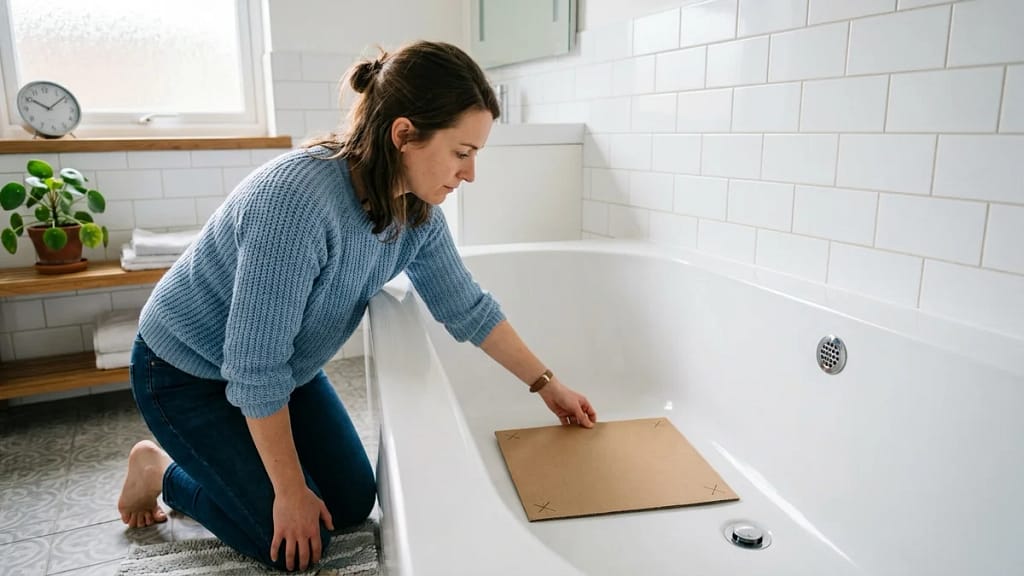
A tape measure shows numbers. A cardboard outline shows how the chair sits in the space. Try it this way:
- Trace the chair’s overall footprint on cardboard, using the spec sheet’s width and depth, and mark where each leg will stand.
- Set the outline on the tub or shower floor. Check that every leg mark lands on flat floor, away from the drain and the walls.
- Carry the outline through the entry, then step around it the way the user would to sit down and stand up. Check that the controls and handheld shower are reachable from the seat.
Real-life example:
A daughter measures her mother’s tub at the rim and orders a chair to match. When it arrives, the legs on one side rest on the curved lower wall, and the chair rocks. Measuring the flat floor would have shown that the tub is narrower at the bottom than at the top.
Most measuring mistakes come from a short list:
- Measuring the rim instead of the floor.
- Comparing only seat width and ignoring the overall footprint.
- Overlooking the drain, the floor slope, or a textured surface.
- Forgetting the door swing or the width of the entry.
- Measuring for the wrong product. If the flat floor is too narrow for any chair, a transfer bench that straddles the tub wall uses different measurements, so the numbers above will not carry over.
When the chair arrives, set all four legs to the same height and place it on a slip resistant mat. Press on the seat and check for rocking before the first use.
When the chair arrives, set all four legs to the same height and place it on a slip resistant mat. Press on the seat and check for rocking before the first use.
What I Recommend
I recommend measuring the floor first and choosing a chair from those numbers, not the other way around. A chair that fits the space and the user is usually the safer choice, even when a larger model has more features.
A practical measuring routine is:
- measure the flat floor width and depth where the legs will stand
- note the drain, the slope, and the floor texture
- measure the entry and any door swing
- take the user’s hip width, knee height, and thigh length
- compare each number with the overall dimensions on the spec sheet
- trace the footprint on cardboard and test it in place
- set all four legs evenly and check for rocking on arrival
With your measurements in hand, comparing the best shower chairs for seniors becomes a check of real numbers against a spec sheet.
FAQ
How do you fit a shower chair?
Measure the flat floor where the legs will stand, compare it with the chair’s overall width and depth, and test the fit with a cardboard outline. After the chair arrives, set all four legs evenly and check that it does not rock.
What is the standard size of a shower chair?
There is no single standard size. Seat width, overall footprint, and height range vary by model, so compare the chair’s listed dimensions with your own measurements.
What is the best height for a shower chair?
The seat usually feels right when the user’s knees bend at about a right angle with feet flat on the floor. Knee to floor height is the number to start from, and adjustable legs make it easier to match.
Can a shower seat be used in a bath instead of a shower?
Yes, if the flat tub floor is wide enough to keep all four legs stable. If it is too narrow, a chair may not suit that tub, and a transfer bench that straddles the tub wall may work better.
How much room should be left around a shower chair?
Enough to step in, turn, sit down, and stand up without the knees or hands touching the walls or controls. A cardboard outline shows this better than a single number.
Final Thoughts
Measuring for a shower chair comes down to three things: the space, the user, and the gap between what a listing says and what the bathroom allows. The step that catches the most problems is also the simplest, a cardboard outline set on the floor. It shows the whole path from the entry to the seat before any money is spent.
