
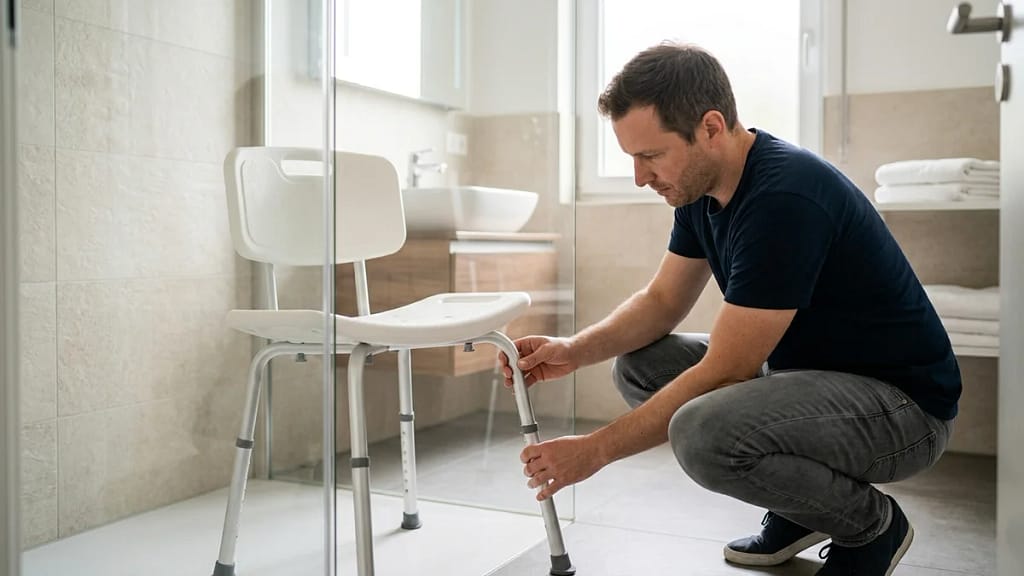
A shower chair only helps when the seat height suits the person sitting on it. Set too low, it makes standing harder on the knees and hips. Set too high, it leaves the feet hanging and the user less steady.
Learning how to adjust shower chair height takes a few minutes and one hole at a time. This guide covers the steps, how to check the result, and what to do when adjusting is not enough.
Disclosure: As an Amazon Associate, I earn from qualifying purchases. This post may contain affiliate links. If you purchase through these links, I may earn a small commission at no extra cost to you. I only recommend products I would feel comfortable using in my own home. Learn more.
On This Page
Quick Answer
To adjust shower chair height on most models, press the spring pin on each leg, slide the leg to the same hole on all four, and set the seat so the user’s feet rest flat with knees near 90 degrees, then test the chair for wobble before bathing.
- Feet flat: when the feet reach the floor, the user has a stable base for sitting, washing, and standing.
- Matching legs: one leg set a hole higher or lower can tilt the seat and make the chair rock.
- Pins fully engaged: a pin that sits only partway in its hole can slip under weight.
- Test first: a gentle rock and a practice sit and stand show problems before the floor is wet.
Most adjustable shower chairs have push button legs that change height in steps of about one inch. Chairs with fixed legs cannot be adjusted, and a chair already at its top setting cannot be raised further.
What You Need Before You Adjust the Chair
A few minutes of preparation makes the adjustment faster and more accurate.
- A target height. With the user sitting in a regular chair, measure from the floor to the crease behind the knee. This is the method in NHS seating guidance, which covers chairs in general and gives a useful starting number for a shower chair.
- The manual. Pin and hole layouts differ by model, and some chairs use twist locks or knobs instead of a spring pin, so the instructions show where each release point sits.
- A helper, if needed. A second person can hold the chair steady while the legs are changed.
Write the target number where it is easy to see, since all four legs need to match it, and the steps below set each leg in turn.
How to Adjust Shower Chair Height Step by Step
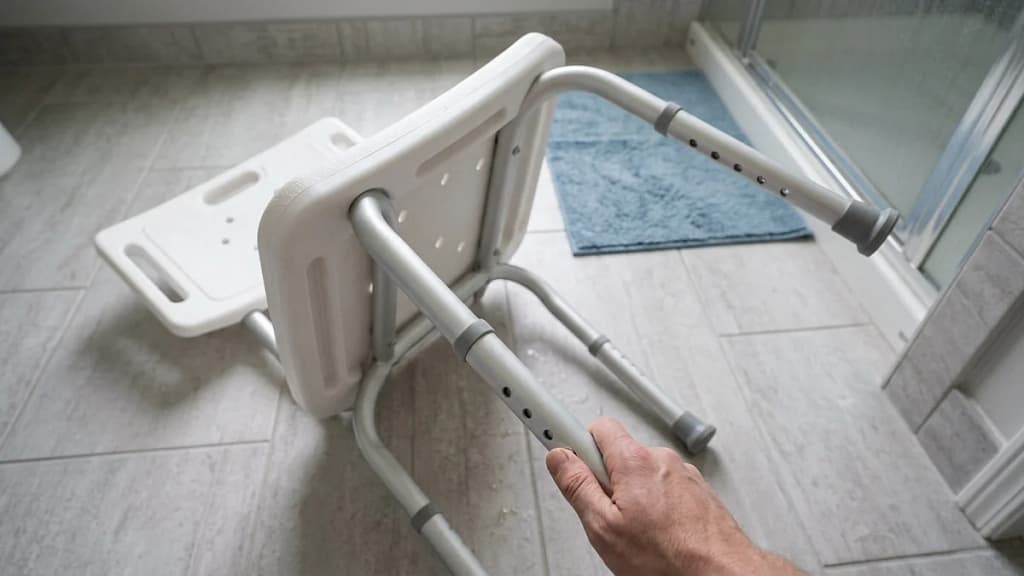
The adjustment comes down to the same few actions on each leg.
- Remove the chair from the tub or shower and set it upright on a dry, flat floor.
- Press the spring pin in on one leg and slide the leg up or down to the hole that matches the target height.
- Release the pin and let it click all the way through the hole.
- Repeat on the other three legs, using the same hole on each.
- Place the chair back in the shower and check that all four feet touch the floor.
To raise the chair, move each leg up to a higher hole. To lower it, move each leg down. If the target falls between two holes, start with the one where the feet rest flat, then run the checks in the next section.
How to Know the Height Is Right
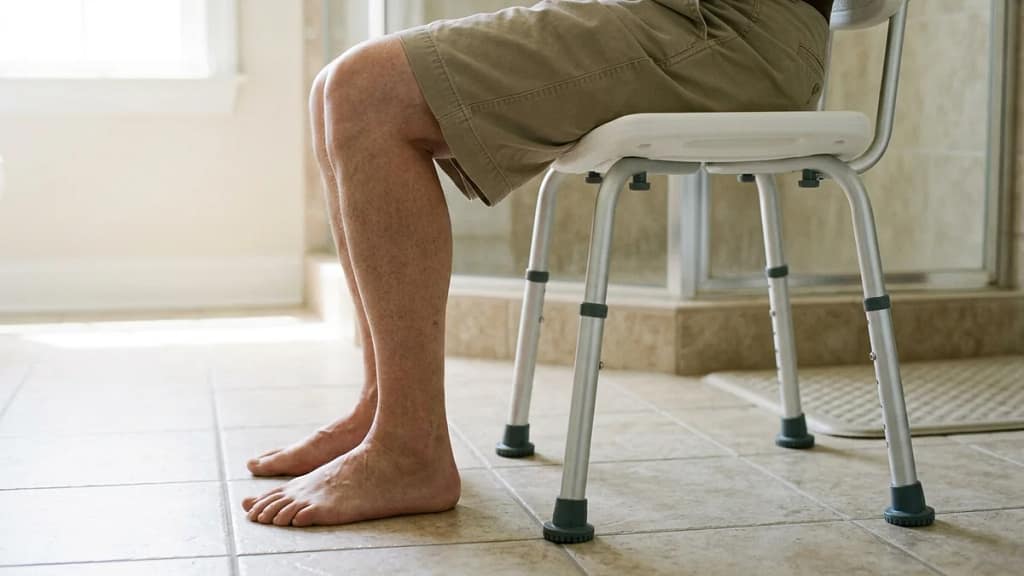
A good fit shows in how the user sits and stands, not only in a measurement.
- Feet rest flat on the shower floor.
- Knees sit close to 90 degrees.
- The seat edge does not press behind the knees.
- Standing up does not need a hard push or a lurch forward.
As a reference point, the ADA Standards for Accessible Design place fixed shower seats and removable tub seats 17 to 19 inches above the floor. Those rules cover public and commercial buildings, so the range works as a starting point rather than a requirement for a home chair.
The shower chair height guide covers seat height by body size and bathing setup in more detail. Once the fit looks right, a short dry test confirms that it holds up under weight.
Test the Chair Before Bathing
A short test on a dry chair catches most problems.
- Press down on the seat and rock it gently from side to side and front to back.
- Check that all four pins are fully engaged and the rubber feet sit flat.
- Have the user sit and stand twice, using the arms or seat edges as usual.
- Check that a grab bar or other fixed support is within easy reach from the seat.
Grab bar position matters once the seat height is set. The grab bar placement height guidance explains where the support should sit so the hand finds it without stretching or leaning.
Once the chair passes the test, the guide on how to use a shower chair safely covers washing and getting out. If the chair does not pass, the problems below cover the most common causes.
Common Problems When Adjusting Shower Chair Height
Most trouble after an adjustment comes from a small mismatch between the legs, the pins, or the floor.
- The pin will not click through. Line the leg up with the hole, press the pin, and rotate the leg slightly until the pin pops out.
- The seat tilts to one side. One leg is probably on a different hole. Count the holes on each leg and match them.
- The chair rocks on a level setting. The shower floor may be uneven or sloped. Try a flatter spot, and consider a different chair if it still rocks.
- The chair slides on a wet floor. Dry the feet, look for worn rubber tips, and use the chair only on a surface it was designed for.
Real-life example:
A caregiver raises a shower chair two holes for a parent and sets it back in the tub. When the parent sits, the seat tilts because one pin sat only partway in its hole. Pressing that pin through and repeating the dry sit test fixes the problem before the shower is turned on.
When none of these fixes help, the chair itself may be the limit, which the next section covers.
When Adjusting the Height Is Not Enough
Sometimes the chair reaches its limit before the fit is right.
- The chair is already at its highest or lowest setting and the user still does not fit. A chair with a wider height range may work better.
- The chair has fixed legs. Only a model with adjustable legs can change the seat height.
- The user needs more support than a basic chair offers, such as arms for standing or a back for fatigue. A different style of seat may help more than a better adjustment.
Recovering from hip surgery?
The seat may need to sit higher than usual. Hospital guidance for hip replacement asks patients to keep the hips higher than the knees when sitting, so follow the surgeon’s or therapist’s advice over the general feet flat rule.
Whether the chair stays or is replaced, a simple routine keeps the height right over time.
What I Recommend
I recommend setting the chair once with the user in mind, then confirming it with a real sit and stand test rather than trusting a measurement alone.
A practical routine is:
- Ask the user how the height feels when sitting down and when standing up.
- Have a second person watch the first sit and stand after any change.
- Recheck the pins and rubber feet every few weeks.
- Reset and retest the height after surgery or any change in mobility.
- Note the final hole setting on a label or in the manual, so it is easy to restore after cleaning or moving the chair.
- If the height range cannot fit the user, choose a shower chair with a range that does.
The right height is the one that fits the user’s body and movement. If the current chair cannot reach a comfortable height, a guide to the best shower chairs for seniors can help compare height ranges and other features.
FAQ
What is the recommended height for shower seats for seniors?
Many references use 17 to 19 inches from the floor, based on ADA seat height rules for public buildings. For a home chair, the better guide is the user’s own fit, with feet flat and knees close to 90 degrees.
Can more than one person share an adjustable shower chair?
Yes, if the legs are reset and the chair is retested for each user. The right height follows leg length, so a taller user usually needs a higher seat and a shorter user a lower one.
Can you adjust a shower chair while someone is sitting on it?
No. Adjust the chair while it is empty, because a leg can shift or release under weight.
Final Thoughts
Seat height is a small setting with a daily effect. When it is right, the chair fades into the routine, and the user can think about bathing instead of the seat.
