
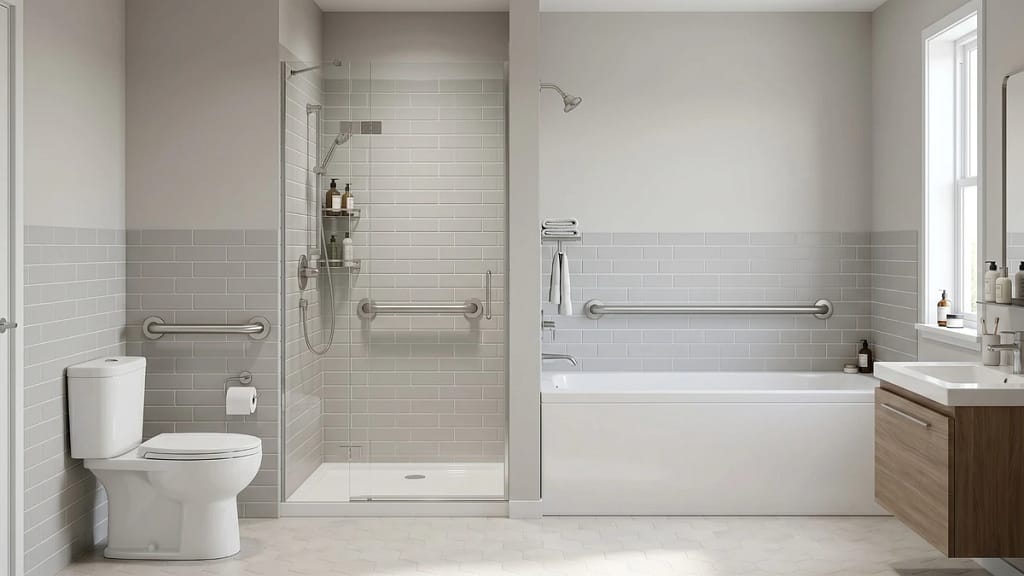
Grab bars come in several standard lengths, and choosing the right size affects both safety and everyday usability.
Among the most common residential bathroom sizes are 18 inch, 24 inch, and 36 inch grab bars. Each length supports a different type of movement, wall space, and bathroom location.
A shorter bar may work well beside a toilet or near a bathtub entry, while a longer bar may provide better balance support along a shower or tub wall. Understanding the differences between 18 vs 24 vs 36 inch grab bars can help you choose the size that fits the space and supports the movement properly.
Disclosure: As an Amazon Associate, I earn from qualifying purchases. This post may contain affiliate links. If you purchase through these links, I may earn a small commission at no extra cost to you. I only recommend products I would feel comfortable using in my own home. Learn more.
On This Page
Quick Answer
18 inch grab bars work well in small spaces, 24 inch grab bars provide versatile support in many bathroom areas, and 36 inch grab bars offer the widest balance support along larger walls.
In general:
- 18 inch grab bars are best for tight spaces or secondary support
- 24 inch grab bars provide balanced support in many locations
- 36 inch grab bars work best for larger wall areas and continuous balance support
The right choice depends on the installation location, available wall space, and the movement the grab bar needs to support.
A grab bar placement diagram can also help visualize where different grab bar lengths are typically installed in a bathroom.
Quick Comparison of 18, 24, and 36 Inch Grab Bars
This table gives a quick way to compare the three common grab bar sizes before choosing based on bathroom location and wall space.
← Swipe to see more →
| Size | Best For | Main Benefit | Limitation |
|---|---|---|---|
| 18 inch | Tight spaces, toilet areas, tub entries, secondary support | Fits where longer bars may not work | Smaller grip area |
| 24 inch | Toilets, smaller showers, bathtub walls, general bathroom support | Good balance of reach and space efficiency | May still be too long for very tight spaces |
| 36 inch | Larger showers, bathtub walls, long open wall sections | Wider support area for balance and movement | Requires more open wall space |
18 Inch Grab Bars
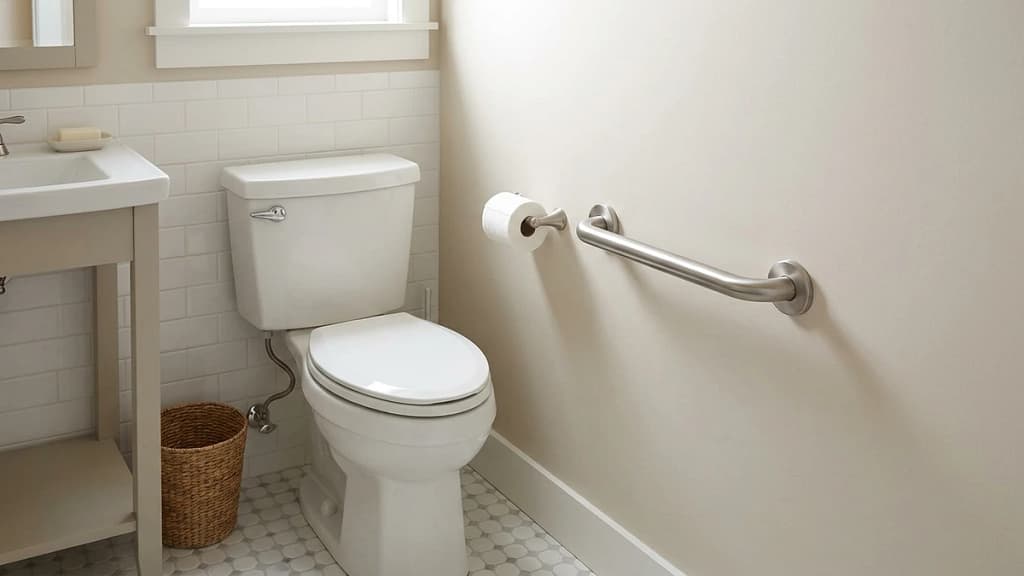
An 18 inch grab bar is one of the shortest commonly used grab bar lengths.
These bars are typically installed where wall space is limited or where only a small support point is needed.
Common uses include:
- beside toilets in small bathrooms
- near bathtub entries
- in tight wall sections where longer bars will not fit
Because of their shorter length, 18 inch grab bars provide a limited grip area. However, they can still offer important support during transitions such as sitting down or standing up.
Example:
A short grab bar near the edge of a bathtub can provide support while stepping over the tub wall, even if a longer bar is installed elsewhere in the bathroom.
In some bathrooms, shorter bars are used as secondary support bars rather than the primary balance bar.
24 Inch Grab Bars
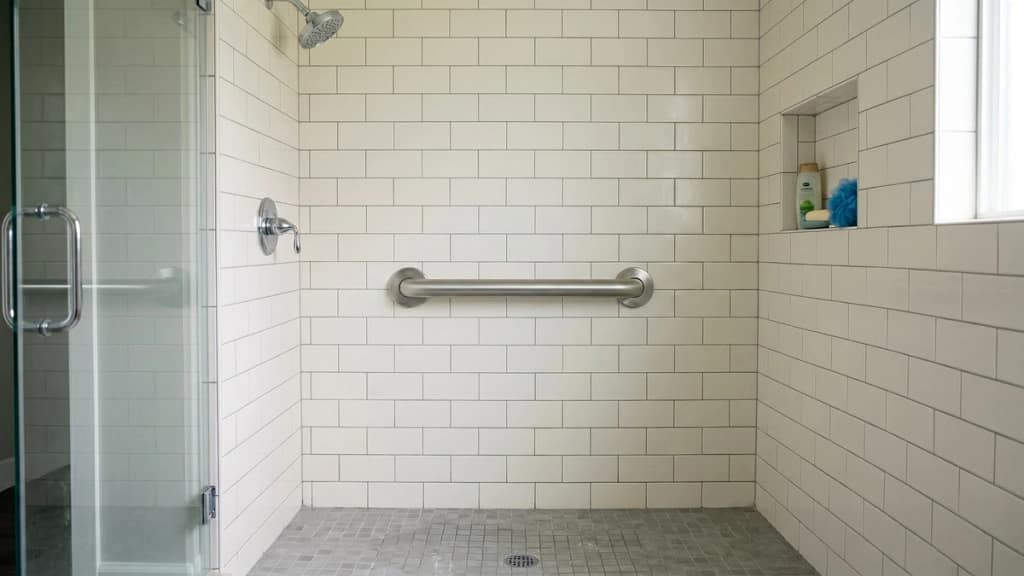
A 24 inch grab bar is often the most versatile size for residential bathrooms because it gives more hand placement range than an 18 inch bar while still fitting many standard wall areas.
This length is especially useful when the user needs a dependable support point for sitting, standing, or steadying balance without requiring a very long wall section.
Common uses include:
- beside toilets when there is enough side-wall space
- inside smaller showers where a 36 inch bar may be too long
- along bathtub walls where moderate balance support is needed
Compared with an 18 inch bar, a 24 inch bar gives the hand more room to adjust during movement. Compared with a 36 inch bar, it is easier to fit in bathrooms with limited wall space.
This makes the 24 inch size a practical middle option when the bathroom needs useful reach without taking up an extended wall area.
36 Inch Grab Bars
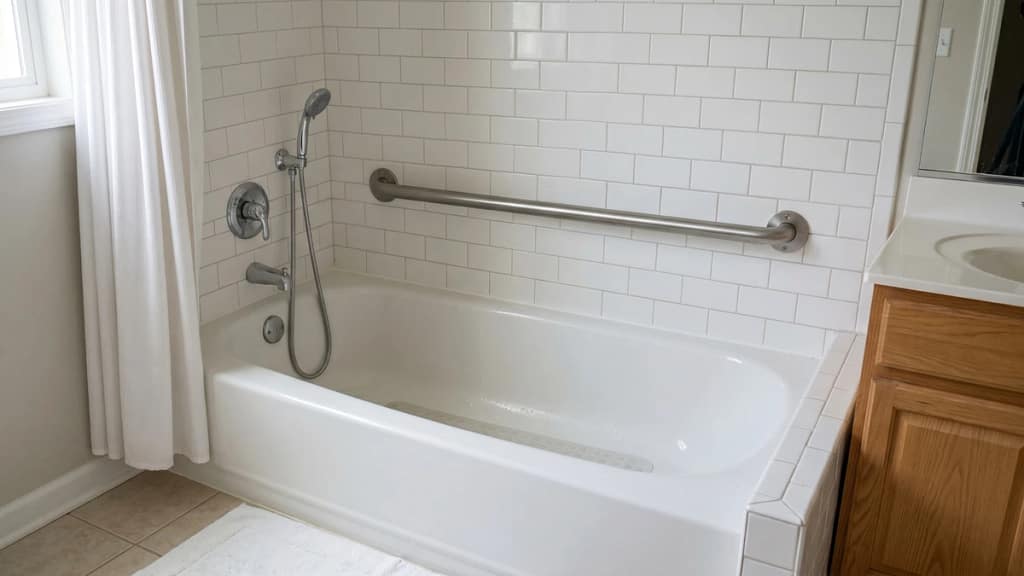
A 36 inch grab bar is typically used where a wide support area is needed.
These longer bars are often installed inside showers or along large bathroom walls where users may need continuous support.
Common locations include:
- shower side walls
- larger bathtub walls
- long wall sections in accessible bathrooms
In the comparison of 18 vs 24 vs 36 inch grab bars, the 36 inch size provides the largest support area.
Longer bars allow users to move their hand along the bar while maintaining balance. This can be especially helpful when turning or adjusting posture in the shower.
Because of their larger size, 36 inch bars work best when there is enough open wall space and the user benefits from being able to move the hand along a wider support area.
How Wall Space Affects Grab Bar Size
Wall space is one of the biggest limits when choosing grab bar length. A longer bar is only useful if it can be installed where the user can actually reach it and where it does not interfere with nearby fixtures.
Bathroom fixtures often reduce the usable installation area. Toilets, sinks, vanities, shower controls, tile edges, and door swings can all affect which length fits best.
A practical way to think about wall space:
- Limited wall space: an 18 inch bar may be easier to place correctly
- Moderate wall space: a 24 inch bar often gives a good balance of reach and fit
- Long open wall space: a 36 inch bar may provide wider balance support
The goal is not always to choose the longest bar. The better choice is the length that fits the wall, lines up with the user’s natural hand position, and supports the movement being made.
For a broader size-selection guide beyond these three common lengths, this article on what length grab bar should you use explains how grab bar length changes by bathroom location and support need.
Which Grab Bar Size Is Best for Showers?
Showers often benefit from longer grab bars because users may need support while standing, turning, or shifting balance.
In many installations:
- 24 inch grab bars provide moderate support along smaller shower walls
- 36 inch grab bars provide a wider grip area along larger shower walls
Longer grab bars allow users to move their hand along the bar while maintaining balance. This can be especially helpful when adjusting posture or reaching for shower controls.
Because shower floors are frequently wet, a longer grab bar can make it easier to reach a stable support point while turning, adjusting posture, or moving along the shower wall.
In some layouts, a vertical grab bar may also be installed near the shower entrance to help stabilize the body while stepping in or out.
If you’re planning shower installation, reviewing where to place grab bars in a shower can help determine the safest positions.
Which Grab Bar Size Is Best for Toilets?
Grab bars near toilets are often shorter because the available wall space is usually more limited.
Common setups include:
- 18 inch grab bars beside the toilet in compact bathrooms
- 24 inch grab bars where additional wall space is available
These bars provide leverage when sitting down or standing up, which is one of the most common movements supported by grab bars.
In some accessibility layouts, a longer grab bar may also be installed behind the toilet to provide additional stability.
When comparing 18 vs 24 vs 36 inch grab bars, the shorter options are often more practical for toilet installations because they fit better within tight wall sections.
If you’re planning placement near a toilet, reviewing where to install grab bars around a toilet can help visualize the safest positions.
Which Grab Bar Size Is Best for Bathtubs?
Bathtubs often require a combination of grab bar sizes because stepping over the tub wall can be one of the most difficult movements in the bathroom.
Different bar lengths may be used to support different parts of the movement.
Common setups include:
- 18 inch grab bars near the tub entry for quick support
- 24 inch grab bars along the tub wall for moderate balance support
- 36 inch grab bars for larger tub walls where extended balance support is needed
In many bathrooms, a longer grab bar installed along the interior wall of the tub provides the most useful support while bathing or showering.
Shorter bars may still be helpful near the tub edge where the user first steps into the bathtub.
Choosing the correct size depends on both the wall space and the type of movement being supported.
What I Recommend
The best grab bar size should be chosen based on the movement being supported, the available wall space, and where the user naturally reaches for support.
A practical starting point is:
- Use 18 inch grab bars for tight spaces, small support areas, or secondary support near toilets and tub entries.
- Use 24 inch grab bars when you need a versatile size that fits many bathroom layouts and provides more hand movement range.
- Use 36 inch grab bars when there is enough wall space and the user needs wider balance support, especially in showers or along bathtub walls.
Longer is not automatically better. A shorter grab bar placed exactly where the hand naturally reaches can be safer and more useful than a longer bar installed in the wrong position.
In many bathrooms, the safest setup uses more than one size: a shorter bar near a toilet or tub entry and a longer bar where broader balance support is needed.
If you want to compare product options after deciding which size and location make sense, this guide to grab bars for bathroom safety can help with the next step.
FAQ
What is the most common grab bar size?
Grab bars between 24 and 36 inches are among the most commonly used sizes in residential bathrooms.
Are 36 inch grab bars better than 24 inch bars?
Not necessarily. Longer bars provide more support area, but the best size depends on the available wall space.
Are 18 inch grab bars safe?
Yes. They can provide useful support in tight spaces, although they offer a smaller grip area.
Can different grab bar sizes be used in the same bathroom?
Yes. Many bathrooms use a combination of sizes depending on the installation location.
Do longer grab bars provide better balance support?
Longer grab bars can allow users to adjust their grip while maintaining balance, which can improve stability in some situations.
Final Thoughts
Understanding the differences between 18 vs 24 vs 36 inch grab bars can help you match each size to the right bathroom location, wall space, and movement pattern.
Shorter grab bars work well in tight spaces, while longer bars provide wider support areas for balance and movement.
Selecting the correct size ensures the grab bar provides reliable support exactly where it is needed during everyday movements such as stepping into a shower or standing up from a toilet.
