
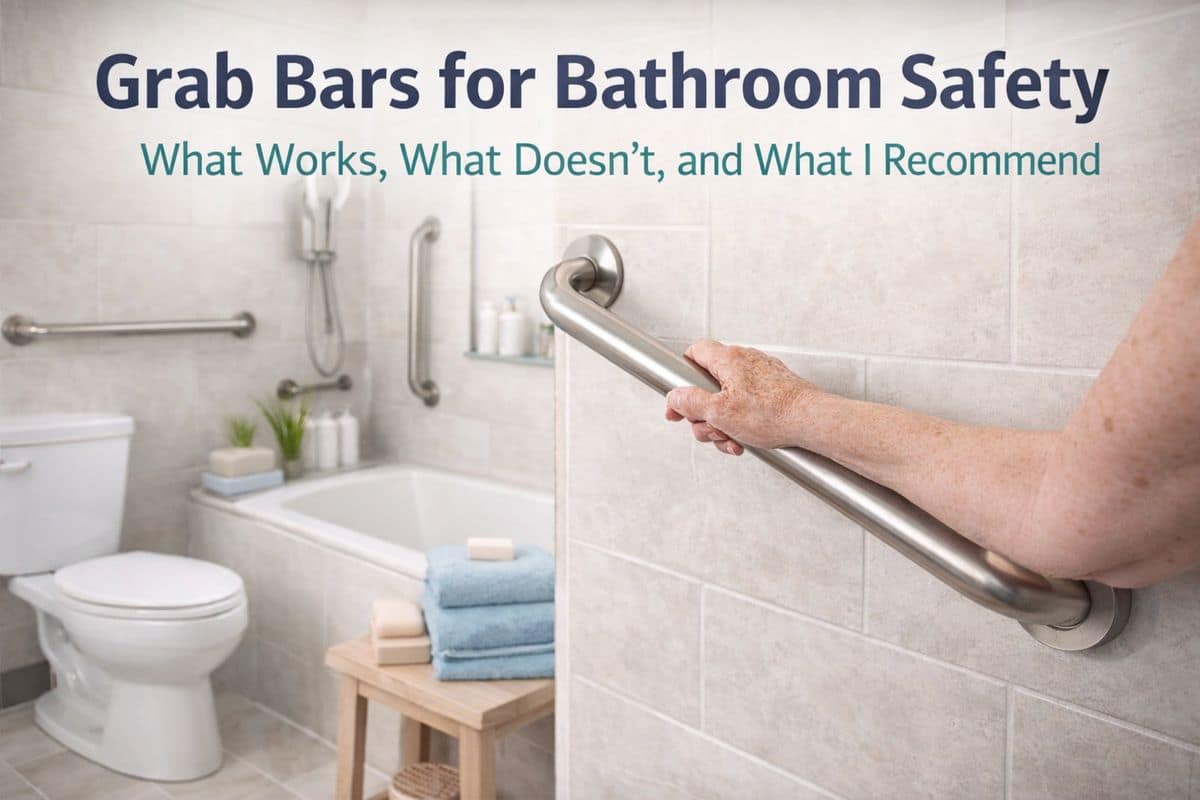
The first time I really thought about bathroom safety, it wasn’t after a major accident. It was a small slip—one of those moments where nothing happens, but it easily could have. That’s usually how it starts.
Bathrooms look harmless, but they combine everything that increases fall risk: water, smooth surfaces, tight spaces, and quick movements. You don’t need poor balance for things to go wrong—just one awkward step.
That’s why grab bars for bathroom safety are such a practical upgrade. They’re simple, relatively inexpensive, and don’t require a full renovation. But when they’re installed correctly and placed where they’re actually needed, they can make a noticeable difference in everyday safety.
Disclosure: As an Amazon Associate, I earn from qualifying purchases. This post may contain affiliate links. If you purchase through these links, I may earn a small commission at no extra cost to you. I only recommend products I would feel comfortable using in my own home. Learn more.
On This Page
- Why Grab Bars Matter for Bathroom Safety
- What Makes Grab Bars Effective for Bathroom Safety
- Types of Grab Bars for Bathroom Safety
- Where to Install Grab Bars for Maximum Safety
- Grab Bar Placement Height Guidelines
- Common Mistakes That Reduce Bathroom Safety
- Best Grab Bars for Bathroom Safety (What I Recommend)
- Final Thoughts
- FAQ
Why Grab Bars Matter for Bathroom Safety
Most bathroom accidents happen during completely normal routines.
Stepping into a shower, turning to reach for something, or standing up from a toilet—these are all everyday movements. But each one involves a shift in balance, and that’s where things can go wrong.
Grab bars work because they support those exact moments.
Instead of trying to recover balance mid-slip, you already have something stable to hold onto. That changes how people move. Many people naturally start using grab bars without thinking, especially when they’re placed correctly.
There’s also a confidence factor. When someone feels stable, they move more naturally. Without that, movements become slower or more cautious, which can actually lead to awkward positioning.
So when we talk about grab bars for bathroom safety, we’re not just trying to reduce risk—we’re making everyday movements more stable and predictable. That’s the real reason how grab bars help prevent falls is less about the bar itself and more about how it changes the way people move.
What Makes Grab Bars Effective for Bathroom Safety
Not all grab bars are equally effective, and most of the difference comes down to a few key details.
The first is installation. Wall-mounted grab bars are generally the most reliable because they’re secured into the wall. When installed properly—ideally into studs—they can support full body weight, which is why it helps to understand how to install grab bars in studs so they’re actually secure in real use.
Suction grab bars are different. They can help with balance, but they shouldn’t be relied on to catch a fall. This is one of the most common misunderstandings.
Grip also matters more than people expect. Bathrooms are wet environments, and a slightly textured surface can improve control. Smooth bars might look nicer, but grip tends to matter more in real use.
Placement is just as important as the product itself. Even a strong grab bar won’t help if it’s not where support is needed.
If I had to start with one upgrade, I’d go with a solid wall-mounted grab bar in the shower. That’s where most slips happen.
Types of Grab Bars for Bathroom Safety
There are a few main types of grab bars, and each one serves a different purpose.
Wall-mounted grab bars are the standard. These are fixed to the wall and provide the highest level of support. They’re the best choice for long-term bathroom safety.
Horizontal grab bars are typically installed inside showers or along walls where balance support is needed. They help with standing and turning movements.
Vertical grab bars are useful near entry points, like stepping into a tub or shower. They allow for a more natural pulling motion.
Suction grab bars are more of a temporary solution. They’re useful for travel or short-term setups, but they shouldn’t replace properly installed grab bars. If you’re deciding between options, understanding the differences between suction vs permanent grab bars can help you choose what actually fits your situation.
There are also toilet support options, including shorter grab bars or rails. These help with sitting and standing, especially in smaller spaces.
The key is choosing the right type for the right situation—not using the same solution everywhere.
Where to Install Grab Bars for Maximum Safety
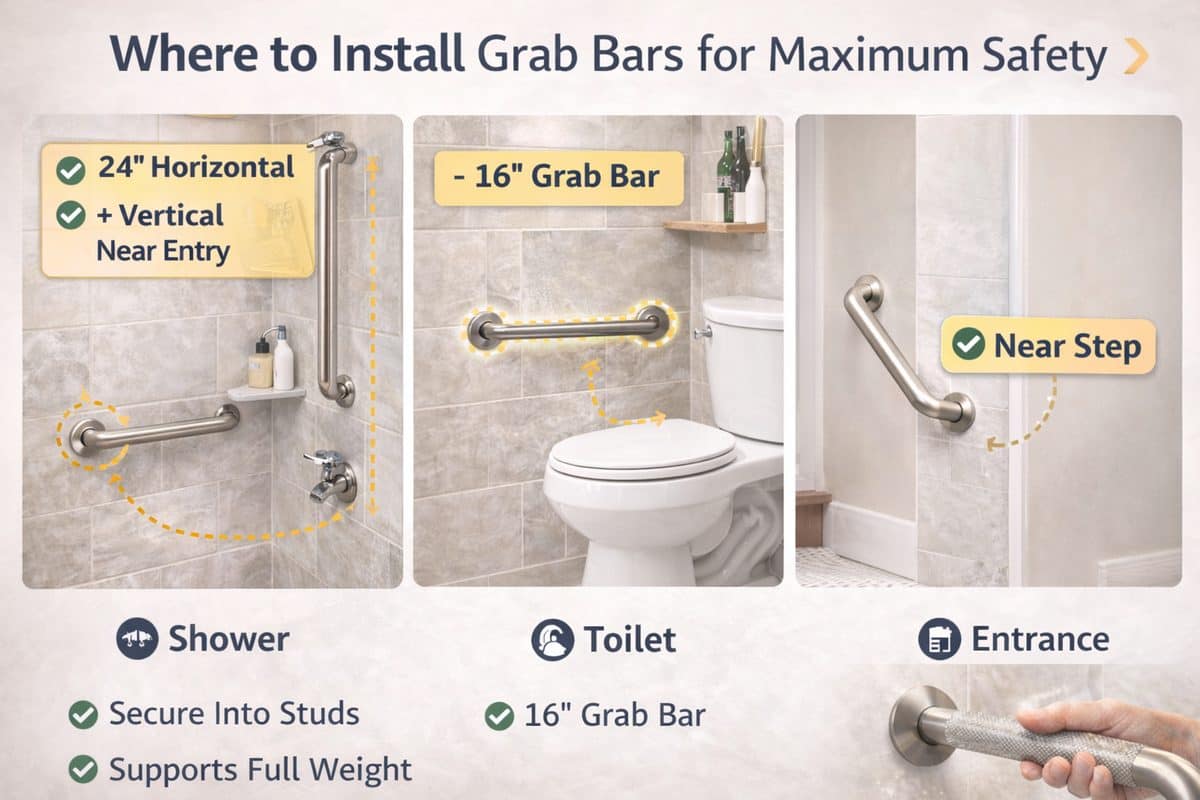
Placement is one of the biggest factors in how effective grab bars are.
The shower or bathtub should be your first priority. This is where most slips occur. A horizontal grab bar inside the shower helps with balance, while a vertical bar near the entry helps with stepping in and out.
In most cases, I’d choose a longer bar (around 24 inches) here because it gives more flexibility in hand placement.
Next to the toilet is another important area. Standing up requires balance and strength, so having a grab bar nearby can make a big difference.
A shorter grab bar (around 16 inches) usually works better here because space is more limited.
Bathroom entrances are often overlooked. If there’s a step or transition, a grab bar nearby can help prevent slips.
If you want a full breakdown, check out where to install grab bars in a bathroom for more detailed placement ideas.
Grab Bar Placement Height Guidelines
Height is one of those details that can make a grab bar feel natural or awkward.
Most grab bar placement height guidelines suggest installing bars between 33 and 36 inches from the floor. This range works well for many people.
However, it’s not one-size-fits-all. A taller person may prefer a slightly higher position, while someone using a shower chair may need a lower placement.
A simple way to test placement is to simulate movement before installation. Hold something at different heights and see where your hand naturally reaches.
If you want more detail, the full guide on grab bar placement height guidelines goes deeper into this.
Common Mistakes That Reduce Bathroom Safety
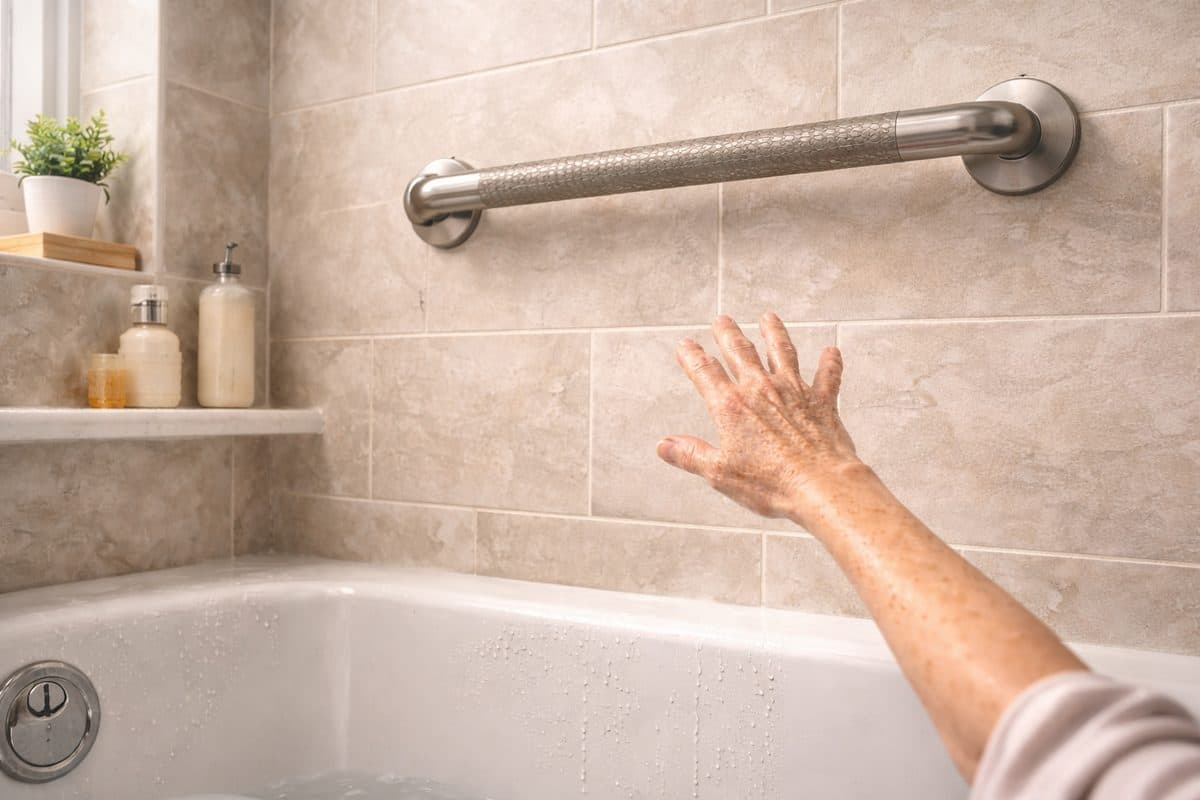
There are a few common mistakes that can reduce the effectiveness of grab bars.
One of the biggest is relying on suction grab bars as a permanent solution. These are not designed to support full body weight, and understanding how much weight grab bars can hold makes it easier to see why they shouldn’t be used for full support.
Another common mistake is assuming any wall-mounted bar is safe to grab. In reality, towel bars are not designed for support. Understanding grab bars vs towel bars can help avoid relying on something that isn’t built to handle body weight.
Poor installation is another issue. If a grab bar isn’t secured properly, it won’t provide reliable support.
Incorrect placement can also limit effectiveness. If the grab bar isn’t where it’s needed, it may not be used at all.
Another mistake is focusing too much on appearance. Grip and stability are more important than how the bar looks.
Avoiding these mistakes can make a significant difference in overall safety.
Best Grab Bars for Bathroom Safety (What I Recommend)
If I had to set up a bathroom for safety, I’d keep it simple and focus on what actually works.
Moen 24-Inch Grab Bar (Best Overall)
If you’re choosing just one grab bar for bathroom safety, this is the style I’d start with. The longer length gives you more “reach,” so you can adjust hand placement while stepping, turning, or rinsing.
- Strong wall-mounted support for daily use
- Longer length gives flexible grip positions
- Great starting point for showers and tubs
Best for: Most showers and tub walls where you want one reliable bar that covers the highest-risk movement.
Pros: Reliable, versatile, great for shower stability
Cons: Requires proper mounting (studs or grab-bar-rated anchors)
👉 Check price & read reviews on Amazon
Amazon Basics Grab Bar (Best Budget)
I like this option as a budget pick because it does the job without overcomplicating anything. If you’re trying to improve bathroom safety quickly (and affordably), this is a practical place to start.
- Affordable option for basic bathroom safety
- Simple design that works near the shower or toilet
- Good choice if you need multiple grab bars on a budget
Best for: Anyone who wants a simple, reliable grab bar at the lowest cost — especially if you’re adding multiple bars around the bathroom.
Pros: Budget-friendly, simple, practical
Cons: May not feel as premium as higher-end brands (finish and grip can vary)
👉 Check price & read reviews on Amazon
Moen 16-Inch Grab Bar (Best for Small Spaces)
This is what I’d use near a toilet or tight areas.
- Strong and compact
- Ideal for sitting and standing support
- Fits well in smaller bathrooms
👉 Check price & read reviews on Amazon
Vive Grab Bar (Best Value Option)
A solid all-around choice.
- Good balance of price and durability
- Works in most bathrooms
- Reliable for daily use
👉 Check price & read reviews on Amazon
Safe-er-Grip Suction Grab Bar (Temporary Use Only)
Best for short-term situations.
- Easy to install and remove
- Useful for travel
- Not for full body weight
👉 Check price & read reviews on Amazon
Final Thoughts
Grab bars for bathroom safety don’t need to be complicated.
A few well-placed, properly installed grab bars can make everyday movements safer and more comfortable. The key is focusing on real-life use—where support is needed, how it’s installed, and whether it feels natural to use.
Start with the shower, then build from there.
FAQ
Q: Are grab bars necessary for bathroom safety?
A: They can help reduce fall risk by providing a stable point of support.
Q: What type of grab bar is safest?
A: Wall-mounted grab bars installed into studs are the safest option.
Q: Where should grab bars be installed?
A: Showers, toilets, and entry points are the most important areas.
Q: What height should grab bars be installed?
A: Most guidelines suggest 33–36 inches, with adjustments as needed.
Q: Are suction grab bars safe?
A: Only for temporary balance support, not full body weight.
