
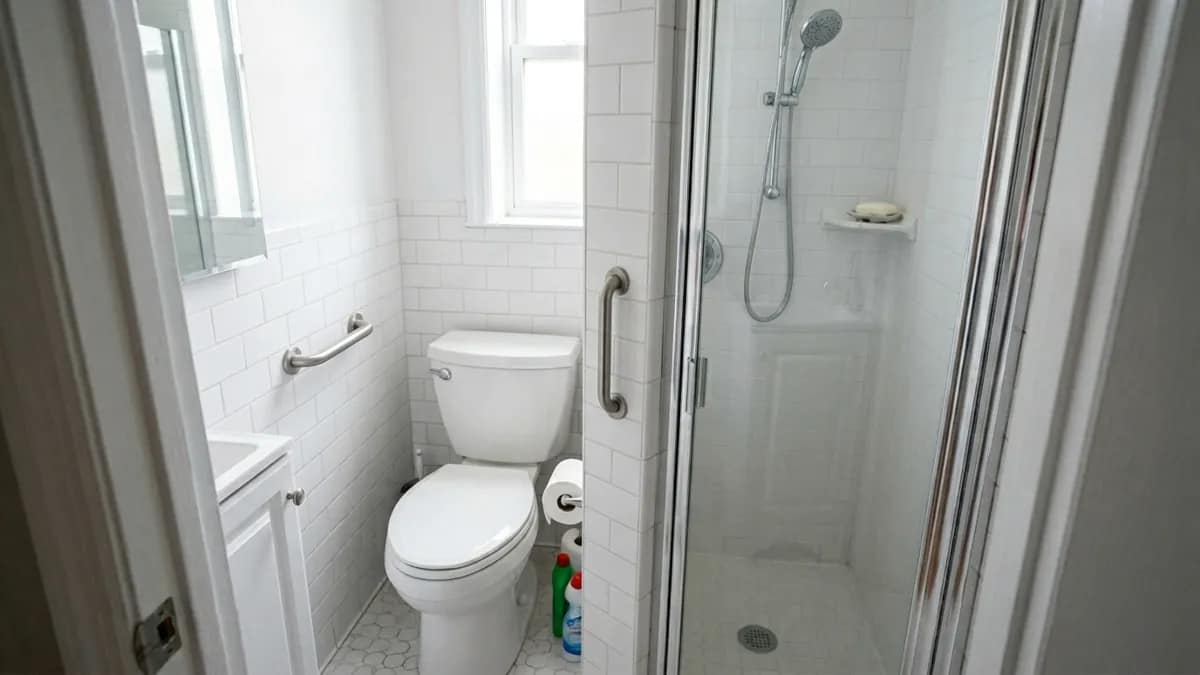
Small bathrooms can be difficult to adapt for safety. Limited wall space, narrow layouts, and fixture placement often make it harder to install standard grab bars without blocking movement or creating clutter.
When choosing the best grab bars for small bathrooms, the challenge is not just adding support but doing it in a way that fits the space. A grab bar that is too long or poorly placed can reduce usability instead of improving safety.
In small bathrooms, compact grab bars combined with strategic placement provide more effective support without limiting movement. The right setup can improve stability while keeping the bathroom functional and easy to use.
Disclosure: As an Amazon Associate, I earn from qualifying purchases. This post may contain affiliate links. If you purchase through these links, I may earn a small commission at no extra cost to you. I only recommend products I would feel comfortable using in my own home. Learn more.
On This Page
- Quick Answer: What Are the Best Grab Bars for Small Bathrooms?
- Which Grab Bar for a Small Bathroom Makes the Most Sense?
- Best Grab Bars for Small Bathrooms by Situation
- Best Grab Bars for Small Bathrooms (Top Picks)
- How to Choose Grab Bars for Small Bathrooms
- Where to Place Grab Bars in Small Bathrooms
- Common Mistakes to Avoid
- When a Fold-Up Grab Bar Makes More Sense
- When Small Bathrooms Need Multiple Grab Bars
- What I Recommend
- Final Thoughts
- FAQ
Quick Answer: What Are the Best Grab Bars for Small Bathrooms?
The best grab bars for small bathrooms are compact, space-efficient bars that provide targeted support without blocking movement, typically using shorter lengths, vertical placement, or multi-bar setups.
- 12–24 inch grab bars fit better in tight spaces
- Vertical placement saves horizontal wall space
- Multiple smaller bars often work better than one long bar
- Foldable options help reduce clutter when not in use
In smaller layouts, the goal is not just adding support but placing it where it can be used comfortably. A well-planned setup with shorter or strategically positioned bars often provides better results than trying to fit a standard long grab bar.
Quick decision guide:
- Very limited space: choose 12-inch or vertical grab bars
- Moderate space: 24-inch bars offer balanced support
- Multiple movement points: use two or more smaller grab bars instead of one long bar
Which Grab Bar for a Small Bathroom Makes the Most Sense?
This table compares the top options based on support level, layout fit, and the trade-offs that matter most in tight bathroom spaces.
| Product | Best Use Case | Support Level | Why It Stands Out | Watch-Out | Action |
|---|---|---|---|---|---|
| Moen 24-Inch Stainless Steel Grab Bar | Most small bathrooms that need one balanced main support bar | High | 24-inch size gives strong coverage without overwhelming compact layouts | Still needs proper wall-mounted installation into studs or approved anchors | Check on Amazon |
| Moen 12-Inch Stainless Steel Grab Bar | Very tight spaces and targeted support points like entries or corners | High | Compact size keeps full-strength support available in narrow wall sections | Shorter bar covers less area and works best for targeted rather than broad support | Check on Amazon |
| Amazon Basics 24-Inch Grab Bar | Budget-conscious buyers who still want dependable support in compact layouts | High | Strong 24-inch everyday support with 500-lb capacity at a lower price | More basic finish and less polished presentation than premium models | Check on Amazon |
| Moen 30-Inch Flip-Up Grab Bar | Tight bathrooms where support is needed but fixed bars would block movement | Moderate | Flip-up design keeps narrow spaces more open when the bar is not in use | Lower weight capacity than fixed grab bars and more specialized use case | Check on Amazon |
| Delta 18-Inch Traditional Grab Bar | Visible bathroom installations where a classic, traditional style matters as much as reliable support | High | Traditional Venetian Bronze finish adds a decorative touch while providing up to 450 lb of support | Higher price for a shorter bar, and the traditional style may not suit every bathroom | Check on Amazon |
Note: Even in small bathrooms, grab bars must be securely mounted into studs or proper anchors to provide reliable support. Improper installation can reduce safety regardless of size.
Best Grab Bars for Small Bathrooms by Situation
Choosing the right grab bar depends on how much support is needed, how the bathroom is used, and how much open wall space is available.
Best overall for most small bathrooms:
The Moen 24-inch stainless steel grab bar is the most balanced choice for compact bathrooms. It provides strong support without taking up as much wall space as a longer bar, making it practical for both shower and toilet areas.
Best for very tight spaces:
The Moen 12-inch grab bar works best where space is extremely limited. It provides targeted support at key points like shower entry areas, narrow wall sections, or corners where a longer bar would not fit.
Best budget option:
The Amazon Basics 24-inch grab bar offers reliable support at a lower price. It’s a practical choice for buyers who want strong basic performance without paying for premium branding or finish details.
Best foldable option:
The Moen 30-inch flip-up grab bar is ideal when a fixed bar would take up too much room. Its fold-up design helps keep the bathroom more open when the support is not actively needed.
Best designer option:
The Delta 18-inch traditional grab bar is a strong fit for visible bathroom areas where a more classic style matters. Its Venetian Bronze finish gives it a decorative look while still providing dependable support in compact layouts.
Below is a closer look at each recommended grab bar, including how they perform in real-life use and which situations they are best suited for.
Best Grab Bars for Small Bathrooms (Top Picks)
BEST OVERALL
Moen 24-Inch Stainless Steel Grab Bar
This is the best overall pick because it gives most small bathrooms the strongest balance between support and space efficiency. The 24-inch length is long enough to feel useful in daily use, but short enough to fit compact shower and toilet areas without making the wall feel crowded.
Best for: Most users who need one primary grab bar in a small bathroom and want strong support without using an oversized bar.
Watch-outs: It still needs proper wall-mounted installation, so the bar only performs as well as the mounting setup behind it.
Why it stands out:
- 24-inch length fits compact layouts without feeling too short
- Supports up to 500 lbs when properly installed
- Stainless steel construction is durable and corrosion-resistant
- ADA-compliant design from a trusted grab bar brand
A strong default choice when you want one grab bar that fits a small bathroom without overcomplicating the setup.
BEST COMPACT OPTION
Moen 12-Inch Stainless Steel Grab Bar
This is the best compact choice for very tight small-bathroom layouts. It gives you the same general strength and quality feel as a larger Moen bar, but in a much shorter format that works better at entry points, corners, and narrow wall sections.
Best for: Very tight spaces where a standard-length grab bar would be too large or would interfere with nearby fixtures.
Watch-outs: The shorter length limits how much hand coverage you get, so it works better for targeted support than for broader movement.
Why it stands out:
- Compact 12-inch size fits highly targeted support zones
- Supports up to 500 lbs when properly installed
- Stainless steel construction keeps it durable despite the smaller size
- Useful when space limits matter more than full-length grip coverage
A good fit when support is needed in one exact spot rather than across a longer section of wall.
BEST BUDGET OPTION
Amazon Basics 24-Inch Grab Bar
A practical budget pick for buyers who want strong basic support in a small bathroom without paying for a premium brand finish. It fills the same general role as the Moen 24-inch bar, but with more value-focused positioning.
- 24-inch length works well in many compact layouts
- Supports up to 500 lbs when properly installed
- Strong budget value for a fixed stainless steel grab bar
Best for: Budget-conscious buyers who still want dependable support in a compact bathroom.
BEST FOLDABLE OPTION
Moen 30-Inch Flip-Up Grab Bar
This is the best foldable option for small bathrooms because it gives support when needed, then gets out of the way when it is not. That makes it especially useful in tighter walkways or toilet-area setups where a fixed bar could make the space feel more crowded all the time.
Best for: Small bathrooms where support is needed, but a permanently extended bar would interfere with movement.
Watch-outs: Its 300-lb rating is lower than many fixed grab bars, so it is better viewed as a space-saving specialty option rather than the strongest all-purpose choice.
Why it stands out:
- Flip-up design helps keep tight spaces more open when the bar is not in use
- Textured grip adds control during use
- Useful near toilets or narrow shared-bathroom walkways
- Good solution when space management matters as much as support
Best when the space feels cramped with fixed hardware left extended all the time.
BEST DESIGNER OPTION
Delta 18-Inch Traditional Grab Bar
A strong pick for visible bathroom areas where a classic, traditional design matters almost as much as support. Its Venetian Bronze finish adds a more decorative touch while still providing dependable safety support in compact spaces.
- Supports up to 450 lbs
- Classic Venetian Bronze finish adds a more decorative look
- 18-inch size works well in compact bathroom layouts
- Suitable for horizontal, vertical, or angled installation
Best for: Style-conscious bathrooms where the grab bar will remain visible and a classic finish matters.
How to Choose Grab Bars for Small Bathrooms
Choosing grab bars for a small bathroom requires balancing safety with available space. The goal is to provide support without limiting movement.
Here are the key factors to consider:
How to measure clearance before choosing a bar:
Measure the usable wall space first, not just the total wall width. Look at how much clear area is left once you account for corners, trim, shower doors, nearby fixtures, and the way the person will actually move through the bathroom.
A grab bar may technically fit on the wall but still be the wrong choice if it crowds the toilet area, blocks part of the entry, or forces the user to reach awkwardly. In a small bathroom, the best bar is the one that supports movement without making the space harder to use.
Size and Length
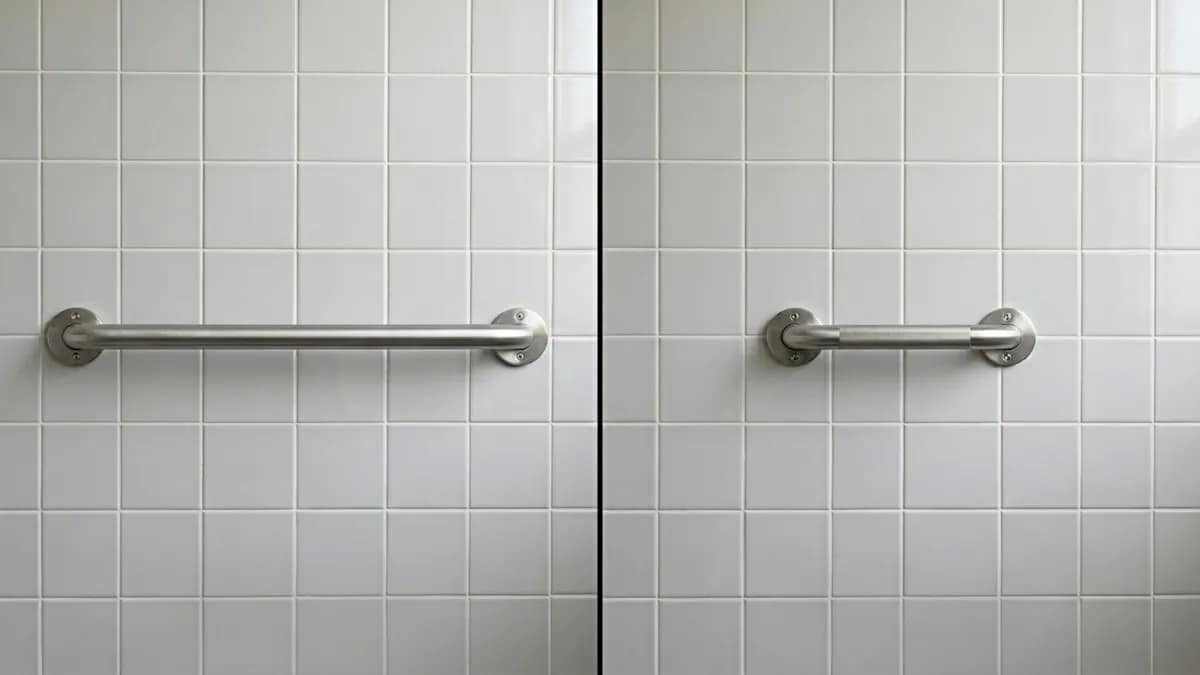
Shorter grab bars are generally more effective in tight layouts. A 12-inch or 24-inch bar can provide support without taking up unnecessary wall space.
Example:
Near a shower entry or beside a toilet, a shorter grab bar can provide targeted support exactly where the hand naturally reaches. In a small bathroom, that often works better than trying to fit one longer bar that extends past the real support zone.
If you’re unsure how length affects usability, this guide on what length grab bar should you use explains how to choose the right size for different situations.
Placement Flexibility
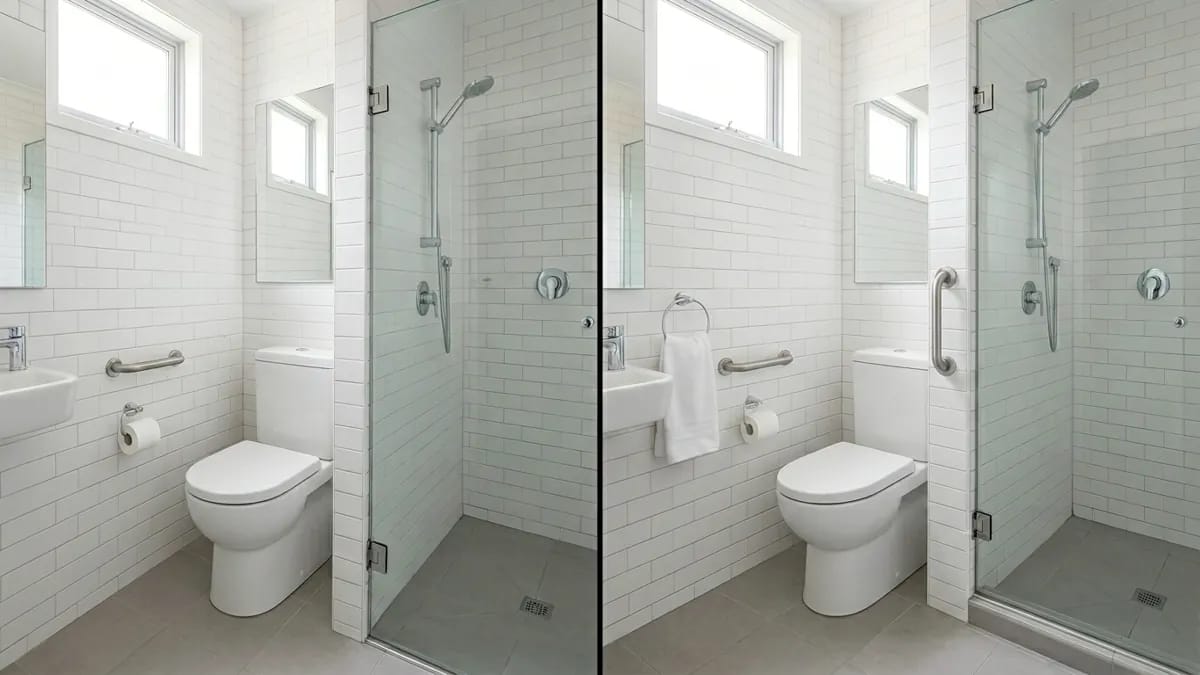
Vertical or angled placement can be more effective than horizontal placement in small bathrooms. This allows support to be added without interfering with other fixtures.
In narrow wall sections, vertical bars can provide support while using less horizontal space.
Mounting Type
Permanent wall-mounted grab bars are the safest option. Even in small bathrooms, secure installation is essential for reliable support.
Proper mounting is especially important when the bar is used for full weight support.
Multi-Bar Strategy
In many small bathrooms, one grab bar is not enough. Using multiple smaller bars can provide support at different points without overcrowding the space.
For example, one bar near the shower entry and another near the main standing area can provide more complete coverage.
Real-Life Layout Example
In a narrow shower, placing a vertical grab bar at the entry and a shorter horizontal bar inside can create a more practical and safer setup than trying to fit a single long bar.
Choosing the right combination of size and placement helps maximize both safety and usability.
For more layout-focused ideas and space-saving setups, this guide on grab bars for small bathrooms explores practical solutions for compact bathrooms.
Where to Place Grab Bars in Small Bathrooms
Placement is critical in small bathrooms because every inch of space matters.
Focus on these key areas:
- Shower entry
Provides support when stepping in and out - Toilet area
Helps with sitting down and standing up - Corners or narrow wall sections
Allows placement without blocking movement - Inside the shower (targeted areas)
Supports turning and repositioning
How to sanity-check the placement:
Before installing the bar, picture the exact movement it is supposed to support. If reaching for it would require stretching, twisting, or stepping around a fixture first, the placement probably needs adjustment.
In a small bathroom, the best location is usually where the hand naturally reaches during entry, turning, sitting, or standing—not just the first open wall area that seems available.
If you want a clearer visual reference for positioning, this guide on grab bar placement diagram shows how different placements work in real bathroom layouts.
Common Mistakes to Avoid
Small bathrooms increase the risk of poor placement decisions. Avoiding these mistakes can make a significant difference.
Here are the most common issues to watch for:
- Using grab bars that are too long
Can block movement or interfere with fixtures - Blocking walking or standing space
Reduces usability - Incorrect placement
A poorly placed bar may not be usable when needed - Relying on a single grab bar
Often not enough in tight layouts
These issues usually become noticeable during real use, especially when space is limited.
When a Fold-Up Grab Bar Makes More Sense
A fold-up grab bar makes more sense when a fixed bar would provide useful support but also get in the way the rest of the time.
This is most helpful in situations like:
- Narrow toilet areas
where a permanently extended bar could crowd the walking path - Shared bathrooms
where support is needed for one user but the space still needs to stay open for others - Tight layouts with frequent movement
where leaving a fixed bar extended would make the room feel more cramped - Bathrooms where space management matters as much as support
especially when the bar is only needed during certain movements
A fold-up bar is usually the better choice when the challenge is not just adding support, but adding it without making a small bathroom harder to move through.
That said, fold-up bars are more specialized than standard fixed grab bars. If maximum support and simplicity matter more than saving space, a fixed bar is often still the stronger option.
When Small Bathrooms Need Multiple Grab Bars
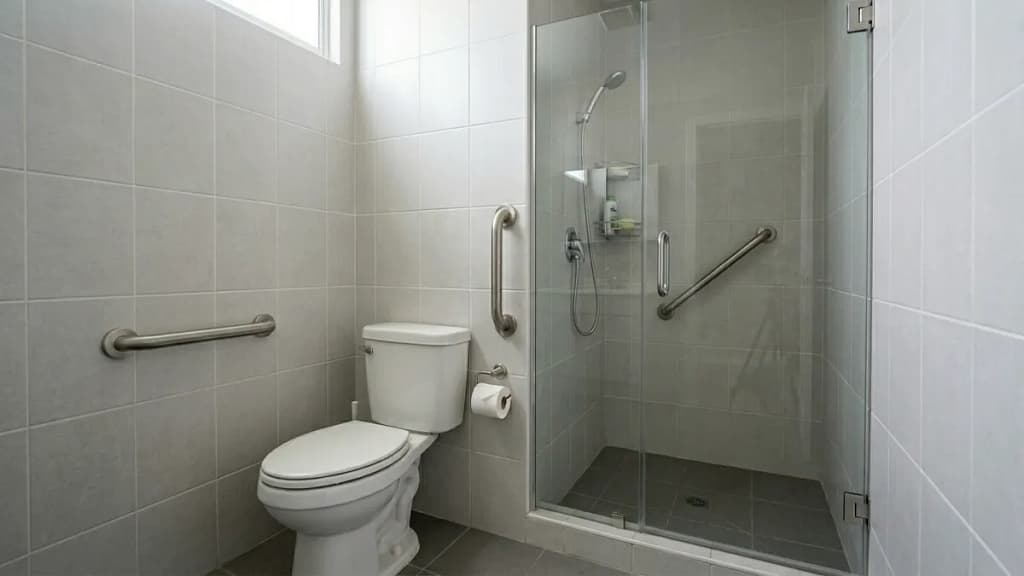
In small bathrooms, a single grab bar is often not enough to provide safe and consistent support.
This is most common in situations like:
- Limited wall space
Prevents using longer grab bars - Multiple movement points
Entry, turning, and standing all require support - Tight layouts
Make repositioning more difficult
Example:
In a narrow shower, one grab bar may not provide support during both entry and movement. A vertical bar at the entry plus a second bar inside the shower can create a more practical support path than expecting one longer bar to handle every movement.
In many cases, multiple smaller grab bars provide better coverage than a single longer bar.
If you’re unsure how many bars are needed for a safe setup, this guide on how many grab bars does a bathroom need explains how to determine the right number based on your layout.
What I Recommend
For most small bathrooms, the Moen 24-inch stainless steel grab bar is the strongest overall choice. It provides reliable support without taking up too much wall space, which makes it easier to use in compact layouts where larger bars can feel intrusive.
If the bathroom is especially tight, a shorter grab bar like the Moen 12-inch model can work better at entry points or narrow support zones. In layouts where a fixed bar would block movement, a foldable option can also make the setup more practical.
The most effective approach is usually to choose compact grab bars based on how the space is actually used, rather than trying to fit one oversized bar into a small room.
Final Thoughts
Small bathrooms require a more precise approach to safety, where both placement and grab bar size must align with limited space and real movement patterns.
Using compact grab bars and placing them strategically allows you to improve stability without reducing usability. Even a well-placed short grab bar can make a noticeable difference when used at the right point.
The most effective setups focus on real usage—how the space is used, where support is needed, and how movement happens within the layout. Taking these factors into account leads to a safer and more functional bathroom.
FAQ
Q: What size grab bar is best for a small bathroom?
A: Shorter grab bars, typically 12 to 24 inches, work best because they provide support without taking up too much space.
Q: Is a 12-inch grab bar enough?
A: Sometimes. A 12-inch grab bar can work very well when support is needed at one exact point, such as a shower entry, a corner, or a narrow spot beside a toilet. But if the user needs a longer grip area for movement, turning, or more continuous support, a 24-inch bar is often the better choice when space allows.
Q: Can you install grab bars in a small bathroom?
A: Yes, but placement is important. Using smaller or vertical grab bars helps fit them into tight layouts without blocking movement.
Q: Is one grab bar enough in a small bathroom?
A: In many cases, no. Multiple smaller grab bars often provide better support than a single longer bar.
Q: Are vertical grab bars better for small bathrooms?
A: Vertical grab bars can be more space-efficient and are useful in narrow wall sections or near entry points.
