
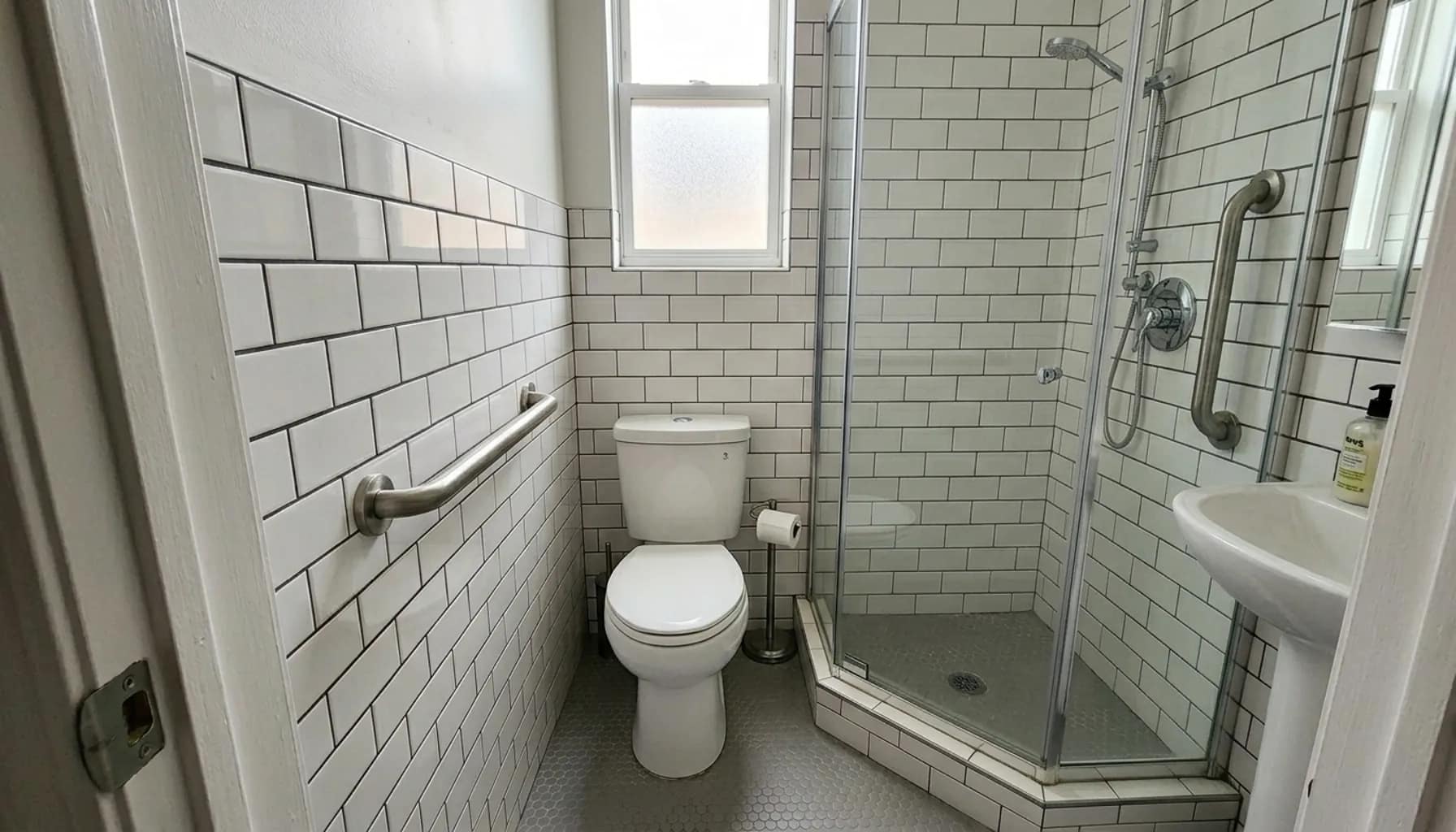
Small bathrooms can present unique safety challenges. Limited space, tight layouts, and restricted movement paths can make everyday tasks more difficult and increase the risk of slips or loss of balance.
Standard grab bar setups do not always work well in compact spaces. Placement needs to be more precise, and the size and type of grab bar must match the layout.
Using the right approach to grab bars for small bathrooms can help improve stability without overcrowding the space. Careful selection and positioning are key to maintaining both safety and usability.
For a broader overview of how grab bars improve safety and how they are used in different setups, see grab bars for elderly.
Disclosure: As an Amazon Associate, I earn from qualifying purchases. This post may contain affiliate links. If you purchase through these links, I may earn a small commission at no extra cost to you. I only recommend products I would feel comfortable using in my own home. Learn more.
On This Page
- Why Small Bathrooms Require Different Grab Bar Planning
- Best Types of Grab Bars for Small Bathrooms
- Where to Place Grab Bars in a Small Bathroom
- Space-Saving Placement Strategies
- Do Grab Bars Make Small Bathrooms Feel Smaller?
- Common Mistakes in Small Bathrooms
- How to Choose Grab Bars for Small Bathrooms
- What I Recommend
- FAQ
- Final Thoughts
Quick Answer
Grab bars for small bathrooms are compact or strategically placed support bars designed to improve stability in limited spaces, helping users maintain balance during common movements such as standing, turning, and entering or exiting the shower or bathtub where space constraints make support more critical.
- Use shorter or space-efficient grab bars
- Focus on high-risk areas like the toilet and shower entry
- Choose designs that allow flexible hand positions
- Ensure placement is within easy reach
- Prioritize secure wall-mounted installation
These grab bars are selected and positioned to fit within tight layouts while still providing reliable support. The goal is to improve safety without reducing usable space.
Why Small Bathrooms Require Different Grab Bar Planning
Small bathrooms limit how and where support can be added. Wall space is often restricted, and fixtures are positioned closer together.
This can create situations where standard grab bar lengths or placements interfere with movement. For example, a long horizontal bar may block access or reduce usable space in a narrow area.
Because of this, grab bar planning in small bathrooms needs to focus on efficiency. Each bar should serve a clear purpose and support specific movements.
In many small bathrooms, even a few inches can change how a space functions. A poorly placed grab bar can block movement, while a well-placed one can improve stability without being noticeable.
This is why planning needs to focus not just on adding support, but on how that support fits into daily movement patterns.
Best Types of Grab Bars for Small Bathrooms
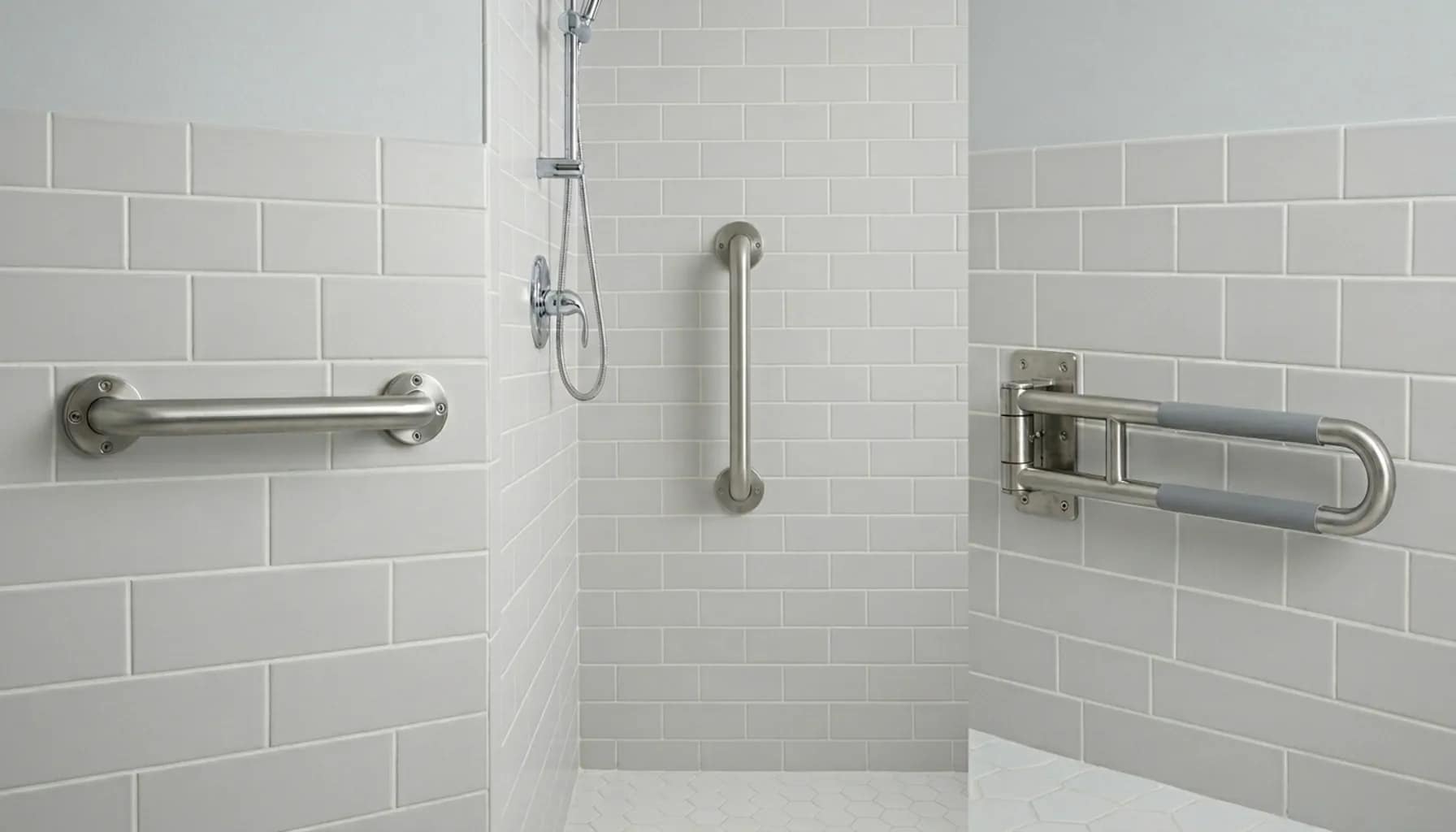
Choosing the right type of grab bar is especially important in compact spaces. The goal is to provide support without interfering with movement or making the area feel crowded.
In small bathrooms, the right design choice directly affects how usable and safe the space feels.
Short-Length Grab Bars (12–18 inches)
Short grab bars are designed for areas where wall space is limited. They provide targeted support without extending too far across the wall.
- Suitable for tight wall sections near toilets or sinks
- Allow precise placement in compact areas
- Reduce the risk of blocking movement paths
These grab bars are most effective when installed at specific support points rather than covering a wide area. They work well in locations where only a small section of wall is available for mounting.
When to use:
Use short grab bars when there is limited wall space or when support is needed in a very specific location, such as next to a toilet or near a sink.
Vertical Grab Bars
Vertical grab bars are useful when horizontal space is limited. They support upward and downward movements such as stepping in and out of a shower.
- Require less horizontal wall space
- Provide natural hand positioning during entry or exit
- Often used near shower entrances
Vertical orientation allows the hand to move along the bar during motion, which can feel more natural in narrow spaces. This makes them especially useful for transitions where body position changes.
When to use:
Use vertical grab bars near shower or tub entry points where movement involves stepping in or out and space does not allow for horizontal placement.
For more details, see where to place vertical grab bars in a shower.
Angled Grab Bars
Angled grab bars combine vertical and horizontal support in one design. This makes them effective in areas where flexibility is needed.
- Support multiple hand positions
- Work well in transitional areas
- Help reduce the need for multiple bars
This type of grab bar allows different grip angles within a single installation. It can support both standing and stabilizing movements without requiring separate bars.
When to use:
Use angled grab bars in areas where multiple types of support are needed but space only allows for one installation, such as between a toilet and a nearby wall or inside compact showers.
If you want to understand how angled designs compare with straight options, see angled vs straight grab bars.
Folding / Flip-Up Grab Bars
Folding grab bars are designed to be moved out of the way when not in use. This is especially useful in narrow spaces.
- Commonly installed next to toilets
- Provide support only when needed
- Help maintain open space when folded
These grab bars are particularly useful in shared or multi-use bathrooms. When folded up, they keep the area clear, while still providing support when required.
When to use:
Use folding grab bars next to toilets or in narrow areas where permanent bars would block movement or limit access.
If you are considering folding grab bars for space saving, see folding grab bars for bathrooms.
Corner Grab Bars
Corner grab bars use the intersection of two walls, making them ideal for compact showers or tight corners.
- Maximize unused wall space
- Provide support from multiple angles
- Suitable for small shower enclosures
By using corner space, these grab bars add support without taking up additional wall area. This makes them effective in layouts where standard placement is not possible.
For a more detailed look at layouts and use cases, corner grab bars for showers can be a practical solution in tight shower setups.
When to use:
Use corner grab bars in small showers or tight corners where traditional horizontal or vertical bars cannot be installed effectively.
Where to Place Grab Bars in a Small Bathroom
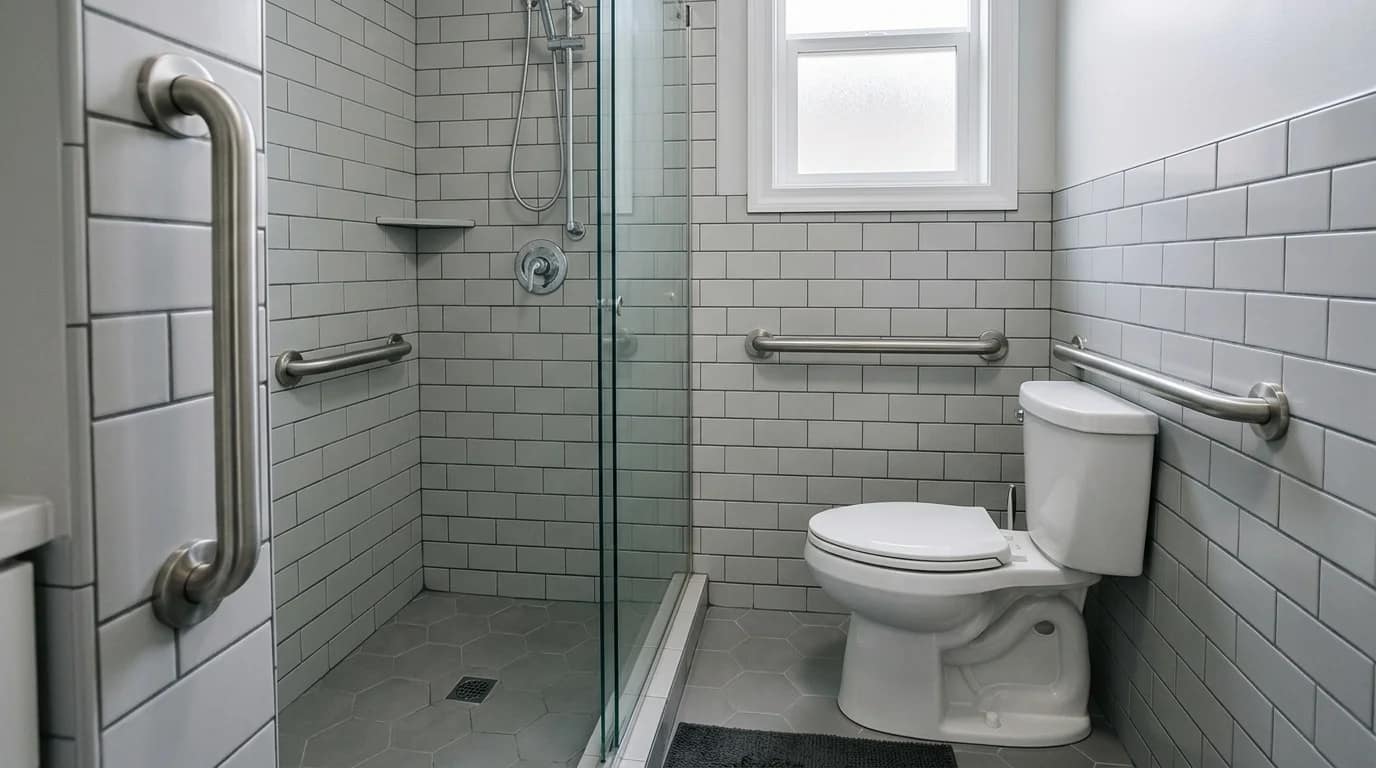
Placement should focus on areas where balance support is most needed, while keeping movement paths clear.
- Shower entry: Vertical or angled bars help support stepping in and out
- Toilet area: Short or folding bars assist with sitting and standing
- Bathtub edge: Compact placement supports safe entry and exit
Even in small bathrooms, proper positioning follows the same core principles. For detailed placement guidance, see where to install grab bars in a bathroom.
Each bar should be placed where it can be reached naturally without stretching or turning awkwardly.
Space-Saving Placement Strategies
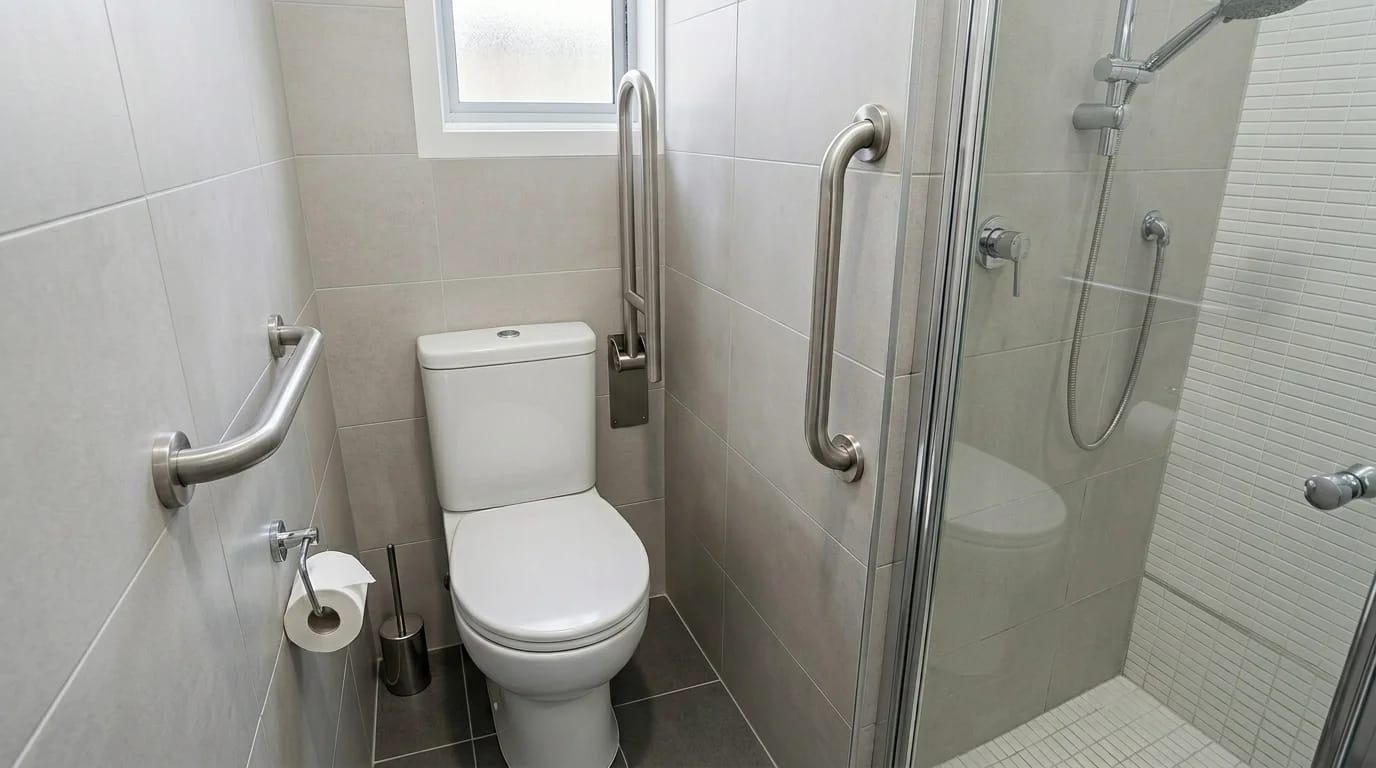
Efficient placement is essential in small bathrooms where every inch affects usability. Poor positioning can create obstacles instead of improving safety.
- Use multi-functional designs, such as angled grab bars, to reduce the need for multiple installations
- Avoid placing grab bars where they interfere with door movement, toilet access, or walking paths
- Focus on key transition points, such as standing up or stepping into the shower
- Maintain clear space around the toilet and shower entry for stable foot positioning
Real-Life Example:
In a narrow toilet area, installing a long horizontal bar may reduce elbow space and make sitting or standing more difficult. A shorter or folding grab bar can provide support without limiting movement.
Do Grab Bars Make Small Bathrooms Feel Smaller?
One common concern is that adding grab bars will make a small bathroom feel even more cramped. In practice, this usually depends on how the bars are selected and placed.
Compact designs, vertical bars, and foldable options can provide support without taking up noticeable space. When positioned correctly, grab bars often blend into the layout rather than stand out.
In many cases, a well-planned setup can actually make the space feel easier to use. Clear support points reduce hesitation during movement, which improves overall comfort and confidence.
Common Mistakes in Small Bathrooms
Using standard-sized grab bars without considering space limitations can create new obstacles instead of improving safety. In small bathrooms, even a few inches of extra length can interfere with movement.
Another common issue is placing bars too close to fixtures, making them difficult to grip or use comfortably during movement.
Over-reliance on temporary solutions, such as suction grab bars, can also reduce reliability, especially in humid environments where suction strength may weaken over time.
Each installation should be evaluated based on available space, movement patterns, and how the bar will actually be used in daily routines.
How to Choose Grab Bars for Small Bathrooms
In small bathrooms, choosing the right grab bar comes down to how well it fits the space without getting in the way of movement. The goal is to provide support without reducing available space.
Length:
Shorter grab bars are typically more practical in compact areas. They allow precise placement without extending into movement zones.
Grip Size:
A diameter that allows a secure and comfortable hold helps maintain control during movement.
Mounting Type:
Wall-mounted grab bars installed into studs provide the most reliable support. This is especially important in tight spaces where stability is critical.
Design Compatibility:
The shape and orientation of the bar should match how it will be used. Vertical and angled designs often work better in limited layouts.
Quick selection approach:
For most small bathrooms, a combination of a short wall-mounted grab bar and a vertical or angled bar near key movement points provides effective support without overcrowding the space.
If you want to explore options that follow these space-saving principles, reviewing grab bars suited for small bathroom layouts can help you compare designs that balance safety and space efficiency.
What I Recommend
Focus on the most important areas first, such as the shower entry and toilet. These locations require the most support during daily use.
Use compact or multi-functional grab bars that fit the space without creating obstacles.
Prioritize secure installation over adding multiple bars. A few well-placed grab bars can provide more effective support than several poorly positioned ones.
Maintaining open space for movement is just as important as adding support.
FAQ
What size grab bars work best in small bathrooms?
Shorter grab bars, typically between 12 and 18 inches, are often more suitable because they fit within limited wall space without interfering with movement.
Can grab bars be installed in tight spaces?
Yes, grab bars can be installed in tight spaces using compact designs, vertical placement, or corner installations that make use of available wall areas.
Are folding grab bars useful in small bathrooms?
Folding grab bars are useful because they provide support when needed and can be moved out of the way to preserve space.
How many grab bars are needed in a small bathroom?
The number depends on the layout, but focusing on key areas such as the shower and toilet is usually sufficient for improving safety.
Final Thoughts
Improving safety in a small bathroom depends more on placement than quantity. Limited space requires each grab bar to serve a clear purpose.
Focusing on high-risk areas, such as the shower entry and toilet, provides the most immediate benefit. Selecting compact or multi-functional designs helps maintain usable space while adding support.
A practical starting point is to install one or two well-placed grab bars in key locations, then reassess if additional support is needed.
In small bathrooms, the right placement matters more than the number of grab bars installed.
