
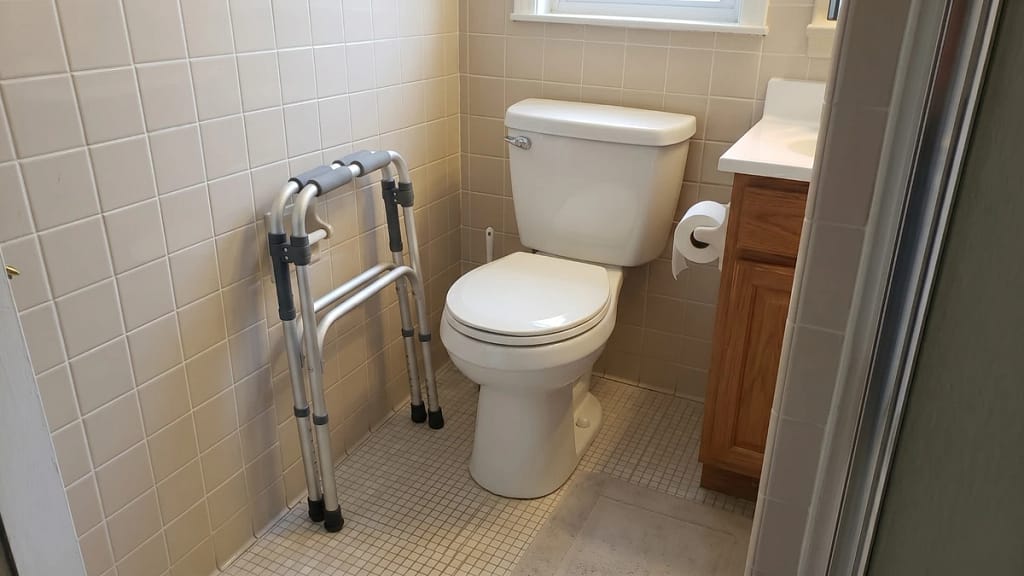
Some bathrooms need toilet support, but not every bathroom has enough space for a frame that stays in place all the time. This is especially common in small bathrooms, shared bathrooms, or temporary recovery situations.
Folding toilet safety frames can help by giving toilet-area support while still allowing more flexibility than a fixed frame. They may be easier to move, store, or adjust when the bathroom has changing needs.
The main decision is whether the folding design still provides enough stability for the person using it. Fit, locking security, support level, and bathroom clearance all need to be checked before relying on one for daily use.
Disclosure: As an Amazon Associate, I earn from qualifying purchases. This post may contain affiliate links. If you purchase through these links, I may earn a small commission at no extra cost to you. I only recommend products I would feel comfortable using in my own home. Learn more.
On This Page
- When Folding Toilet Safety Frames Make Sense
- Folding vs Fixed Toilet Safety Frames
- Small Bathrooms and Folding Toilet Safety Frames
- How to Check Stability Before Using a Folding Frame
- Installation and Setup Still Matter
- How to Choose a Folding Toilet Safety Frame
- When a Folding Frame May Not Be the Best Choice
- Folding Toilet Safety Frames vs Folding Grab Bars
- When It Makes Sense to Compare Folding and Compact Frame Options
- Common Mistakes to Avoid
- What I Recommend
- FAQ
- Final Thoughts
Quick Answer
Folding toilet safety frames are toilet support frames designed to fold, collapse, or move more easily than fixed frames while still providing hand support during sitting and standing. They can work well when space, storage, or shared bathroom access matters, but they still need to feel stable during real transfers.
- They can help in small or shared bathrooms
- They are often easier to move or store than fixed frames
- They still need careful stability checks before regular use
- They may not feel as rigid as some fixed, non-folding frames
- The best choice depends on support needs and bathroom layout
A folding frame is not automatically safer or less safe than a fixed frame. The important issue is whether it locks securely, fits the toilet area, and stays steady when the user pushes down on the handles.
A folding design is most useful when flexibility matters, but it should still meet the same basic standard as any toilet support device: stable, reachable, and predictable during use.
When Folding Toilet Safety Frames Make Sense
Folding toilet safety frames make the most sense when the bathroom needs support, but the setup also needs flexibility.
They may be useful in situations such as:
- shared bathrooms
- small bathrooms
- temporary recovery periods
- caregiver-managed setups
- bathrooms where the frame cannot stay in place all day
- users who need support only during certain parts of the day
Example:
A person may need hand support during morning and evening routines, while another household member needs the bathroom to stay open and less crowded at other times. A folding frame can make that kind of shared use easier if it remains stable when opened.
The main benefit is flexibility. The main caution is that flexibility should not come at the cost of secure support.
Folding vs Fixed Toilet Safety Frames
Folding and fixed toilet safety frames serve similar purposes, but they do not always feel the same during daily use. The better choice depends on how much support the user needs and whether the bathroom must stay flexible for storage, cleaning, or shared access.
← Swipe to see more →
| Decision Point | Folding Frame | Fixed Frame |
|---|---|---|
| Best fit | Shared bathrooms, temporary use, storage needs, or tight layouts | Daily support when the frame can stay in place |
| Main benefit | More flexible and easier to move or store | Often feels more consistent because it does not need to be folded or moved |
| Main caution | Must lock open securely and stay steady during transfers, especially if someone pushes heavily on the handles every day | Needs enough bathroom space to stay in place comfortably, so it is not ideal in a bathroom that is too narrow or shared by multiple people |
A folding frame may be practical for flexible use, while a fixed frame may feel more reassuring for stronger daily support needs. The better choice is the one that feels stable during the actual sit-to-stand movement, not simply the one that fits the room better.
Small Bathrooms and Folding Toilet Safety Frames
Small bathrooms are one of the main reasons people consider folding toilet safety frames. A standard frame can make the toilet area feel crowded, especially when there is a vanity, wall, or cabinet close to the toilet.
In small bathrooms, check:
- side clearance
- front clearance
- handle width
- whether the frame blocks the transfer path
- where the frame will go when folded or moved
- whether other users need access to the toilet
A folding frame may help when the frame needs to be moved out of the way between uses. However, the bathroom still needs enough space for the frame to open fully and sit securely while in use.
Small-bathroom planning should focus on both support and clearance. This guide on toilet safety frames for small bathrooms explains how limited space affects frame choice, handle placement, and daily usability.
A folding design can reduce crowding, but it still needs enough room to function safely when opened.
How to Check Stability Before Using a Folding Frame
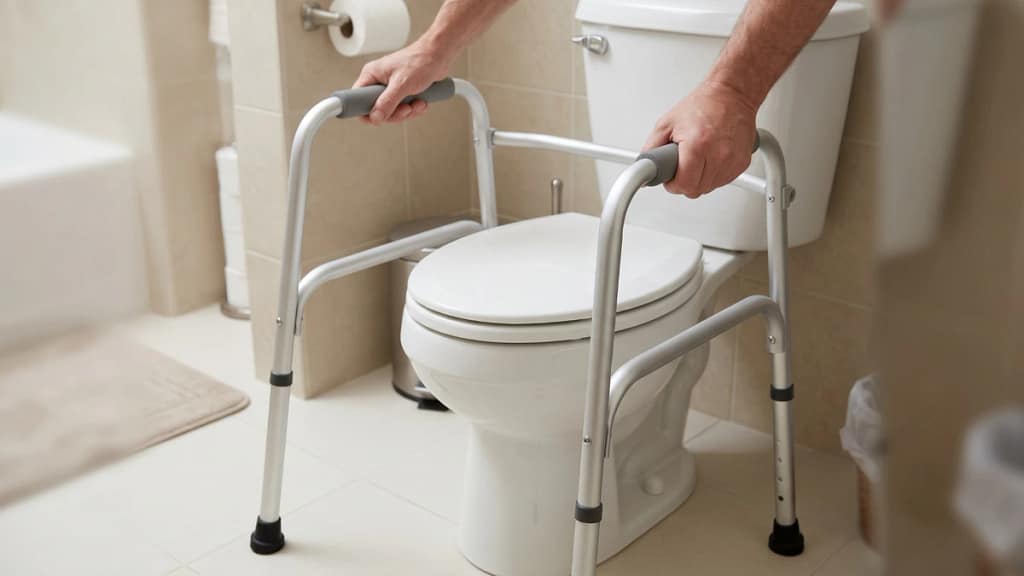
A folding toilet safety frame should be checked carefully before regular use. The folding feature adds convenience, but the frame still needs to stay steady when pressure is applied during sitting and standing.
Before relying on it, check whether:
- the frame opens fully and locks into position
- hinges, folding joints, or locking points feel secure
- both handles are even, reachable, and comfortable to press down on
- the frame sits evenly around the toilet without rocking
- there is enough room for the user’s knees, feet, and transfer path
How to check before use:
Open the frame fully, confirm that the locking points are engaged, then apply light pressure on each handle from the seated and standing direction. The frame should not fold, tilt, slide, rock, or shift out of position. If it moves during this check, do not rely on it for regular transfers until the setup is corrected.
The frame should also be tested during the full movement when it is safe to do so. Sitting down and standing up place different pressure on the frame than a quick hand test from beside the toilet.
If the frame shifts, folds unexpectedly, feels uneven, or makes the transfer path awkward, it should not be treated as ready for regular use.
Installation and Setup Still Matter
A folding design does not remove the need for proper setup. The frame still needs to be positioned evenly around the toilet, adjusted to the user’s reach, and opened in a way that leaves enough room for the full transfer.
Setup should include:
- placing the frame evenly around the toilet
- checking that locks or hinges are fully engaged
- confirming that the handles are reachable
- making sure the frame does not crowd the user’s knees or feet
- testing the frame before daily use
For example, a folding frame may appear ready once opened, but still feel unstable if one side is slightly out of position or if the handles do not line up well with the user’s natural push-off motion.
This is why setup matters as much as the folding feature itself. This guide on how to install a toilet safety frame explains how positioning, adjustment, and stability checks affect daily use.
A folding frame should be easy to manage, but it still needs to be set up with the same care as any other toilet support frame.
How to Choose a Folding Toilet Safety Frame
Choosing a folding toilet safety frame starts with the same basic question as any toilet support device: what problem does it need to solve?
The main factors are:
- bathroom size
- support needs
- folding mechanism
- handle comfort
- weight support
- ease of cleaning
- storage space
- whether a fixed frame may be safer or simpler
The folding mechanism should be easy to use, but it should also feel secure when locked open. Handles should be reachable from the seated position and useful during standing, not just positioned conveniently for storage.
Weight support and stability also matter. A folding frame may be convenient, but if the user pushes heavily on the handles every day, the frame needs to feel rigid enough for that level of use.
For a broader decision process, this guide on how to choose a toilet safety frame explains how support level, fit, bathroom layout, and stability should be weighed together.
The best folding frame is usually the one that solves the space or storage problem without making toilet transfers feel less steady.
When a Folding Frame May Not Be the Best Choice
A folding toilet safety frame may not be the best choice when the user needs stronger, more predictable support every day. In some cases, a fixed frame or another support option may make more sense.
A folding frame may be less suitable when:
- the user pushes down heavily during every transfer
- the frame feels less rigid than needed
- the folding mechanism is difficult to lock or manage
- the user needs support that stays in place all the time
- low toilet height is the bigger problem than side support
For example, if the main issue is that the toilet is too low, a frame alone may not solve the full problem. In that case, the decision may be between added height, side support, or a combination of both. This guide on toilet safety frames vs raised toilet seats explains when support-focused and height-focused options make more sense.
A folding frame works best when the user needs flexible side support. If the main need is stronger daily stability or added toilet height, another setup may be more appropriate.
Folding Toilet Safety Frames vs Folding Grab Bars
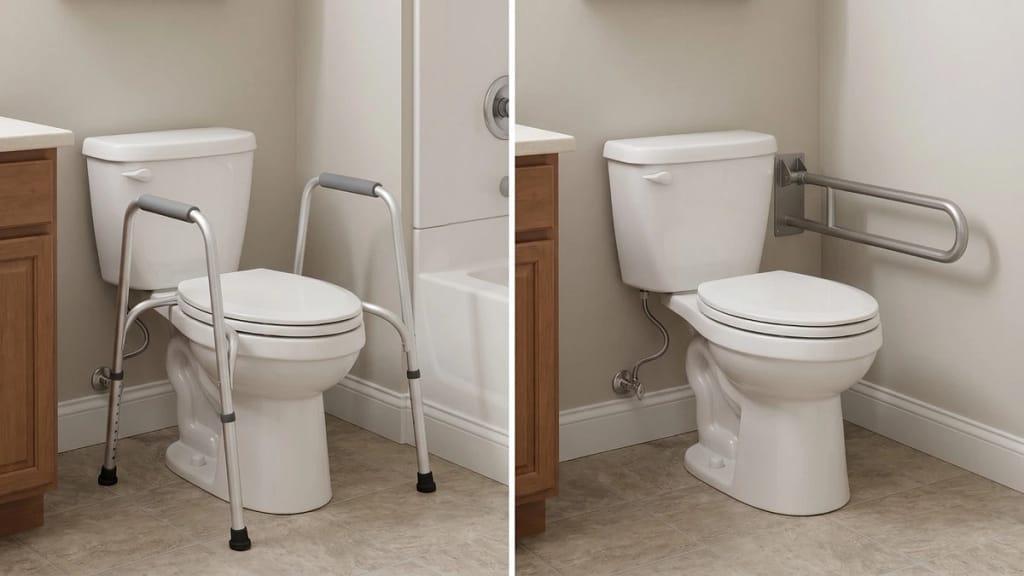
Folding toilet safety frames and folding grab bars both provide bathroom support, but they work in different ways.
A folding toilet safety frame:
- sits around or near the toilet
- provides handles close to the body
- can often be moved or stored more easily
- does not usually require wall mounting
A folding grab bar:
- attaches to the wall
- folds up or away when not in use
- depends on proper wall support and placement
- may provide a stronger fixed support point when installed correctly
The better option depends on the bathroom layout and the user’s transfer pattern. A folding toilet safety frame may work better when close hand placement around the toilet is needed. A folding grab bar may work better when fixed wall support is preferred and the wall structure allows proper installation.
If wall-mounted fold-away support is part of the decision, this guide on folding grab bars for bathrooms explains when that type of support may be useful.
The choice should be based on where the user needs support most during the toilet transfer.
When It Makes Sense to Compare Folding and Compact Frame Options
Comparing folding and compact toilet safety frame options makes sense when a standard frame may be too bulky, difficult to store, or awkward to use in the available bathroom space.
This becomes more useful when:
- the bathroom has limited side clearance
- the frame needs to be moved or stored between uses
- the bathroom is shared by multiple people
- a full-size frame feels too wide or permanent
- the user needs support without making the toilet area feel crowded
At this stage, the goal is not only to find a frame that folds. The better goal is to compare designs that balance support, clearance, storage, and everyday usability.
For readers who need a more space-conscious frame, this guide to the best toilet safety frames for small bathrooms compares options that may work better when a standard frame feels too bulky or difficult to fit.
Comparing options is most useful after the main limitation is clear, whether that limitation is storage, bathroom width, handle placement, or shared access.
Common Mistakes to Avoid
A few common mistakes can make a folding toilet safety frame less useful or less stable than expected.
The most common ones are:
- Choosing folding only for convenience
Storage matters, but the frame still needs to provide enough support. - Ignoring the locking mechanism
The frame should lock securely and stay open during use. - Skipping stability checks
A folding frame should be tested during real sitting and standing. - Not checking bathroom clearance
The frame may fold, but it still needs room when opened. - Using folding support when stronger daily support is needed
Some users may feel safer with a more rigid fixed frame.
Most mistakes happen when folding is treated as the main feature. The more important question is whether the frame supports the user well during the actual transfer.
What I Recommend
A folding toilet safety frame is usually worth considering when space, storage, or shared bathroom access matters. It can be a practical option when the user needs toilet-area support but the frame cannot stay in place all the time.
A good decision process is:
- choose folding only if the frame still feels stable
- check that locks or hinges work securely
- make sure the frame fits the bathroom when open
- choose fixed support if stronger daily stability is needed
- test the frame during real sitting and standing before relying on it
Folding is useful when it solves a space or storage problem without weakening the transfer support the user needs.
The safest choice is the frame that fits the bathroom and stays predictable during regular use.
FAQ
Are folding toilet safety frames safe?
They can be safe when they lock securely, fit the toilet area properly, and feel stable during sitting and standing.
Are folding toilet safety frames less stable than fixed frames?
Not always, but some fixed frames may feel more rigid. The difference depends on design, setup, and how much support the user needs.
Who should use a folding toilet safety frame?
They are often useful for people who need toilet-area support in a small, shared, or temporary bathroom setup.
Do folding toilet safety frames work in small bathrooms?
They can, but the frame still needs enough room when opened and enough clearance for safe transfers.
What should be checked before using one?
Check the locking mechanism, handle reach, frame stability, bathroom clearance, and whether the frame moves during actual sitting and standing.
Final Thoughts
Folding toilet safety frames can be useful in small bathrooms, shared bathrooms, and temporary support situations. They provide more flexibility than many fixed frames, but they still need to fit properly and feel stable during transfers.
The folding feature should be treated as one part of the decision, not the whole reason to choose the frame. Support needs, locking security, bathroom clearance, and daily use all matter.
A folding toilet safety frame works best when it provides the needed support while keeping the bathroom easier to use for everyone who shares the space.
