
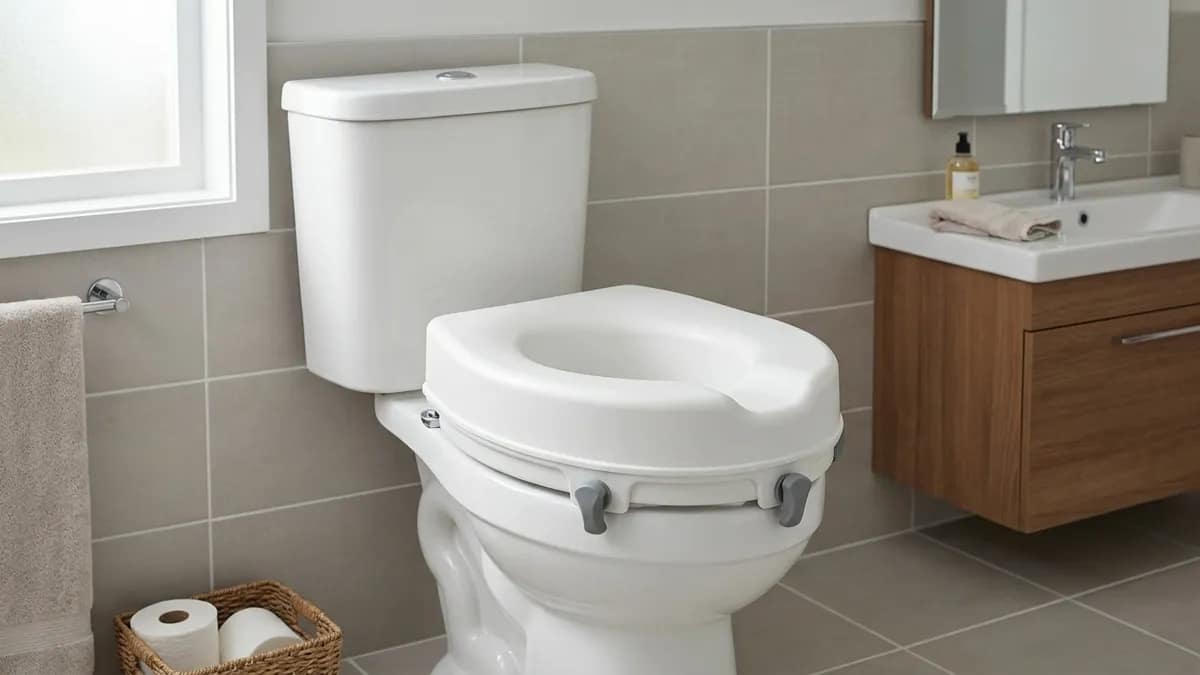
A raised toilet seat is only helpful if it stays stable during use. Even a small amount of movement can reduce confidence and increase the risk of slipping or losing balance.
Understanding how to secure a raised toilet seat properly is essential for making it safe and reliable in everyday use. The process itself is simple, but small mistakes in positioning or tightening can lead to instability.
A correct setup helps the seat remain stable and predictable during everyday use.
Disclosure: As an Amazon Associate, I earn from qualifying purchases. This post may contain affiliate links. If you purchase through these links, I may earn a small commission at no extra cost to you. I only recommend products I would feel comfortable using in my own home. Learn more.
On This Page
Quick Answer
To secure a raised toilet seat properly, place it flat on the toilet, tighten all attachments evenly, and test for movement before use. A correctly secured seat should feel stable from every direction, not just when sitting down.
- Align the seat fully with the toilet bowl
- Tighten clamps or locking mechanisms evenly on both sides
- Avoid overtightening, which can cause misalignment
- Test for movement from side-to-side and front-to-back
- Recheck stability regularly, especially with daily use
Even small movement can affect balance, so proper securing is just as important as choosing the right seat.
Why Properly Securing a Raised Toilet Seat Matters
A raised toilet seat that is not properly secured can shift slightly during use, which affects both safety and confidence.
This is why learning how to secure a raised toilet seat properly is an important part of making the setup safe for daily use.
Common risks include:
- slipping during sitting or standing
- uneven weight distribution
- hesitation or instability during movement
Real-Life Example:
If a seat shifts slightly while sitting down, it can cause hesitation or a sudden adjustment in balance. For seniors or anyone with limited mobility, even a small shift like this can increase the risk of slipping or falling.
If you’re unsure how common this issue is or what causes it, this guide on whether raised toilet seats move or slip explains the main reasons behind instability.
A secure setup removes these risks and makes everyday use feel more controlled.
Step-by-Step: How to Secure a Raised Toilet Seat
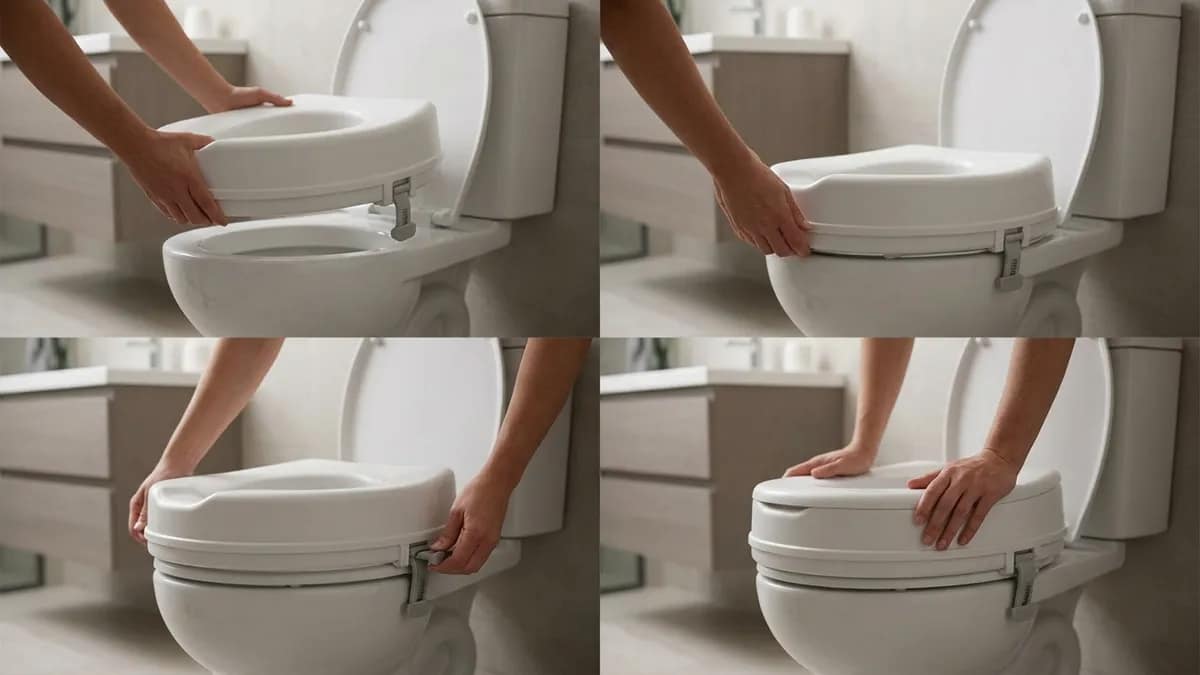
Understanding how to secure a raised toilet seat properly becomes easier when the process is broken into a few simple steps.
Step 1: Position the Seat Correctly
Place the seat evenly on the toilet bowl so it sits flat without gaps. If the seat is slightly off-center, it may shift during use even if tightened properly.
Step 2: Align All Contact Points
Check that all clamps, brackets, or contact surfaces are fully aligned with the toilet. Misalignment at this stage often leads to uneven pressure later.
Step 3: Tighten Attachments Evenly
Tighten each side gradually instead of fully tightening one side first. This helps distribute pressure evenly and prevents tilting.
Step 4: Test Stability from Multiple Angles
Apply gentle pressure forward, backward, and side-to-side. A properly secured seat should not shift or feel loose in any direction.
For example, a seat that feels stable when pressed straight down may still move slightly from the side if tightening was uneven. Testing from different angles helps catch these small issues early.
If you want a deeper understanding of how setup affects stability, this guide on how to install a raised toilet seat explains the full process in detail.
Following these steps ensures the seat feels stable and predictable during use.
How Tight Should a Raised Toilet Seat Be?
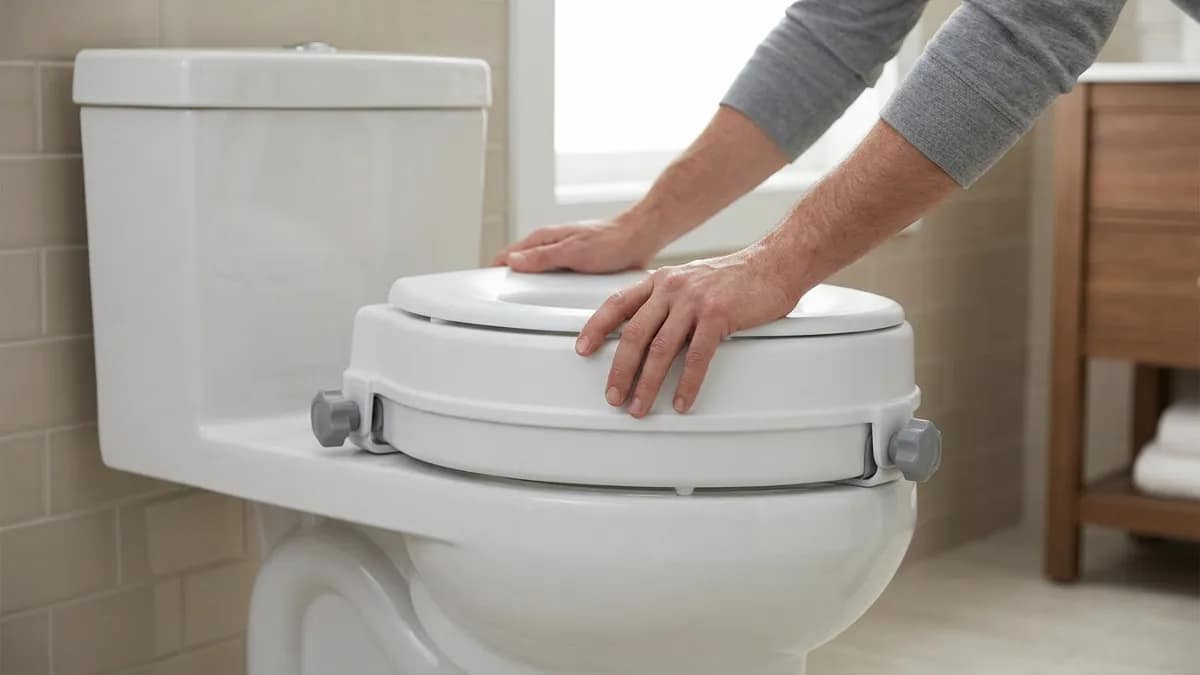
A raised toilet seat should be tight enough to prevent movement, but not so tight that it causes stress on the attachment points.
Signs of correct tightness:
- the seat does not shift when weight is applied
- the attachment feels firm but not forced
- adjustments can still be made without difficulty
Signs it may be too tight:
- parts feel strained or difficult to adjust
- the seat becomes slightly misaligned
- removal becomes unnecessarily difficult
For example, if a seat is tightened too much on one side, it may feel secure at first but slightly shift when weight is applied from a different angle.
On the other hand, a loosely tightened seat may feel stable when sitting but move when standing up. The right balance is a firm, even hold that stays stable under normal movement.
The goal is to create a setup that feels secure without creating tension in the components.
If removal is also part of your routine, this guide on whether raised toilet seats can be removed easily explains how different attachment styles affect how quickly the seat can be taken off and reinstalled.
Common Mistakes to Avoid
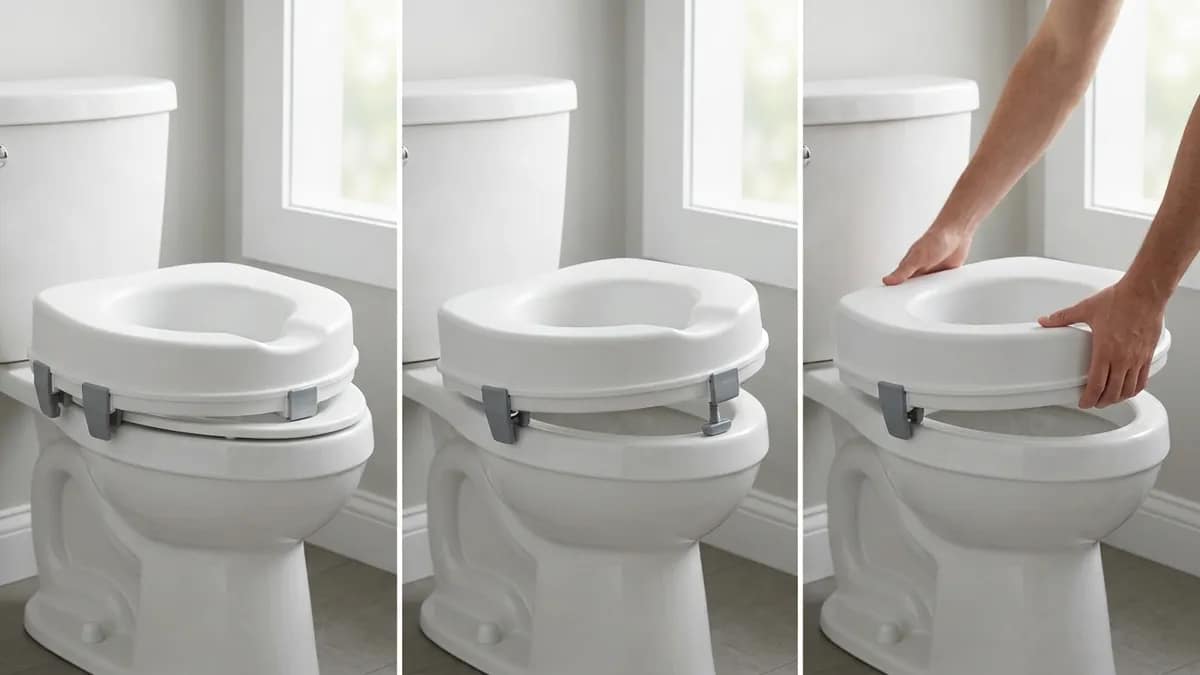
Small setup mistakes can lead to noticeable instability, even when the seat seems properly installed.
Common issues include:
- Uneven tightening
Tightening one side more than the other can cause the seat to tilt slightly. - Incorrect positioning
If the seat is not fully aligned with the bowl, it may shift during use. - Skipping the stability test
Not checking the seat before use can lead to surprises during movement. - Overtightening for extra security
This can actually reduce stability by creating uneven pressure points.
For example, tightening one clamp fully before adjusting the other often leads to a slight tilt that is not immediately obvious but becomes noticeable during use.
Avoiding these small mistakes helps create a more reliable and comfortable setup.
How to Keep a Raised Toilet Seat Secure Over Time
Even a well-secured seat can loosen slightly over time with regular use.
To maintain stability:
- check attachments periodically
- clean contact areas to prevent slipping
- readjust clamps if movement develops
Real-Life Example:
A seat used multiple times a day may gradually loosen without being noticeable at first. A quick weekly check can prevent small shifts from turning into stability issues.
Choosing the right design from the start also helps maintain stability. This guide on how to choose a raised toilet seat explains what features improve long-term performance.
If regular checks and adjustments still do not resolve the problem, the issue may involve fit, support needs, or overall setup rather than attachment alone.
When a Raised Toilet Seat Still Feels Unstable
In some cases, proper installation alone does not fully solve stability issues.
This may happen when:
- The toilet shape does not match the seat
- The base surface is not ideal
- Additional support is needed during movement
For example, if you feel the need to hold onto something while sitting down or standing up, the issue is no longer just the seat—it’s the lack of support during movement.
In these situations, adding grab bar support can significantly improve safety and confidence. If you’re unsure when added support becomes necessary, this guide on when seniors should add grab bars explains the signs that extra support is needed.
In some cases, the problem is not how tightly the seat is secured, but whether the seat and toilet are compatible in the first place. A model that does not match the toilet shape or contact points may continue to feel unstable even after repeated adjustment.
When stability depends on more than just the seat, combining solutions often creates a safer and more reliable setup.
What I Recommend
The most reliable setup starts with a seat that fits the toilet correctly and is secured evenly before regular use.
If extra control is needed during sitting and standing, raised toilet seats with built-in handles are often a better option than basic models. The handles provide a more stable point of support, which can improve safety and make movement feel more controlled.
- Focus on correct positioning before tightening
- Tighten evenly rather than aggressively
- Always test stability before regular use
- Choose designs that match your stability needs
If you’re comparing options that provide better control during movement, this guide to the best raised toilet seats with handles explains how different designs improve stability in real use.
The goal is not just to secure the seat, but to create a setup that feels stable and predictable every time you use it.
FAQ
How tight should a raised toilet seat be?
It should be tight enough to prevent movement, but not so tight that it strains the components.
Why does a raised toilet seat still move?
This can be caused by uneven tightening, poor alignment, or an incompatible fit.
Can all raised toilet seats be secured the same way?
No, different models use different attachment systems.
Do I need tools to secure a raised toilet seat?
Many models are tool-free, but some require basic adjustments.
How often should I check stability?
It’s a good idea to check periodically, especially with regular use.
Final Thoughts
Securing a raised toilet seat properly is a simple process, but it plays a critical role in overall safety.
A stable setup reduces hesitation, improves confidence, and allows movements like sitting and standing to feel more controlled and predictable.
Most stability issues come from small setup details rather than the seat itself. Taking the time to position, tighten, and test the seat correctly helps prevent those issues before they become noticeable.
With the right setup, a raised toilet seat becomes not just easier to use, but safer and more reliable in everyday situations.
