
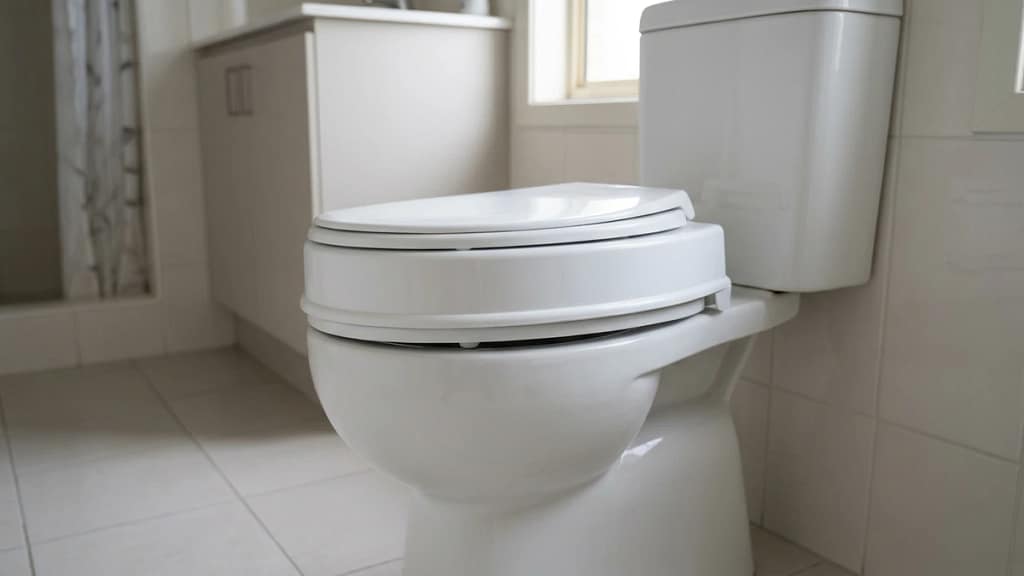
A raised toilet seat should make bathroom use feel easier, not less secure. But one of the most common concerns people have is whether the seat might shift, wobble, or slip during use.
If you are wondering do raised toilet seats move or slip, the honest answer is that some can—especially when the fit is poor, the seat is not secured correctly, or the design does not match the user’s needs. At the same time, not every small amount of movement means the setup is unsafe.
This guide explains why raised toilet seats may move, when that movement becomes a real problem, and what to do if the seat does not feel stable in daily use.
Disclosure: As an Amazon Associate, I earn from qualifying purchases. This post may contain affiliate links. If you purchase through these links, I may earn a small commission at no extra cost to you. I only recommend products I would feel comfortable using in my own home. Learn more.
On This Page
- Why Raised Toilet Seats Move or Slip
- When Movement Is a Real Problem
- How to Check If a Raised Toilet Seat Feels Secure
- Common Reasons a Raised Toilet Seat Feels Unstable
- How to Make a Raised Toilet Seat More Stable
- When a Basic Raised Toilet Seat Is Not Enough
- How to Choose a Raised Toilet Seat That Feels More Secure
- When Support Around the Toilet Matters More Than Height
- What I Recommend
- FAQ
- Final Thoughts
Quick Answer
Yes, some raised toilet seats can move or slip, especially when they do not fit the toilet properly or are not secured well.
- A poor fit is one of the most common causes of movement
- Loose attachment points can make a seat feel unstable during use
- Toilet shape and seat design do not always match perfectly
- Shifting weight while sitting or standing can expose weak setup points
- Noticeable slipping should not be ignored
In practical terms, a raised toilet seat should feel steady during normal movement. A little settling can happen in some setups, but repeated shifting, rocking, or sliding is a sign that something is wrong.
Why Raised Toilet Seats Move or Slip
Raised toilet seats usually move or slip for a few broad reasons. In most cases, the problem comes down to fit, attachment, or how force is applied during real use.
The main causes are:
- the seat does not fit the toilet shape correctly
- the attachment system is not holding the seat firmly enough
- the seat is not sitting evenly on the toilet
- the user’s movement during sitting or standing places more force on one side than the setup can handle well
Understanding those broad causes makes it easier to spot whether the problem is a simple setup issue or a sign that the current seat is not the right match.
Example:
A raised toilet seat may look stable when no one is using it but still shift when the user pushes up more heavily from one side while standing. That is why stability has to be judged by real use, not just by how the setup looks at a glance.
When Movement Is a Real Problem
Not all movement means the setup is immediately unsafe, but noticeable slipping or rocking should always be taken seriously.
A raised toilet seat becomes a real concern when:
- it shifts side to side during normal use
- it slides forward or backward
- it rocks when weight is applied unevenly
- the user starts hesitating because the setup feels uncertain
For example, a seat that settles slightly when first used may not be a major issue. But a seat that keeps shifting during sitting or standing can affect confidence and increase the risk of a bad transfer.
This is also where the problem becomes a broader safety question, not just a comfort issue. If you want to understand that bigger picture, this guide on whether raised toilet seats are safe for seniors explains when these seats work well and when movement becomes a real risk.
A good rule is simple: if the seat feels unpredictable during regular use, the problem should be corrected rather than ignored.
How to tell whether the movement is a real safety issue:
Notice when the movement happens and what triggers it. If the seat only settles slightly at first but then stays steady, the issue may be minor. If it keeps shifting during sitting, standing, or uneven weight transfer, it should be treated more seriously.
The key question is not whether there is any movement at all. It is whether the setup still feels stable and predictable during normal daily use.
How to Check If a Raised Toilet Seat Feels Secure
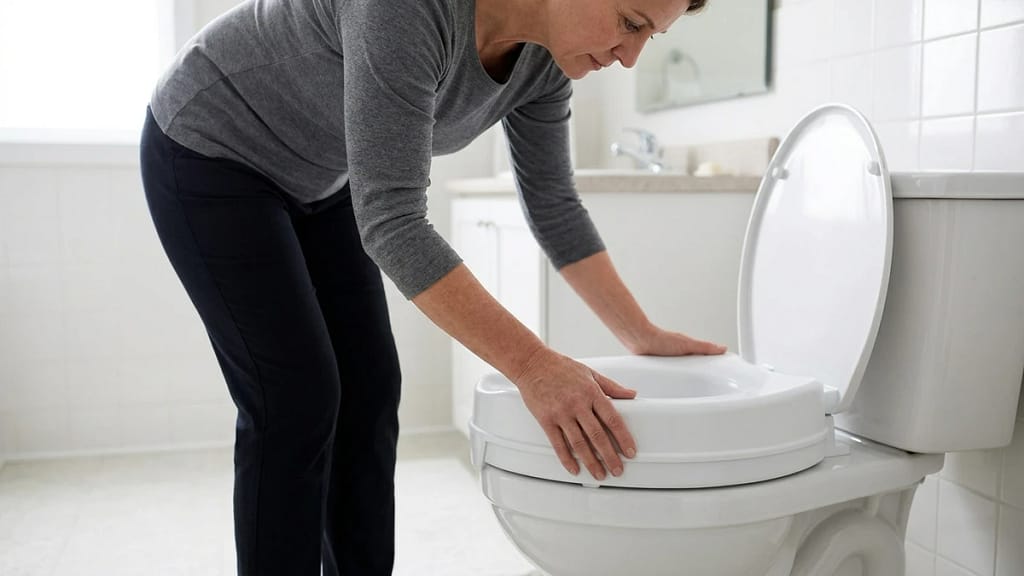
The best way to judge stability is to test the seat in a simple, practical way before treating it as part of a daily routine.
Check for:
- front-to-back movement
- side-to-side shifting
- visible rocking when pressure is applied
- changes in how the seat feels when sitting down or standing up
A basic check can look like this:
- press down gently from different angles
- sit carefully and notice whether the seat stays flat
- pay attention to whether one side feels less stable than the other
- repeat the check after a few uses if needed
For example, a raised toilet seat may seem secure when looked at from above but still move slightly when the user leans to one side or pushes up with more force during standing. That kind of real-use testing matters more than appearance alone.
If you are not sure what a properly secured setup should feel like, this guide on how to secure a raised toilet seat properly explains what to look for and how to reduce unnecessary movement.
The goal is not perfection in theory. It is a setup that feels stable and predictable when the person actually uses it.
Common Reasons a Raised Toilet Seat Feels Unstable
A raised toilet seat can feel unstable even when the basic idea is right. In many cases, the real problem is a correctable mismatch in fit, positioning, or setup rather than the concept of using a raised seat itself.
The most common ones are:
- using the wrong seat for the toilet shape
- installing it unevenly
- not tightening the attachment enough
- choosing a model that does not match the user’s support needs
For example, a basic seat may technically fit the toilet and still feel unreliable if the user needs more stability while standing. In that situation, the problem is not just how the seat is attached. It is also whether the design is right for the person using it.
Setup mistakes also matter more than many people expect. If you want to see how installation affects stability, this guide on installing a raised toilet seat correctly explains why proper positioning and attachment make such a difference.
In other words, this kind of instability is often not random. It usually points to a specific setup or product-match problem that can be identified and corrected.
How to Make a Raised Toilet Seat More Stable
If a raised toilet seat does not feel secure, the next step is to troubleshoot the setup in a practical way rather than simply hoping it will feel better over time.
Start with:
- rechecking that the seat matches the toilet shape
- making sure the seat sits evenly on the toilet
- tightening or repositioning the attachment system
- testing it again under normal movement
How to test whether the adjustment actually worked:
After making any change, test the seat again the way it is really used. Press from different angles, sit down carefully, and pay attention to whether one side still feels less secure than the other.
If the seat still feels questionable during normal movement, the issue is probably not solved yet. A setup should feel predictably stable, not just slightly better than before.
It also helps to ask whether the issue is minor or structural. A small adjustment may solve the problem if the seat is basically right for the toilet and the user. But if the setup feels questionable every time it is used, the problem may be the product choice rather than the installation alone.
The key is not to keep tolerating a setup that feels “almost okay.” Stability should feel obvious, not uncertain.
If those adjustments still do not solve the problem, the issue may be bigger than setup alone. At that point, it makes sense to ask whether the current seat is the right type of support in the first place.
When a Basic Raised Toilet Seat Is Not Enough
Sometimes movement is a sign that the problem is bigger than a simple fit issue. In those cases, a basic raised toilet seat may not be the right long-term solution.
That becomes more likely when:
- the user needs higher weight support
- the user feels unsteady during transfers
- the seat already feels borderline even after careful setup
- the movement issue keeps returning even after adjustments
For example, a standard raised toilet seat may seem workable at first but still feel narrow, less stable, or less reassuring when used several times a day by someone who needs a sturdier setup.
In that kind of situation, it often makes more sense to move to a stronger design rather than keep trying to fix a seat that is only a partial match.
If that sounds familiar, this roundup of raised toilet seats for heavier users compares stronger options built for better support and stability.
A seat that keeps feeling only borderline stable is usually a sign that the setup needs to change, not just be adjusted again.
How to Choose a Raised Toilet Seat That Feels More Secure
A more secure raised toilet seat usually starts with choosing the right type of product in the first place.
Look for:
- a seat that matches the toilet shape
- an attachment method that feels stable, not flimsy
- a height that helps without making the setup awkward
- enough support for the user’s real movement needs
For example, a product that looks fine in a listing may still be the wrong choice if it is too basic for the user’s balance needs or too bulky for the available bathroom space.
That is why a raised toilet seat that fits the toilet and the user properly is much more likely to feel stable in daily use.
If you want to evaluate the full decision more systematically, this guide on how to choose a raised toilet seat explains how fit, support, and daily use should be weighed together.
The most secure setup is usually the one that matches the person, the toilet, and the bathroom space all at once.
When Support Around the Toilet Matters More Than Height
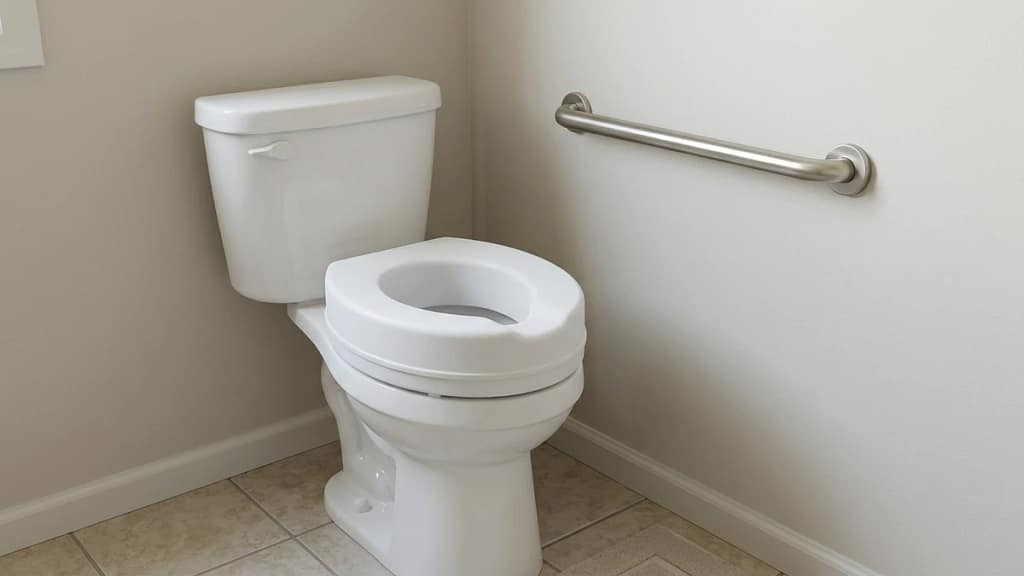
Sometimes the raised seat itself is doing its job, but the transfer still feels unsafe because there is nothing stable to hold during sitting down or standing up. In those cases, the real problem is not seat height alone. It is the lack of support around the toilet.
This is often the case when:
- the user can sit down more easily with added height
- but still feels unsteady during standing
- or reaches for walls, counters, or nearby surfaces for balance
Example:
A senior may say the raised seat helps with bending, but the movement still does not feel safe because there is nothing stable to hold during the transfer. In that kind of situation, the issue is no longer just about height. It is about support during movement.
When that happens, it helps to think beyond the seat itself. This guide on whether grab bars are safe for seniors explains how fixed support can improve confidence and control when height alone is not enough.
A raised toilet seat can solve one part of the problem, but support around the toilet may be what makes the full movement feel secure.
What I Recommend
If a raised toilet seat moves or slips in a noticeable way, it should be treated as a setup problem that needs attention, not as something to simply get used to.
A practical approach is:
- recheck fit and installation first
- test the seat during real movement, not just by looking at it
- stop using clearly unstable setups
- move to a stronger or more supportive design if the seat still feels uncertain
Small adjustments can fix some problems, but repeated instability usually means the current setup is not the right match.
The safest raised toilet seat is the one that feels steady and predictable every time it is used.
FAQ
Is it normal for a raised toilet seat to move a little?
A small amount of settling may happen in some setups, but noticeable shifting or rocking should not be treated as normal.
Why does my raised toilet seat slip?
Common causes include poor fit, loose attachment, mismatched toilet shape, or a design that does not suit the user’s needs.
Can a raised toilet seat be unsafe?
Yes, if it moves significantly during sitting or standing, it can affect balance and transfer safety.
How do I make a raised toilet seat stop moving?
Check the fit, resecure the seat, and make sure it is installed evenly and matched to the toilet correctly.
Should I replace a raised toilet seat that feels unstable?
If it keeps feeling unstable after setup adjustments, replacement is usually the better choice.
Final Thoughts
Raised toilet seats can move or slip, but that does not mean every model is unsafe. In most cases, movement happens because of poor fit, weak attachment, or a mismatch between the product and the user’s needs.
The important thing is not to ignore it. A seat that feels uncertain during regular use should be checked, adjusted, or replaced with something more appropriate.
A raised toilet seat should make daily movement easier and more secure, not introduce a new source of hesitation.
