

Arthritis often makes toilet use harder because the movement involves bending, lowering down, pushing back up, and sometimes relying on sore hands for support. A toilet that once felt normal can start feeling too low, especially when knee, hip, or hand pain becomes more noticeable.
That is why raised toilet seats for seniors with arthritis are often considered. They can reduce how far the body needs to lower and how much effort it takes to stand, but height alone is not always enough.
The right setup depends on where the strain happens most. For some seniors, the main issue is knee or hip bending. For others, the bigger problem is grip strength, stability, or needing more control during transfers.
Disclosure: As an Amazon Associate, I earn from qualifying purchases. This post may contain affiliate links. If you purchase through these links, I may earn a small commission at no extra cost to you. I only recommend products I would feel comfortable using in my own home. Learn more.
On This Page
- Why Arthritis Makes Toilet Use Harder
- How a Raised Toilet Seat Can Help
- Are Raised Toilet Seats Safe for Seniors with Arthritis?
- Which Type of Raised Toilet Seat Helps Most with Arthritis?
- When Height Alone Is Not Enough
- How to Choose a Raised Toilet Seat When Arthritis Is the Main Problem
- When Wall Support May Help More Than Extra Height
- Common Mistakes to Avoid
- What I Recommend
- FAQ
- Final Thoughts
Quick Answer
Raised toilet seats for seniors with arthritis can help when a low toilet increases strain on the knees, hips, or hands during sitting and standing. They work best when the added height reduces effort, the seat feels stable, and the setup matches the senior’s support needs.
- They can reduce strain on the knees and hips by making the toilet feel less low
- They can make standing up easier when pushing from a deep seated position is painful
- Support features often matter as much as added height
- Not every senior with arthritis needs the same type of seat
- Comfort, grip, and stability all affect what works best
A raised toilet seat helps most when low toilet height is clearly part of the problem. If the main difficulty is hand pain, poor balance, or reduced control during transfers, the setup may also need better support around the toilet.
Why Arthritis Makes Toilet Use Harder
Arthritis can make toilet use harder because sitting and standing from a toilet require several joints to work together at the same time. The knees and hips control the lowering motion, while the hands and wrists may take extra pressure during push-off.
The most common problems are:
- bending the knees and hips to sit down
- pushing up from a low seated position
- placing pressure through painful hands or wrists
- moving more slowly and needing more control during transfers
For example, a senior may still walk to the bathroom without much difficulty but find the final sit-to-stand movement much harder than the walk itself. In that situation, the problem is often not the bathroom in general. It is the specific combination of low height and painful joints during transfers.
That is why toilet height starts to matter more once arthritis affects everyday movement.
How a Raised Toilet Seat Can Help
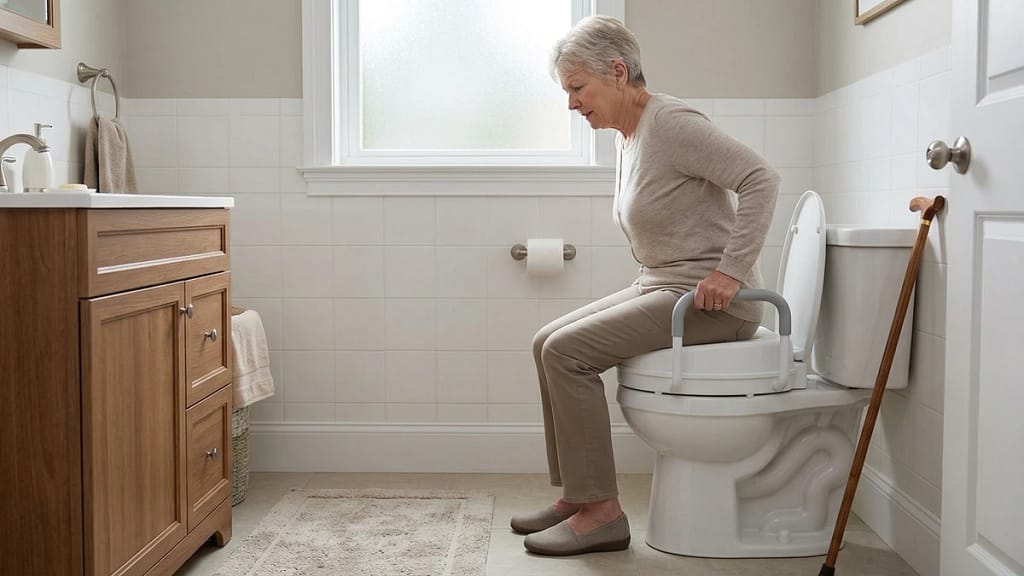
A raised toilet seat helps by making the starting position less low. That usually reduces how much the knees and hips need to bend and can make standing up feel less demanding.
This is often helpful when:
- the toilet feels too low
- knee pain increases with deeper bending
- hip stiffness makes lowering down uncomfortable
- standing up takes noticeable effort
That is why height becomes an important part of the decision. Once it is clear that the toilet feels low enough to add effort, the next question is how much added height is likely to help without making the setup feel awkward. This guide on what height raised toilet seat is needed explains how different height options affect comfort and ease of standing.
Example:
If knee arthritis makes deep bending painful, a modest height increase can reduce how far the knees need to bend before the person is seated. The goal is not to make the toilet unusually high, but to reduce the hardest part of the movement without creating a new stability problem.
A raised toilet seat does not treat arthritis itself, but it can make one of the most repeated bathroom movements less physically demanding. The next step is making sure that the extra height also feels stable and safe in daily use.
Are Raised Toilet Seats Safe for Seniors with Arthritis?
Raised toilet seats can be safe for seniors with arthritis when the seat fits properly, feels stable, and matches the senior’s actual movement needs.
Safety usually depends on:
- a secure fit on the toilet
- the right amount of added height
- enough support during transfers
- a setup that does not rock, shift, or feel uncertain
For example, extra height may reduce knee strain, but that benefit is reduced if the seat feels unstable while sitting or standing. In real use, arthritis often makes people move more slowly and rely more carefully on the setup, which means even small stability problems can matter more.
That is why the safety question is really about the full transfer, not just the height itself. If the seat reduces strain but still feels shaky or poorly matched to the toilet, it is not solving the problem well. This guide on whether raised toilet seats are safe for seniors explains what usually makes the difference between a helpful setup and a questionable one.
A raised toilet seat is safest when it makes the movement easier and more controlled at the same time. Once that safety foundation is clear, the next question becomes which type of seat actually works best when arthritis is the main issue.
Which Type of Raised Toilet Seat Helps Most with Arthritis?
The type that helps most is usually one that adds a moderate amount of height, feels stable during transfers, and provides hand support when pushing up is difficult.
In practical terms, the most helpful features are often:
- a moderate height increase rather than an extreme lift
- a stable attachment that does not move during transfers
- handles when pushing up is difficult
- a surface that feels manageable during slower sitting and standing
For many seniors with arthritis, the biggest challenge is not just sitting lower. It is getting back up without putting too much strain through painful knees, hips, or hands. That is why support during the upward part of the movement often matters as much as the seat height itself.
Handle-supported designs can make more sense when the senior needs something steadier to push from rather than just a taller seat. If that sounds closer to the real difficulty, this roundup of raised toilet seats with handles is useful for seeing which types of setups provide more transfer support.
The best type is usually the one that reduces joint strain without making the setup feel less stable. That also explains why height alone is not always enough for every arthritis-related transfer problem.
When Height Alone Is Not Enough
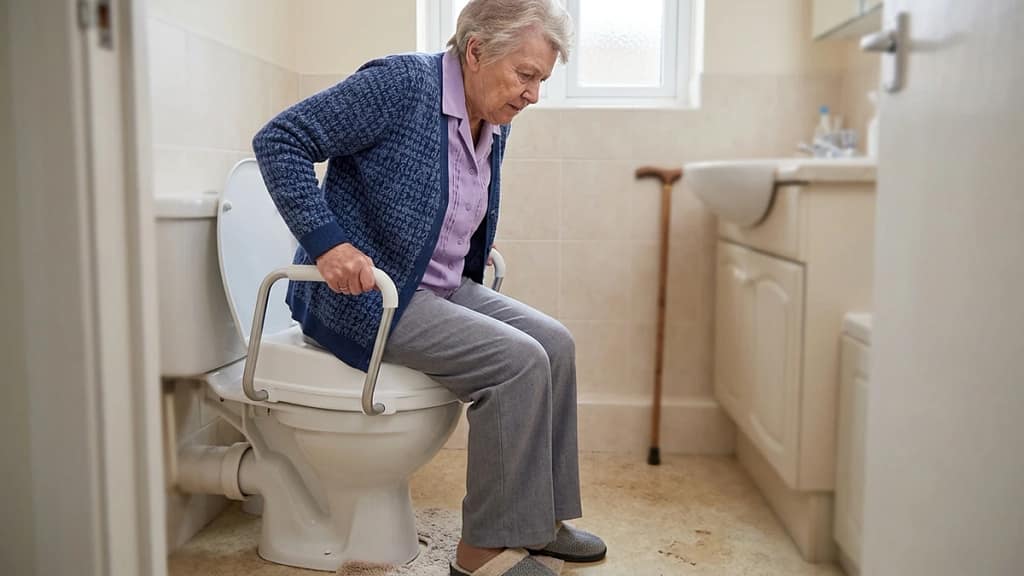
Some seniors with arthritis need more than a taller toilet position. Height may help with bending, but it may not fully solve the transfer problem.
That becomes more likely when:
- hand pain makes pushing up difficult
- balance feels less steady during standing
- the senior needs side support during transfers
- the setup still feels uncertain after adding height
For example, a raised toilet seat may reduce knee strain but still leave the senior depending heavily on sore hands or nearby surfaces during standing. In that kind of situation, the problem is broader than height alone.
When the challenge starts involving support, control, and overall transfer stability, the setup begins to overlap with broader mobility needs. This guide on raised toilet seats for disabled adults explains when a more support-focused approach makes sense.
When extra height helps but does not fully solve the transfer, the next step is choosing a setup that better matches the senior’s actual movement pattern. That usually means looking more closely at height, support, grip comfort, and how the seat will be used in daily practice.
How to Choose a Raised Toilet Seat When Arthritis Is the Main Problem
The best choice comes from matching the seat to the actual transfer difficulty, not just to the word arthritis.
Start by looking at:
- how low the toilet currently feels
- whether the main strain is in the knees, hips, or hands
- whether extra support is needed during standing
- whether comfort matters during slower transfers
- whether the setup needs to work for short-term or long-term use
Height should be chosen carefully. Too little may not change the movement enough, while too much can make the seated position feel less stable. Support should also be considered early, especially when arthritis affects the hands as much as the lower body.
Quick check:
If knee or hip bending is the main problem, added height may help most. If painful hands, weak grip, or balance are the bigger issue, handles or nearby wall support may matter more than adding extra height.
A useful way to think about the choice is to separate the problem into parts: how low the toilet feels, how much effort standing requires, and whether the transfer feels controlled from start to finish. This guide on how to choose a raised toilet seat explains how to weigh height, fit, support, and daily use together.
The right choice usually reduces strain in the exact part of the movement that arthritis is affecting most. If the transfer still feels difficult even after height and seat support are considered carefully, the next question is whether support around the toilet would help more than extra elevation alone.
When Wall Support May Help More Than Extra Height

Sometimes the bigger problem is not how low the toilet feels. It is how difficult it feels to push up safely using painful or weaker hands.
This is more likely when:
- the senior reaches for counters or walls while standing
- hand pain makes push-off harder than lowering down
- balance feels less predictable during transfers
- the toilet height is only part of the problem
Example:
A higher seat may reduce knee strain, but the senior may still reach for the counter, wall, or towel bar when standing. In that situation, the main issue is not just toilet height. It is the need for a secure handhold during the transfer.
That is especially true when arthritis affects grip strength or makes pressure through the hands feel more painful. This guide on grab bars for arthritis and weak grip explains when hand support around the toilet can improve control more effectively than height alone.
A raised toilet seat helps when low height is the problem. Wall support helps when the transfer still feels uncertain after height has already been improved. That distinction also makes it easier to avoid choosing a setup that only solves part of the problem.
Common Mistakes to Avoid
With arthritis, small setup mistakes can matter because the senior may already be moving slowly, pushing through painful joints, or relying more heavily on the toilet area for control. The goal is to avoid choices that reduce strain in one place but create instability somewhere else.
The most common ones are:
- Focusing only on height
Extra height helps, but it may not solve hand pain or transfer control problems. - Ignoring grip and push-off strain
Arthritis often affects the part of the movement that happens through the hands as much as through the knees or hips. - Choosing an unstable setup
A raised seat should feel steady during transfers, not just look acceptable in place. - Overlooking the bathroom around the toilet
The right seat can still feel wrong if there is not enough room or support nearby.
These mistakes usually happen when the setup is judged too narrowly. The most useful choice comes from looking at the full transfer, including height, hand support, stability, and the space around the toilet.
Once those issues are avoided, the decision becomes much simpler: use extra height when it clearly reduces strain, and add more support when the transfer still does not feel controlled enough.
What I Recommend
Raised toilet seats for seniors with arthritis usually make the most sense when low toilet height is clearly increasing strain during sitting and standing.
The practical approach is:
- use one when toilet height is making transfers harder
- prioritize stability and manageable height over extreme elevation
- add support if pushing up still feels difficult
- choose based on where the strain happens most during the movement
If arthritis mainly affects the knees and hips, added height often helps. If hand pain, weak grip, or poor transfer control are just as limiting, the setup may also need more support around the toilet.
FAQ
Are raised toilet seats good for seniors with arthritis?
Yes, they can help when low toilet height increases strain on the knees, hips, or hands during transfers.
What height raised toilet seat works best for arthritis?
The best height is the one that reduces strain without making the seated position feel unstable or awkward.
Do seniors with arthritis need handles on a raised toilet seat?
Some do, especially when pushing up from the toilet is difficult or hand pain affects transfer control.
Can extra height alone solve the problem?
Not always. If grip, balance, or transfer support are major issues, height may need to be combined with other support.
When should extra support be added around the toilet?
Extra support becomes more important when the senior still feels uncertain during standing even after the toilet height is improved.
Final Thoughts
Raised toilet seats for seniors with arthritis can be very helpful when the toilet feels too low and the sit-to-stand movement starts adding unnecessary strain. They work best when the height is appropriate, the seat feels stable, and the setup matches the senior’s real transfer needs.
Some seniors need only extra height. Others need handles, more comfort, or better wall support during transfers. The best result usually comes from identifying which part of the movement feels hardest and choosing the setup that addresses that problem directly.
