
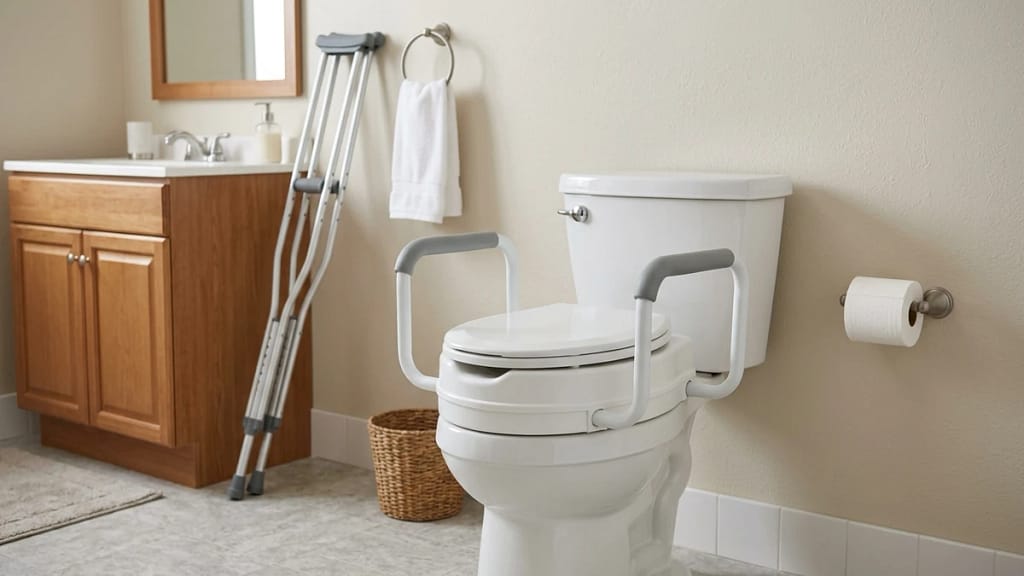
Bathroom use can become much harder when the toilet feels too low, transfers take more effort, or balance and control are limited. For many disabled adults, the challenge is not only getting on and off the toilet, but doing it in a way that feels steady and manageable.
That is why raised toilet seats for disabled adults are often considered. They can help reduce bending and make transfers easier, but the right setup depends on more than height alone.
Support needs, bathroom layout, toilet fit, and the type of movement difficulty all matter. A raised toilet seat can be useful in many situations, but it is not always the complete solution.
Disclosure: As an Amazon Associate, I earn from qualifying purchases. This post may contain affiliate links. If you purchase through these links, I may earn a small commission at no extra cost to you. I only recommend products I would feel comfortable using in my own home. Learn more.
On This Page
- When a Raised Toilet Seat Helps Most
- What Makes Bathroom Use Harder for Disabled Adults
- When a Raised Toilet Seat May Not Be Enough
- Which Features Matter Most for Disabled Adults
- How to Choose the Right Raised Toilet Seat for a Disabled Adult
- When Wall Support May Be Better Than Height Alone
- Common Mistakes When Choosing a Raised Toilet Seat for a Disabled Adult
- What I Recommend
- FAQ
- Final Thoughts
Quick Answer
Raised toilet seats for disabled adults are most helpful when toilet height makes transfers harder, sitting down feels too low, or standing up takes too much effort. They can reduce bending and improve comfort, but the safest setup still depends on stability, support needs, and how the transfer feels in real use.
- They can help when the toilet feels too low for safe, controlled transfers
- They often reduce the effort needed to sit down and stand up
- Stability and support matter as much as added height
- Not every disabled adult needs the same type of setup
- Some situations need extra support, not just extra height
A raised toilet seat is often useful when toilet height is clearly part of the problem. It becomes less useful when the main issue is balance, side support, or the need for a more controlled transfer setup.
The goal is not simply to make the toilet taller. The goal is to make bathroom use feel more manageable and more secure.
When a Raised Toilet Seat Helps Most
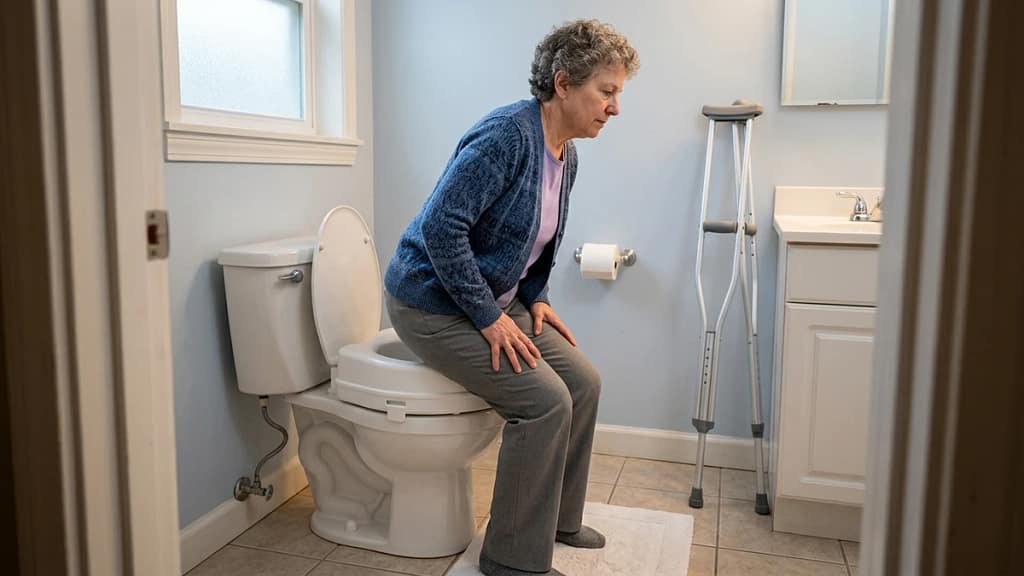
A raised toilet seat usually helps most when the toilet feels too low for the person’s current movement ability. Even a few inches can reduce how far the body needs to lower and how much force is needed to stand back up.
This is especially helpful when:
- lowering down feels slow or difficult
- standing up requires heavy pushing
- leg strength is reduced
- range of motion is limited
Example:
A disabled adult may manage walking to the bathroom independently but still find the final sit-to-stand movement difficult because the toilet position feels too low. In that situation, extra height may improve the part of the routine that feels hardest.
If the effect of added height is still unclear, this guide on how much height a raised toilet seat adds explains why even a modest lift can change how the movement feels.
A raised toilet seat usually helps most when low toilet height is making the transfer more difficult than it needs to be.
What Makes Bathroom Use Harder for Disabled Adults
Height is often part of the problem, but many disabled adults also deal with broader transfer challenges that affect how safe and manageable bathroom use feels.
Common challenges include:
- reduced balance during transfers
- slower or more controlled movement
- limited grip strength
- reduced leg strength
- difficulty turning or repositioning
- tight bathroom layouts that make movement harder
For example, a person may not only struggle with the toilet being low. The bigger issue may be needing extra control while lowering down or needing something stable nearby when pushing up to stand.
That is why the right setup depends on the full movement, not just on the toilet height.
Once those movement challenges are clear, the next question is whether added height solves enough of the problem or whether the setup needs more support than height alone can provide.
When a Raised Toilet Seat May Not Be Enough
A raised toilet seat can help with height, but it does not solve every transfer problem. In some cases, extra height improves part of the movement while the bigger difficulty still remains.
That becomes more likely when:
- balance is a major concern
- the person needs side support during transfers
- standing up still feels unsafe after adding height
- the transfer requires more control than height alone can provide
How to tell whether height alone is enough:
Pay attention to what still feels difficult after extra height is added. If lowering down feels easier but standing, balance, or transfer control still feel uncertain, the setup may need more than height alone.
In that situation, added support often matters just as much as the seat height itself.
In those situations, the main question often changes from “Is the toilet too low?” to “What kind of support makes the transfer feel more controlled?” That is where support-focused options become more relevant than height alone. This guide on toilet safety frames vs raised toilet seats explains when side support may solve the problem more effectively.
Some setups also work better when added height is combined with support instead of treated as a separate decision.
For example, a person may benefit from a higher toilet position but still need stable hand support during standing. This guide on using a raised toilet seat with a toilet safety frame explains when that kind of combined setup makes practical sense.
A raised toilet seat is most useful when toilet height is the main obstacle. When the real problem is transfer control or stability, the setup often needs more than height alone.
Which Features Matter Most for Disabled Adults
The most useful features depend on the person’s actual movement needs, but some factors matter more often than others.
The most important ones usually include:
- a stable fit on the toilet
- the right amount of added height
- enough support during slower transfers
- comfort during repeated daily use
- a design that works in the available bathroom space
Grip comfort can also become a bigger factor than many people expect. This is especially true when the transfer is slower, hand strength is limited, or the person needs to press down more carefully during standing. In those situations, pressure on the hands can affect how safe and manageable the setup feels.
That overlap is common in users who also deal with hand pain, stiffness, or reduced grip strength. This guide on raised toilet seats for seniors with arthritis is useful because it shows which support features tend to matter when hand comfort becomes part of the transfer problem.
A good setup should reduce effort without creating a new stability problem.
Fit matters just as much as height. A raised toilet seat that shifts, rocks, or does not sit securely on the toilet can make transfers feel less safe even if the added height is otherwise helpful.
How to Choose the Right Raised Toilet Seat for a Disabled Adult
The best choice depends on how the toilet is being used in real daily life, not just on the diagnosis.
Start by looking at:
- how low the toilet feels now
- how much extra height is likely to help
- whether extra support is needed during transfers
- whether the bathroom has enough space for the setup
- whether the need is short-term or long-term
Height should be treated as one part of the decision, not the whole decision. A useful starting point is to look at fit, support, and daily use together instead of trying to solve the problem with height alone. This guide on how to choose a raised toilet seat explains how to weigh those factors more clearly.
For some disabled adults, the deciding factor is not the lift itself but the amount of control the setup provides during standing and lowering down.
When that becomes the priority, handle-supported designs are often worth comparing more closely. This roundup of raised toilet seats with handles shows which types of models are better suited to support-focused transfers.
The right choice usually comes from matching the seat to the transfer difficulty itself rather than focusing on height alone.
When Wall Support May Be Better Than Height Alone
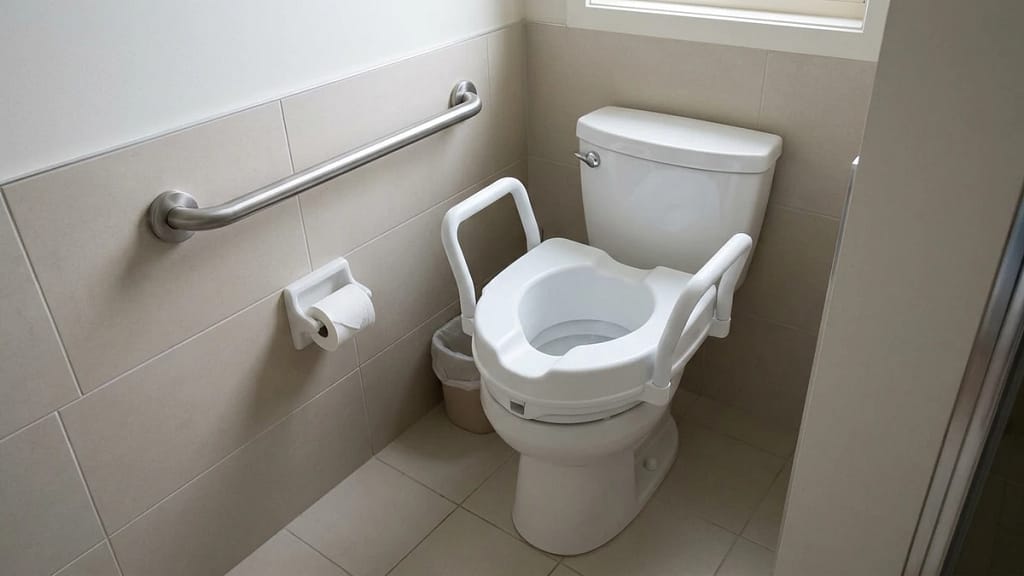
Some bathroom setups need fixed support more than extra toilet height. A raised seat may help with bending, but it does not automatically provide anything stable to hold during the transfer.
That matters most when:
- the person reaches for nearby walls or counters
- standing still feels uncertain
- the transfer feels safer with something fixed to hold
- the toilet height is manageable but the movement still feels unstable
For example, a disabled adult may feel more comfortable with a slightly higher toilet but still struggle because there is no dependable support nearby while standing up. In that case, wall-mounted support may matter more than adding more height.
This guide on grab bars for disabled seniors explains how fixed support can improve control when transfer stability is the bigger issue.
A raised toilet seat helps when low toilet height is the main problem. Fixed wall support helps when the transfer itself still feels unsafe or uncontrolled.
Common Mistakes When Choosing a Raised Toilet Seat for a Disabled Adult
A few common mistakes can make the setup less useful than expected.
The biggest ones are:
- Focusing only on height
Extra height helps, but it does not solve every transfer problem. - Ignoring stability
A seat that fits poorly or feels loose can make bathroom use feel less safe. - Overlooking support needs
Some people need handles, frames, or nearby wall support in addition to added height. - Choosing a setup that does not fit the bathroom
A good seat can still be the wrong choice if the surrounding space makes transfers harder.
The most useful setup is the one that fits the bathroom, the toilet, and the transfer pattern all at once.
What I Recommend
A raised toilet seat usually makes sense when toilet height is clearly making transfers harder, slower, or less controlled. It is most useful when the toilet feels too low but the person can still benefit from a simpler height-based adjustment.
The practical approach is:
- use one when toilet height is part of the problem
- prioritize stability and real transfer control
- add support when height alone does not solve the difficulty
- choose based on actual movement needs, not just general labels
A raised toilet seat works best when it matches the transfer challenge directly. When support, balance, or transfer control are the bigger issues, the setup often needs more than added height.
FAQ
Are raised toilet seats good for disabled adults?
They can be, especially when toilet height makes sitting down and standing up more difficult.
Do disabled adults need handles with a raised toilet seat?
Some do. Handles can help when extra control and support are needed during transfers.
When is a toilet safety frame better than a raised toilet seat?
A safety frame may be better when side support and transfer control matter more than extra height alone.
Can a raised toilet seat help with transfers?
Yes, when low toilet height is making the transfer harder or more physically demanding.
Is extra height enough on its own?
Not always. Some people also need handles, a safety frame, or fixed wall support to make the transfer feel secure.
Final Thoughts
Raised toilet seats for disabled adults can be very helpful when toilet height is making bathroom use harder than it needs to be. They often reduce effort and improve comfort, but they work best when the setup also feels stable and appropriate for the person’s real transfer needs.
Some disabled adults need only extra height. Others need more support, more control, or a different overall setup. The most useful decision comes from looking at the full bathroom movement, not just the toilet itself.
When the setup matches the actual difficulty, bathroom use usually feels more manageable and more secure.
