
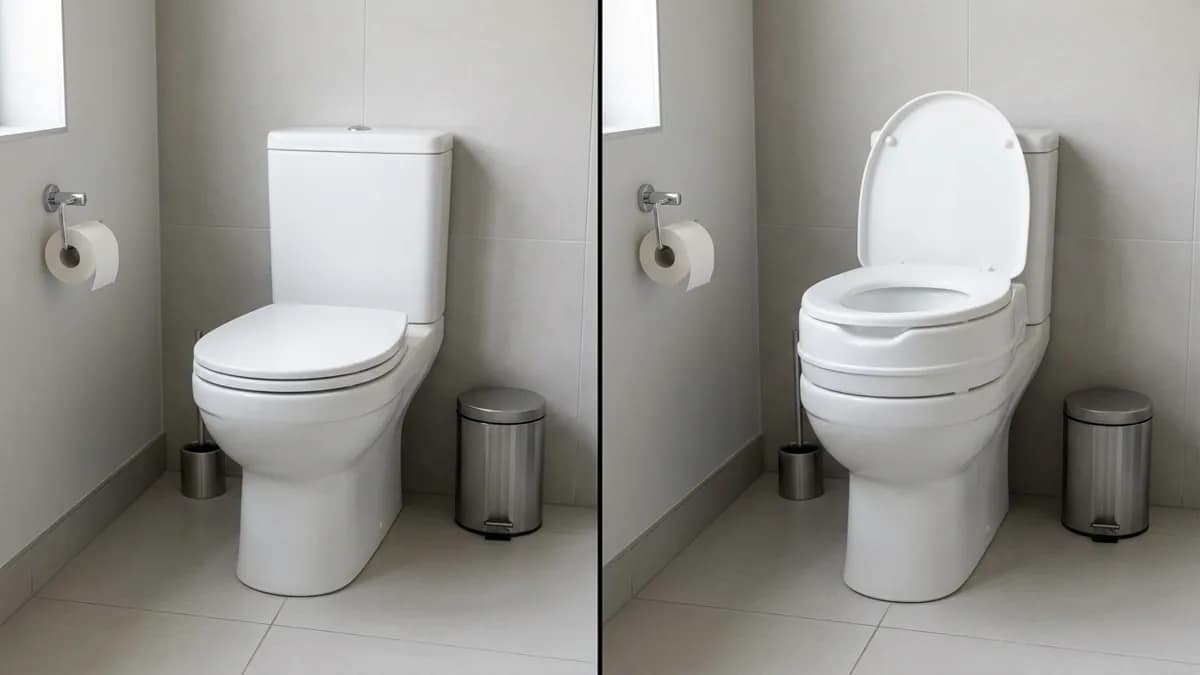
Choosing the right raised toilet seat height directly affects how easily and safely you can sit down and stand up.
If the height is too low, sitting and standing may still feel difficult. If it is too high, the position can feel unstable or awkward.
That is why the question what height raised toilet seat do I need is not just about adding inches.
It is about finding a height that improves movement while still allowing you to sit comfortably, keep your feet stable, and stand up with control.
Disclosure: As an Amazon Associate, I earn from qualifying purchases. This post may contain affiliate links. If you purchase through these links, I may earn a small commission at no extra cost to you. I only recommend products I would feel comfortable using in my own home. Learn more.
On This Page
Quick Answer
The right height for a raised toilet seat is usually an additional 2 to 4 inches, depending on your current toilet height and how much assistance you need when sitting and standing.
- Most people need an additional 2 to 4 inches
- The goal is to reduce bending, not eliminate it completely
- Your feet should still rest flat on the floor
- Knees should be slightly lower than your hips when seated
- Too much height can reduce balance and control
In simple terms, the correct height is the one that makes movement easier while still feeling stable and controlled.
Quick decision guide:
- Feet not flat or balance feels off: choose a lower height
- Too much bending or strain: choose a higher height
- Unsure: start with 2–4 inches and adjust based on comfort
Why Raised Toilet Seat Height Matters
The height of a raised toilet seat directly affects how your body moves during everyday use. Even a small difference in height can change how much effort is needed to sit down or stand up.
When the seat is too low, you may:
- strain your knees and hips
- drop down too quickly
- rely heavily on arm support
When the height is appropriate:
- movement feels smoother
- standing requires less effort
- sitting feels more controlled
To understand how your current toilet height affects this, it helps to compare standard and elevated setups. This guide on standard toilet vs comfort height toilet explains how baseline height impacts overall comfort.
Choosing the right height is not about maximizing elevation—it’s about improving how the movement feels from start to finish.
How to Choose the Right Height
Choosing the correct height starts with understanding your current setup and how your body moves.
This is where understanding what height raised toilet seat you need becomes more practical than theoretical.
If you are unsure where to start, a guide on how to measure for a raised toilet seat can help confirm your toilet height and basic fit before choosing added elevation.
Key factors to consider:
- Current toilet height
Measure from the floor to the seat. This gives you a baseline. - User height
Taller individuals may need less added height, while shorter users may need more. - Mobility limitations
Reduced knee or hip flexibility increases the need for elevation. - Recovery or medical needs
After surgery, even small adjustments can significantly reduce strain.
These factors work together, which is why the “right height” is not the same for everyone.
If you want a more structured way to evaluate these factors together, this guide on how to choose a raised toilet seat walks through the decision process in more detail.
The goal is to find a height that improves movement without creating a new balance problem.
Once you understand your needs, the next step is to match them with standard height options.
Common Raised Toilet Seat Heights Explained
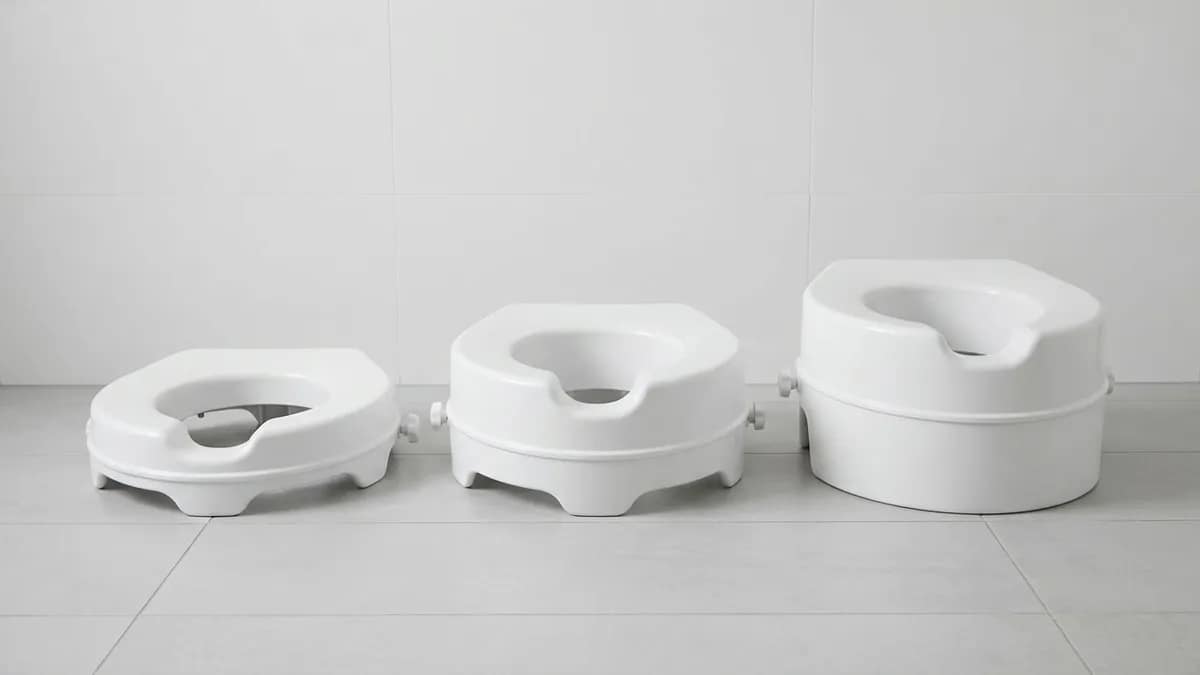
Raised toilet seats are typically available in a few standard height options. Each one is designed to solve a different level of difficulty when sitting and standing.
2-Inch
This is the smallest adjustment and works best when only a slight reduction in bending is needed.
- Best for minor discomfort or early-stage mobility issues
- Keeps movement natural with minimal adjustment
3-Inch
This is the most balanced option for general use and fits a wide range of users.
- Reduces strain while maintaining stability
- Often the most practical starting point
4-Inch
This level provides more noticeable assistance when standing up becomes harder.
- Better for moderate mobility limitations
- Makes standing significantly easier
5-Inch or Higher
This is used when bending is very limited and more elevation is required.
- Suitable for severe mobility restrictions
- May feel less stable without additional support
To better understand how much elevation these options actually provide, this guide on how much height a raised toilet seat adds breaks it down clearly.
Choosing the right height from these options depends on how your body responds—not just the number itself.
When a Lower Height Is Better
It may seem like more height is always better, but that’s not always the case.
A lower height works better when:
- balance is a concern
- feet cannot stay flat on the floor
- sitting position feels unstable
Real-Life Example:
If your feet are not firmly planted, you lose stability when sitting and standing. This can make movement feel less controlled, even if it requires less effort.
When You Need a Higher Raised Toilet Seat
A higher seat becomes more useful when bending is the main limitation.
This usually applies when:
- knee or hip movement is restricted
- sitting down feels too low or painful
- standing requires excessive effort
For example, after surgery, even a small reduction in bending can significantly improve comfort and reduce strain.
This can also apply to taller users who feel cramped on lower toilets and need more elevation for a more natural sitting position.
However, increased height should still be balanced with stability. If the seat feels too high or you find yourself needing something to hold onto while sitting or standing, additional support such as a grab bar may be necessary.
Knowing when to add support can make a significant difference in safety and confidence. This guide on when seniors should add grab bars explains how to recognize the right time to combine a raised toilet seat with proper support.
How to Test If the Height Feels Right
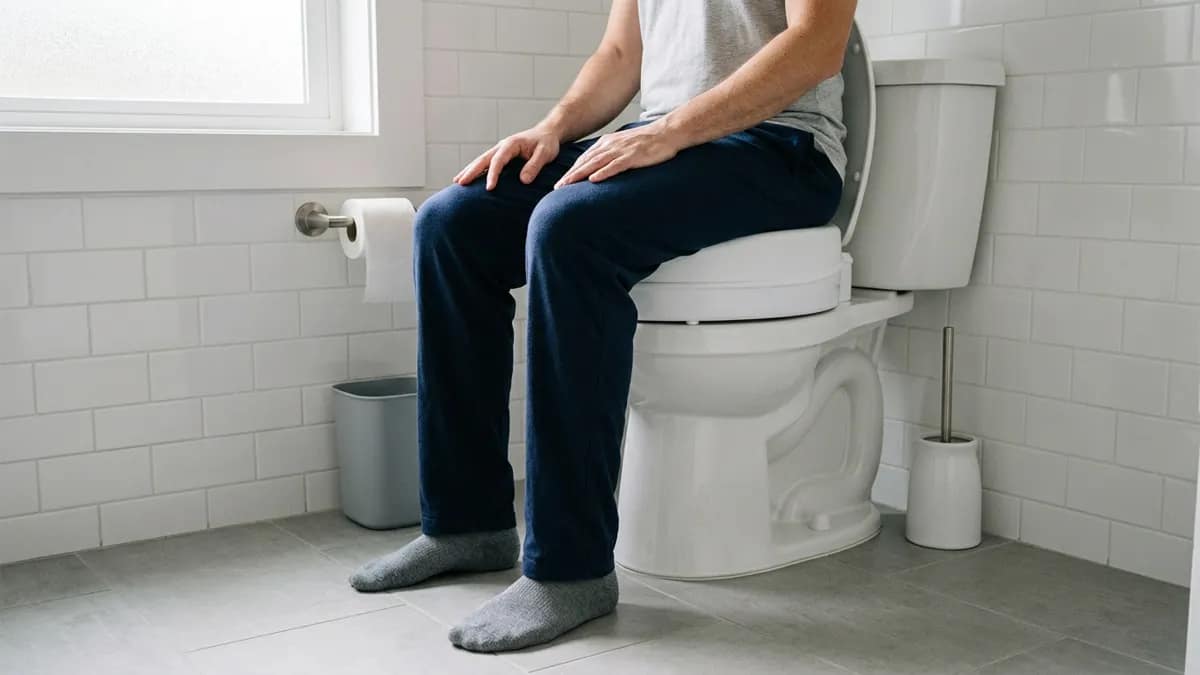
The best way to confirm the correct height is to test how it feels during actual use.
What to check:
- Feet position → should be flat on the floor
- Knee position → slightly lower than hips
- Sitting control → no dropping or instability
- Standing effort → easier but still controlled
If something feels off—too high, unstable, or awkward—it usually means the height needs adjustment.
Testing in real use is the most reliable way to confirm your choice.
Common Mistakes When Choosing Height
Choosing the wrong height often comes from focusing on numbers instead of how the movement actually feels, especially when deciding what height raised toilet seat do I need in real use.
- Assuming higher is always better
A higher seat may reduce effort, but it can also make sitting feel unstable if your feet no longer stay firmly on the floor. - Not measuring the current toilet height
Without knowing your starting point, it’s easy to choose a height that overcorrects or doesn’t help enough. - Ignoring foot positioning
If your feet are not flat, balance is reduced, especially when shifting or standing. - Skipping real-use testing
A seat may feel fine at first, but issues often show up when you actually sit down and stand up multiple times.
In many cases, the wrong height doesn’t feel obviously “wrong” at first—it just feels slightly off. Over time, that small mismatch can make everyday use less stable or less comfortable.
What I Recommend
The best approach is to focus on how the movement feels rather than trying to choose a specific number.
In most cases, a 2 to 4-inch increase is enough to improve comfort without affecting stability. Starting within this range allows you to reduce strain while still maintaining control during sitting and standing.
If you’re unsure, it’s better to choose a slightly lower height and adjust if needed. A setup that feels stable and controlled will always be more useful than one that simply feels higher.
And if you’re still comparing options or unsure which design fits your needs, it helps to see how different models handle height and stability in real use. This guide to the best raised toilet seats for seniors breaks that down in a practical way.
The goal is not to raise the seat as much as possible, but to make the movement easier, smoother, and more predictable in everyday use.
FAQ
How high should a raised toilet seat be?
Most people benefit from a 2–4 inch increase, depending on mobility and comfort.
Is a 2-inch or 4-inch raised toilet seat better?
A 2-inch option works for mild support, while 4 inches is better for more limited mobility.
Can a raised toilet seat be too high?
Yes, too much height can reduce stability and make sitting feel awkward.
How do I measure my toilet height?
Measure from the floor to the top of the toilet seat.
What height is best after surgery?
It depends on the procedure, but reducing bending is usually the main goal.
Final Thoughts
The right raised toilet seat height makes everyday movement easier without compromising balance.
Small adjustments can have a significant impact, especially when they match your body and mobility needs.
Taking the time to measure, test, and adjust ensures that the final setup feels stable, comfortable, and safe to use.
