
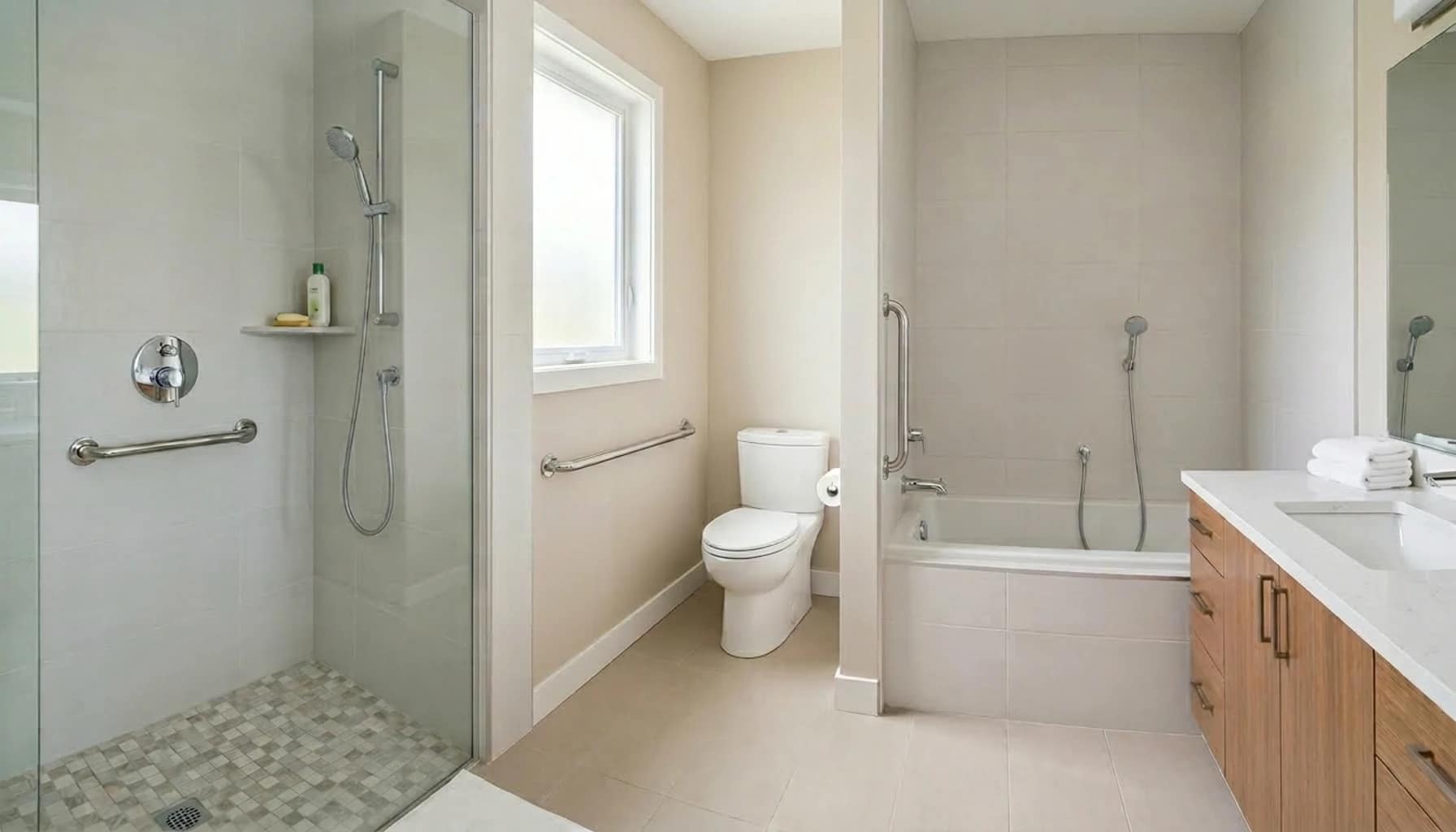
Bathrooms are one of the most common places where falls occur, especially during routine movements like stepping into a shower, turning on wet surfaces, or standing up from a toilet.
A common mistake when installing grab bars is focusing on the bar itself instead of the placement. Even a strong grab bar becomes ineffective if it is not positioned where support is actually needed during real movement.
This article is all about where to install grab bars in a bathroom so they actually help during real movements.
This guide focuses on practical placement decisions and highlights small details that significantly impact usability.
Disclosure: As an Amazon Associate, I earn from qualifying purchases. This post may contain affiliate links. If you purchase through these links, I may earn a small commission at no extra cost to you. I only recommend products I would feel comfortable using in my own home. Learn more.
On This Page
- Why Grab Bar Placement Matters
- Quick Rule of Thumb Before Installation
- How to Decide the Right Grab Bar Placement
- Grab Bar Placement in the Shower Area
- Grab Bar Placement Around the Toilet
- Grab Bar Placement Near a Bathtub
- What Is the Correct Height for Grab Bars?
- Do Grab Bars Need to Be Installed in Studs?
- Common Grab Bar Placement Mistakes
- A Simple Grab Bar Placement Checklist
- What I Recommend
- FAQ
- Final Thoughts
Quick Answer
Grab bars should be installed at key support points where balance is most challenged, including shower entry, inside the shower, next to the toilet, and at bathtub entry points. Proper placement ensures the bar is within natural reach during movements like stepping, turning, and standing.
- Shower entry: vertical bar for stepping in and out
- Inside shower: horizontal bar for balance while standing
- Toilet area: side-mounted bar for sitting and standing
- Bathtub edge: entry support for stepping over
Grab bars are most effective when installed where the hand naturally reaches during movement, which is why most bathrooms include at least two support zones in the shower and one near the toilet.
To better visualize how these placements work in a real bathroom layout, see this grab bar placement diagram.
Why Grab Bar Placement Matters
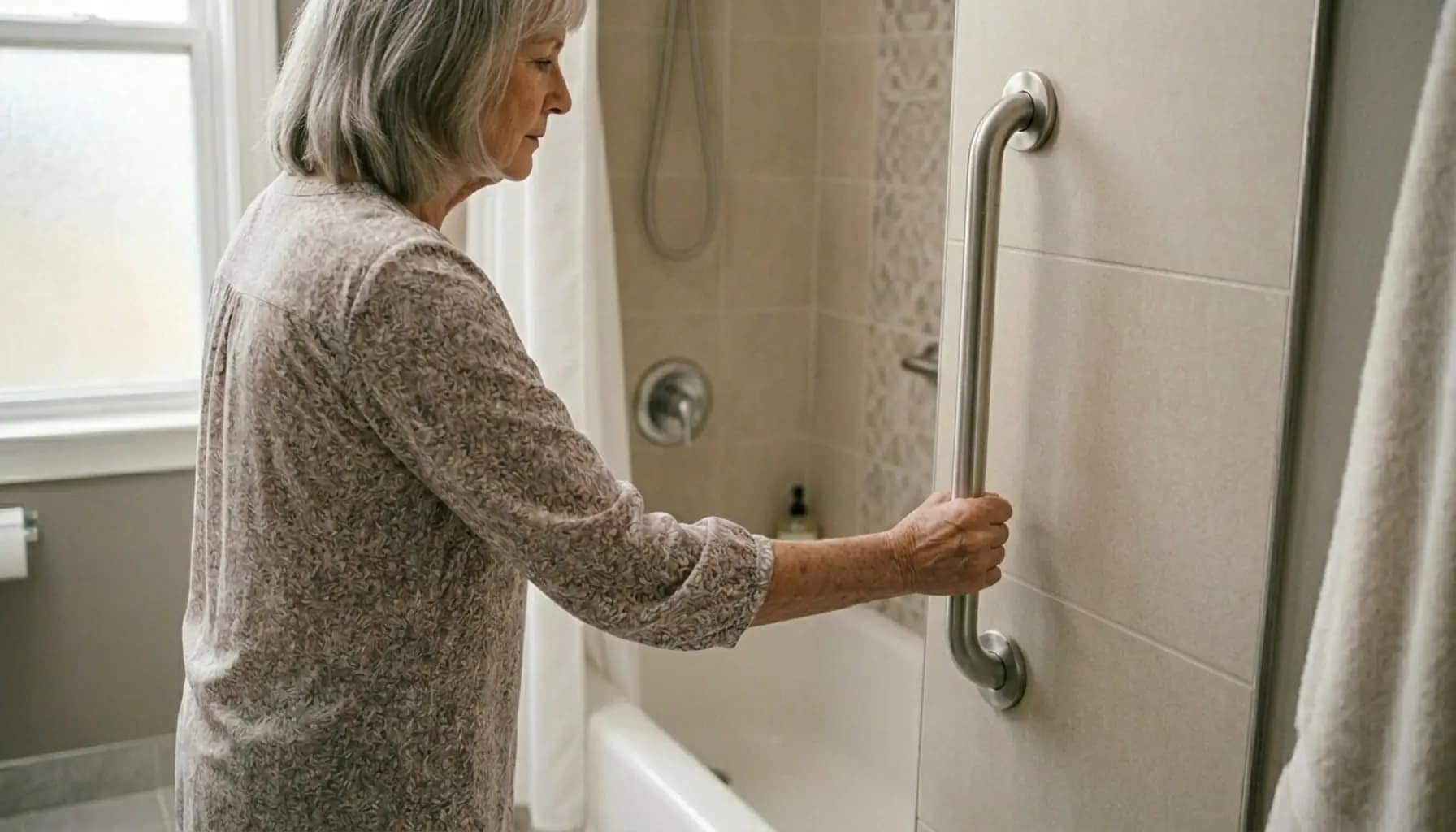
A grab bar provides a stable support point when balance is lost, especially on wet surfaces or during sudden movement.
Most falls do not occur during routine walking, but during transitional movements such as stepping over a tub edge, standing up from a toilet, or shifting weight on wet surfaces.
When grab bars are placed where your hand naturally reaches, they tend to be used automatically. That’s one of the clearest signs the placement is effective.
When they’re placed badly, you get the opposite problem. People ignore the grab bar and grab whatever’s closest, which is often a towel bar, soap dish, or the shower door frame.
This is why placement should be based on movement patterns rather than fixed measurements, as real-world use rarely follows perfect positioning.
Quick Rule of Thumb Before Installation
Before you drill or mount anything, a simple “movement test” can help identify the correct placement. It takes five minutes and it prevents most placement regrets.
Stand where the person will actually stand. Then mimic the motion: stepping in, turning, sitting, standing, reaching for shampoo, rinsing, and stepping out.
Now look for the moment when your hand reaches out for help. That’s where the bar needs to be.
If you’re planning for a senior, do the test at a slower pace. People often move slower and rely more on a secure grip, especially on slick surfaces.
How to Decide the Right Grab Bar Placement
The correct placement depends on where support is needed most during real movement, especially during high-risk transitions like stepping into a shower or standing up from a toilet.
For example, someone with reduced leg strength may need stronger support near the toilet, while someone with balance concerns may rely more on shower entry support.
A practical approach is to observe where instability occurs during normal use. These moments often indicate where a grab bar will be most effective.
Instead of installing multiple bars without a clear purpose, focus on the specific movements that feel least stable. This leads to better results with fewer installations, and understanding how many grab bars a bathroom needs can help you plan support more effectively.
In many cases, the best placement is not where it looks balanced on the wall, but where it supports the most unstable part of the movement.
Grab Bar Placement in the Shower Area
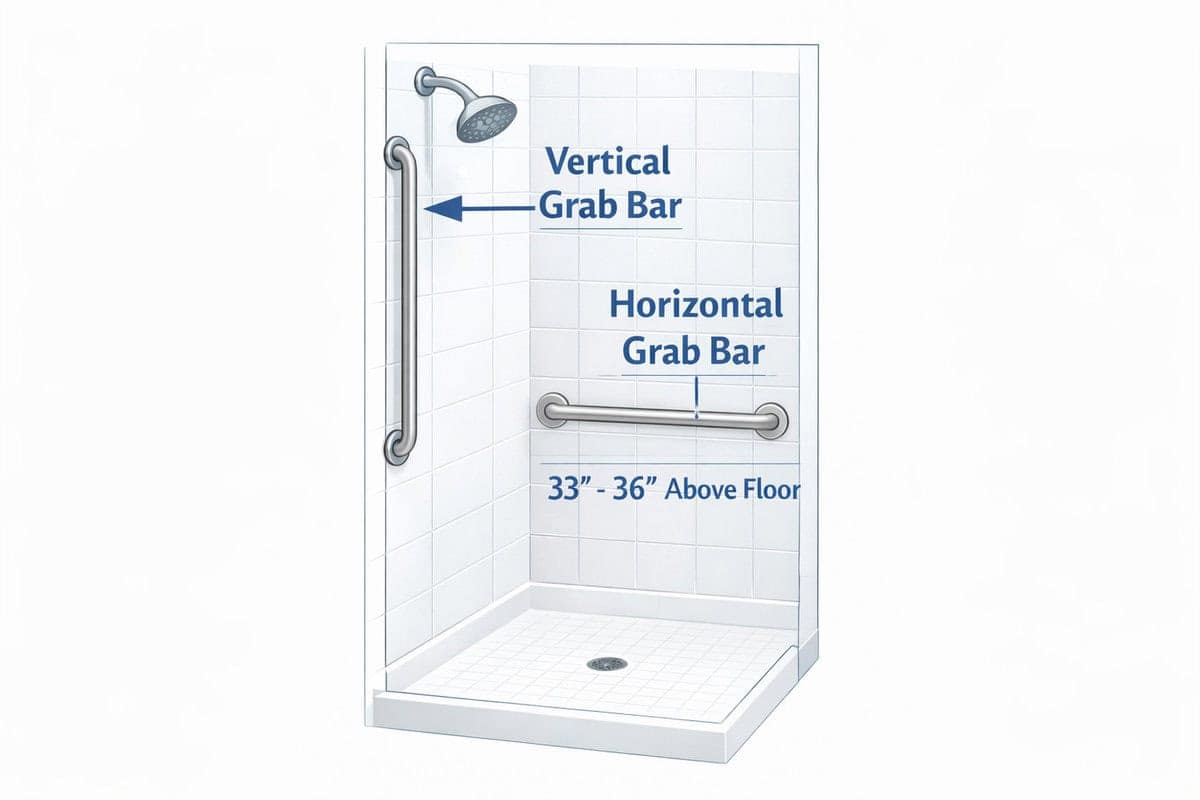
Most bathrooms need at least two support zones in the shower area, which is a key part of deciding where to install grab bars in a bathroom effectively.
At the shower entrance: A vertical bar near the shower entrance is often more effective because it allows a secure grip at different heights during entry and exit.
Place it where you can reach it before you fully commit your weight into the shower. If you have to take two steps inside before grabbing it, it’s too far.
Inside the shower: A horizontal bar on the side wall is the classic choice for balance. It helps during rinsing, shifting stance, or turning around.
For a more detailed breakdown of shower positioning, see where to place grab bars in a shower.
If the shower is used by someone who sits sometimes, consider a second horizontal bar lower down. That way the person can safely transition from standing to sitting without awkward reaching.
Some people like diagonal bars because they support different grip heights along the same bar. These can work well in smaller showers, especially for users who prefer a slightly angled grip or have limited reach.
Grab Bar Placement Around the Toilet
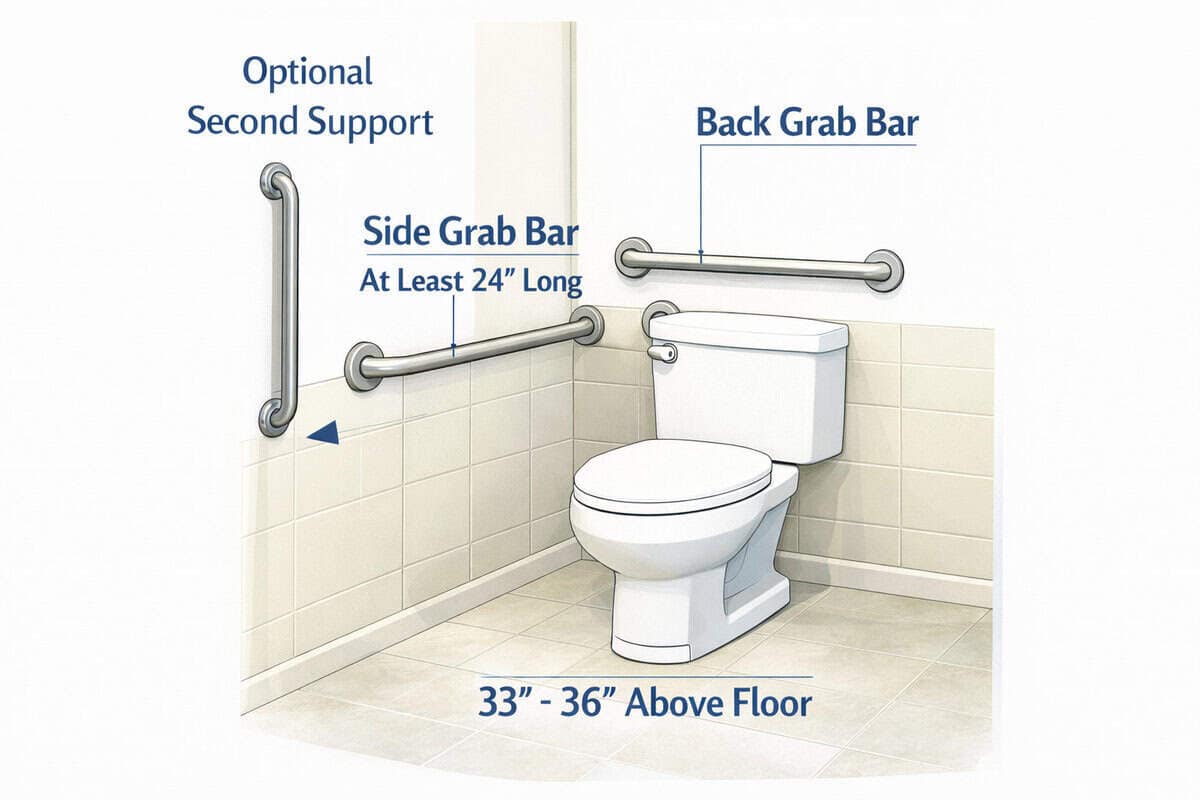
Toilet transitions are sneaky. People don’t think of the toilet as dangerous, but standing up and sitting down can be one of the most unstable moments.
Two common setups are typically used, depending on the bathroom layout.
Wall-mounted support: A horizontal bar on the side wall, next to the toilet, gives leverage. If the person tends to push up with one hand, put the bar on that stronger side.
If there’s room and it makes sense, adding support on both sides is even better. Two-sided support can help reduce risk because you’re not twisting or leaning to one side.
Freestanding toilet safety rails: These are great when wall mounting is difficult, or when you want an easier install. They provide two handles and a stable frame, and many people find them more comfortable than a single wall bar.
A key detail: make sure the bar or rail is positioned so the person’s hand can grip it before they start standing. If the handle is too far forward, they’ll still end up pushing on the sink.
Toilet areas often require specific placement depending on wall position. A full guide on where to install grab bars around a toilet explains the safest setups.
Grab Bar Placement Near a Bathtub

Bathtubs are one of the most challenging areas for grab bar placement because they involve multiple high-risk movements, including stepping over the edge, lowering into the tub, and standing up on a wet surface.
If you’re planning bathtub grab bars, think in three moments:
- entering,
- balancing while in the tub,
- exiting.
Near the tub entry: A vertical bar at the outer edge is extremely helpful. This is the bar people grab when stepping over the tub wall.
Position it so it’s reachable while still standing outside the tub. That gives the person something stable during the most awkward part of the movement.
Inside the tub: A horizontal bar along the long wall supports balance while bathing. If the user sits in the tub, this bar is also useful for shifting positions.
In many real bathrooms, one bar is not enough for tubs. Two bars often feel “normal,” while one can still feel like you’re gambling every time you step over the edge.
What Is the Correct Height for Grab Bars?
Here’s the common standard you’ll see: many guidelines place horizontal grab bars around 33 to 36 inches from the floor. That range works well for a lot of adults because it’s close to natural hand height when standing.
In practice, the correct height is the one that allows a comfortable and natural grip without strain. Comfort matters because if it feels awkward, people stop using it.
If you’re planning shower bars for someone shorter, you might go slightly lower. If the user is tall, a little higher can feel more natural.
A simple trick: stand in the spot and place your hand where it naturally reaches. Mark it with painter’s tape, then step away and return to test it again. If your hand lands in the same place twice, you’ve found a good height range.
If you want a more detailed breakdown, including how height changes depending on showers, toilets, and bathtubs, I’ve put together a full guide on grab bar placement height guidelines.
Do Grab Bars Need to Be Installed in Studs?
Most of the time, yes, you want grab bars anchored to studs because that’s the strongest support. A grab bar isn’t like a towel hook—it may need to hold partial or full body weight, especially if someone slips.
That’s why it helps to understand how to install grab bars in studs so you can make sure the installation is actually secure.
If the studs are not where you need them, there are mounting solutions designed for grab bars, but you must be careful with load ratings. This is where many people find it worth using a professional, at least for the first installation.
Suction grab bars can be useful as temporary support, but I don’t treat them as the primary safety solution in a bathroom. They can help reduce risk in some scenarios, but they’re not the same as a properly mounted bar.
Common Grab Bar Placement Mistakes
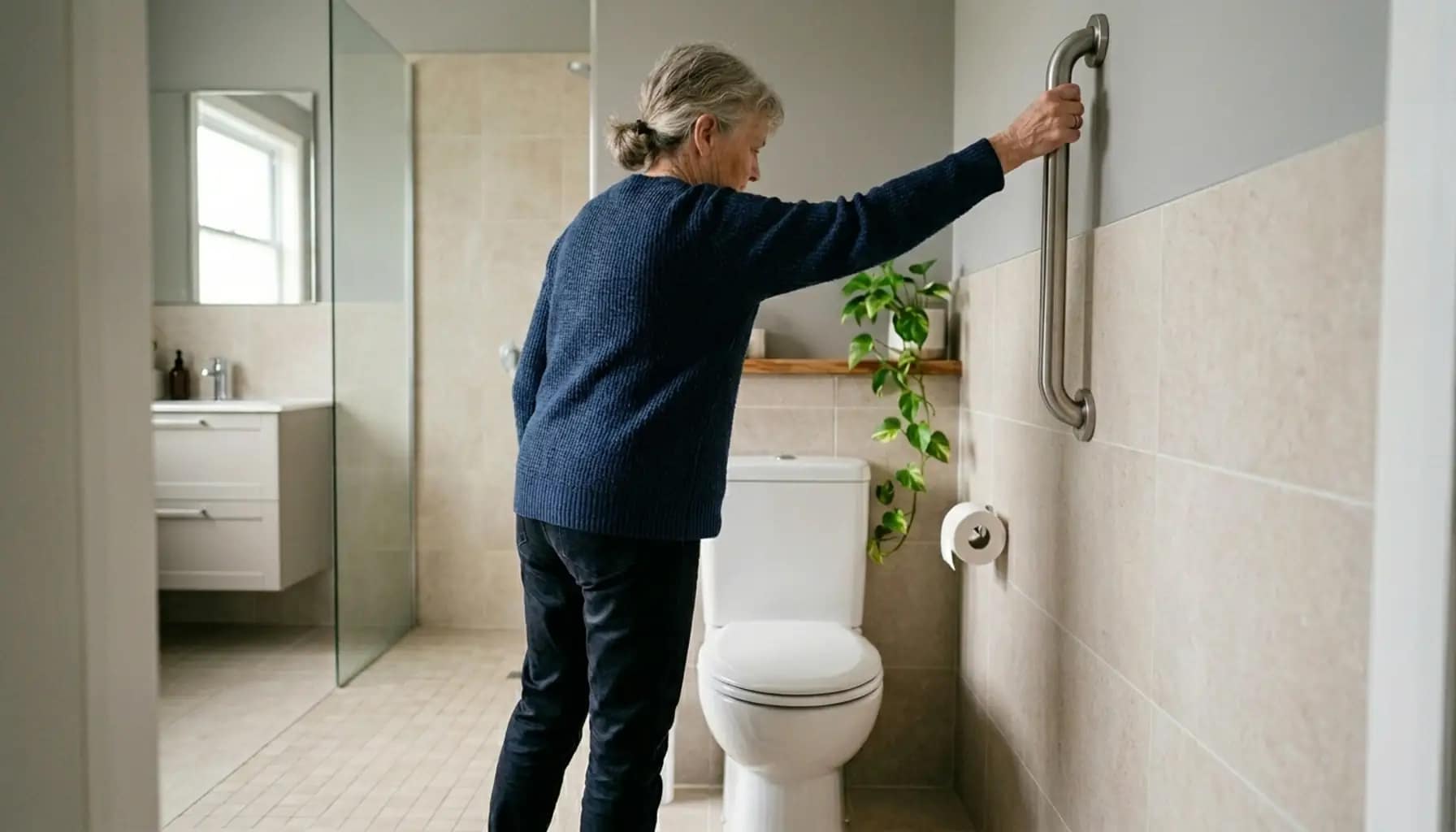
The same mistakes tend to appear repeatedly, and most of them are preventable.
Installing based on “looks.” A bar can look centered and still be useless if it’s not where the hand reaches during movement.
Installing too far away from the action. If the bar is beyond arm’s reach when stepping in, it won’t help when you’re mid-slip.
Using towel bars as support. People do it instinctively. It’s also one of the fastest ways to rip hardware out of the wall.
Ignoring how the person turns. Many people rotate in the shower or tub, and they need a bar in the “turning zone,” not just at the entry.
One bar solves everything. In reality, most bathrooms need at least two zones: entry/exit + inside stability.
If you’re planning installation, it also helps to understand common grab bar installation mistakes so you avoid problems before drilling.
A Simple Grab Bar Placement Checklist
This quick checklist helps confirm whether grab bars are positioned correctly for real-world use and safe movement.
Can the person reach a bar before stepping into the shower or over the tub edge?
If not, move the entry bar closer.
Can they hold a bar while turning or rinsing inside the shower?
If not, add or reposition the inside bar.
Can they grab support before standing from the toilet?
If not, adjust the bar or choose a rail system.
Is the bar placement comfortable for the actual user’s height and reach?
If not, test again with tape before mounting.
And finally, does the setup encourage safe movement without forcing awkward twisting?
If the setup feels awkward during testing, it will likely feel even more difficult for someone with limited mobility.
If any step feels awkward or unsupported during this check, adjust the placement before installation—small changes here can make a significant difference in safety.
What I Recommend
When setting up a bathroom for safety, it helps to choose grab bar types based on the specific risk area.
For shower and tub entry, wall-mounted grab bars with a textured grip provide reliable support, especially with wet hands. A length that allows a full hand grip is typically more effective than shorter options.
Inside the shower, a horizontal wall-mounted grab bar often provides the most consistent support for everyday use, especially during standing, turning, and rinsing.
Around the toilet, toilet safety rails can provide stable two-sided support, particularly in situations where wall mounting is difficult or additional balance support is needed.
For comparing sizes, finishes, and commonly used options, reviewing the best grab bars for seniors can help identify practical choices for different setups.
FAQ
Where to install grab bars in a bathroom for the most impact?
Start with the shower entry/exit and next to the toilet. Those are two of the highest-risk transition zones.
Should I put grab bars inside the shower or just outside?
Ideally both. A bar at the entry helps stepping in and out, while an inside bar helps with balance and turning.
What height should grab bars be installed?
Many installations place bars around 33–36 inches from the floor, but testing hand reach for the user is the best approach.
Are suction grab bars safe as the main solution?
They can help in some situations, but they’re generally recommended as temporary support, not the primary safety setup.
Do I need two grab bars around a toilet?
Not always, but two-sided support can feel more stable for many people, especially if standing is difficult.
Final Thoughts
Installing grab bars in the correct locations significantly improves bathroom safety by supporting natural movement during high-risk transitions.
Testing reach, identifying high-risk transitions, and placing support where it is needed most can make a noticeable difference in stability and confidence during daily use.
In many cases, a small number of well-placed grab bars provides better results than multiple poorly positioned ones.
In practice, the difference between a safe bathroom and a risky one often comes down to a few inches of placement. Getting that right has a much bigger impact than most people expect.
