
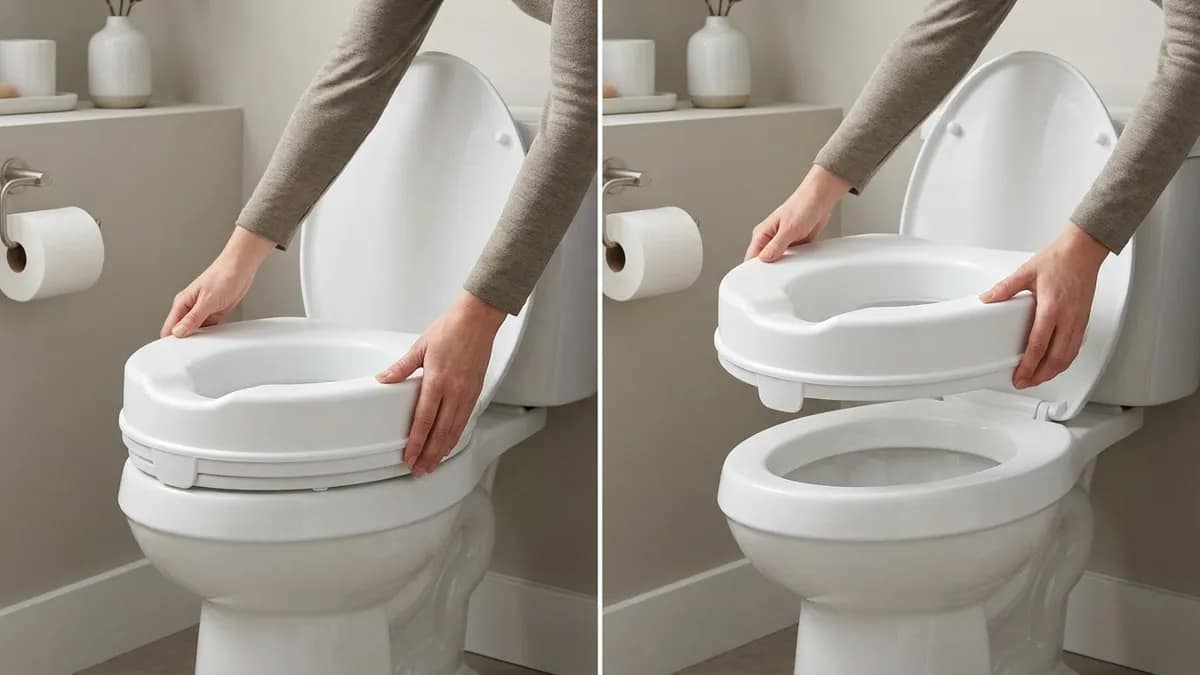
Raised toilet seats are often used as a temporary solution, so how easily they can be removed becomes an important part of choosing the right setup. Whether for cleaning, sharing a bathroom, or short-term recovery, flexibility matters just as much as stability.
So, can raised toilet seats be removed easily? In most cases, yes—but the level of effort depends on the type of seat and how it is installed.
Understanding how different designs work will help you choose a setup that fits both your safety needs and your need for easy removal.
Disclosure: As an Amazon Associate, I earn from qualifying purchases. This post may contain affiliate links. If you purchase through these links, I may earn a small commission at no extra cost to you. I only recommend products I would feel comfortable using in my own home. Learn more.
On This Page
- Types of Raised Toilet Seats and How Easy They Are to Remove
- How to Remove a Raised Toilet Seat (Step-by-Step)
- When Removal Is Easy (And When It’s Not)
- Can You Remove It Daily or Temporarily?
- Common Problems When Removing a Raised Toilet Seat
- How to Make Removal Easier
- Alternative Options That Are Easy to Remove
- What I Recommend
- FAQ
- Final Thoughts
Quick Answer
Yes, most raised toilet seats can be removed easily, especially tool-free and clamp-on models, although more secure designs may require slightly more effort to detach.
- Tool-free seats → easiest to remove and reinstall
- Clamp-on seats → simple but require loosening brackets
- Locking models → more secure, slightly more effort to remove
- Frequent removal depends on how tightly the seat is secured
In general, removal takes only a few minutes, but ease of removal depends on how the seat is attached and how often it needs to be taken off.
Quick decision guide:
- Frequent removal needed: choose tool-free models
- Occasional removal: clamp-on models work well
- Maximum stability needed: choose more secure designs and remove less often
Types of Raised Toilet Seats and How Easy They Are to Remove

Not all raised toilet seats are designed with the same level of flexibility. Some are built for quick removal, while others prioritize stability.
Tool-free seats
These are the easiest to remove. They are designed to be attached and detached without tools, making them ideal for temporary use or shared bathrooms.
If you’re considering this type, this guide on using a raised toilet seat without tools explains how they work in practice.
Clamp-on seats
These use adjustable brackets to secure the seat. Removal is still simple but requires loosening the clamps before lifting the seat.
They offer a good balance between stability and flexibility.
Locking or fixed models
These are designed for a more secure fit. While they can still be removed, the process may take slightly longer and require more careful adjustment.
They are better suited for longer-term use rather than frequent removal.
Choosing the right type depends on how often you plan to remove the seat and how important stability is for your situation.
Once you understand the type of seat you’re using, the removal process becomes more straightforward.
How to Remove a Raised Toilet Seat (Step-by-Step)
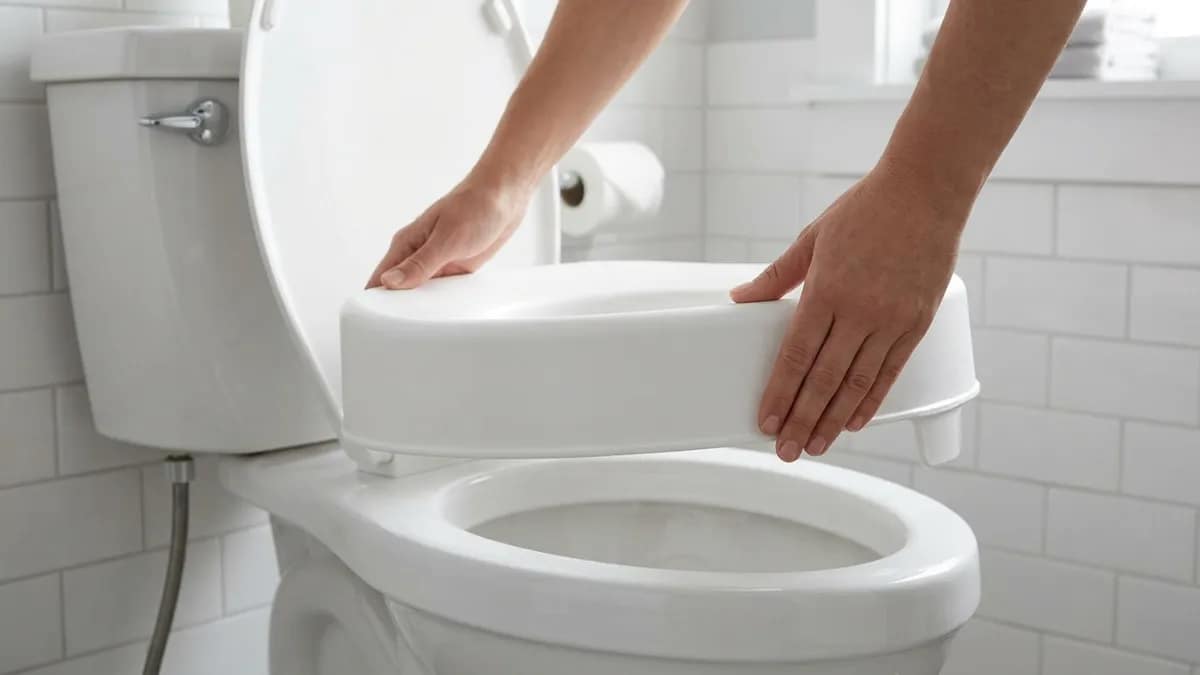
Removing a raised toilet seat is usually simple, but doing it in the right order helps avoid awkward lifting or parts catching on the rim.
Step 1: Fully Release the Attachment Mechanism
Loosen clamps or unlock the mechanism completely before lifting. Partially loosened brackets are the most common reason seats feel stuck.
Step 2: Lift Evenly from Both Sides
Use both hands and lift straight up. This prevents tilting, which can cause the seat to catch on the bowl or feel heavier than it is.
Step 3: Check for Residual Tightness or Contact Points
If it doesn’t lift easily, stop and check for any remaining tension or contact points. Forcing it can damage the seat or the toilet.
Removal should feel controlled and smooth. If it doesn’t, it usually means something hasn’t been fully released.
If you want a better understanding of how installation affects both removal and reinstallation, this guide on how to install a raised toilet seat explains how to set it up properly from the start.
When Removal Is Easy (And When It’s Not)
When considering can raised toilet seats be removed easily, the answer depends on how the seat is designed and how it is used over time.
It is usually easy when:
- the seat is lightweight
- attachments are simple
- it is not overtightened
It may be less easy when:
- clamps are tightened too much
- the seat has not been removed in a long time
- the design prioritizes stability over flexibility
A seat used occasionally in a guest bathroom will be much easier to remove than one installed for daily, long-term use.
Understanding this difference helps set realistic expectations.
Can You Remove It Daily or Temporarily?

When asking can raised toilet seats be removed easily, it’s also important to consider how often the seat needs to be taken off and reinstalled.
Daily removal is possible when:
- the seat uses tool-free attachment
- the setup is lightweight and simple
Temporary use is common for:
- short-term recovery
- shared bathrooms
- renters or flexible setups
In a shared household, one person may need a raised seat while others do not. In this case, a tool-free model can be removed after each use and reinstalled quickly when needed without disrupting the rest of the household.
If your situation requires frequent removal, choosing the right type becomes more important. This guide on temporary raised toilet seats for renters explains which designs work best for flexible use.
Not every model is built for daily removal, so matching the seat to your usage pattern is key.
Common Problems When Removing a Raised Toilet Seat
Even simple designs can become harder to remove if certain issues are overlooked during setup or daily use.
- Overtightened clamps
Tightening the seat too much for stability can make it difficult to loosen later. - Parts becoming stiff over time
Lack of regular adjustment or cleaning can cause components to feel stuck. - Uneven lifting
Lifting from one side can cause the seat to catch or feel harder to remove.
Real-Life Example:
A seat that hasn’t been removed for weeks may feel harder to lift simply because the clamps have settled into position. This doesn’t mean it’s stuck—it usually just needs proper loosening first.
Most of these issues are minor and can be avoided with proper setup and occasional adjustment.
An article on how to clean a raised toilet seat can also help explain how residue buildup around clamps, brackets, or contact points may affect removal over time if the seat is not cleaned regularly.
How to Make Removal Easier
Making removal easier usually comes down to small choices during setup rather than the removal process itself.
- Avoid overtightening
Tighten enough for stability, but not to the point where removal becomes difficult. - Choose the right type
Tool-free or quick-release designs are better for frequent removal. - Check and adjust periodically
Regular adjustments prevent parts from becoming stiff or difficult to handle.
Someone who removes the seat a few times a week will benefit more from a quick-release model than a tightly secured clamp-on design. Over time, this makes a noticeable difference in convenience.
Choosing the right model from the start makes the biggest difference. This guide on how to choose a raised toilet seat explains what to look for based on your needs.
Alternative Options That Are Easy to Remove
If flexibility is your main concern, there are alternatives that are even easier to install and remove than raised toilet seats.
These options focus on providing support rather than changing height.
- Temporary grab bars → attach without permanent installation
- Clamp-on handles → removable without tools
- Portable safety solutions → designed for short-term use
Real-Life Example:
A renter who cannot install permanent fixtures may use temporary grab bars next to the toilet for support instead of adding a raised seat. This setup provides stability during sitting and standing while still allowing everything to be removed easily when needed.
If you’re considering this type of setup, this guide on temporary grab bars for renters explains how these solutions work and when they are a practical choice.
In situations where easy removal is just as important as safety, these alternatives can be a better fit.
What I Recommend
If you need flexibility, choose a model designed for easy removal rather than trying to adapt a more permanent setup.
- For short-term recovery → choose tool-free or lightweight designs
- For occasional removal → clamp-on models work well
- For long-term use → prioritize stability over easy removal
If the seat is mainly being used during recovery, it helps to compare options made for that situation. This guide to the best raised toilet seats after surgery shows which models are easier to manage while still providing the support and height needed during healing.
The key is to match the seat to how often you plan to remove it, not just how easy it is to install.
FAQ
Can you remove a raised toilet seat without tools?
Yes, many models are designed for tool-free removal.
How long does it take to remove one?
Usually just a few minutes, depending on the design.
Can you reinstall it easily?
Yes, most models can be reinstalled using the same steps.
Is it safe to remove it frequently?
Yes, if the model is designed for frequent removal.
Do all raised toilet seats remove the same way?
No, the process varies depending on the attachment type.
Final Thoughts
Most raised toilet seats are designed to be removable, but how easy that feels depends on the type of seat and how it is used.
Choosing the right design from the start makes a noticeable difference, especially if flexibility is important in your daily routine.
A setup that balances stability and ease of removal will provide both safety and convenience over time.
