
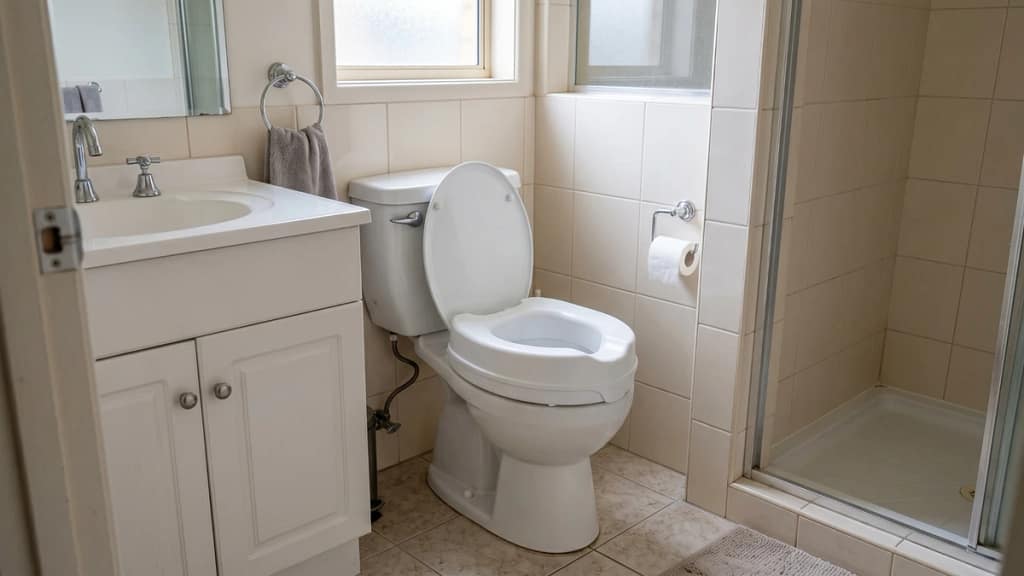
Small bathrooms can make toilet safety decisions more difficult. A raised toilet seat may add helpful height, but limited side clearance, nearby vanities, and tight transfer space can make some designs feel awkward.
That is why raised toilet seats for small bathrooms need to be chosen carefully. The right option should fit the toilet, leave enough room to sit and stand, and avoid making the bathroom feel more crowded.
This guide explains what to check before choosing one, including height, toilet fit, side clearance, handles, support needs, and when a more compact setup makes sense.
Disclosure: As an Amazon Associate, I earn from qualifying purchases. This post may contain affiliate links. If you purchase through these links, I may earn a small commission at no extra cost to you. I only recommend products I would feel comfortable using in my own home. Learn more.
On This Page
- Why Small Bathrooms Make Raised Toilet Seat Choice Harder
- How Much Height Works Best in a Small Bathroom?
- Measure the Toilet and the Space Around It First
- Will a Raised Toilet Seat Fit the Existing Toilet?
- Handles Can Help, But They Need Enough Clearance
- When a Small Bathroom Needs Support Around the Toilet
- How to Choose a Raised Toilet Seat for a Small Bathroom
- When It Makes Sense to Compare Small-Bathroom Raised Seat Options
- Common Mistakes in Small Bathrooms
- What I Recommend
- FAQ
- Final Thoughts
Quick Answer
Raised toilet seats for small bathrooms can work well when the seat fits the toilet securely, adds only the height needed, and leaves enough room for safe sitting and standing. Compact designs are often easier to manage, while wider seats or models with handles need more careful clearance checks.
- Compact raised seats usually work better in tight bathrooms
- Handles can help, but they need enough side clearance
- Toilet shape and attachment style still matter
- Added height should not make the setup feel crowded or unstable
- Measuring first helps avoid fit problems
The best raised toilet seat for a small bathroom is not always the smallest model. It is the one that fits the toilet, supports the user’s movement, and leaves enough working space around the toilet.
A seat that technically fits the bowl can still be the wrong choice if it blocks natural movement or makes transfers feel cramped.
Why Small Bathrooms Make Raised Toilet Seat Choice Harder
Small bathrooms create fit problems that may not be obvious from the product description. A raised toilet seat can add height, but it can also change how much space the user has for knees, feet, and hand placement.
Common small-bathroom challenges include:
- limited side clearance
- vanities or walls close to the toilet
- reduced front clearance
- toilet paper holders or fixtures near the seat
- less room for handles or support arms
In a small bathroom, the best choice needs to fit the whole movement, not just the toilet bowl.
Example:
A raised toilet seat with handles may look like the safest option, but one handle may sit too close to a wall or cabinet. That can make it harder to sit down, stand up, or use the handle naturally.
How Much Height Works Best in a Small Bathroom?
The best height is the amount that reduces strain without making the seated position feel awkward. In a small bathroom, this matters because the user may have less room to adjust foot position or shift weight while standing.
Too little height may not help enough. Too much height can make the feet feel less grounded or make the transfer feel less controlled, especially when there is limited room to reposition the feet in front of the toilet.
A practical height choice should consider:
- the current toilet height
- the user’s height
- knee and hip comfort
- foot contact with the floor
- how much room is available in front of the toilet
For example, a taller raised seat may reduce bending, but it may also make positioning harder if the bathroom has limited front clearance. That is why height should be judged together with the available space.
If the height question is unclear, this guide on how much height a raised toilet seat adds explains why a few inches can change sitting and standing more than expected.
Once the height range is clear, the next step is measuring the toilet area so the seat can work in the actual bathroom layout.
Measure the Toilet and the Space Around It First
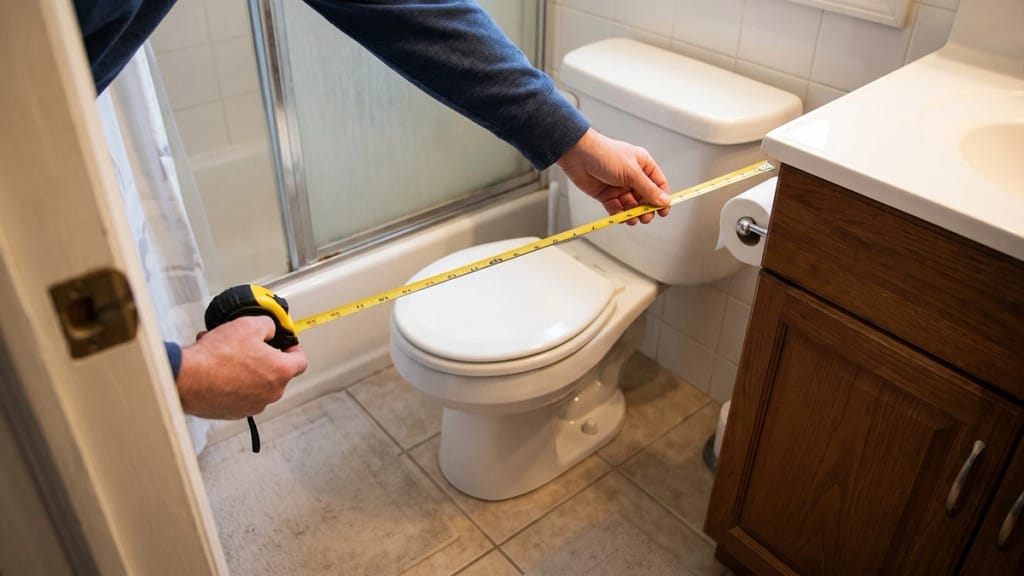
Measuring is especially important in a small bathroom because small differences in width, shape, or clearance can affect daily use.
Before choosing a raised toilet seat, check:
- toilet height
- bowl shape
- side clearance
- front clearance
- door swing, approach space, or transfer path around the toilet
- distance to the wall or vanity
- toilet paper holder position
- room for handles if needed
Measuring only the toilet height is not enough. The seat also needs to leave enough room for the user to approach the toilet, sit down, stand up, and reposition safely.
How to check the space:
Stand in front of the toilet and picture the full sit-to-stand movement. There should be enough room for the user’s feet, knees, hands, and turning space without hitting a vanity, wall, door, toilet paper holder, or raised seat handle.
For example, a raised seat may match the toilet shape but still feel too wide if the bathroom has a vanity close to one side. In that case, the problem is not the seat height. It is the full clearance around the toilet.
This guide on how to measure for a raised toilet seat explains what to check before choosing a model.
Good measurements make the next step easier: confirming whether the seat will actually fit the toilet itself.
Will a Raised Toilet Seat Fit the Existing Toilet?
A small bathroom does not change the basic fit rules. A raised toilet seat still needs to match the existing toilet’s shape, rim, and attachment setup before it can be trusted for daily use.
Important compatibility factors include:
- round vs elongated bowl shape
- rim shape
- attachment method
- toilet seat mounting area
- whether the raised seat uses clamps, bolts, or locking knobs
For example, a compact raised toilet seat may still feel unstable if it does not match the toilet bowl shape or cannot attach securely. A smaller bathroom does not remove the need for proper compatibility.
This guide on whether raised toilet seats fit all toilets explains how toilet shape, attachment style, and overall fit affect stability.
A good small-bathroom setup starts with toilet compatibility, then adds the space and support checks that make daily use practical.
Handles Can Help, But They Need Enough Clearance
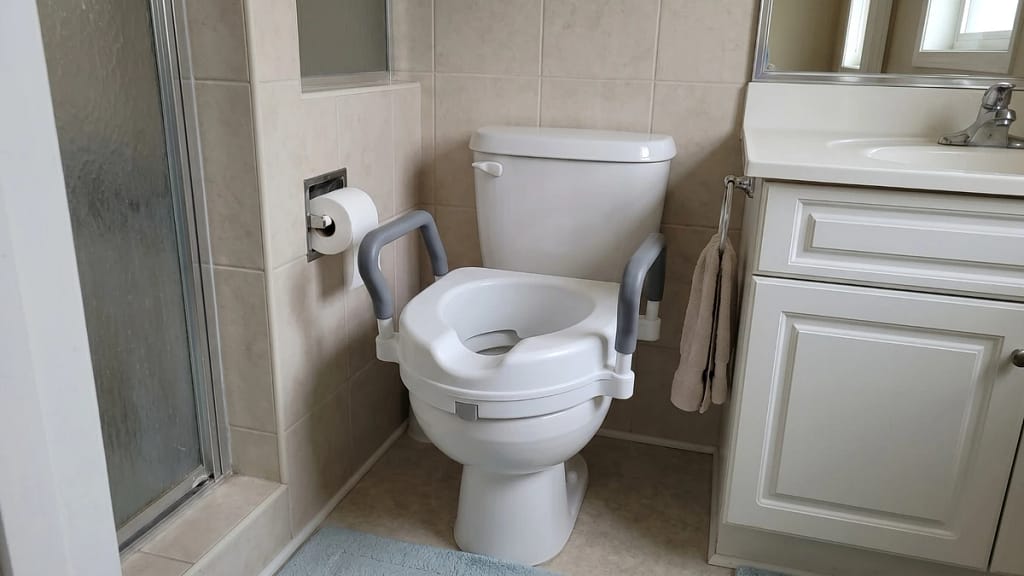
Handles can make a raised toilet seat more supportive, especially when standing up feels difficult. In a small bathroom, however, handles can also create fit problems.
Handles may be helpful when:
- the user needs support during standing
- pushing up from the toilet feels difficult
- nearby surfaces are not safe to use for balance
- the seat needs to provide more control than height alone
But handles may be a problem when:
- one side is close to a wall or vanity
- the handles block natural movement
- the bathroom is too narrow for comfortable hand placement
- the user cannot reach the handles evenly
Removable handles or narrower support designs may work better in some small bathrooms. The key is not only whether the handles fit, but whether they can be used comfortably during the full transfer.
If handles make the toilet area harder to use, a narrower raised seat, separate wall support, or another support approach may be safer than forcing a wider seat into a tight space.
When a Small Bathroom Needs Support Around the Toilet
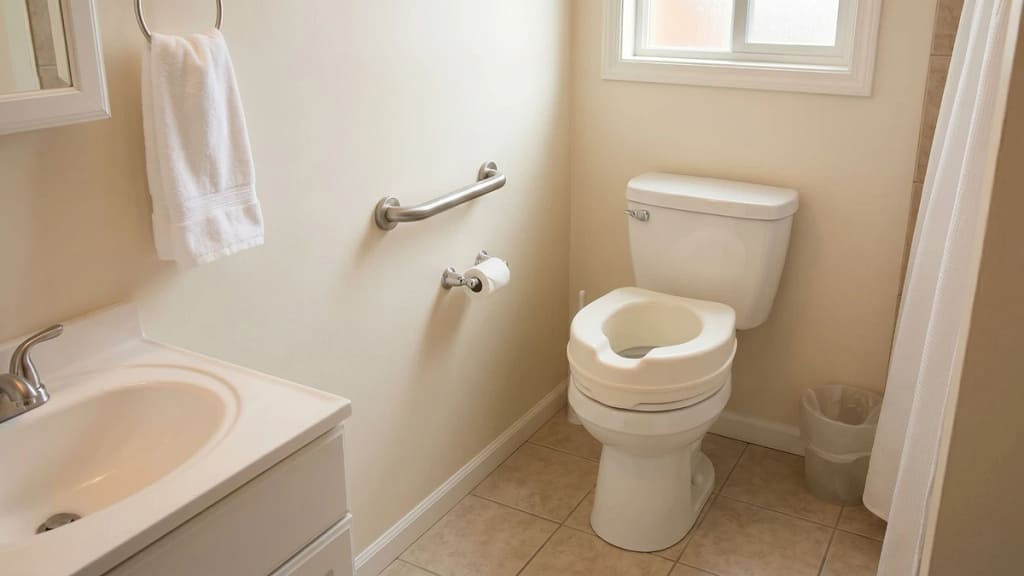
A raised toilet seat mainly solves a height problem. It does not always solve balance, grip, or side-support problems.
Support around the toilet becomes more important when:
- the user reaches for walls or counters while standing
- the raised seat helps with height but not balance
- handles on the seat do not fit comfortably
- there is limited room for a wider support design
- transfers still feel uncertain after adding height
For example, a compact raised seat may fit the toilet well, but the user may still need something stable nearby when standing. In a small bathroom, support placement needs to be planned carefully because there may be less wall space and less room for bulky equipment.
When wall support is part of the decision, this guide on grab bars for small bathrooms explains how support can be planned when space is limited.
The goal is to avoid solving the height problem while leaving the transfer support problem untouched.
How to Choose a Raised Toilet Seat for a Small Bathroom
Choosing a raised toilet seat for a small bathroom means balancing height, fit, stability, and clearance.
The main factors are:
- compact footprint
- correct toilet shape
- secure attachment
- realistic added height
- whether handles are practical
- ease of cleaning and removal
- enough room for sitting and standing
A basic compact seat may work well when the user only needs added height. A handle-supported seat may be better when the user also needs help standing, but only if the bathroom has enough side clearance.
For example, a seat with handles may be safer in theory but less practical if one handle crowds the wall. A simpler seat may work better when space is tight and separate wall support is available.
This broader decision process is easier when fit, height, support, and daily use are considered together. This guide on how to choose a raised toilet seat explains how to weigh those factors more clearly.
Once those needs are clear, it becomes easier to decide whether a general raised seat is enough or whether small-bathroom-specific options should be compared.
When It Makes Sense to Compare Small-Bathroom Raised Seat Options
Comparing small-bathroom raised seat options makes sense when space is tight and a standard raised toilet seat may feel too bulky.
This is especially useful when:
- the bathroom has limited side clearance
- handles may or may not fit
- the current raised seat feels crowded
- the user needs a compact but stable setup
- the toilet shape or bathroom layout limits choices
At this stage, the goal is not simply to find the smallest seat. The better goal is to find a seat that fits the toilet, leaves enough movement space, and still supports the user’s needs.
For readers ready to compare compact options, this guide to the best raised toilet seats for small bathrooms compares designs that are better suited to tighter layouts.
Comparing options is most useful after the bathroom’s main limitation is clear, whether that is side clearance, handle width, toilet shape, or transfer space.
Common Mistakes in Small Bathrooms
Small-bathroom setups often fail because the seat is chosen by one feature instead of the full bathroom layout.
Common mistakes include:
- Choosing handles without checking side clearance
Handles can help, but they need enough room to be used naturally. - Measuring only toilet height
Height matters, but side clearance and front clearance matter too. - Ignoring front clearance
The user still needs room for feet, knees, and standing movement. - Assuming compact means stable
A smaller seat still needs secure attachment and proper fit. - Using a seat that crowds the transfer path
A seat that makes movement awkward can create a new problem.
The best small-bathroom setup should make movement easier, not simply add height in a tighter space.
What I Recommend
The most practical approach is to measure the full toilet area before choosing a raised toilet seat for a small bathroom.
A good process is:
- confirm the toilet shape
- measure side and front clearance
- choose only the height that is actually needed
- check whether handles will fit comfortably
- prioritize secure fit over extra features
- avoid any setup that makes transfers feel cramped
A raised toilet seat can work well in a small bathroom when it fits both the toilet and the available space. If the seat adds height but makes movement feel crowded or unstable, it is not the right fit.
The best option is usually the simplest stable setup that solves the height problem without taking away needed movement space.
FAQ
Can raised toilet seats work in small bathrooms?
Yes. Raised toilet seats can work in small bathrooms when the seat fits the toilet securely and leaves enough room for sitting and standing.
Are raised toilet seats with handles too wide for small bathrooms?
Some can be too wide, especially near walls or vanities. Side clearance should be checked before choosing a model with handles.
What should be measured before choosing one?
Measure toilet height, bowl shape, side clearance, front clearance, and the distance to nearby fixtures such as walls or vanities.
Is a compact raised toilet seat always safer in a small bathroom?
Not always. A compact seat still needs to fit securely and provide enough stability during transfers.
What if the raised toilet seat fits the toilet but crowds the bathroom?
If the seat crowds the transfer path or makes movement awkward, a different design or support setup may be needed.
Final Thoughts
Raised toilet seats for small bathrooms can be useful when toilet height is making sitting and standing harder. The key is choosing a seat that fits the toilet securely without crowding the transfer space.
Compact designs often work better in tight layouts, but compact size alone is not enough. Height, attachment style, toilet shape, handles, and nearby support all matter.
The safest choice is the raised toilet seat that supports the user’s movement while still leaving enough room to use the bathroom comfortably.
