
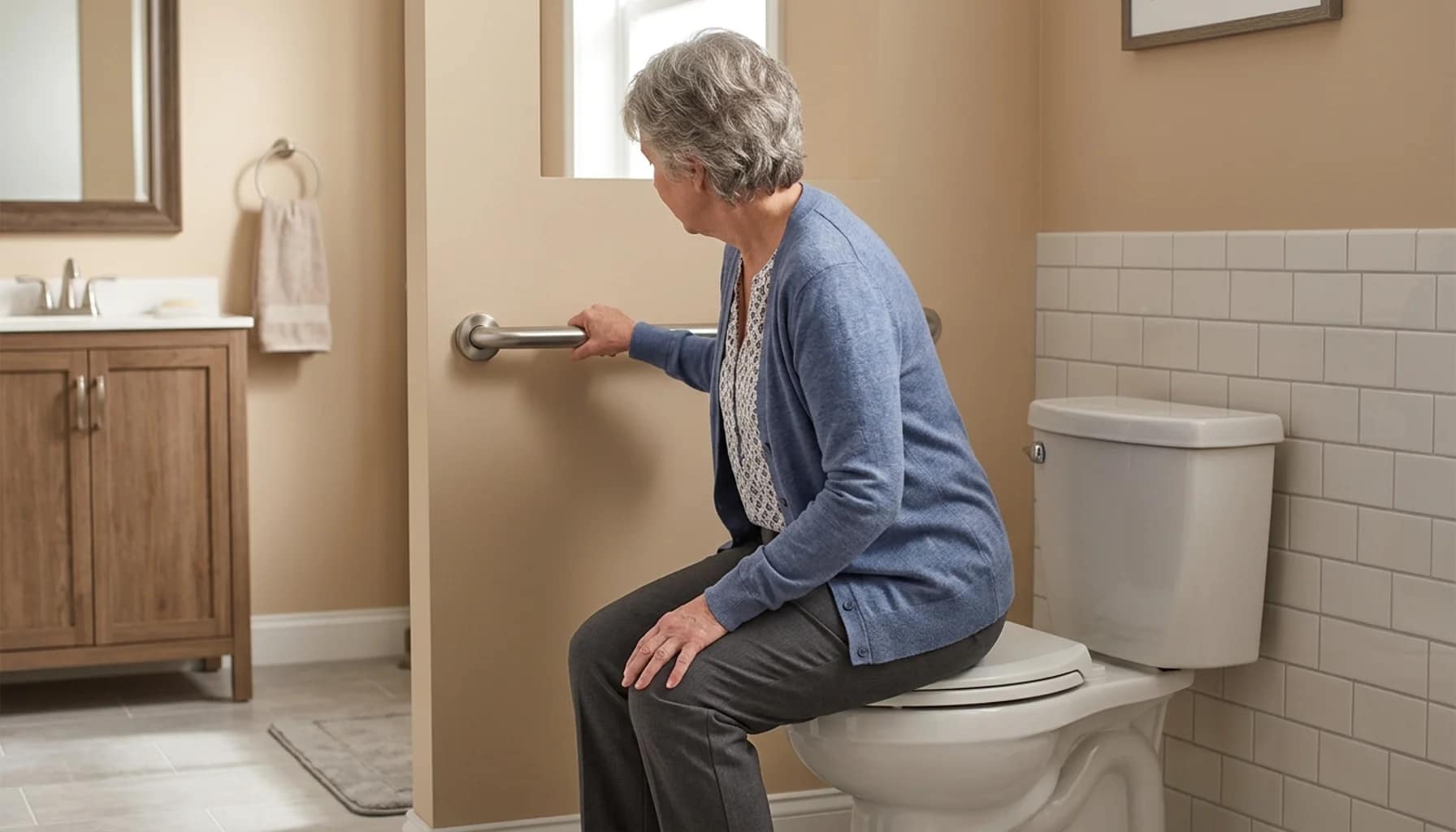
Falls in bathrooms are a common concern, especially in areas where surfaces are wet and movement is frequent. This often leads to a key question: do grab bars actually prevent falls?
There is a common misconception that installing grab bars eliminates risk completely. In reality, their role is to reduce risk and provide support during movement.
Understanding do grab bars prevent falls requires looking at how they work, where they are most effective, and what factors influence their performance.
This is especially important because many falls happen during routine movements rather than unexpected accidents.
Disclosure: As an Amazon Associate, I earn from qualifying purchases. This post may contain affiliate links. If you purchase through these links, I may earn a small commission at no extra cost to you. I only recommend products I would feel comfortable using in my own home. Learn more.
On This Page
- How Grab Bars Help Prevent Falls
- Situations Where Grab Bars Are Most Effective
- What Grab Bars Cannot Do
- Factors That Affect How Well Grab Bars Prevent Falls
- Common Reasons Grab Bars Fail to Prevent Falls
- Are Grab Bars Enough on Their Own?
- How to Get the Most Safety Benefit from Grab Bars
- What I Recommend
- FAQ
- Final Thoughts
Quick Answer
Grab bars can help prevent falls by providing stable support during movement, especially in high-risk areas like bathrooms, but they do not eliminate the risk entirely, as their effectiveness depends on proper placement, correct use, and overall environment safety.
- Help stabilize balance during movement
- Reduce risk in slippery environments
- Support controlled sitting and standing
- Most effective when properly installed
- Work best as part of a broader safety setup
Grab bars are designed to assist with balance and movement rather than guarantee fall prevention. Their effectiveness depends on how and where they are used within the bathroom.
How Grab Bars Help Prevent Falls
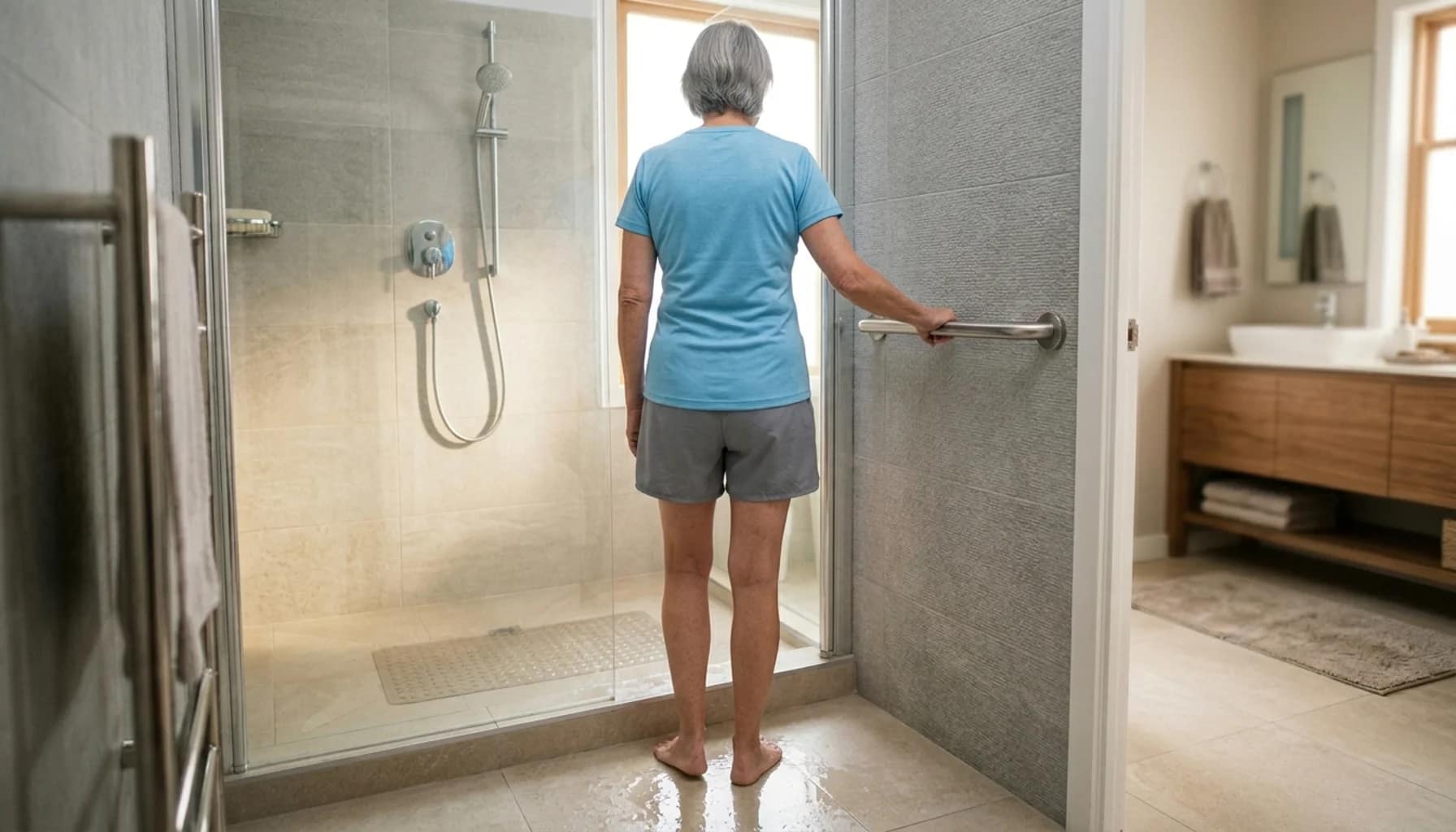
Grab bars provide a stable point of contact during movement. This can help maintain balance when surfaces are slippery or when transitioning between positions.
They are especially useful during movements such as standing up, sitting down, or turning. These actions often involve shifts in body weight that can increase the risk of instability.
Grab bars also reduce reliance on unstable surfaces such as towel racks or sink edges, which are not designed to support weight.
For a more reliable setup, wall mounted grab bars provide secure and consistent support when installed correctly.
Situations Where Grab Bars Are Most Effective
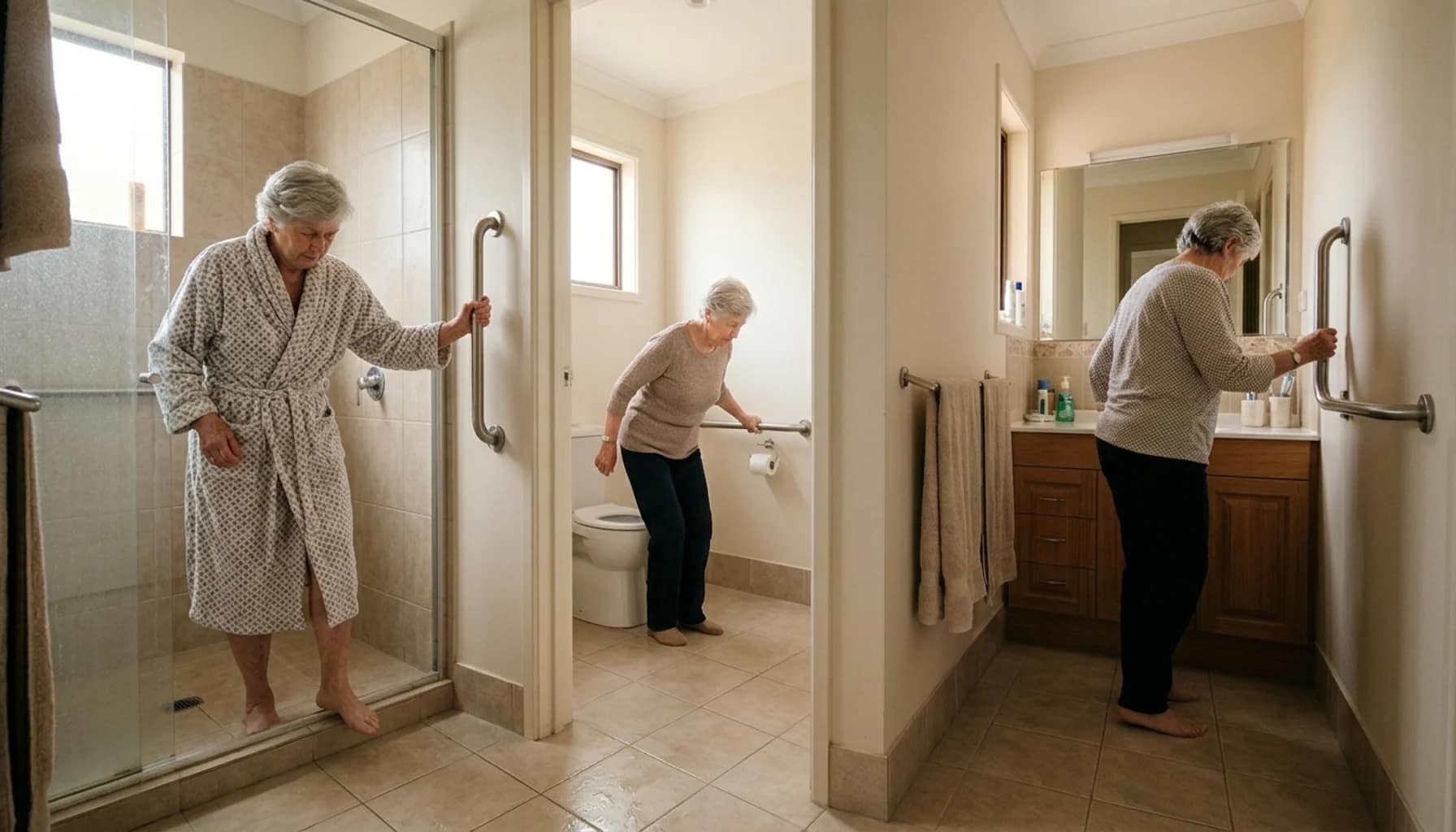
Grab bars are most effective in areas where movement is frequent and surfaces increase the risk of slipping.
- Shower entry and exit: Stepping over thresholds and onto wet surfaces
- Standing from the toilet: Requires controlled upward movement
- Turning in confined spaces: Limited room increases instability
For example, stepping into a shower often involves shifting weight onto a wet surface. A grab bar placed within reach helps maintain balance during that transition.
In many cases, these high-risk movements are the earliest signs that additional support may be needed. Recognizing these situations can help determine when to install grab bars for seniors before a fall occurs, rather than reacting after one.
What Grab Bars Cannot Do
Grab bars provide support, but they have limitations.
They cannot prevent all falls, especially in situations where balance is severely compromised. They also do not eliminate hazards such as slippery flooring or poor lighting.
Real-Life Example:
If the floor is wet and no non-slip surface is present, a person may still slip before reaching a grab bar. In this case, the grab bar cannot prevent the initial loss of balance.
Grab bars are not a substitute for other safety measures. They work best when combined with improvements such as non-slip surfaces and adequate lighting.
Understanding these limitations helps set realistic expectations.
This highlights the importance of combining grab bars with other safety measures rather than relying on them alone.
Factors That Affect How Well Grab Bars Prevent Falls
The effectiveness of grab bars depends on several key factors.
Placement:
Grab bars must be positioned where support is needed during movement.
Installation quality:
Secure mounting into wall studs ensures stability under pressure.
User behavior:
Consistent use is important. Grab bars cannot help if they are not used during movement.
Bathroom environment:
Conditions such as wet floors or clutter can still increase risk even with grab bars installed.
These factors work together rather than independently. Even a well-installed grab bar may be less effective if placement or usage does not match real movement patterns.
Common Reasons Grab Bars Fail to Prevent Falls

In some cases, grab bars do not provide the expected level of safety. This is often due to avoidable issues.
Incorrect placement can make grab bars difficult to reach when needed. Weak installation can reduce stability and increase risk.
Another common issue is inconsistent use. If grab bars are not used regularly, they cannot provide support during critical moments.
Overconfidence can also play a role. Relying solely on grab bars without addressing other risks may create a false sense of security.
Understanding common grab bar installation mistakes can help identify issues that reduce their effectiveness.
Are Grab Bars Enough on Their Own?
Grab bars are an important safety feature, but they are not a complete solution on their own.
They should be part of a broader safety setup that includes non-slip flooring, proper lighting, and clear pathways.
Combining these elements helps create a safer environment overall. Each component addresses a different aspect of fall risk.
Using grab bars alongside other safety measures provides more effective protection than relying on a single solution.
This combination improves safety by addressing both balance support and environmental risks. Understanding are grab bars safe for seniors can help clarify how they fit into a complete safety setup.
Addressing only one risk factor may leave other hazards unaddressed, which is why a combined approach is more effective.
How to Get the Most Safety Benefit from Grab Bars
Maximizing the benefit of grab bars involves proper setup and consistent use.
- Install grab bars in key areas such as showers and near toilets
- Ensure they are mounted securely and positioned correctly
- Use them regularly during movement
- Combine with other safety features such as non-slip mats
For example, using a grab bar while stepping into the shower can help maintain balance during one of the highest-risk movements.
Consistent use is essential for achieving the full benefit. Grab bars are most effective when they become part of routine movement rather than being used only in moments of instability.
These steps help ensure that grab bars are not only installed correctly but also used effectively in daily routines.
For a more complete understanding of how these elements work together, a broader approach to improving bathroom safety with grab bars can help address multiple risk factors at once.
What I Recommend
Grab bars should be used as part of a broader safety approach rather than a standalone solution.
Priority should be given to high-risk areas such as showers and around toilets, where balance support is most critical.
Focus on proper placement and secure installation first. A well-positioned grab bar provides more benefit than adding multiple bars without clear purpose.
Combining grab bars with non-slip surfaces, good lighting, and clear pathways creates a more complete and reliable safety setup, and following a bathroom safety checklist for seniors can help ensure all key risk factors are addressed beyond grab bars alone.
FAQ
Do grab bars completely prevent falls?
No, grab bars help reduce the risk of falls but do not eliminate it entirely.
Where are grab bars most effective?
They are most effective in high-risk areas such as showers, near toilets, and at bathtub entry points.
Are grab bars enough on their own?
No, they should be used alongside other safety measures such as non-slip flooring and proper lighting.
Why do some falls still happen with grab bars?
Falls can still occur due to improper placement, weak installation, inconsistent use, or other environmental risks.
Final Thoughts
Grab bars can significantly reduce the risk of falls, but they do not eliminate it completely. Their effectiveness depends on proper placement, consistent use, and overall bathroom safety.
They work best as part of a broader safety approach that includes non-slip surfaces, good lighting, and an organized layout.
Understanding both their strengths and limitations helps create a safer and more realistic approach to fall prevention.
