
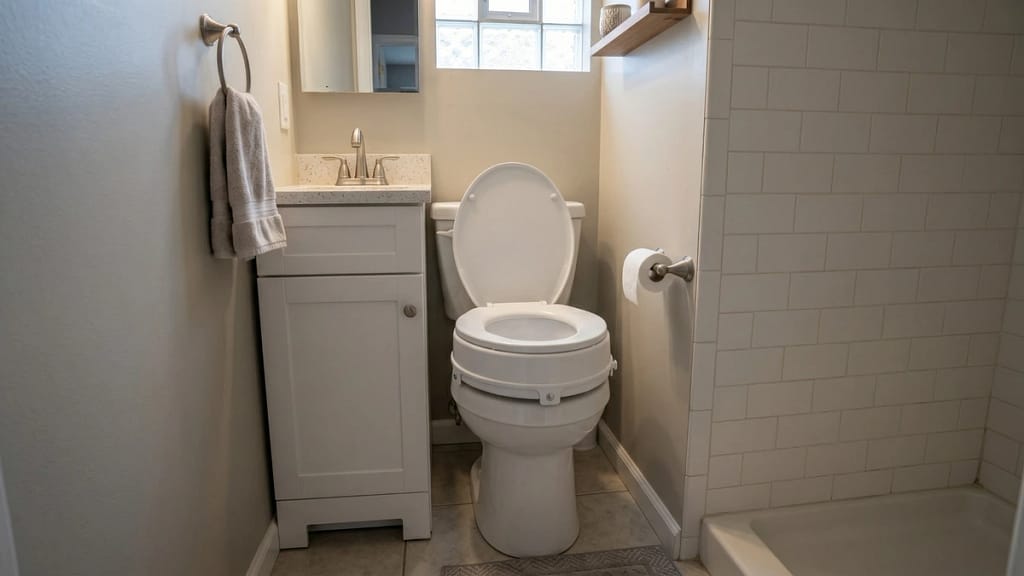
A raised toilet seat can make a low toilet easier to use, but small bathrooms create a different problem. The seat may add height, but it can also add width, bulk, or awkward handle placement if the product is not chosen carefully.
That is why choosing the best raised toilet seats for small bathrooms is not only about finding the smallest model. The better choice is usually the one that adds useful height while still fitting the toilet, surrounding fixtures, and daily bathroom routine.
In a tight toilet area, every detail matters: toilet shape, side clearance, front clearance, handle width, attachment style, and whether the bathroom is shared. This guide explains what to look for before comparing specific products.
Disclosure: As an Amazon Associate, I earn from qualifying purchases. This post may contain affiliate links. If you purchase through these links, I may earn a small commission at no extra cost to you. I only recommend products I would feel comfortable using in my own home. Learn more.
On This Page
- Quick Answer: Best Raised Toilet Seats for Small Bathrooms
- Which Raised Toilet Seat Makes the Most Sense for a Small Bathroom?
- Best Raised Toilet Seats for Small Bathrooms: Top Picks
- Why Small Bathrooms Make Raised Toilet Seat Choice Harder
- What to Measure Before Choosing a Small-Bathroom Raised Toilet Seat
- Do Small-Bathroom Raised Toilet Seats Fit Every Toilet?
- How Much Height Works Best in a Small Bathroom?
- Handles vs No Handles in a Small Bathroom
- How to Choose the Best Raised Toilet Seat for a Small Bathroom
- When a Raised Toilet Seat May Not Be the Best Small-Bathroom Solution
- When It Makes Sense to Compare Broader Raised Toilet Seat Options
- Common Mistakes When Choosing a Raised Toilet Seat for a Small Bathroom
- What I Recommend
- Final Thoughts
- FAQ
Quick Answer: Best Raised Toilet Seats for Small Bathrooms
The best raised toilet seats for small bathrooms are compact models that fit the toilet shape, add the right height, and leave enough room for sitting, standing, and turning safely.
A good small-bathroom option should:
- fit the toilet shape correctly
- leave enough side clearance for the user’s body and nearby fixtures
- add height without making foot position awkward
- stay stable during sitting and standing
- use handles only when there is enough room for them
For some bathrooms, a raised toilet seat with handles can work well. In other bathrooms, a simpler riser, wall-mounted grab bar, or different toilet support setup may be more practical.
The safest choice depends on the person’s main movement problem. If low toilet height is the issue, a raised seat may help. If balance or side support is the bigger problem, height alone may not be enough.
Which Raised Toilet Seat Makes the Most Sense for a Small Bathroom?
This table compares the top options based on support level, ideal use case, and the trade-offs that matter most in real use.
| Product | Best Use Case | Support Level | Why It Stands Out | Watch-Out | Action |
|---|---|---|---|---|---|
| KOHLER Hyten 3″ Elevated Toilet Seat | Best when space is tight and handles are not needed | Height only | 3-inch raise with normal seat style | Does not provide hand support | Check on Amazon |
| Lunderg Solva Raised Toilet Seat with Handles | Best when handles are needed but floor space is limited | Height + handles | Removable handles without floor legs | Needs side clearance for the handles | Check on Amazon |
| Vive Raised Toilet Seat | Best when easy installation matters most | Height only | Tool-free hinged riser design | No handles and a taller 3.5-inch raise | Check on Amazon |
| Bemis Assurance 3″ Raised Toilet Seat | Best when secure seat-style attachment is the priority | Secure height support | Secure hinge-style setup | Less convenient to remove than simple risers | Check on Amazon |
| Carex Hinged Raised Toilet Seat Riser | Best when price matters and handles are not needed | Budget height support | Budget-friendly hinged design | Basic design with no side support | Check on Amazon |
Best Raised Toilet Seats for Small Bathrooms: Top Picks
These raised toilet seats were selected for small-bathroom situations where fit, height, side clearance, and daily usability matter more than size alone.
BEST OVERALL
KOHLER Hyten 3″ Elevated Toilet Seat
The KOHLER Hyten 3″ Elevated Toilet Seat is the best overall pick for small bathrooms because it adds height without adding handles, legs, or a frame around the toilet. Its normal toilet-seat style makes it a practical choice when the bathroom is tight, shared, or needs to feel less medical-looking.
Best for: Users who mainly need added toilet height without extra side bulk.
Watch-outs: It does not provide handles for push-up support, so it is not the best choice when the user needs steady side support during transfers.
Why it stands out:
- 3-inch height increase without side handles
- More normal-looking than many medical-style risers
- Round and elongated options are available
- Soft-close seat design supports daily shared-bathroom use
Choose the correct round or elongated version before buying, and remember that added height alone does not solve balance problems.
BEST WITH HANDLES
Lunderg Solva Raised Toilet Seat with Handles
The Lunderg Solva Raised Toilet Seat with Handles is the best handled option for small bathrooms when side clearance allows. It adds height and hand support without using floor-standing legs, which makes it less bulky than a full frame-style setup around the toilet.
Best for: Users who need handles but do not want a floor-standing toilet safety frame.
Watch-outs: The handles still need side clearance, so this is not the best fit for very narrow toilet spaces. Choose the correct round or elongated version before buying.
Why it stands out:
- 3-inch height increase keeps the rise moderate
- Round and elongated options are available
- Removable handles add flexibility compared with fixed-handle designs
- No floor legs, which helps keep the setup cleaner in tighter bathrooms
- Less bulky-looking than many raised toilet seats with arms
Measure side clearance and choose the correct round or elongated version before selecting a handled raised toilet seat.
BEST TOOL-FREE OPTION
Vive Raised Toilet Seat
The Vive Raised Toilet Seat is the best tool-free option for users who want added height without handles or frame legs. Its no-handle design keeps the toilet area narrower, while the hinged riser style makes cleaning more practical than some fixed raised seats.
Best for: Users who mainly need added height and want a simpler installation process.
Watch-outs: It does not provide handles, and the 3.5-inch height increase may feel tall for some users.
Why it stands out:
- Tool-free installation based on the listing
- No side handles or frame legs to crowd a small bathroom
- Hinged design allows the riser to lift for cleaning
- Standard, elongated, and universal options are available
This is better positioned as an easy-install no-handle riser, not as a quick-lift portable seat.
BEST SECURE SEAT-STYLE OPTION
Bemis Assurance 3″ Raised Toilet Seat
The Bemis Assurance 3″ Raised Toilet Seat is the best secure seat-style option for users who want a more stability-focused no-handle raised seat. It avoids side handles and frame legs, but its secure hinge-style setup gives it a different role than simpler no-handle risers.
Best for: Users who want added height with a more secure seat-style attachment.
Watch-outs: It is less convenient to remove than simpler risers and does not provide side handles for push-up support.
Why it stands out:
- 3-inch height increase without side handles
- Secure hinge-style attachment supports the stability-focused angle
- No frame-style footprint, which helps in tight toilet areas
- Round and elongated options are available
Correct installation and toilet-shape fit still matter; a secure seat-style design should not be treated as a substitute for grab bars or full transfer support.
BEST BUDGET OPTION
Carex Hinged Raised Toilet Seat Riser
The Carex Hinged Raised Toilet Seat Riser is the best budget option for small bathrooms when the user mainly needs added height at a lower price. It keeps the setup simple with a no-handle design, while the hinged style makes it more practical than many very basic risers.
Best for: Budget-conscious users who need added height but do not need handles.
Watch-outs: It is a more basic design and is not the right choice when the user needs side support during transfers.
Why it stands out:
- Budget-friendly no-handle raised toilet seat
- 3.5-inch height increase without adding side bulk
- Hinged design supports easier cleaning than many basic risers
- Round and elongated versions are available
Choose the correct round or elongated version, and avoid using a budget no-handle riser when the main need is transfer support.
After comparing the products, the next step is checking whether the seat style fits the actual bathroom space and transfer movement. In small bathrooms, the best-looking option can still be the wrong choice if it crowds the toilet area or adds the wrong height.
Why Small Bathrooms Make Raised Toilet Seat Choice Harder
Small bathrooms make raised toilet seat choice harder because the product has to work in a limited space. A model that fits well in a larger bathroom may feel awkward when the toilet is close to a vanity, bathtub, wall, or toilet paper holder.
The biggest small-bathroom issues are usually:
- limited side clearance
- limited front clearance
- handles that make the seat too wide
- attachment parts that interfere with the toilet shape
- shared bathrooms where other users need normal access
- nearby fixtures that affect sitting, standing, or turning
This is why the smallest option is not automatically the best option. A very compact raised toilet seat may still be a poor fit if it shifts, feels unstable, or adds the wrong amount of height.
If you need the layout planning before comparing products, this guide on raised toilet seats for small bathrooms explains the space, clearance, and fit issues in more detail.
Example:
In a narrow bathroom where the toilet sits close to a vanity, a raised toilet seat with fixed handles may technically fit on the toilet but still be difficult to use. The handle on one side may be too close to the vanity, or the user may not have enough room to turn comfortably beside the toilet. In that situation, a compact no-handle riser or another support setup may work better than a wider raised seat.
Here, the focus is narrower: choosing raised toilet seat options that still make sense when the bathroom is tight and the user needs added toilet height.
What to Measure Before Choosing a Small-Bathroom Raised Toilet Seat
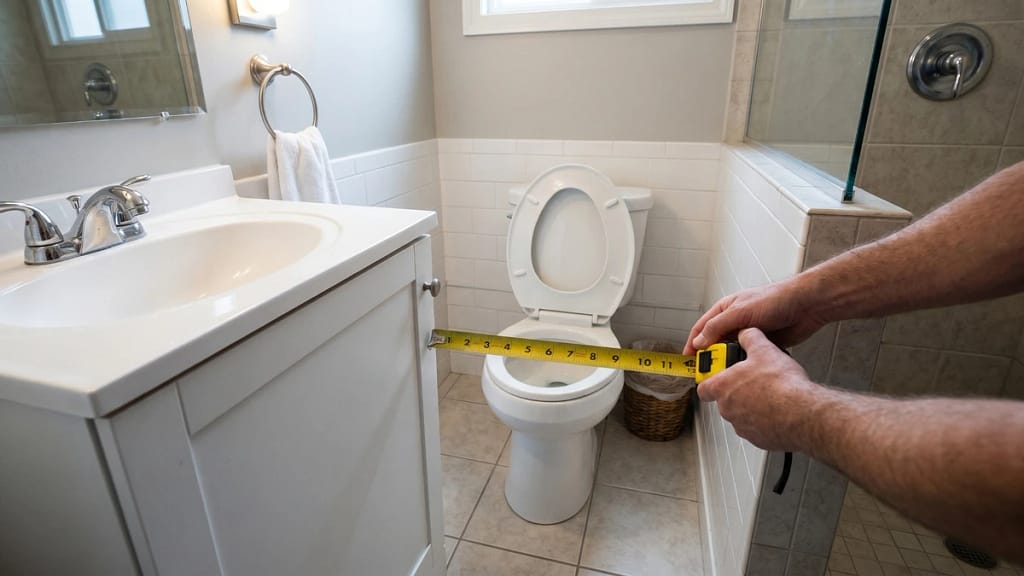
Measuring first is especially important in a small bathroom. A raised toilet seat can look compact online but still feel too wide, too tall, or too difficult to use once installed.
Start with the toilet itself. Check whether the bowl is round or elongated, then measure the available space around it. Toilet shape affects product compatibility, while surrounding space affects whether handles or side supports will be practical.
Important measurements include:
- current toilet seat height
- toilet bowl shape
- toilet bowl width and length
- side clearance on both sides of the toilet
- front clearance in front of the bowl
- distance to the vanity, tub, wall, or cabinet
- space needed for handles, clamps, or side brackets
- whether the toilet paper holder blocks the user’s arm or hip
This step helps prevent a common mistake:
Choosing a raised toilet seat that technically fits the toilet but does not fit the bathroom routine.
How to check the space:
Stand in front of the toilet and picture the full sit-to-stand movement. There should be enough room for the user’s feet, knees, hands, and turning space without the raised seat, handles, clamps, vanity, wall, cabinet, or toilet paper holder blocking the movement.
For a more detailed measuring process, this guide on how to measure for a raised toilet seat walks through the measurements that matter before buying.
In small bathrooms, measurement should happen before product preference. A comfortable-looking seat is only useful if it fits securely and leaves enough room to move.
Do Small-Bathroom Raised Toilet Seats Fit Every Toilet?
Small-bathroom raised toilet seats do not fit every toilet. Even compact models still need to match the toilet shape, rim style, and attachment method.
The first compatibility issue is usually round vs elongated toilet shape. A seat made for an elongated toilet may not sit correctly on a round toilet, and a round model may not give the right fit on an elongated bowl.
Other fit issues can include:
- unusual toilet rims
- thick or curved toilet bowls
- bidet attachments
- raised toilet seats that clamp to the bowl
- hinge-mounted designs that need enough space behind the seat
- armrests that interfere with nearby walls or fixtures
A small bathroom can make these issues more noticeable. If the seat is slightly awkward to install, the tight space may make it harder to adjust, clean, or remove.
This is why compatibility should be checked separately from bathroom size. This guide on whether raised toilet seats fit all toilets explains why toilet shape and attachment style matter.
A product can be compact and still be the wrong fit. The goal is not just a smaller seat; it is a secure seat that matches the toilet and the available space.
How Much Height Works Best in a Small Bathroom?
The best height depends on the user, not only the bathroom. A raised toilet seat should make sitting and standing easier without making the user’s feet dangle, changing balance, or creating an awkward transfer position.
In small bathrooms, height can feel different because there may be less room to adjust foot position. If the seat is too high, the user may feel less stable when sitting down or standing up. If it is too low, it may not reduce enough strain.
Common raised toilet seat heights include:
- lower-profile height increases for mild support needs
- moderate height increases for easier sit-to-stand movement
- taller risers for users who need more bending reduction
A taller seat is not always better. The right height should let the user sit with control, stand without excessive strain, and keep both feet positioned comfortably.
Real-life example: A 5-inch raised toilet seat may sound more supportive because it reduces bending, but it can feel too tall for a shorter user in a tight bathroom. If the person’s feet do not rest comfortably on the floor, standing up may feel less controlled. A lower raised seat may be the better choice if it still reduces enough strain.
This guide on what height raised toilet seat you need explains how body position and toilet height affect the decision.
For small bathrooms, the best choice is often the lowest height increase that solves the main problem. That keeps the setup more natural while still reducing strain.
Handles vs No Handles in a Small Bathroom
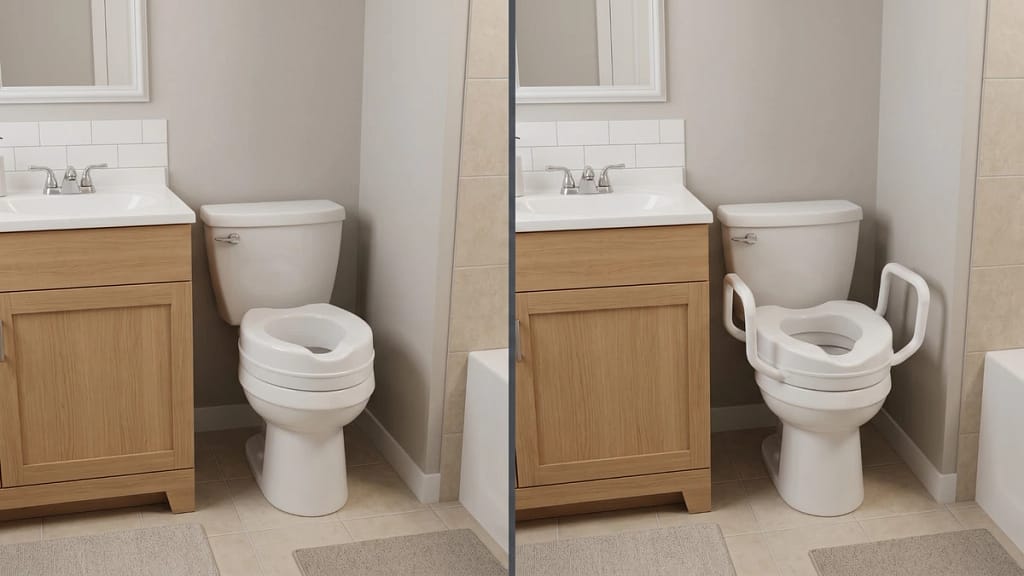
Handles can make a raised toilet seat more supportive, but they also make the setup wider. In a small bathroom, that trade-off matters.
Raised toilet seats with handles may help when the user needs a place to push up during standing or control the movement when sitting down. They can be especially useful when the toilet feels low and the person also wants light hand support.
However, handles may be a poor fit when:
- the toilet is close to a wall or vanity
- the bathroom is shared by several people
- the handles block side movement
- the user needs more support than the seat handles provide
- the handles make cleaning or removal harder
No-handle risers can work better when the main need is height and the bathroom does not have enough width for armrests. They may also be easier to use in shared bathrooms because they usually change the toilet area less.
Removable handles can be a middle option. They may provide support when needed while allowing more flexibility later. However, removable parts should still be checked carefully for stability before regular use.
The key question is simple: does the handle actually improve the transfer, or does it crowd the bathroom? In a small space, added support is only helpful if the user can reach and use it naturally.
How to Choose the Best Raised Toilet Seat for a Small Bathroom
Choosing the best raised toilet seat for a small bathroom means balancing fit, height, stability, support, and daily usability. The product should not solve one problem while creating another.
Start with the available clearance
Before comparing features, check how much room exists around the toilet. Side clearance matters most if the seat has handles. Front clearance matters for standing, turning, and approaching the toilet.
A compact product may still feel awkward if the user cannot position their feet or move around the toilet comfortably.
Match the height to the user
The seat should reduce bending without making the toilet too high. A moderate height increase may be enough for many users. Taller risers may help in some situations, but they can also change balance and foot placement.
Decide whether handles are practical
Handles are useful only when there is enough room to use them. If the handles press too close to a wall, vanity, or cabinet, they may not give the user natural support.
For tight bathrooms, compare handle width carefully. A no-handle riser or removable-handle model may be more practical than a fixed wide-arm design.
Check attachment and stability
A raised toilet seat should feel stable before regular use. Attachment style matters because some seats lock to the bowl, some attach through the hinge area, and some sit over the existing toilet setup.
In a small bathroom, an unstable seat can be especially frustrating because there is less room to reposition or compensate.
Consider cleaning and removal
Small bathrooms can make cleaning harder. A seat that is difficult to remove or clean around may become inconvenient for daily use, especially in a shared bathroom.
This broader guide on how to choose a raised toilet seat explains the main buying factors beyond small-bathroom space.
The best small-bathroom choice should feel stable, reachable, and easy enough to live with every day.
When a Raised Toilet Seat May Not Be the Best Small-Bathroom Solution
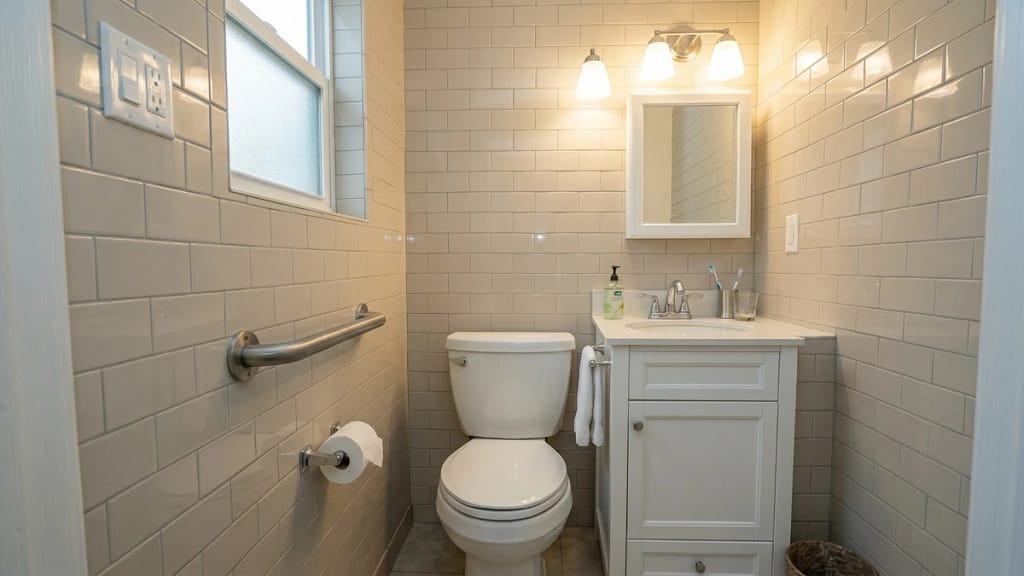
A raised toilet seat may not be the best solution if the main problem is side support, balance, or transfer control rather than toilet height.
This can happen when the user:
- needs something stronger to hold during transfers
- has trouble turning or positioning near the toilet
- leans heavily to one side
- cannot use seat-mounted handles comfortably
- has too little side clearance for a raised toilet seat with arms
In these cases, a raised toilet seat may help with height but still leave the user without enough support. Adding handles to the seat may not fix the problem if the bathroom is too tight or if the user needs more secure hand support.
A wall-mounted grab bar can sometimes make more sense in tight bathrooms because it does not sit on the toilet or widen the seat. For readers comparing space-saving support alternatives, this guide to the best grab bars for small bathrooms may be useful.
The right solution depends on the movement problem. If height is the issue, a raised toilet seat may be enough. If support is the issue, a different setup may be safer and more practical.
When It Makes Sense to Compare Broader Raised Toilet Seat Options
A small-bathroom-focused list is useful when space is the main constraint. However, some readers may need to compare broader raised toilet seat options before making a final choice.
This can make sense when:
- the bathroom has more space than expected
- handles are needed but compact models feel too limited
- the user needs a different height range
- a more secure attachment style is important
- the decision is more about support than bathroom size
A broader comparison can also help when the buyer is choosing for long-term use rather than a short recovery period. Small size matters, but it should not override fit, comfort, and stability.
For a wider product comparison, this guide to the best raised toilet seats for seniors compares different raised toilet seat styles based on support needs, fit, and everyday use.
If the bathroom is truly tight, stay focused on compact fit. If the space is manageable, compare the broader category before choosing.
Common Mistakes When Choosing a Raised Toilet Seat for a Small Bathroom
Small bathrooms leave less room for error, so the buying mistakes are usually practical ones.
Common mistakes include:
- Choosing the smallest option without checking stability
A compact seat still needs to feel secure during sitting and standing. - Ignoring toilet shape
Round and elongated toilets need the correct seat design. - Choosing handles without measuring side clearance
Handles can help, but they can also make the setup too wide. - Choosing too much height
A taller seat may reduce bending, but it can also make balance or foot position worse. - Assuming compact means easy to clean
Some compact designs still have attachment points that require regular cleaning. - Using a raised toilet seat when support is the real issue
If the user needs something to hold, height alone may not solve the problem.
The best way to avoid these mistakes is to start with the bathroom layout and the user’s movement pattern, then compare products second.
What I Recommend
For most small bathrooms, the best raised toilet seat is the one that adds useful height without making the toilet area wider or harder to use. The KOHLER Hyten 3″ Elevated Toilet Seat is the best overall starting point because it raises the seat height without adding handles, floor legs, or a frame around the toilet.
A practical decision process is:
- measure the toilet and surrounding clearance first
- confirm whether the toilet is round or elongated
- choose a no-handle design if the bathroom is very tight
- choose handles only if there is enough side clearance
- prioritize secure fit and comfortable height over compact appearance alone
- consider grab bars if the main problem is support rather than toilet height
The right raised toilet seat for a small bathroom should make sitting and standing easier without creating a new space, fit, or stability problem.
Final Thoughts
The best raised toilet seats for small bathrooms are not always the largest or most supportive-looking options. The best choice is the one that adds useful height without making the toilet area harder to use.
Before choosing, check the toilet shape, measure the available clearance, think carefully about handles, and avoid adding more height than the user actually needs.
A raised toilet seat can be a practical small-bathroom aid when height is the main issue. If the person needs stronger side support or the bathroom is too tight for handles, another setup may work better.
The right product should make the bathroom routine easier, not just raise the seat.
FAQ
What is the best raised toilet seat for a small bathroom?
The best raised toilet seat for a small bathroom is one that fits the toilet securely, adds the right amount of height, and does not crowd the user’s transfer space.
Do raised toilet seats with handles work in small bathrooms?
They can work if there is enough side clearance. In very tight bathrooms, handles may make the setup too wide or difficult to use.
How much space do you need for a raised toilet seat?
The needed space depends on the toilet shape, seat design, handle width, and the user’s transfer pattern. Side clearance is especially important when choosing a model with handles.
Is a compact raised toilet seat always safer?
No. Compact size does not automatically mean better safety. The seat still needs to fit securely, stay stable, and match the user’s height and support needs.
When are grab bars better than a raised toilet seat in a small bathroom?
Grab bars may be better when the user needs side support more than added toilet height, or when a raised toilet seat with handles would crowd the toilet area.
