
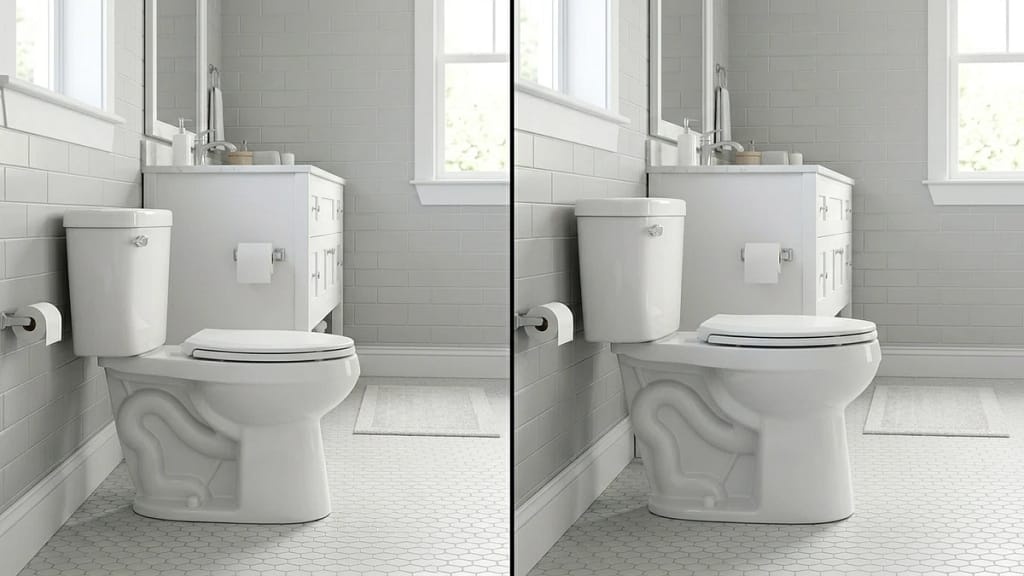
Toilet height affects more than comfort. It changes how easy it feels to sit down, stand up, and stay balanced during one of the most repeated movements in daily life.
When comparing standard toilet vs comfort height toilet, the main difference is the seat height from the floor. That small difference can make a noticeable impact, especially for seniors, taller adults, or anyone dealing with knee, hip, or mobility limitations.
The better option depends on the user, not just the toilet. What feels comfortable and natural for one person may feel too low, too high, or less stable for someone else.
Disclosure: As an Amazon Associate, I earn from qualifying purchases. This post may contain affiliate links. If you purchase through these links, I may earn a small commission at no extra cost to you. I only recommend products I would feel comfortable using in my own home. Learn more.
On This Page
- What Is a Standard Toilet?
- What Is a Comfort Height Toilet?
- Height Difference Between Standard and Comfort Height Toilets
- Which One Is Easier to Use?
- How User Height and Mobility Affect the Better Choice
- Standard Toilet vs Comfort Height Toilet for Seniors
- When a Raised Toilet Seat Makes More Sense
- Common Mistakes When Comparing Toilet Heights
- What I Recommend
- FAQ
- Final Thoughts
Quick Answer
A standard toilet sits lower, while a comfort height toilet sits a few inches higher and is usually easier for taller adults, seniors, and people who have difficulty sitting down or standing up.
In simple terms:
- Standard toilet → lower height, often more natural for shorter users
- Comfort height toilet → higher height, often easier for users with knee, hip, or mobility issues
The main difference affects everyday use:
- A lower toilet usually requires more bending
- A higher toilet usually reduces the effort needed to stand up
- Standard height may feel more stable for some shorter users
- Comfort height often feels more comfortable for taller users
The better choice depends on the user’s height, mobility, and how the full sitting and standing movement feels in real use.
What Is a Standard Toilet?
A standard toilet usually has a seat height of about 15 to 16 inches from the floor before adding the toilet seat. This lower height has been common in residential bathrooms for years, so it is the setup many people are already used to.
In everyday use, a standard toilet often feels:
- lower to sit down onto
- more familiar in older homes
- more natural for shorter users
Because the seat sits lower, the user usually has to bend more at the knees and hips when sitting down and use more effort when standing back up.
For example, a shorter user may feel comfortable and stable on a standard toilet because the seated position allows the feet to stay flat on the floor more easily. In that situation, extra height may not improve the movement and could even make the setup feel less natural.
A standard toilet is not automatically less comfortable. It simply works better for some body types and movement patterns than others.
What Is a Comfort Height Toilet?
A comfort height toilet usually measures about 17 to 19 inches from the floor to the top of the seat. That makes it a few inches taller than a standard toilet, which is often enough to change how sitting down and standing up feel in daily use.
In everyday use, a comfort height toilet often feels:
- easier to stand up from
- less demanding on the knees and hips
- more comfortable for taller users
Because the seat sits higher, the body does not have to lower as far when sitting down or push up from as low a position when standing. That small change can reduce effort noticeably, especially when the movement already feels physically demanding.
For example, someone with knee pain may find that a comfort height toilet feels easier to use because standing up requires less strain. A taller adult may also find that the higher seat feels more natural and less cramped than a lower standard toilet.
A comfort height toilet is not automatically the better choice for everyone, but it often works well when reducing effort during sitting and standing is the main goal.
Height Difference Between Standard and Comfort Height Toilets
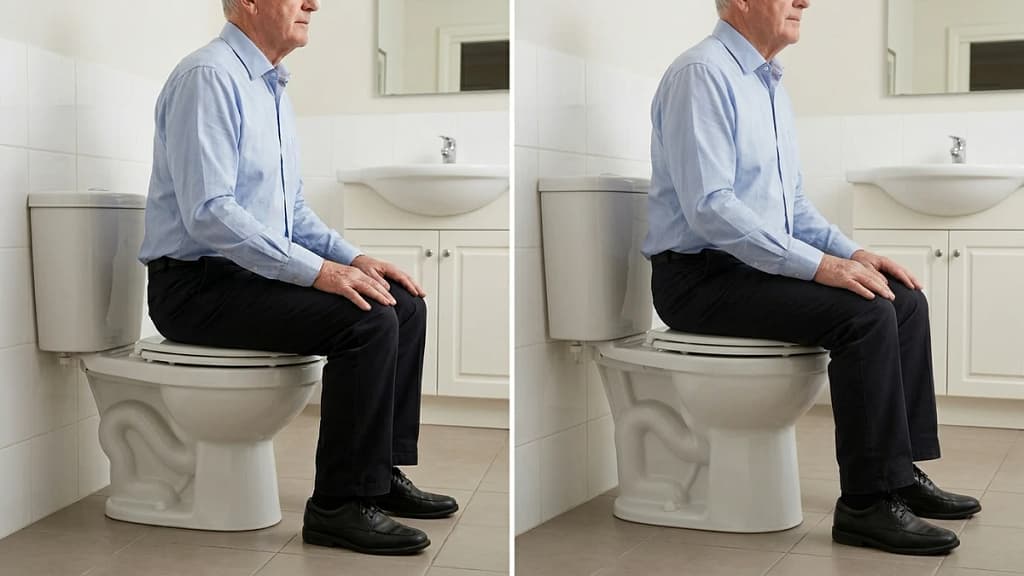
The height difference between standard and comfort height toilets is usually only a few inches, but those inches can matter a lot in real use.
A lower toilet requires:
- more bending at the knees and hips
- more effort when standing up
- more control when lowering down
A higher toilet usually reduces:
- how far the body has to move
- strain on the joints
- effort during standing
For example, someone may not think a 2-3 inch difference sounds important at first, but in daily use that small increase can make standing up feel noticeably easier.
That is also why a raised toilet seat can make a noticeable difference even when it only adds a few inches.
If you want a clearer sense of how a few inches can change the experience, this guide on how much height a raised toilet seat adds helps explain why small height changes matter so much.
The important point is that the difference is not just numerical. It changes how the movement feels from start to finish.
Which One Is Easier to Use?
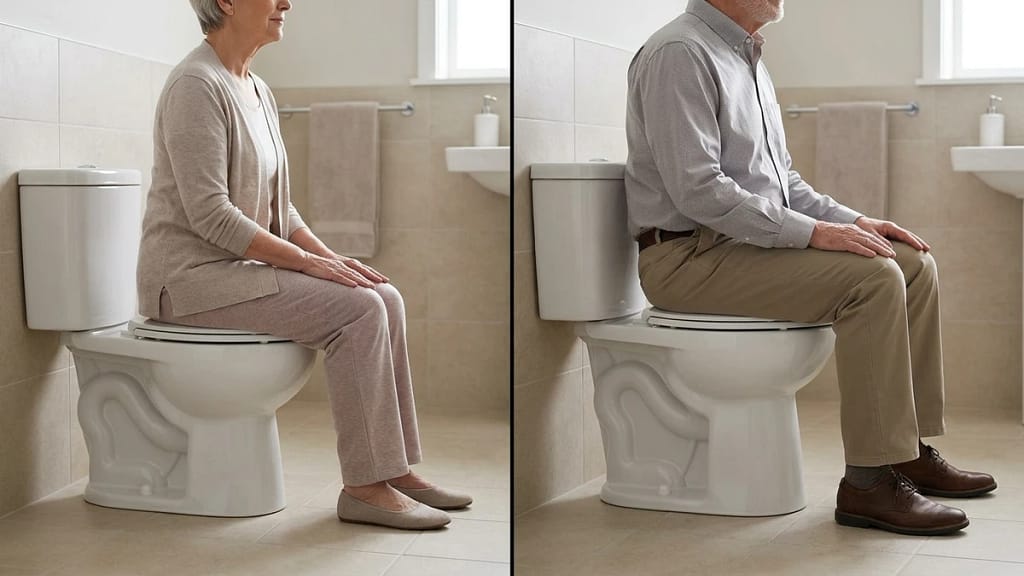
Neither option is automatically easier for everyone. Ease of use depends on the person’s height, strength, flexibility, and balance.
A comfort height toilet is often easier when:
- standing up feels difficult
- knee or hip bending is limited
- the user is taller than average
A standard toilet may still feel easier when:
- the user is shorter
- foot contact and seated stability matter more
- the current setup already feels comfortable
How to judge which feels easier:
Do not focus only on which toilet is higher. The better option is the one that lets the user lower down with control, keep the feet planted naturally, and stand up without extra strain or hesitation.
If a higher toilet reduces effort but makes the seated position feel less stable, it may not actually be the better choice for that user.
For example, a taller adult may feel cramped on a standard toilet and immediately notice the benefit of a comfort height model. A shorter user, however, may feel more stable on the lower toilet because the seated position is more grounded.
The best test is not just whether one toilet is higher, but whether the full motion of sitting and standing feels smoother and more controlled.
How User Height and Mobility Affect the Better Choice
The same toilet can feel completely different depending on who is using it. That is why body size and mobility matter just as much as the actual toilet height.
A few patterns are common:
- Taller users often benefit from extra height because the lower starting position feels less comfortable
- Shorter users may prefer a lower toilet because it keeps the feet planted more naturally
- Users with limited mobility may need whichever height reduces strain without making the position feel unstable
Example:
A taller person with mild knee stiffness may feel immediate relief from a comfort height toilet, while a shorter person with similar stiffness may still prefer a lower setup with a smaller height adjustment. The same toilet can feel helpful for one user and less stable for another.
If you are trying to match toilet height to actual movement needs, this guide on choosing the right raised toilet seat height explains how user size and mobility change what works best.
The better choice is the one that improves movement for the actual user, not the one that sounds better in general.
Standard Toilet vs Comfort Height Toilet for Seniors
For seniors, the difference between standard and comfort height often becomes more noticeable because standing up tends to require more effort over time. A higher toilet can reduce that effort, but that does not automatically make it the right choice in every case.
A comfort height toilet may help when:
- standing up is physically demanding
- bending the knees and hips feels difficult
- the user is taller or has reduced leg strength
A standard toilet may still be workable when:
- the user is shorter
- balance and foot contact are more important than added height
- the current toilet already feels manageable
Some seniors need more than a higher seat. If standing up feels difficult but balance is also uncertain, extra height alone may not make the movement feel safe or controlled. In those cases, the better choice depends on whether the user needs only less bending or also added support during the push up and lowering down.
For seniors, the right choice often comes down to whether the problem is mostly height, mostly stability, or a combination of both.
When a Raised Toilet Seat Makes More Sense
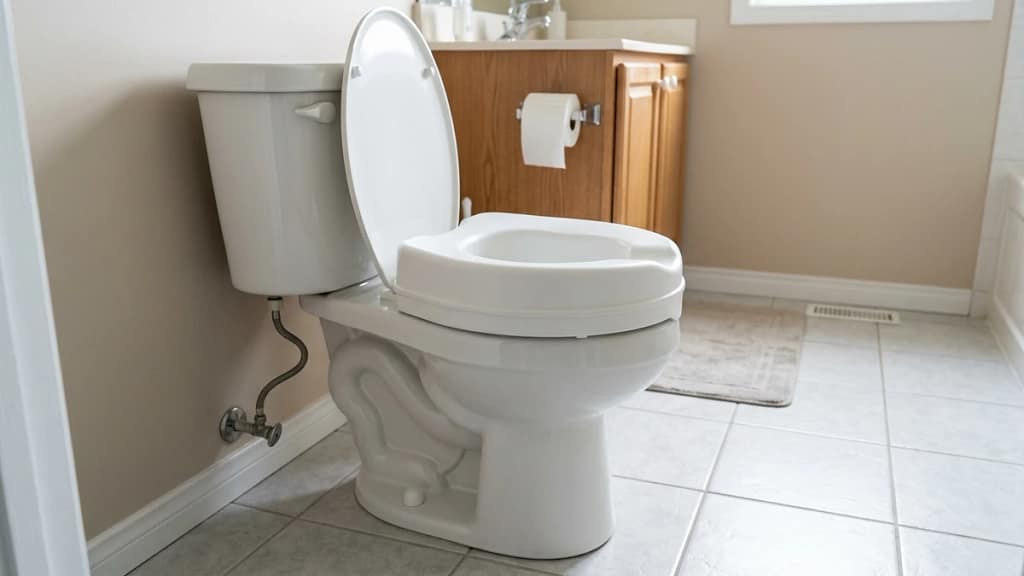
Replacing the toilet is not always necessary. In many cases, a raised toilet seat can solve the same height problem more simply and with less cost or effort.
A raised toilet seat often makes more sense when:
- the current toilet is too low
- the need for added height may be temporary
- the bathroom setup does not need a full toilet replacement
- the user wants flexibility rather than a permanent change
Example:
Someone recovering from a temporary mobility setback may not need a new toilet at all. A raised seat on a standard toilet may provide enough extra height to make daily use easier until movement improves, without requiring a permanent bathroom change.
At that point, the decision is less about the toilet itself and more about which setup improves the movement most effectively.
If you want to sort through those choices more systematically, this guide on how to choose a raised toilet seat explains when a seat adjustment makes more sense than changing the toilet.
In practical terms, a raised toilet seat is often the more flexible option when the goal is to improve height without changing the entire bathroom fixture.
Common Mistakes When Comparing Toilet Heights
The biggest mistake in this comparison is treating toilet height like a simple upgrade instead of a movement issue.
Common mistakes include:
- assuming higher is always better
- ignoring the user’s height
- forgetting about foot position and balance
- focusing only on sitting comfort instead of the full movement
For example, a comfort height toilet may sound like the obvious upgrade, but if the user is shorter and already stable on a standard-height toilet, the higher setup may feel less natural than expected.
A good comparison should always include how the person actually moves, not just the listed seat height.
What I Recommend
The best choice depends on what part of the movement feels difficult and whether height alone is enough to make the setup feel safe and comfortable.
- Choose a standard toilet if the lower height already feels natural, stable, and easy to use
- Choose a comfort height toilet if sitting down and standing up feel physically demanding
- Consider a raised toilet seat if extra height is needed but replacing the toilet is not necessary
For some users, extra height helps, but added hand support makes just as much difference.
If you’ve already decided that a handle-supported design may be a better fit, this roundup of the best raised toilet seats with handles compares options that combine added height with extra support.
The right setup should make the full movement feel easier without making the seated position feel awkward or less stable.
FAQ
What is the difference between standard and comfort height toilets?
A standard toilet sits lower, while a comfort height toilet sits a few inches higher to make sitting and standing easier.
Are comfort height toilets better for seniors?
They often are, especially when standing up is difficult, but they are not automatically better for every senior.
Can a standard toilet be made taller?
Yes. A raised toilet seat can add height without replacing the toilet.
Are comfort height toilets harder for short people to use?
They can be, because the higher seat may make the seated position feel less stable for shorter users.
Is comfort height the same as ADA height?
They are often very similar, though exact measurements can vary slightly by model and definition.
Final Thoughts
The difference between a standard toilet and a comfort height toilet is only a few inches, but those inches can change comfort, effort, and stability in a meaningful way.
A comfort height toilet is often better for taller users and for people who struggle with sitting and standing. A standard toilet may still be the better choice for shorter users or anyone who feels more stable in a lower seated position.
The most useful comparison is not just which toilet is taller, but which height makes the full movement feel easier, steadier, and more natural for the person using it every day.
