
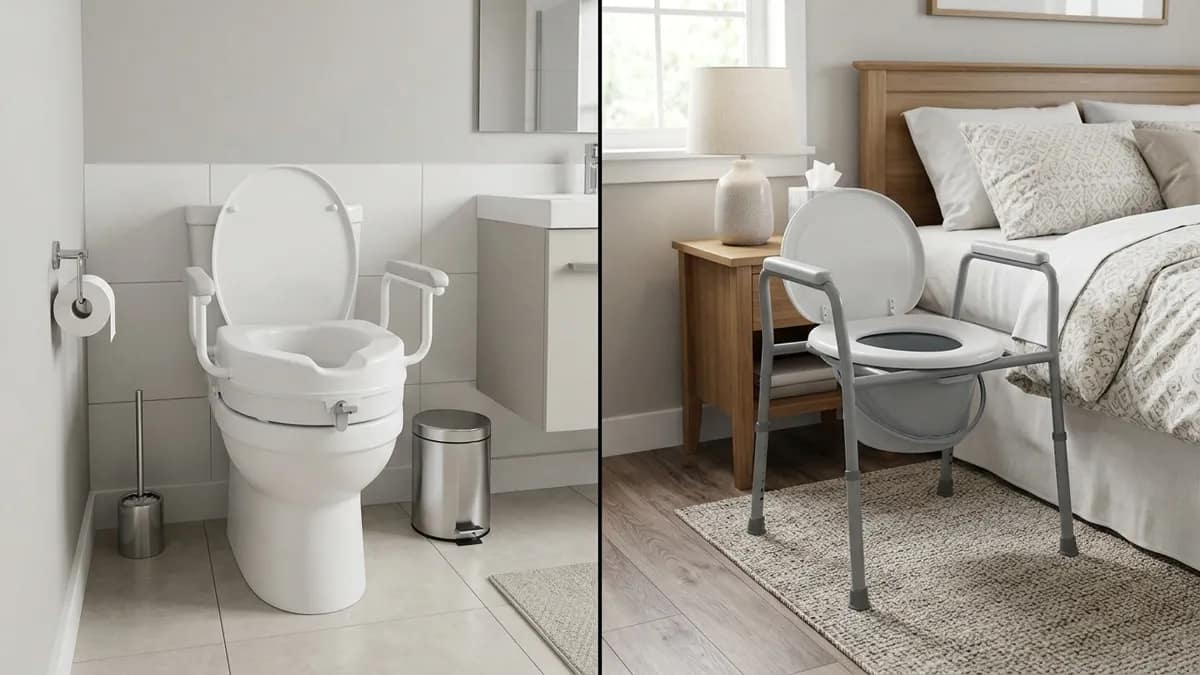
Choosing between a raised toilet seat and a bedside commode depends on how much movement the user can safely manage and whether reaching the bathroom is practical.
When comparing raised toilet seat vs bedside commode, the key difference is not just comfort—it’s how much support and independence the user needs. One works with your existing toilet, while the other replaces it entirely when access becomes difficult.
Understanding how each option works in real-life use will help you choose the one that actually improves safety and convenience.
Disclosure: As an Amazon Associate, I earn from qualifying purchases. This post may contain affiliate links. If you purchase through these links, I may earn a small commission at no extra cost to you. I only recommend products I would feel comfortable using in my own home. Learn more.
On This Page
Quick Answer
A raised toilet seat adds height to an existing toilet to reduce bending, while a bedside commode is a portable toilet used when reaching the bathroom is difficult or unsafe.
- Raised toilet seat → increases height and reduces bending
- Bedside commode → provides a complete toilet solution
- Raised toilet seat → requires access to a bathroom
- Bedside Commode → can be used anywhere, including bedside
- Choice depends on mobility and access, not just comfort
In simple terms, a raised toilet seat supports independence in the bathroom, while a bedside commode supports situations where getting to the bathroom is difficult.
What Is a Raised Toilet Seat?
A raised toilet seat is an attachment placed on top of a regular toilet to increase its height. This makes it easier to sit down and stand up by reducing how far the body needs to move.
It works best for people who can still use the bathroom independently but need help with bending or standing.
For example, someone with mild knee or hip stiffness may find that even a few extra inches significantly reduce effort without changing their daily routine.
Choosing the right height is an important part of making it effective. This guide on what height raised toilet seat do I need explains how to choose a height that better matches comfort, stability, and everyday use.
When used correctly, a raised toilet seat improves ease of movement without changing the overall bathroom setup.
If you are still deciding whether this type of setup is the right fit, this guide on how to choose a raised toilet seat explains how height, stability, and support needs affect the decision in real use.
What Is a Bedside Commode?
A bedside commode is a portable toilet that can be placed near the bed or in any convenient location. It typically includes a seat, a frame, and a removable bucket.
Unlike a raised toilet seat, it does not depend on access to a bathroom.
It is most useful when:
- walking to the bathroom is difficult or unsafe
- mobility is significantly limited
- nighttime use increases fall risk
For example, someone recovering from surgery or experiencing weakness may not be able to reach the bathroom quickly. In this case, a bedside commode provides a safer and more accessible option.
It is designed to reduce movement requirements rather than modify an existing toilet.
Key Differences That Actually Matter
When comparing raised toilet seat vs bedside commode, these differences help clarify which option fits the user’s situation more effectively.
- Installation vs portability
Raised toilet seats attach to an existing toilet, while commodes can be placed anywhere. - Height vs full support
Raised seats only change height, while commodes provide a complete sitting structure. - Bathroom dependency
Raised seats require a working bathroom, while commodes do not. - Level of support
Commode frames often include armrests, offering more stability than a basic raised seat. - Convenience vs independence
Raised seats support independent bathroom use, while commodes prioritize accessibility.
These differences highlight that the choice is less about preference and more about the user’s mobility and environment.
These differences help define when each option becomes the more practical choice.
When a Raised Toilet Seat Is the Better Choice
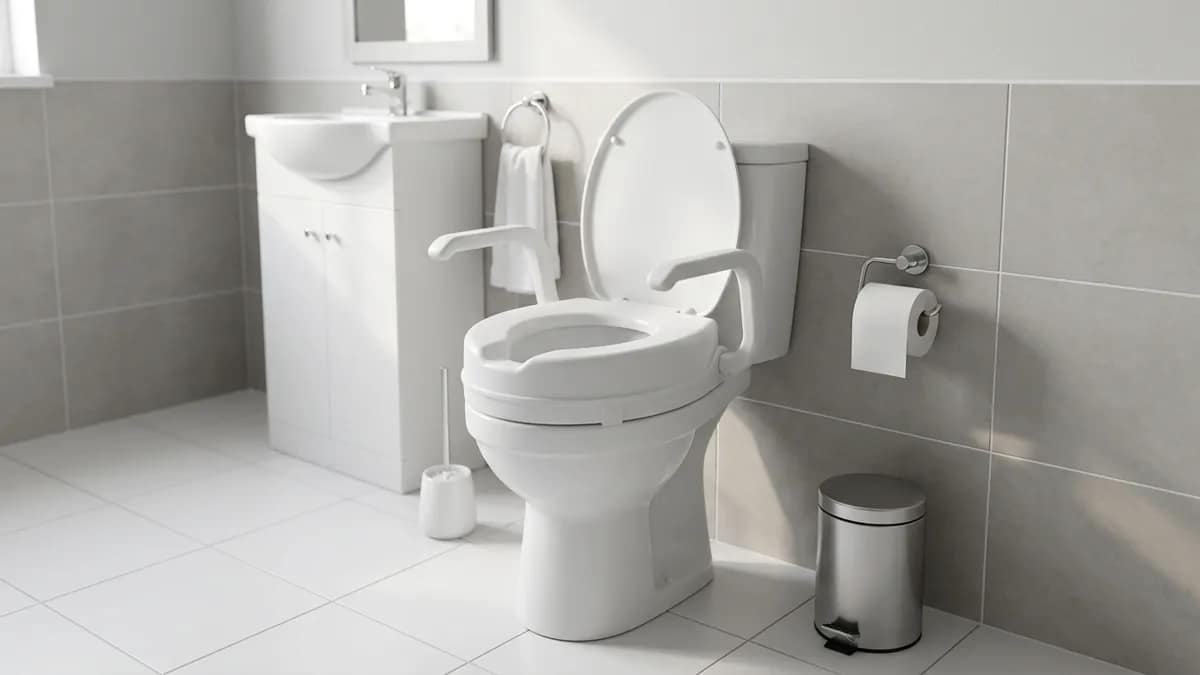
A raised toilet seat is the better option when the main goal is to make an existing bathroom easier to use.
It works well when:
- the user can walk to the bathroom independently
- bending or standing is the main difficulty
- only a small adjustment is needed
For example, someone who feels strain when sitting down but has no balance issues may benefit from a raised seat without needing additional equipment.
In these situations, a simple height adjustment is often enough to improve daily use.
If you want a broader comparison of how raised toilet seats work alongside other support options, this guide on toilet safety frames vs raised toilet seats provides additional context.
When a Bedside Commode Is the Better Choice

In the comparison of raised toilet seat vs bedside commode, a bedside commode becomes the better option when getting to the bathroom is difficult, unsafe, or impractical.
It is especially useful when:
- mobility is significantly limited
- recovery restricts movement
- nighttime bathroom trips increase fall risk
- quick access is necessary
For example, after surgery, even short walks can feel unstable or exhausting. In these cases, having a commode nearby reduces both effort and risk.
When safety depends on reducing movement rather than adjusting it, a bedside commode is usually the better choice.
Safety Comparison: Which One Is Safer?
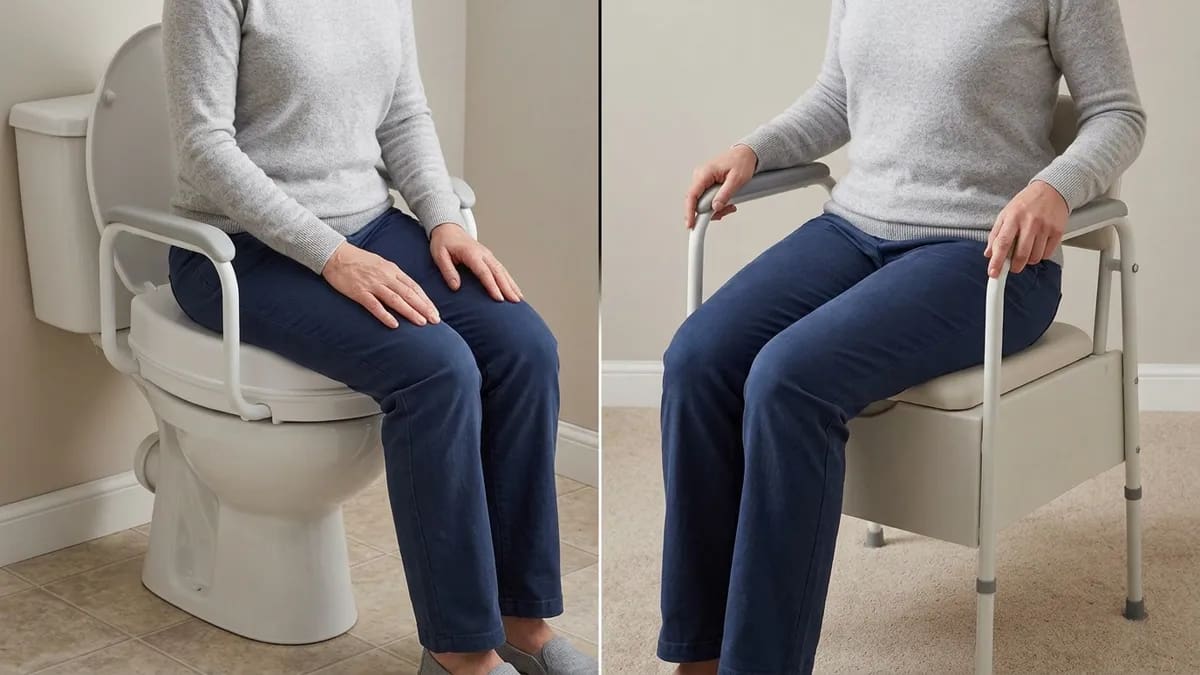
Safety depends less on the product itself and more on how well it matches the user’s needs.
A raised toilet seat is safe when:
- it is properly secured
- the height supports controlled movement
- balance is not a major concern
A bedside commode is safer when:
- reaching the bathroom is difficult
- stability is needed during sitting and standing
- movement needs to be minimized
For example, a stable raised seat works well for someone with mild mobility issues. However, for someone who feels unsteady while walking, reducing the need to move becomes the safer option.
If stability is a concern, making sure the seat is attached correctly can make a big difference. This guide on how to secure a raised toilet seat properly explains how to keep the seat in place and reduce unwanted shifting during use.
Choosing the safer option depends on whether the risk comes from movement or from instability.
Can You Use Both Together?
In some situations, using both options together can provide a more flexible setup.
For example:
- a raised toilet seat can be used during the day for normal bathroom use
- a bedside commode can be used at night to reduce walking
This approach is often useful during recovery, when mobility improves gradually over time.
During that stage, an article on raised toilet seats after hip surgery can help explain when added height is enough during recovery and when keeping a bedside commode nearby still makes sense.
Using both options strategically can provide a balance between independence and safety.
What I Recommend
The right choice depends on how much movement the user can safely manage in everyday situations.
- If the main issue is bending or standing → a raised toilet seat is usually enough
- If the main issue is getting to the bathroom → a bedside commode is more practical
In many cases, the transition is gradual. Someone may start with a bedside commode during recovery and move back to a raised toilet seat as mobility improves.
If you’re considering a raised toilet seat as part of that transition, it helps to see how different designs handle height, stability, and ease of use in real situations. This guide to the best raised toilet seats after surgery breaks down options that are commonly used during recovery.
Focusing on the specific challenge—movement, balance, or access—makes it easier to choose a setup that feels both safe and practical.
FAQ
Which is better for seniors: raised toilet seat or bedside commode?
It depends on mobility. Raised seats are better for independent users, while commodes are better when movement is limited.
Is a bedside commode safer than a raised toilet seat?
It can be safer if reaching the bathroom is difficult or risky.
Can you use both together?
Yes, many people use a commode at night and a raised toilet seat during the day.
Is a raised toilet seat enough after surgery?
It depends on mobility. Some users may still need a commode during early recovery.
Do bedside commodes require cleaning?
Yes, they include a removable bucket that must be cleaned regularly.
Final Thoughts
Raised toilet seats and bedside commodes serve different purposes, even though they are often compared.
One improves how you use the bathroom, while the other replaces the need to reach it.
Choosing the right option comes down to understanding what part of the movement feels difficult and selecting the solution that directly improves that experience.
