
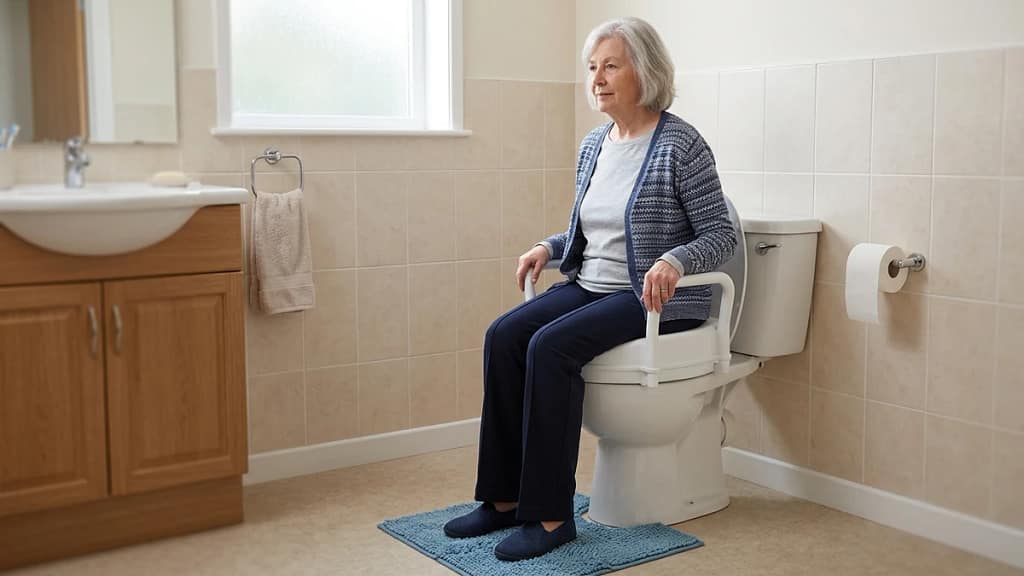
Bathroom use often becomes more difficult after hip surgery because the toilet may suddenly feel lower, more restrictive, and harder to manage than before. Movements that were routine can start requiring more planning, more control, and more effort.
That is why raised toilet seats after hip surgery are often considered during recovery. They can help reduce how far the body needs to lower and how much effort it takes to stand back up, but the need is not exactly the same for every person.
The right setup depends on recovery instructions, current toilet height, pain level, balance, and how controlled the sit-to-stand movement feels in daily use.
Disclosure: As an Amazon Associate, I earn from qualifying purchases. This post may contain affiliate links. If you purchase through these links, I may earn a small commission at no extra cost to you. I only recommend products I would feel comfortable using in my own home. Learn more.
On This Page
- Why Toilet Height Matters More After Hip Surgery
- When Is a Raised Toilet Seat Usually Recommended After Hip Surgery?
- Do All Hip Surgery Patients Need One?
- Raised Toilet Seat vs Bedside Commode After Hip Surgery
- When a Raised Toilet Seat Works Better with Extra Support
- How to Choose a Raised Toilet Seat After Hip Surgery
- When Temporary Bathroom Support Makes More Sense
- Common Mistakes to Avoid During Recovery
- What I Recommend
- FAQ
- Final Thoughts
Quick Answer
Raised toilet seats after hip surgery are often used when toilet height makes sitting down or standing up harder during recovery, especially when bending feels restricted or the toilet feels too low. They can make bathroom use more manageable, but the right height, stability, and support level still matter.
- They are often helpful when bending and lowering down feel uncomfortable
- They can reduce strain during sit-to-stand movement
- Not every hip surgery patient needs one
- Some recovery setups need added support as well as added height
- The best option depends on recovery needs, toilet height, and bathroom layout
In practical terms, a raised toilet seat is most useful when it helps the toilet feel easier to use without making the setup feel unstable or awkward.
The main goal is not just extra height. The goal is a bathroom setup that feels safer and easier during recovery.
Important note:
Recovery instructions should guide the decision first. If the surgeon, therapist, or discharge plan includes specific guidance about toilet height, bending, or transfer safety, those instructions should shape the bathroom setup before anything else.
Why Toilet Height Matters More After Hip Surgery
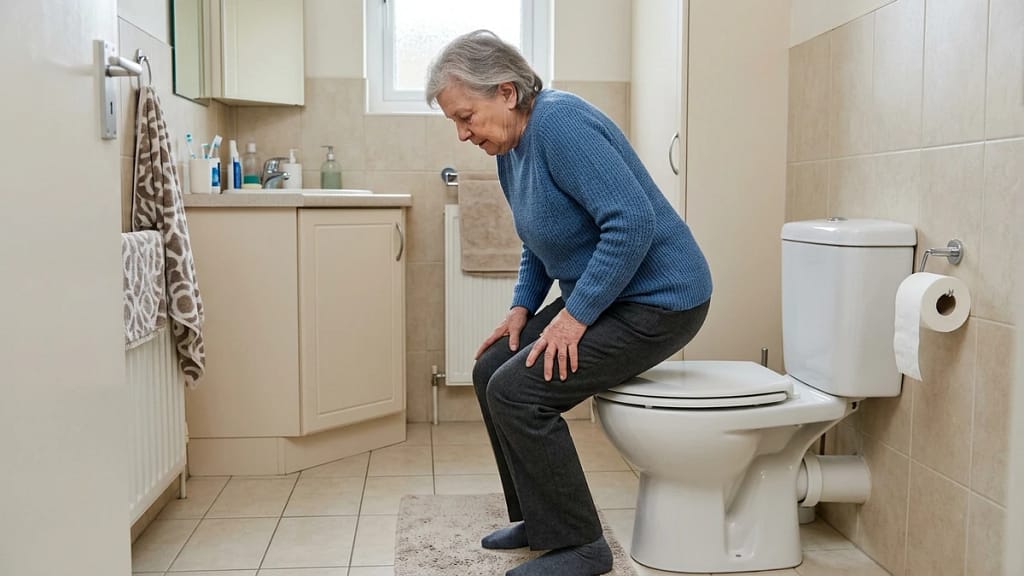
Hip surgery often changes toilet use because the movement becomes less forgiving. Sitting down can require more control, and standing back up may take more effort than usual.
That usually happens because:
- bending feels more restricted
- lowering down feels less comfortable
- standing up requires more push and more balance
For example, a toilet that felt normal before surgery may suddenly feel too low after surgery because the body is less comfortable moving into a lower position.
In that situation, even a small increase in height can make the movement feel more manageable. This guide on how much height a raised toilet seat adds explains why a few inches can change the sit-to-stand movement so noticeably.
When the toilet starts feeling low in a way that affects recovery, added height often becomes worth considering.
When Is a Raised Toilet Seat Usually Recommended After Hip Surgery?
A raised toilet seat is usually recommended when the toilet itself has become one of the clearest obstacles in daily recovery.
Common situations include:
- the toilet feels too low
- sitting down feels restricted or uncomfortable
- standing up requires heavy pushing with the hands
- recovery instructions limit how much bending feels appropriate
- the bathroom is otherwise usable, but the toilet height is the main problem
For example, someone may manage walking to the bathroom and using the sink without much difficulty, but still struggle with the specific motion of lowering onto the toilet and getting back up. That is often the point where added height starts making practical sense.
This also fits the broader question of timing. This guide on when seniors should use a raised toilet seat explains the kinds of daily movement changes that usually signal it is time to consider one.
A raised toilet seat is usually recommended when toilet height has become a clear part of the recovery problem.
Do All Hip Surgery Patients Need One?
A raised toilet seat is helpful for many hip surgery patients, but it is not automatically necessary in every recovery situation.
The difference usually depends on:
- how low the current toilet is
- how much bending feels limited
- the person’s height and mobility
- whether the bathroom already has supportive features
- how difficult the sit-to-stand movement feels in practice
Example:
A person using a taller toilet may feel comfortable enough without extra height, while another person using a standard-height toilet may notice a problem immediately. The answer is usually less about the surgery label itself and more about how the toilet feels during recovery.
Safety also depends on fit and stability, not just on the fact that the seat adds height. This guide on whether raised toilet seats are safe for seniors gives useful context on what makes a setup feel secure and when added height is not enough by itself.
The most useful question is not whether hip surgery patients “should” use one in general. It is whether the toilet is currently making recovery harder.
Raised Toilet Seat vs Bedside Commode After Hip Surgery
A raised toilet seat and a bedside commode can both help after hip surgery, but they solve different problems.
A raised toilet seat usually makes more sense when:
- the person can still get to the bathroom
- the main issue is toilet height
- the goal is to make normal bathroom use easier
A bedside commode usually makes more sense when:
- getting to the bathroom is difficult
- night-time access is a concern
- the person needs a more temporary, closer setup during early recovery
For example, a person who can walk to the bathroom but finds the toilet too low may do well with a raised toilet seat. A person who struggles with the distance to the bathroom, especially at night, may benefit more from a commode during the early recovery period.
If the choice is not obvious, this guide on raised toilet seat vs bedside commode explains when each option makes more practical sense.
The better option depends on whether the main challenge is toilet height or bathroom access.
When a Raised Toilet Seat Works Better with Extra Support
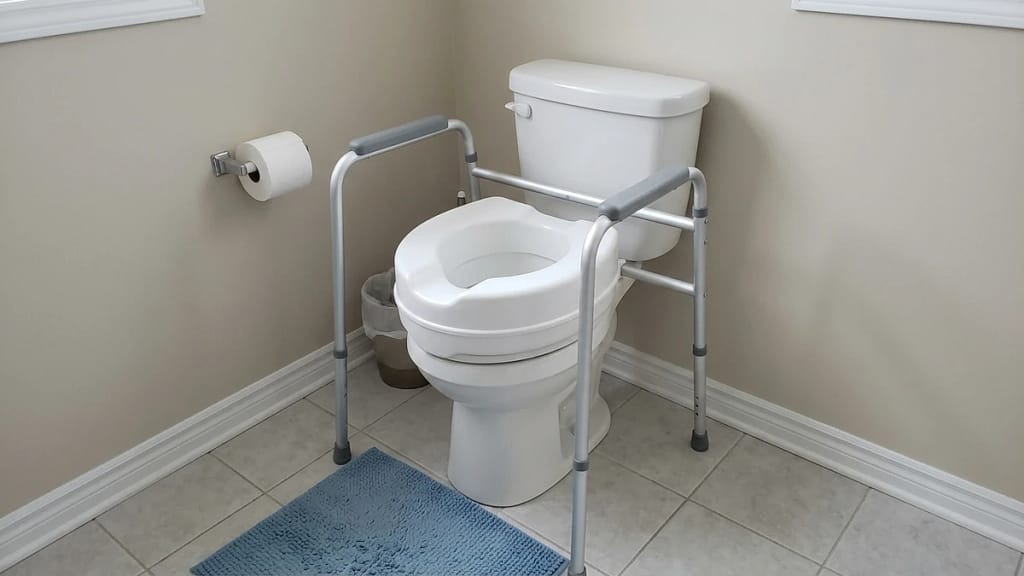
Some recovery setups need more than extra height. Added height can make the toilet easier to reach, but it does not automatically provide anything secure to hold during transfers.
That becomes more important when:
- standing still feels unsteady
- the person needs side support while pushing up
- balance feels reduced during transfers
- the sit-to-stand movement still feels uncertain after adding height
How to tell whether height alone is enough:
Pay attention to what still feels difficult after extra height is added. If lowering down feels easier but standing still feels uncertain or unsupported, the setup may need more than height alone.
In that situation, side support or a different support setup may matter just as much as the seat height itself.
For example, a raised toilet seat may make lowering down easier but still leave the person searching for something stable while standing.
In that situation, the setup may work better when combined with side support. This guide on using a raised toilet seat with a toilet safety frame explains when the two can work well together.
Height helps when low toilet position is the main issue. Extra support helps when the movement still needs more control.
How to Choose a Raised Toilet Seat After Hip Surgery
The best choice after hip surgery depends on how the toilet will actually be used during recovery. The goal is to make bathroom use easier without creating a setup that feels awkward, unstable, or harder to manage than necessary.
Start by looking at the main factors together:
- how low the current toilet feels
- how much extra height is likely to help
- whether the setup needs more support as well as more height
- whether the need is short-term or may last longer than expected
Height should be chosen carefully. Too little may not help enough, but too much can make the seated position feel less stable. A setup that works well during recovery should reduce strain while still feeling controlled during sitting and standing.
For example, one person may only need a modest lift because the toilet is already fairly tall, while another may need more height because the toilet feels especially low during recovery. This guide on how to choose a raised toilet seat explains how to weigh height, fit, support, and daily use more clearly.
The best choice is usually the one that makes bathroom use easier during recovery without making the setup feel awkward or harder to manage every day.
When Temporary Bathroom Support Makes More Sense
Some recovery situations do not call for a permanent bathroom change. They call for short-term support that helps during the recovery window and can be removed later.
This is especially useful when:
- the recovery need is temporary
- the bathroom is shared
- drilling or permanent changes are not practical
- the main goal is safer movement during a limited period
For example, a person recovering in a rental or shared home may need extra support during transfers without wanting to change the bathroom permanently.
In that kind of setup, temporary bathroom supports may be part of the solution. This guide on temporary grab bars explains when short-term support options make sense.
A temporary setup can be the better choice when the recovery need is real but not expected to last long.
Common Mistakes to Avoid During Recovery
A few common mistakes can make the setup less useful than it should be.
These are the biggest ones:
- Assuming height alone solves everything
Some people need more support, not just more elevation. - Choosing too much or too little height
The wrong height can make the toilet feel either still too low or unnecessarily awkward. - Ignoring stability
A raised toilet seat should feel secure during actual movement, not just look acceptable in place. - Treating a temporary need like a permanent decision
Recovery setups should match the likely recovery period, not assume the need will last forever.
The best recovery setup usually comes from matching height, support, and timing to the actual recovery situation.
What I Recommend
A raised toilet seat usually makes sense after hip surgery when toilet height has clearly started making bathroom use harder, slower, or less comfortable.
- Use one when the toilet feels too low for recovery
- Prioritize a stable setup that feels easy to manage
- Add extra support if standing still feels uncertain
- Avoid assuming the need is permanent unless recovery shows that it is
If the main problem is low toilet height, a raised toilet seat is often a practical recovery tool. If balance, support, or access are the bigger issue, height may need to be combined with something else.
Once the need for extra height is clear, it often helps to compare models designed with recovery in mind. This roundup of the best raised toilet seats after surgery focuses on options that suit short-term recovery, support needs, and easier bathroom use.
The most useful setup is the one that supports recovery without making everyday bathroom use feel more complicated.
FAQ
Do you need a raised toilet seat after hip surgery?
Not always. It depends on how low the toilet feels, how limited bending is, and how difficult sitting and standing feel during recovery.
How long is a raised toilet seat used after hip surgery?
It varies. Some people use one only during early recovery, while others keep it longer if toilet height remains a problem.
Is a raised toilet seat enough after hip surgery?
Sometimes yes, but not always. If balance or transfer support is also a problem, extra support may still be needed.
Is a bedside commode better after hip surgery?
It can be better when bathroom access is difficult, especially during early recovery or at night.
Can a raised toilet seat be combined with extra support?
Yes. Some recovery setups work better when height is combined with side support such as a toilet safety frame.
Final Thoughts
Raised toilet seats after hip surgery are often useful because toilet height can become a more noticeable problem during recovery than it was before surgery.
Some people need one right away. Others do not. The deciding factor is usually how the toilet feels during the sit-to-stand movement, not the surgery alone.
When the toilet starts feeling too low for recovery, a raised toilet seat can make daily bathroom use more manageable and more comfortable.
